Pene Pati’s role debut as Hoffmann and the provocative Lydia Steier’s direction of this iconic opera were more than enough to justify a trip to the German capital.
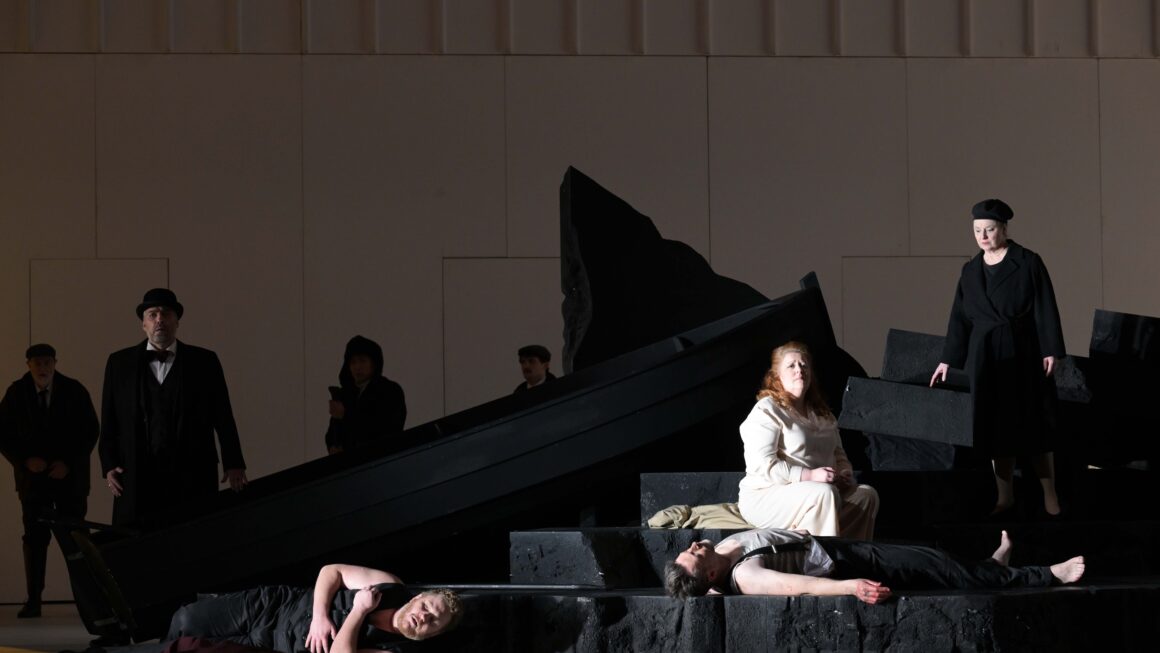
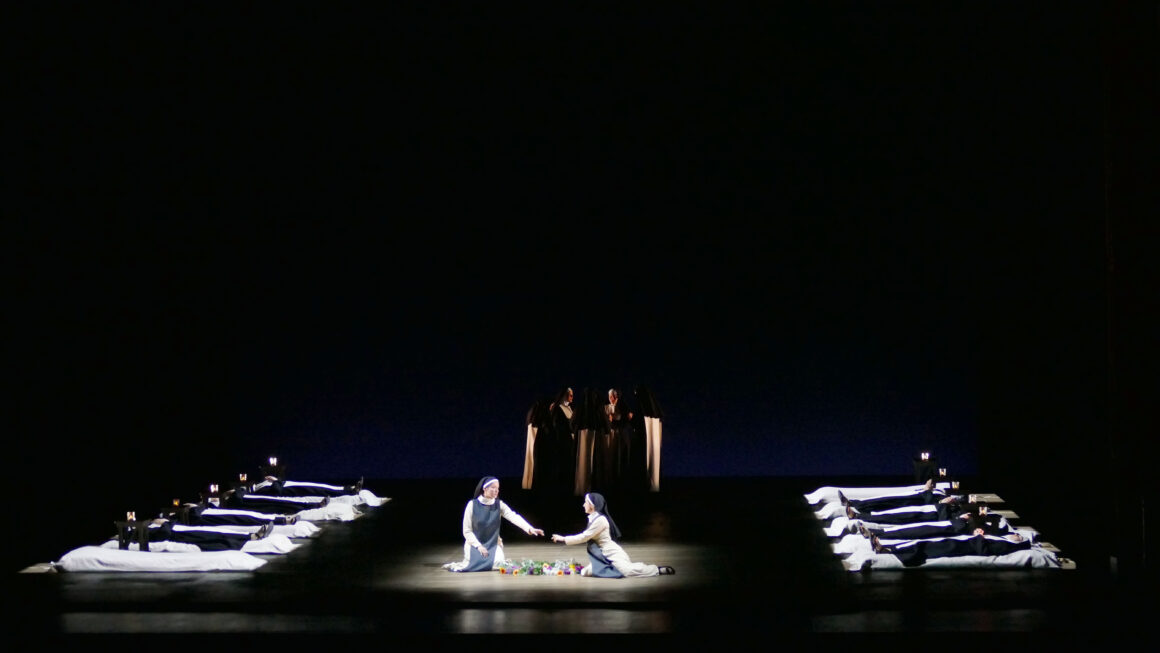
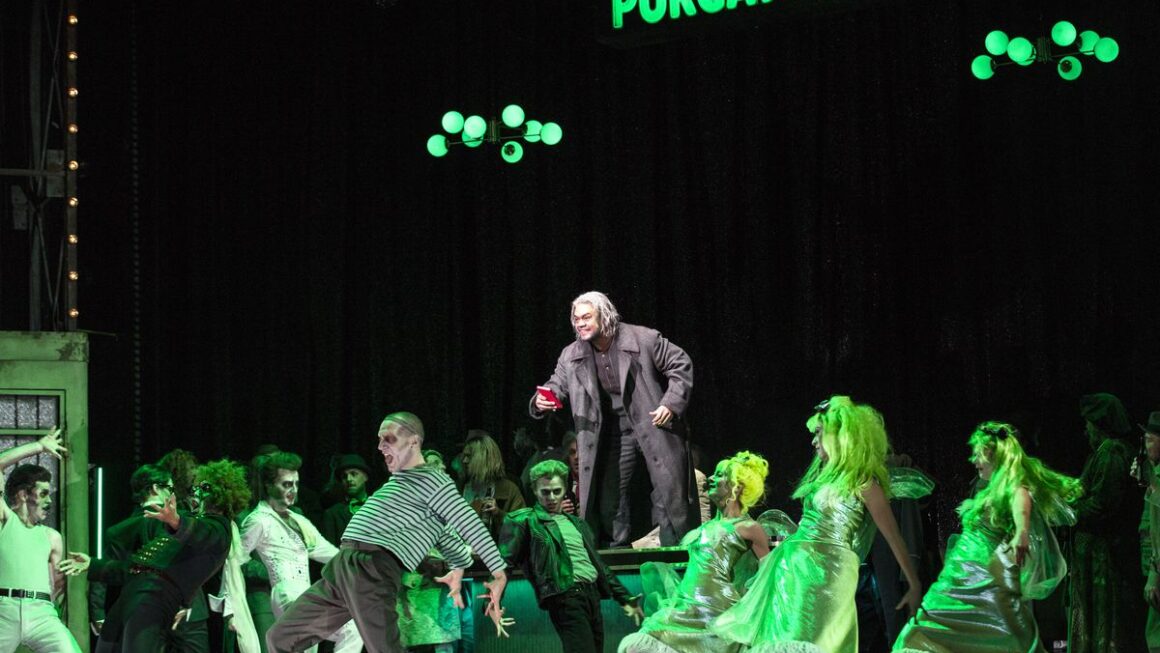
We won’t debate the version presented here, which includes some cuts (particularly in the Venice act) and adjustments to the dialogue. However, Lydia Steier and Bertrand de Billy offer a fairly complete production. The concept of the staging revolves around a Hoffmann who dies in the prologue, and we follow him in purgatory to see whether he will be saved by the Muse or follow the Devil into Hell. The idea makes sense in the prologue and the final act, but the three middle acts, with their respective narratives, are more difficult to transform. Was it really necessary to judge Hoffmann? This question is worth pondering, and it doesn’t necessarily find an answer in this interpretation, which makes the overall concept of the story somewhat frustrating. At times slightly confusing, one might lose track of the narrative, even for someone familiar with the story. Nevertheless, it remains a lively, colorful, humorous, and at times obscene performance, brimming with (perhaps too many?) ideas and pop culture references. The costumes and sets are superbly executed, as are the choreography. Visually, it is a true success.
Musically, Bertrand de Billy expertly conducts the Staatskapelle Berlin. After a vigorous overture, the subtlety of the conductor shines, especially in Antonia’s act. The local choirs are also in good form, though it’s a shame that the staging often hides them, depriving us of the full power of their sound.
As for the voices in the secondary roles, Ya-Chung Huang as Cochenille/Frantz deserves special mention. With perfect French and undeniable comedic flair, it is a great success.
Sonja Herranen is a charming Giulietta, with a confident voice, though her role is unfortunately too brief for us to fully appreciate her.
Julia Kleiter offers a beautiful Antonia. Despite being confined to her room on an upper floor, the set does not stop her from moving us, even through her surprising suicide.
The surprise of the evening was Serafina Starke, stepping in at the last minute to play Olympia. A member of the Berlin Opera Studio, the soprano made an outstanding debut in this role. Her high notes are generous, and her vocal runs are excellent. This is a wonderful discovery, and we hope to see her again soon.
Finally, in the female roles, Ema Nikolovska as the Muse/Nicklausse deserves all our congratulations. Flawless from start to finish, with excellent French, she is a major highlight.
It’s hard to ask for more from Roberto Tagliavini’s Devil. His phrasing, pronunciation, projection, lower and higher notes, and acting are all perfection, and we would gladly follow him to Hell.
Finally, after impressively taking on the role of Werther, Pene Pati tackles another pinnacle of French opera in the same year. And once again, he delivers. His French is excellent, and he uses his magnificent high notes with intelligence. It is in passages like “O Dieu, de quelle ivresse” that the Samoan tenor is at his best. There is no doubt that his Hoffmann will only improve with time, but it is already a fantastic role debut.
This is, therefore, a great musical and vocal success, complemented by a generous and intriguing staging. An excellent production that we hope to see again soon.
Cast :
Musical Direction: Bertrand de Billy
Stage Direction: Lydia Steier
Stage Management: Katharina Lang, Leander TeßmerSet,
Video: Momme Hinrichs
Costumes: Ursula Kudrna
Lighting: Olaf Freese
Choreography: Tabatha McFadyen
Chorus Master: Dani Juris
Dramaturgy: Maurice Lenhard, Christoph Lang
Hoffmann: Pene Pati
Olympia: Serafina Starke
Antonia: Julia Kleiter
Giulietta: Sonja Herranen
Lindorf, Coppélius, Dr. Miracle, Dapertutto: Roberto Tagliavini
The Muse, Nicklausse: Ema Nikolovska
Cochenille, Frantz, Pitichinaccio, Andrès: Ya-Chung Huang
Luther: Manuel Winckhler
Hermann: David Oštrek
Nathanaël: Álvaro Diana
Spalanzani: Florian Hoffmann
Crespel: Stefan Cerny
Voice from the Grave: Natalia Skrycka
Schlémil: Jaka Mihelač
The Old Lady: Brigitte Eisenfeld
Staatsopernchor, Staatskapelle Berlin