One hundred and twenty-five years after its first performance in Rome on January 14, 1900, Athens also paid homage to Puccini’s masterpiece with a series of for months sold- out performances. Based on a play by Victorien Sardou, brought to fame by Sarah Bernhardt, Tosca has all the ingredients to captivate audiences: a mix of love and death, jealousy, sexual harassment, sadism, religion, murder, suicide, and murderous police.
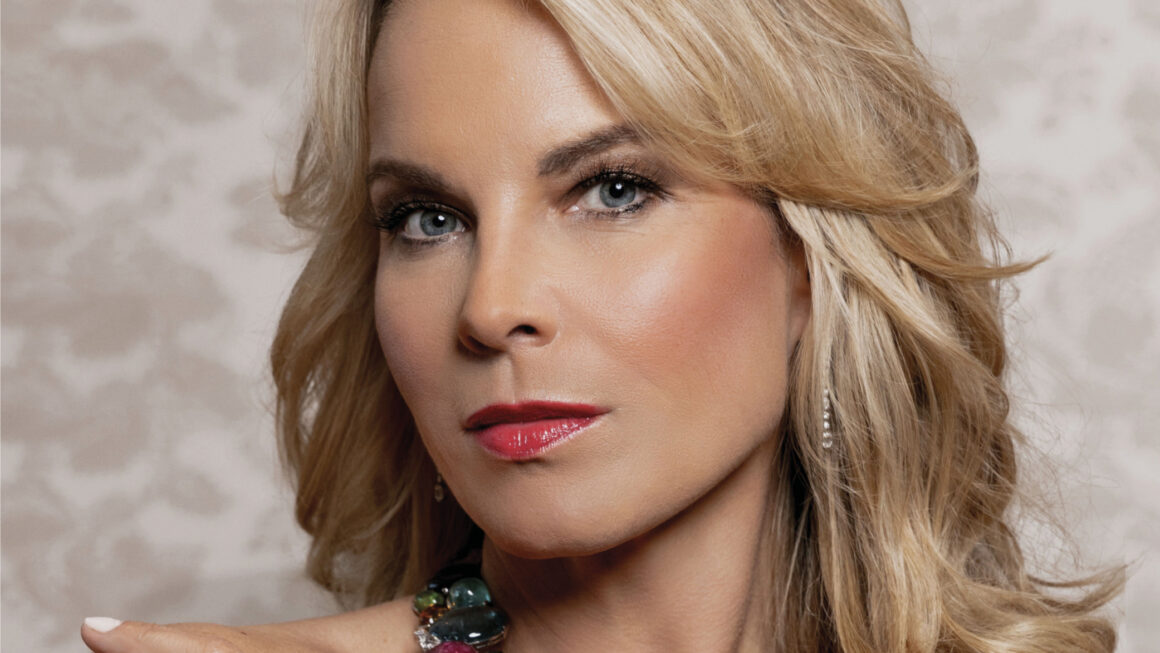
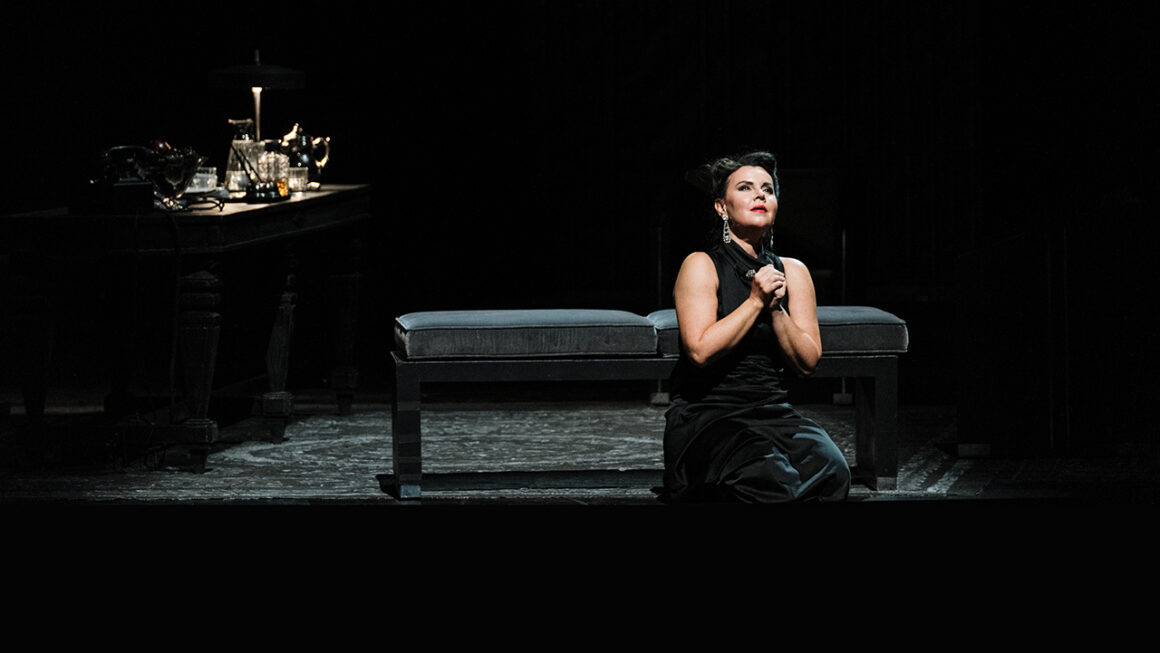
Added to this are a series of some of the most famous musical scores in the entire operatic repertoire. The December 7 performance was highly awaited due to the presence of tenor Roberto Alagna, “l’ultimo Divo” and his wife, Polish soprano Aleksandra Kurzak. Completing the opera’s trio—the soprano loves the tenor, but the baritone doesn’t want it—was a local star, Dimitri Platanias. Kurzak, in the title role, gave a superb performance, both vocally and theatrically. The soprano, who at the beginning of her career sang roles such as the Queen of the Night and Gilda, has developed a more dramatic voice over the years, with a full-bodied middle register and confident, rich high notes. Her work and psychological exploration of the character are admirable, complementing her beautiful stage presence and strong acting temperament. Kurzak conveys the character’s psychological evolution with great believability throughout the three acts; in the first, she plays the diva and the capricious woman in the duet with Cavaradossi, devising a smooth evocative pianissimo rendition of “dilla ancora la parola che consola ” that was truly memorable. In her encounter with Scarpia, jealousy takes over, and Kurzak indulges in a few veristic accents, such as “tu non l’avrai stasera, giuro” which are by the way pertinent and in keeping with tradition.
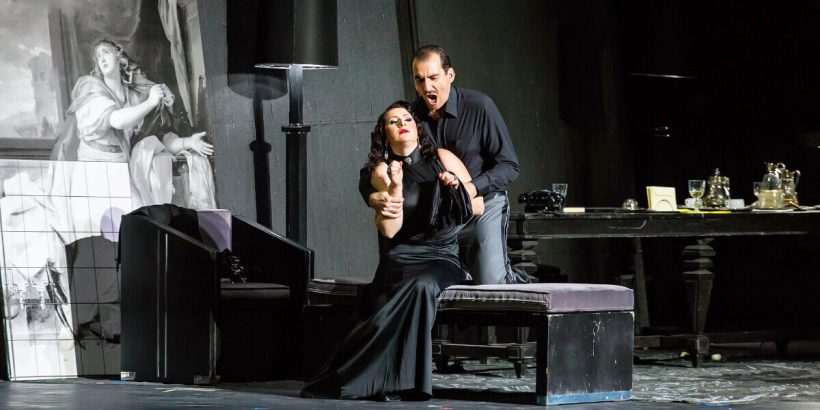
In the second act, the most vocally demanding, Tosca confronts Baron Scarpia with dignity and pride, in a vocal and dramatic crescendo that culminates in a captivating performance of “Vissi d’Arte.” Following an exemplary orchestral reading, Kurzak distils a moving prayer that leaves no room for mere vocal display, while fully respecting the signs of expression and the many nuances of “Perché me ne remuneri così.” In the dramatic finale and Scarpia’s murder, the soprano, despite a few excessive “parlato,” delivers a remarkable stage and vocal performance. Kurzak also solves well the final act, where the key moments most awaited by opera fans—”Io quella lama gli piantai nel cor” and “O Scarpia davanti a Dio“—are successfully resolved.
Roberto Alagna, after a 37-year career, is a true champion: his timbre is gorgeous, his masked projection is perfectly old-school, his diction is crystal clear, and his phrasing is textbook. He portrays a Cavaradossi virile and enamored, from the opening of “Recondita armonia” and the subsequent duet with Tosca; the beauty with which Alagna delivers famous passages like “Quale occhio al mondo” conveys a vision of a tenor world that now seems irretrievably lost. And Alagna plays at being a tenor in “La vita mi costasse” and “Vittoria, vittoria,” with gloriously sustained high A-sharps. The opera’s most famous aria, “E lucevan le stelle,” despite some mismatches with the orchestra, is performed by the tenor with great emotional involvement, with evocative pianissimos at the beginning and the finale of “E non ho amato mai tanto la vita“, culminating in a corona with a forte high A of magnificent color and vibe.
Dimitri Platanias offers a powerful portrayal of Scarpia, inspiring fear in all those around him without being overly grotesque or sadistic. His voice has a beautiful baritone color, uniformly expressed throughout the range, with its strength in the particularly sonorous and richly timbred upper register, which allows him to dominate the chorus and orchestra in the Te Deum, which concludes with phenomenal high Fs. In the second act, Platanias stands out with his highly calibrated phrasing, rich in nuance and expressive accents, in an opera in which “canto di conversazione” is fundamental. The confrontation and blackmail of Tosca are also theatrically rendered with great effectiveness. Among the other characters, Petros Magoulas‘s excellent Angelotti and Yanni Yannissis’s Sacristan are worthy of note.
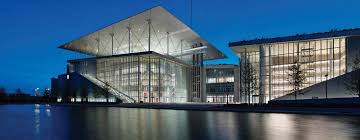
The orchestra and chorus of the Greek National Opera were conducted by Paolo Carignani, a Tosca specialist. Carignani offers a modern, raw interpretation, with at times exaggerated dynamics, amplified by the acoustics of Renzo Piano’s modern hall. Carignani captures the score’s twentieth-century aspects, starting with the nervous exposition of the tritone of Scarpia’s theme, a reading that gives little space to sensuality and descriptivism, extolling Puccini rather than Puccinismo. I particularly appreciated the sound rendering of the Roman dawn at the beginning of the third act, a livid and leaden dawn with the metallic background of the capital’s church bells.
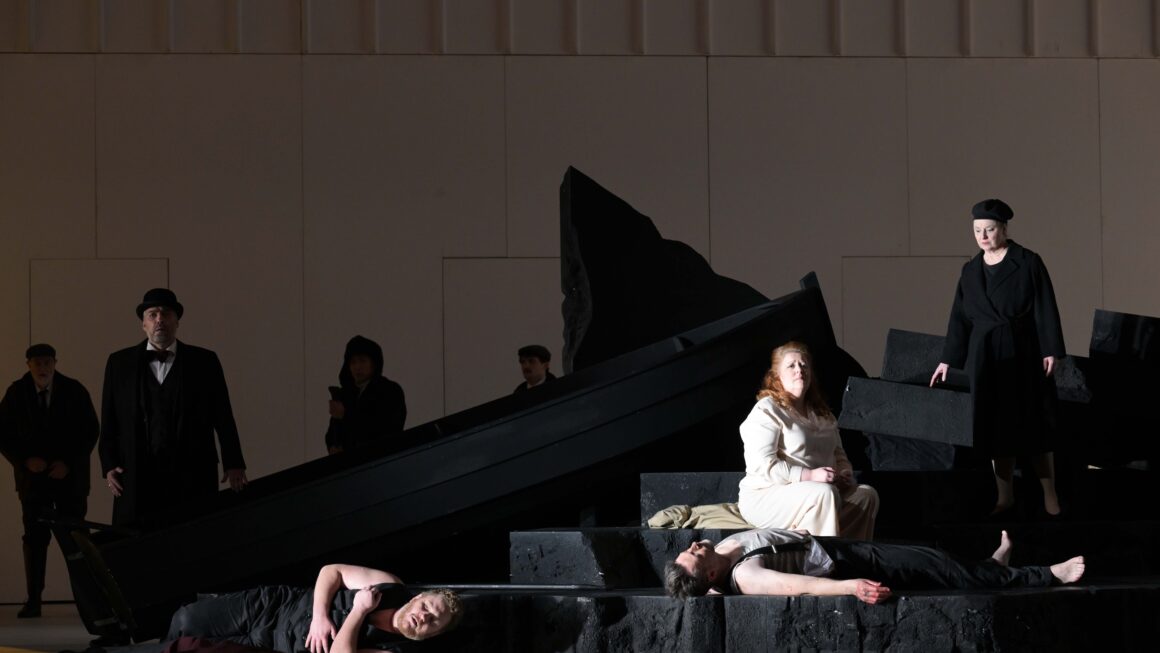
For these performances, the Athens Opera has proposed a revival of an old staging by Nikos S. Petroupolos. The opera is set in Rome in 1944, that of Rossellini’s “Roma città aperta,” a film whose sets and costumes are reminiscent of the black-and-white setting. Aside from this temporal shift, the dramaturgy is respected, especially in the relationships between the characters. What is completely missing is the Eternal City itself, the Rome that, in its locations, ceremonies, and colors, is the true protagonist of Puccini’s opera.
From this perspective, the third act is particularly disappointing, set in a police station, where Castel Sant’Angelo and the statue of Archangel Michael are missing, and the protagonist, instead of jumping into the void, walks out to the back of the stage. A great success for a sold-out theater, with my Greek neighbors in the seats knowing the Italian libretto of Tosca better than I did!
::::::::::::::::::::::::::::::::::::::::
CAST
Floria Tosca: Aleksandra Kurzak
Mario Cavaradossi: Roberto Alagna
Baron Scarpia: Dimitri Platanias
Cesare Angelotti: Petros Magoulas
A sacristan: Yanni Yannissis
Sciarrone: Georgios Papadimitriou
A shepard boy: Penny Rizou
Spoletta: Yannis Kalyvas
Conductor: Paolo Carignani
Staging, sets, costumes: Nikos S. Petroupolos
Revival stage director:: Ian Kesoulis
Chorus master: Agathangelos Georgakatos