
La Scala’s brave decision to open the new season with Shostakovich’s masterpiece is a courageous choice: the audiences who fill the theater on St. Ambrose’s Day in evening gowns and fabulous jewelry, paying up to €3,500 for a seat, are much more comfortable with the operas of Giuseppe Verdi or Giacomo Puccini; incidentally, the 2026 season will open with Otello and the 2027 season with “Un Ballo in Maschera“. The theater’s choice is even more courageous in a time of widespread Russophobia, with some great conductors and singers banned from performing in Western European theaters; the absence of Sergio Mattarella, President of the Italian Republic, from the La Scala premiere has also been interpreted by the press, in this light. Lady Macbeth of the Mtsensk District represents one of the pinnacles of Shostakovich’s productions and one of the most innovative and groundbreaking operas of the twentieth century.
The first performance took place on 22 January 1934 in Leningrad and the opera immediately enjoyed enormous success: in 1936 Stalin attended a performance in Moscow and two days later the famous criticism entitled “Muddle instead of music” appeared in Pravda. Shostakovich’s opera was described as “an ugly flood of confusing sound… a pandemonium of creaking, shrieking, and crashes”; Lady Macbeth vanished from the public scene, only to reappear in 1962 as a revised version, Katerina Izmailova.
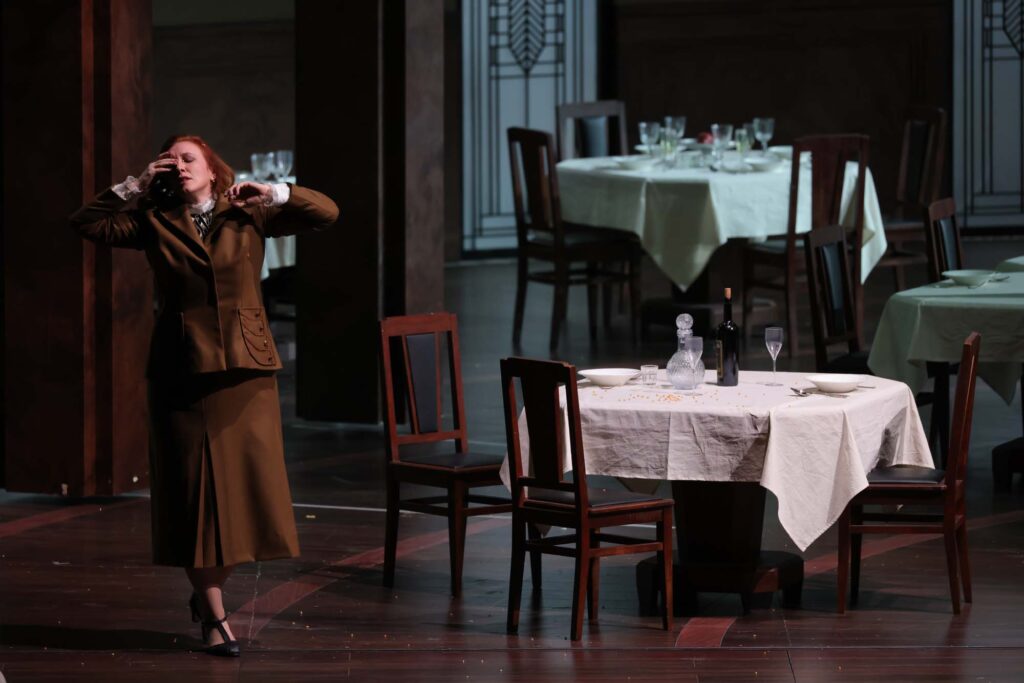
The opera derives from a short novel by Nikolai Leskov, written in 1865: Katerina, the wife of a wealthy merchant, lives in an unhappy marriage; falling in love with the young worker Sergei, she poisons her hateful father-in-law and kills her husband, strangling him with the help of her lover. Discovered by the police, the two murderous lovers are taken to a labor camp in Siberia, where Sergei finds a new lover, Sonetka. Katerina attacks her rival, and the two end up in the waters of a frozen river, both dying.
Shostakovich uses a modern musical language in the four acts, divided into nine scenes connected by symphonic interludes.
The orchestral instrumentation is rich, with influences from expressionism and inserts of folk music and grotesque satire, alternating moments of lyricism with violent explosions of sound. La Scala puts on a grandiose and in some ways even memorable performance, finally confirming its reputation and prestige.
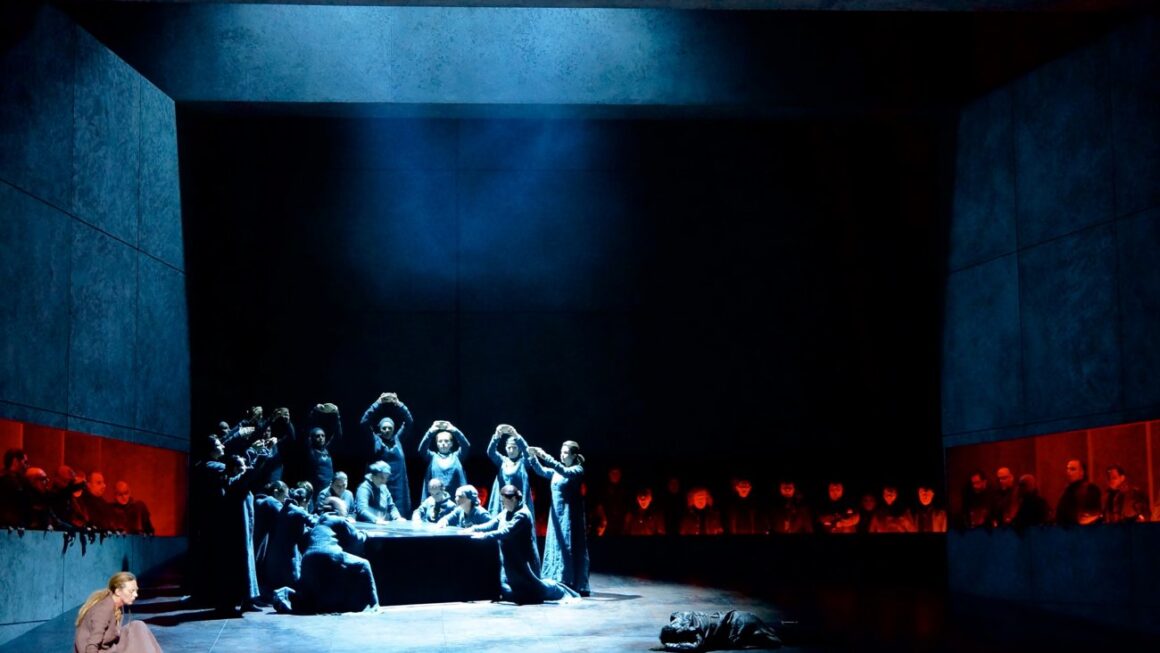
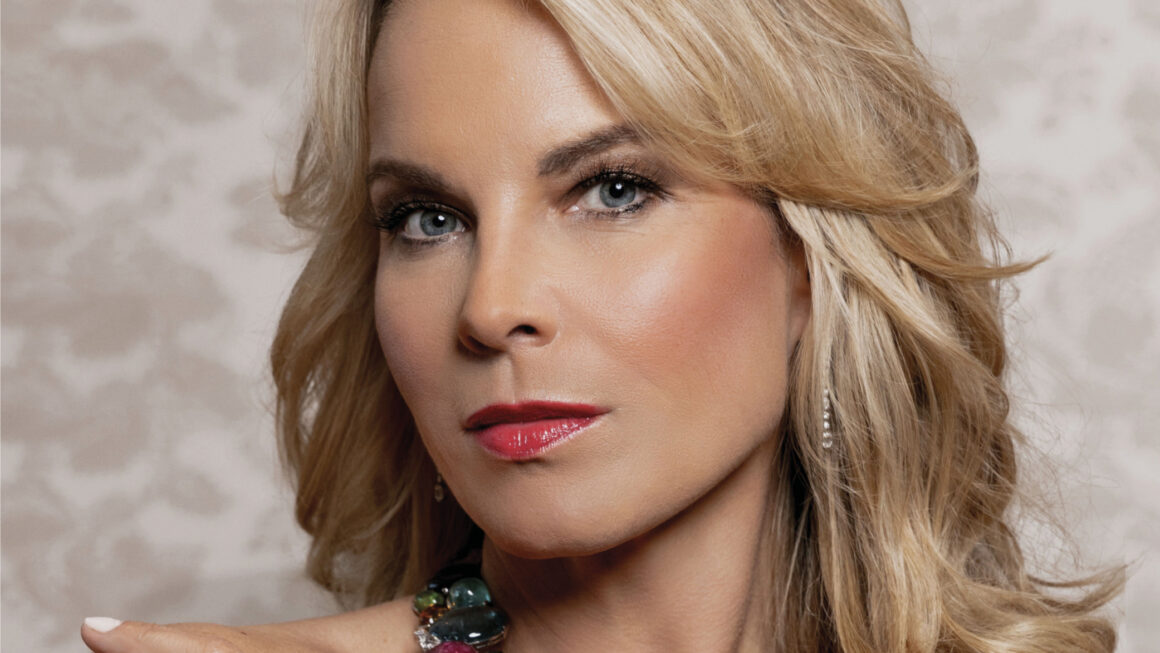
Most of the credit goes to conductor Riccardo Chailly, at his final inauguration as music director at La Scala, delivering a performance that can be considered a benchmark. Every single detail of the score is highlighted, with a truly exemplary array of colors and timbres. At the same time, the narrative and the unfolding of the drama proceed at a rapid pace that truly leaves the listener breathless, with phrasing that highlights the melodic and sumptuous moments and explodes with power at the dramatic climaxes. The La Scala Orchestra responds magnificently with a superlative performance in every section, where the color and sumptuousness of the strings and the perfect rhythm and intonation of the brass are admired, with honorable mention for the trumpets and trombones. The Theater Chorus, in its complex interventions, confirms itself as the best in the world, with a performance that remains unsurpassed today. The cast is also worthy of a La Scala premiere; the marvelous protagonist is Sara Jakubiak, with her powerful voice that stands out with ease against the orchestral magma in the deadly high notes that the part requires; the American soprano, vocally and scenically, admirably portrays the character of Katerina, a murderer who, unlike Shakespeare’s Lady, is not thirsty for power but only for carnal love and the lust for life.
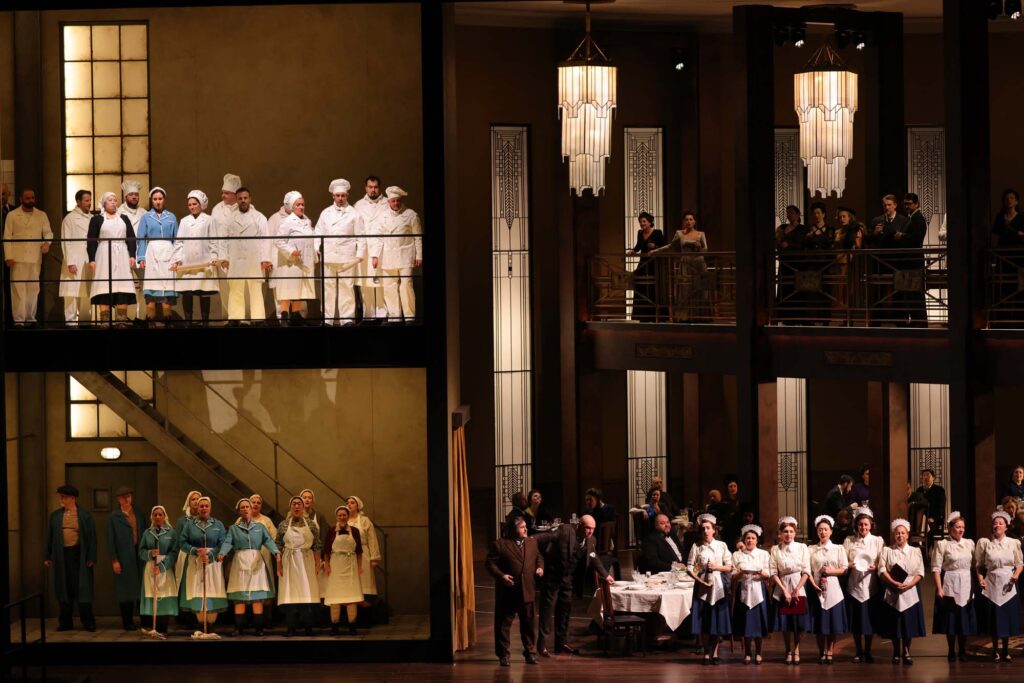
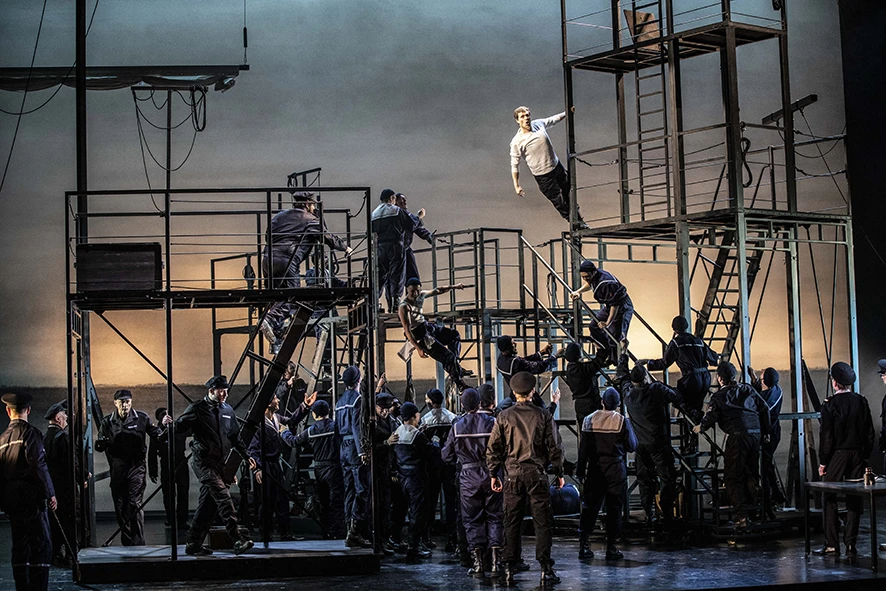
As rarely happens, the direction of Moscow’s Vasily Barkhatov is also a complete success; the most scandalous director, in the most scandalous opera, manages to avoid any scandal. The opera is set in the 1950s, in the sumptuous interiors of a luxury restaurant, and in the squalid rooms where the most brutal scenes take place. The opera is told using flashbacks; during the interludes, the police interrogations of Katerina and Sergei take place, where photos and murder weapons appear, and the story thus unfolds like a narration. Like a police report, with the protagonists fully clothed, the opera’s most famous scene, Katerina and Sergei’s sexual act, is also resolved, with the orchestra screaming the protagonist’s pleasure until the glissando of the trombones reproduces a full-blown ejaculation. The flashbacks are interrupted by the truck carrying the prisoners to Siberia bursting onto the scene; here the final tragedy unfolds with the only real transgression of the evening: Katerina douses herself in gasoline and sets herself on fire, dragging her rival Sonetka to her death as well.
The scene is visually striking, with human torches created by expert stuntmen, but it betrays the spirit of the finale. Death by water—a dark lake in Shostakovich and the Volga River in Leskov’s story—is a true twentieth-century topos and links Katerina to other contemporary antiheroes. How can we not think of Wozzeck, who drowns himself in the pond after killing Marie, or Peter Grimes, who sinks his boat in the open sea?
A huge success in a packed theater; we left this great performance shaken and moved!
Long live the opera!
::::::::::::::::::::::::::::::::::::::::::::::::::::
CAST
Boris Timofeevič Izmailov Alexander Roslavets
Zinovij Borisovič Izmailov Yevgeny Akimov
Katerina L’vovna Izmajlova Sara Jakubiak
Sergej Najmiddin Mavlyanov
Seedy Lout Alexander Kravets
Mill hand Chao Liu
Priest Valery Gilmanov
Yard keeper Jirí Rajniš
Foreman Ivan Shcherbatykh
Police Sergenat Oleg Budaratskiy
Drunken guest Massimiliano Difino*
Aksin’ja Ekaterina Sannikova
Old convict Goderdzi Janelidze
Sonetka Elena Maximova
Female convict Laura Lolita Perešivana
Sergeant Xhieldo Hyseni
Policeman Huanhong Li
Conductor Riccardo Chailly
Maestro del coro Alberto Malazzi
Staging Vasily Barkhatov
Sets Zinovy Margolon
Costumes Olga Shaishmelashvili
Lights Alexander Sivaev