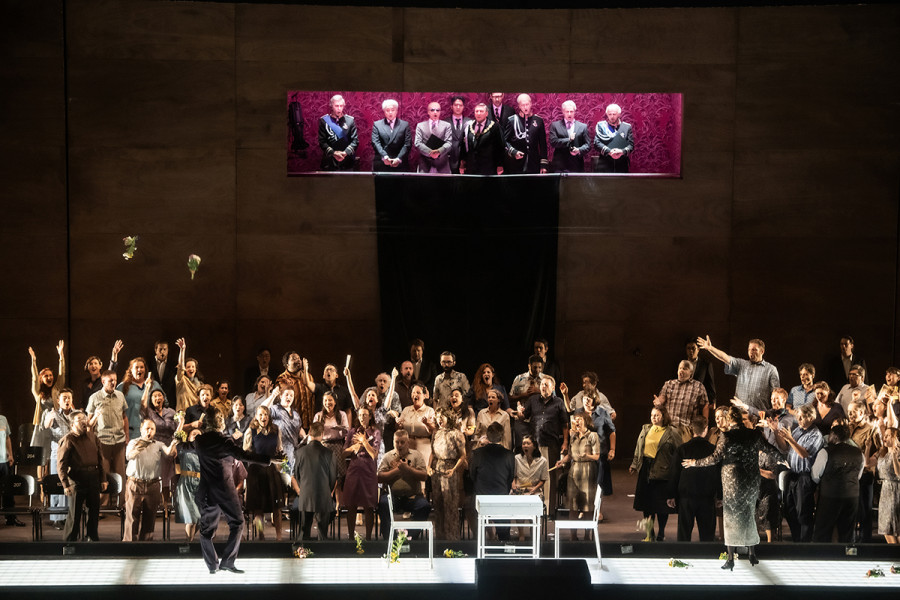
I hesitated for a long time before writing the lines that follow. You know Opera Diary’s primary motivation: to inspire audiences to go to the theater and to focus only on the positive aspects of the experiences lived, rather than playing into the “look at me” side of a harsh review to tear down this or that singer just to generate clicks and audience numbers. Yes, human beings — or at least a large part of them — enjoy looking at what goes wrong, at what is bad, slowing down to stare at accidents on the highway…
Last night, however, was marked very negatively for me in many ways. And in order not to fall out with the Deutsche Oper Berlin (especially since I had just experienced two wonderful productions, namely Don Carlo and I Vespri Siciliani), and to preserve the fantastic and remarkable work of my colleague Vinicius, who sees a large majority of the productions in the three theaters of the German capital, I will try to focus on what is essential.
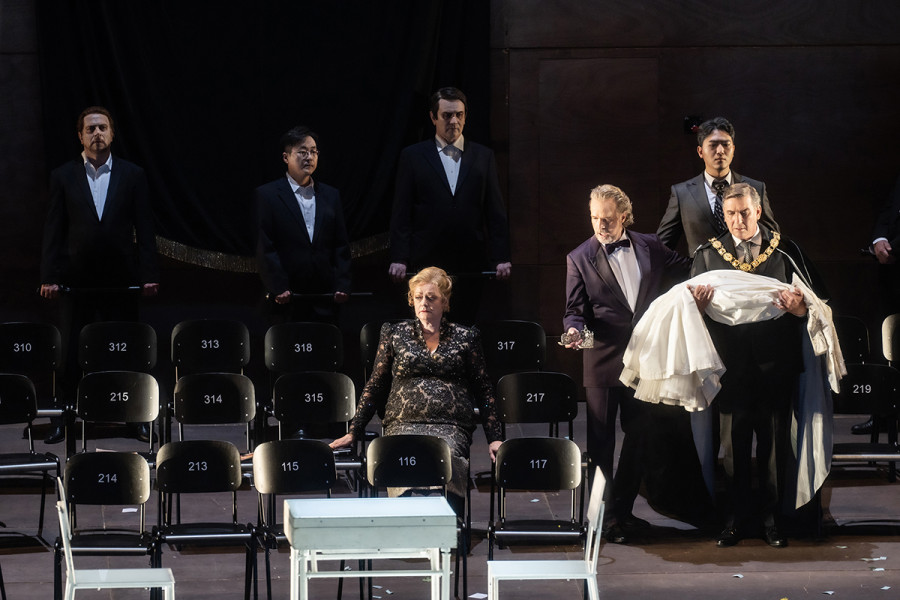
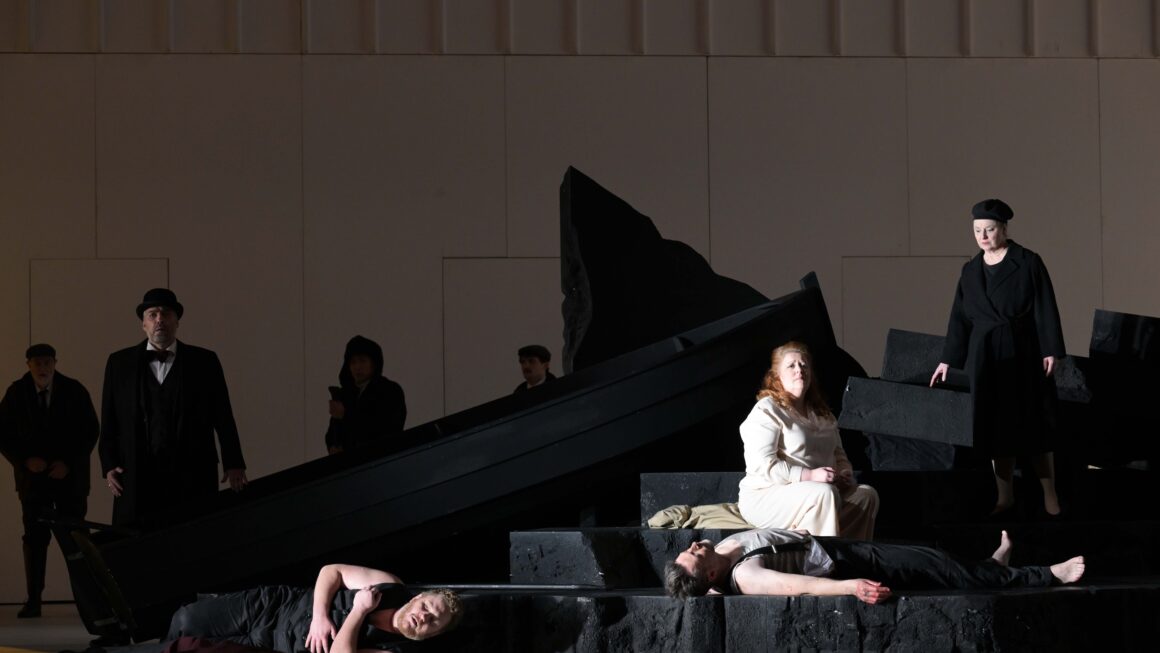
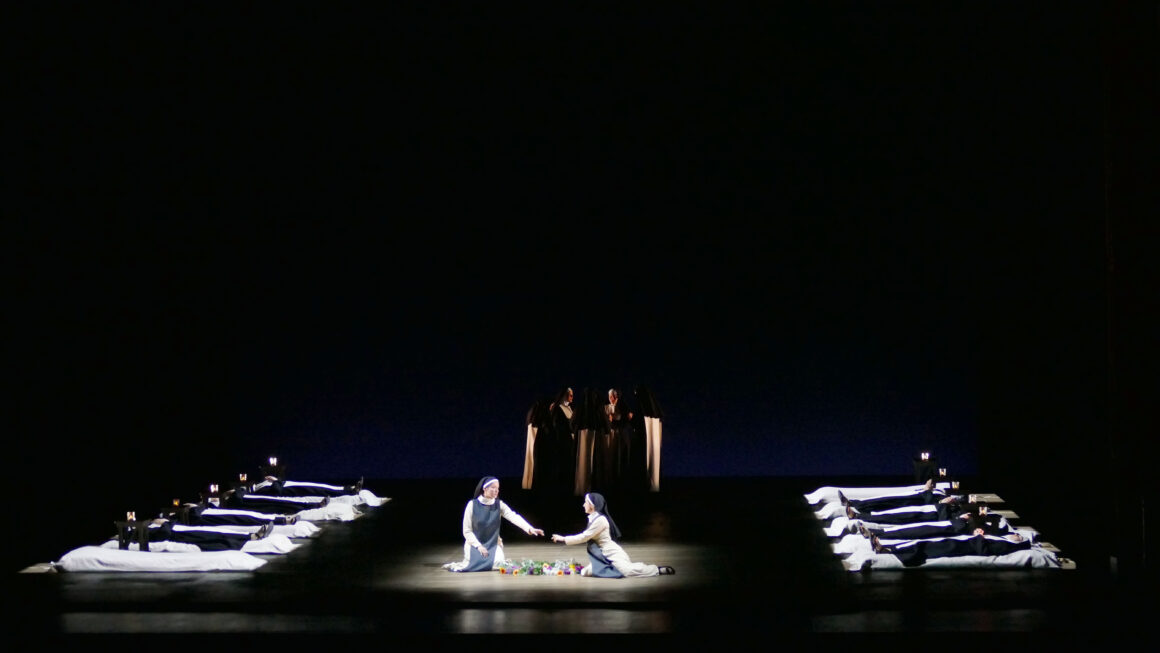
The voice of Angelo Villari, the tenor singing Calaf, needs no introduction — a very beautiful, powerful voice, everything required for a fine interpretation. But his voice was drowned in a staging that did not highlight anyone, not even the magnificent music of the Italian Maestro from Lucca.
Nina Solodovnikova singing Liù also delivered a strong performance in Part I. I had never seen this lady on stage before, but I sincerely hope one day to see what she is truly capable of in a more substantial role.
I refer to Part I because that is the only part I saw. Being very disappointed by the performance offered to me, and with two very tall people seated in front of me in a sold-out theater (understandably, on Valentine’s Day), I preferred to return to my hotel and sleep with a clear mind rather than subject myself to the second part (admittedly shorter). The ordeal for my ears — and especially for my eyes — had already been too much. Indeed, many of my neighbors were speaking English or French, and between each round of applause I could hear them asking numerous questions about what they were seeing: who was playing what, who was singing what, who Liù was, and what the Prince of China was doing dressed and portrayed in such a way.
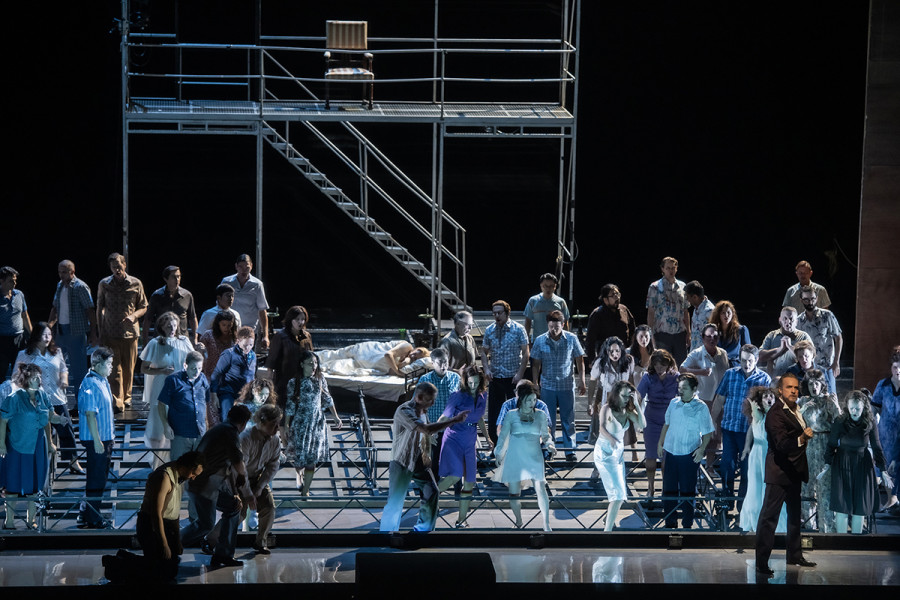
True, strong friendship between two people can endure for decades despite disagreements or arguments. Let us say that my friendship with the Deutsche Oper will continue despite this major, major disagreement that separated us for one evening.
In any case, I publicly thank the Deutsche Oper press office, and Wenke in particular, for her kindness, goodwill, and generosity — especially toward my colleague Vinicius, who spends a large part of his life in Berlin. I hope to return soon for a production that shall we say is far more traditional, without tarnishing the soul of an Italian composer as this dark TURANDOT did.
:::::::::::::::::::::::::::::::::::::::
CAST
Musikalische Leitung
Daniel Carter
Inszenierung
Lorenzo Fioroni
–
Turandot
Catherine Foster
Altoum
Burkhard Ulrich
Calaf
Angelo Villari
Liù
Nina Solodovnikova
Timur
Volodymyr Morozov
Ping
Michael Bachtadze
Pang
Kangyoon Shine Lee
Pong
Thomas Cilluffo
Ein Mandarin
Byung Gil Kim
Erste Damenstimme
Yuuki Tamai
Zweite Damenstimme
Seungeun Oh
Orchester
Orchester der Deutschen Oper Berlin