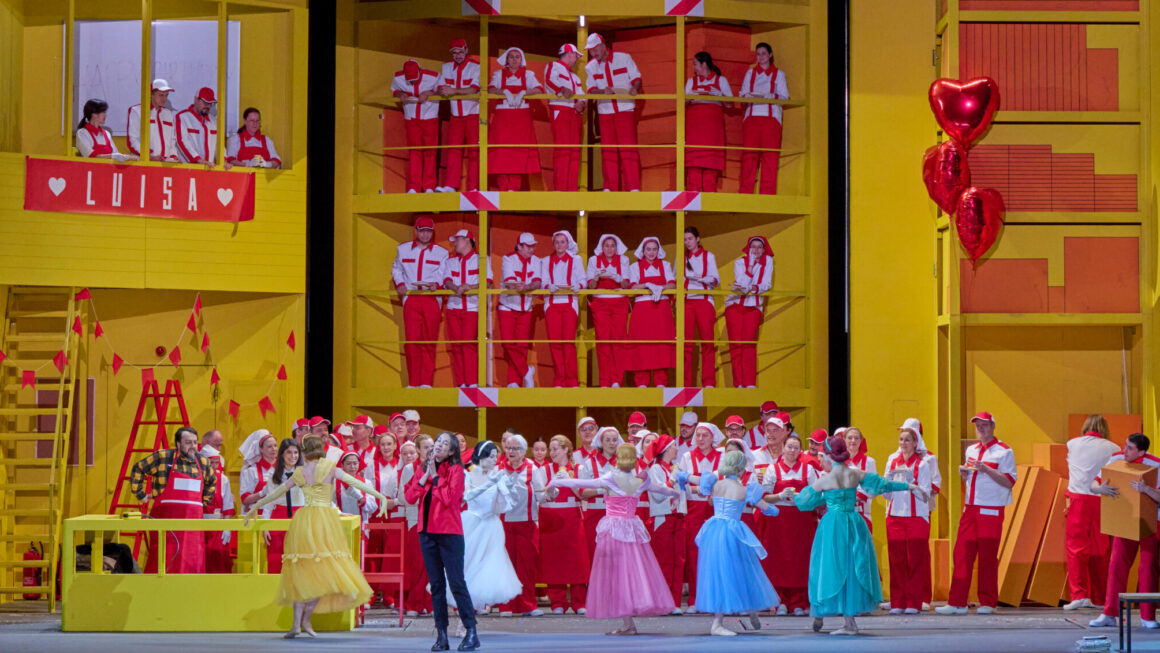
There are evenings when Verdi’s Luisa Miller feels less like a prelude to the later tragedies and more like a fully mature, self‑contained world — one where intimacy and power collide, and where the score asks the singers not only to shine but to break, to plead, to fracture. This performance in Vienna had that charge in the air from the start, carried above all by a cast in rare equilibrium and a musical direction that knew exactly how to let Verdi’s long lines breathe.
At the centre of the evening, Nadine Sierra gave a Luisa of breathtaking radiance. You could sense it from her very first phrases: the voice poised perfectly on the breath, the line supple and unforced, the top gleaming without ever turning brittle. Sierra has entered a phase of her artistry where everything feels instinctive — nothing pushed, nothing decorative, everything shaped with emotional intent. Her Act II prayer unfolded with a purity that genuinely suspended the room, and the final scene — always a tightrope — was delivered with a devastating mix of fragility and control. It was, plainly, a stratospheric performance.
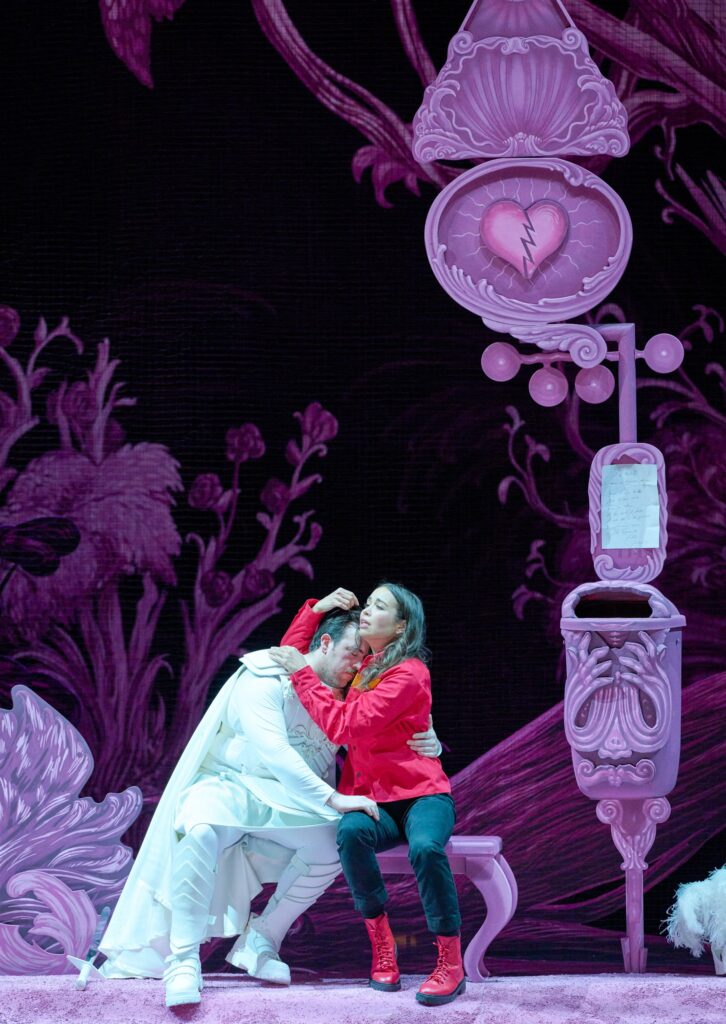
Opposite her, Marko Mimica delivered a Miller of exceptional depth. We have known for years the beauty of his timbre, the intelligence of his singing, the grounded dignity he brings to everything he touches — but this role lets all those qualities converge. Miller is perhaps the most theatrically interesting character in the opera: the moral centre, the father navigating impossible forces, the only one who sees the full web of manipulation. Mimica embodied him with understated force. Vocally, the darkness of the middle register, the clean attack, the unerring legato — everything was there. Dramatically, he was entirely believable: a man holding the world together with shaking hands. What made the evening fascinating was how perfectly he contrasted with Roberto Tagliavini’s Graf von Walter. Tagliavini sang with a more metallic, powerful, commanding edge — the kind of sound that fills a room with authority even before the character speaks. The opposition between the two fathers could be heard in the timbre alone: iron against velvet, power against principle.
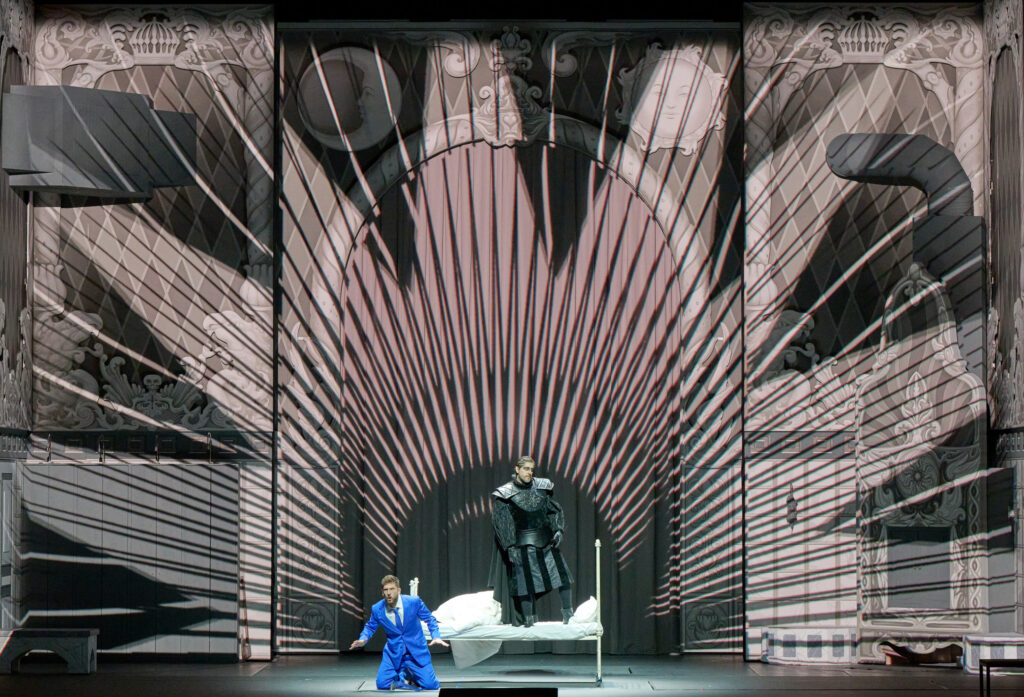
Freddie De Tommaso brought bright, ringing ardour to Rodolfo, with the kind of youthful intensity that gives the role its tragic glow. His phrasing was generous, his top notes firm and forward, and he found real emotional heat in the confrontational pages. George Petean, as Wurm, offered exactly the kind of clean, articulate Verdi baritone one longs for in this repertoire — clear diction, elegant line, no excess. Daria Sushkova shaped Federica with poise and a satisfyingly dark inner sheen; Teresa Sales Rebordão sang Laura with charm and warmth; Adrian Autard, even in his brief appearance as the farmer, gave a neat, well‑focused impression. This was genuinely a performance in which everyone did well.
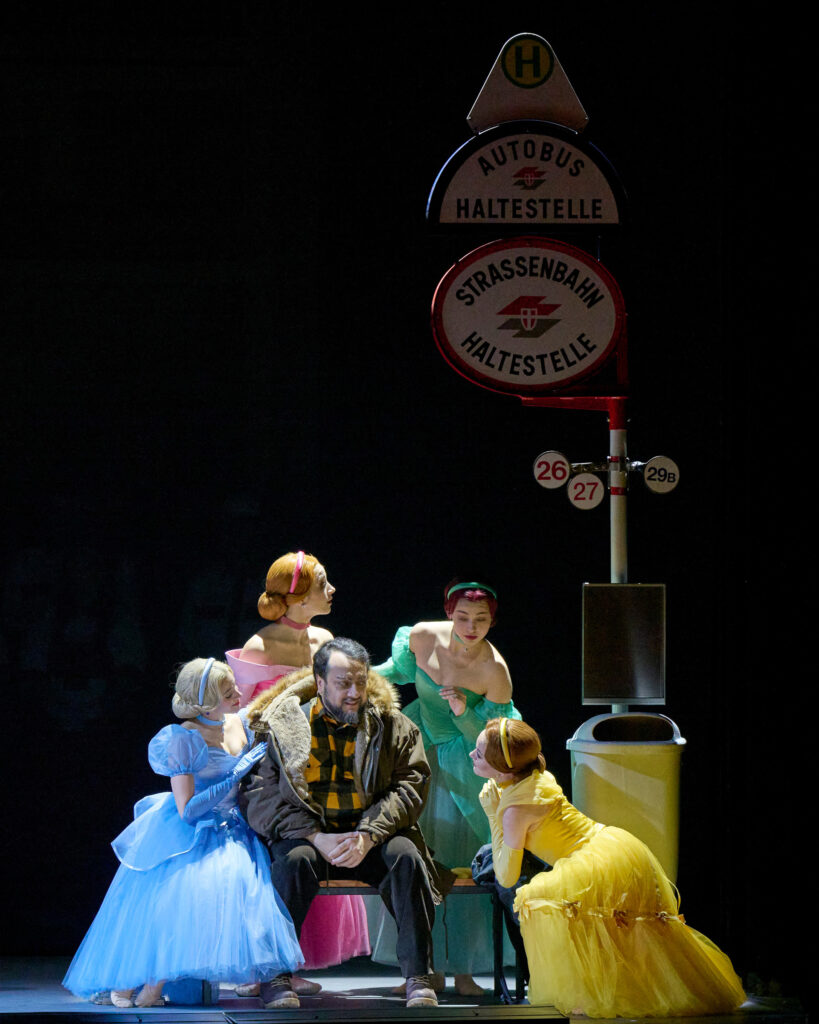
In the pit, Michele Mariotti reminded us once again of his unique gift in early‑mid Verdi. His reading had that rare mixture of clarity and elasticity — nothing inflated, nothing rushed, everything allowed to unfold with its own natural temperature. Mariotti understands that Luisa Miller thrives on transparency: the woodwinds commenting in quiet sorrow, the strings breathing with the singers, the dynamics shaped to let the text glow. The Wiener Staatsoper orchestra responded with beautifully blended playing, and the pacing of Act III had a tragic inevitability that felt absolutely right.
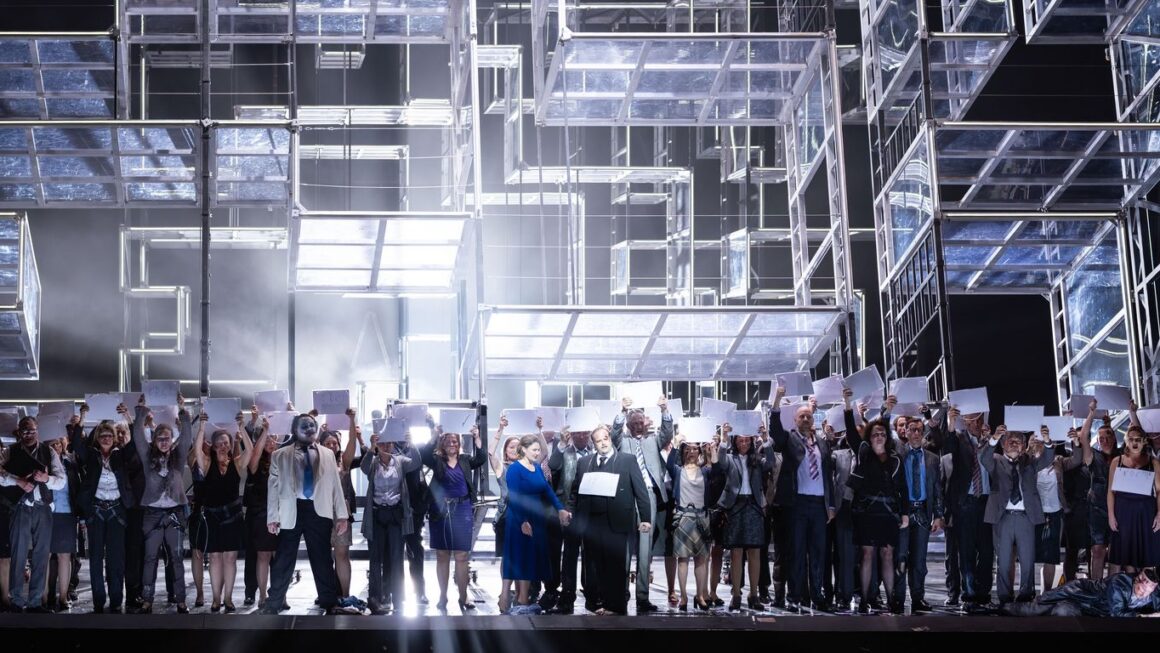
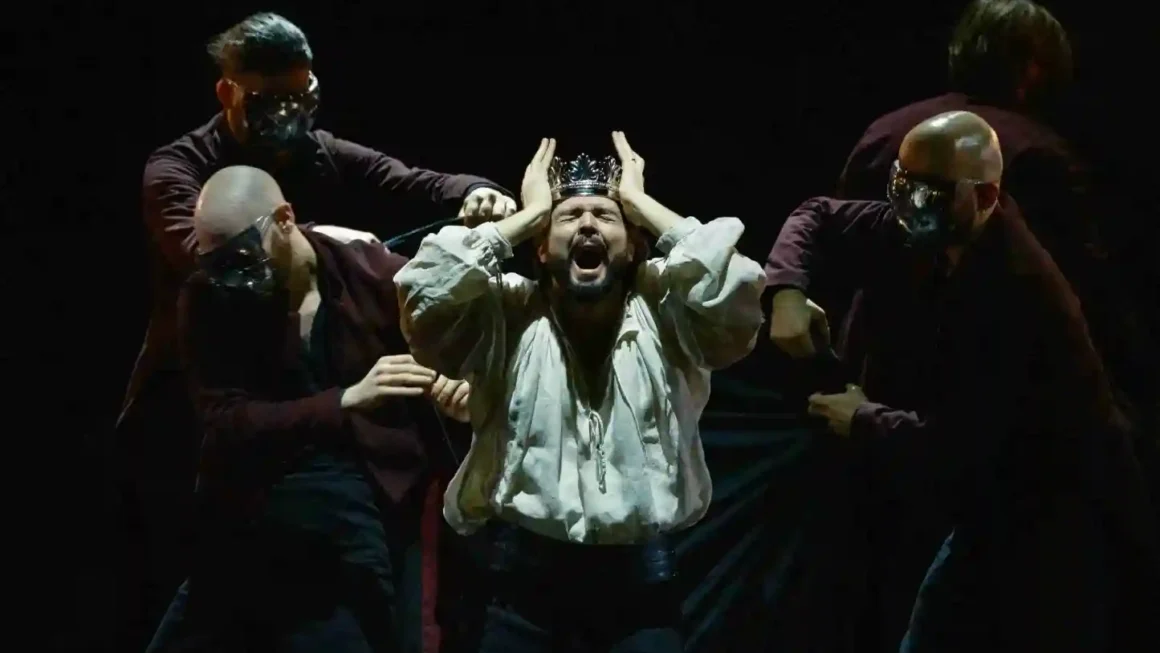
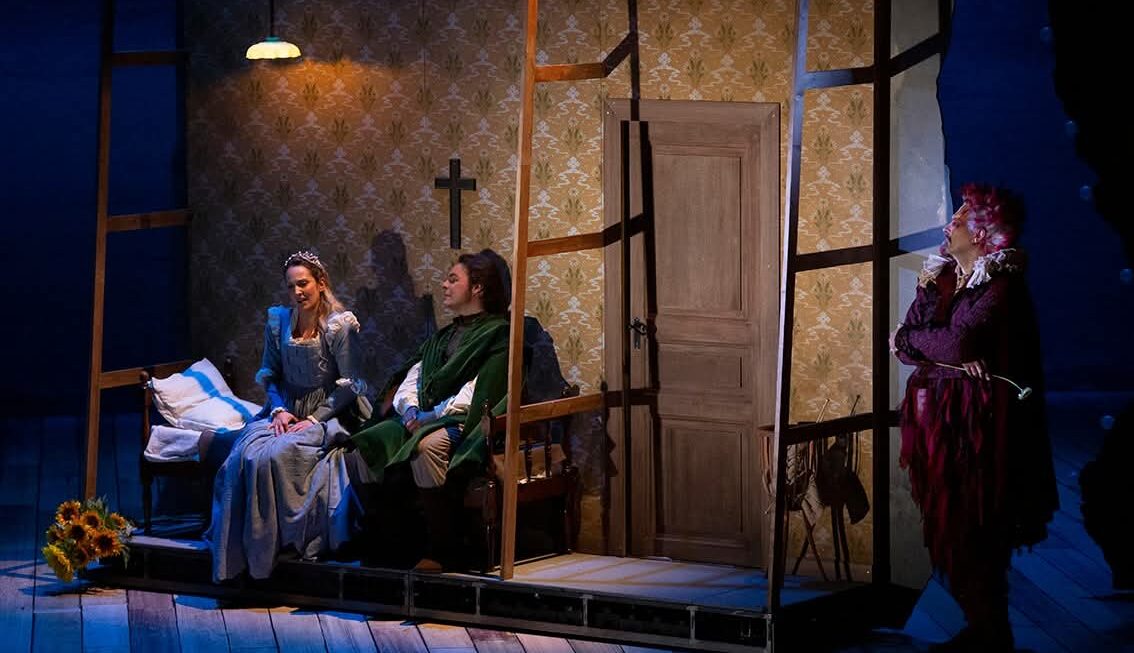
The only hesitation — and it remained a hesitation, not a disfiguring flaw — came from Philipp Grigorian’s staging. The decision to place the drama at the crossroads of two already dislocated aesthetics (fast-food imagery on one side, video‑game references on the other) created a visual tension that never fully cohered. Each idea might have worked on its own; together, they occasionally pulled focus away from the music rather than towards it. At times — especially in the final scene — the eye was busier than it needed to be, just when Verdi requires stillness and directness. It didn’t spoil the evening, but it did raise the question of whether the production trusted the score’s own power as much as the musical team clearly did.
But the music triumphed. Sierra incandescent, Mimica superb in mind and sound, Tagliavini imposing, Petean refined, De Tommaso ardent — all guided by Mariotti’s luminous, finely calibrated direction. In short: a Luisa Miller that struck hard where it should, whispered where it must, and reminded everyone present how shattering Verdi can be when the voices and the conductor breathe in the same space.
***
Cast
Graf von Walter: Roberto Tagliavini
Rodolfo: Freddie De Tommaso
Federica: Daria Sushkova
Wurm: Marko Mimica
Miller: George Petean
Luisa: Nadine Sierra
Laura: Teresa Sales Rebordão
Ein Bauer: Adrian Autard
Musikalische Leitung: Michele Mariotti
Inszenierung & Bühne: Philipp Grigorian
Kostüme: Vlada Pomirkovanaya
Choreografie: Anna Abalikhina
Licht: Franck Evin
Video: Patrick K.-H.