There are operas you fall in love with instantly. And then there are operas like La Gioconda.
For me, Ponchielli’s Venetian epic has always been something I listen to in the background at work — a sweeping, dramatic soundtrack that washes over you without necessarily demanding total emotional surrender. Falling in love with it takes time. And I am exactly the same in my sentimental life: I rarely fall head over heels at first sight. I need to discover the qualities, understand the flaws, learn the backstory, and return again and again before I truly fall.
Seeing La Gioconda at the theatre — especially with a cast like this and in a new staging — is rare enough. Experiencing it at the Gran Teatre del Liceu in a production by Romain Gilbert? That is something else entirely, because I was so sad to don’t saw it in Napoli!
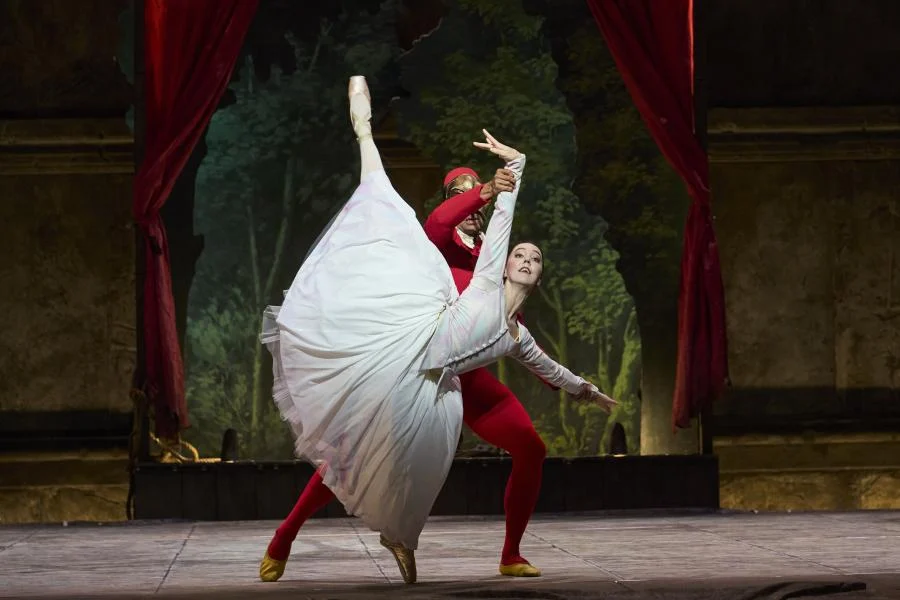
When a new Romain Gilbert production, it feels a bit like the release of a new Daft Punk album. You know the style. You know the aesthetic. You know the respect for structure. But you are still curious — and somehow, it always works. Gilbert respects the libretto, respects the music, respects the musicians — and above all, respects the audience. In an era of conceptual overload, that is no small achievement.
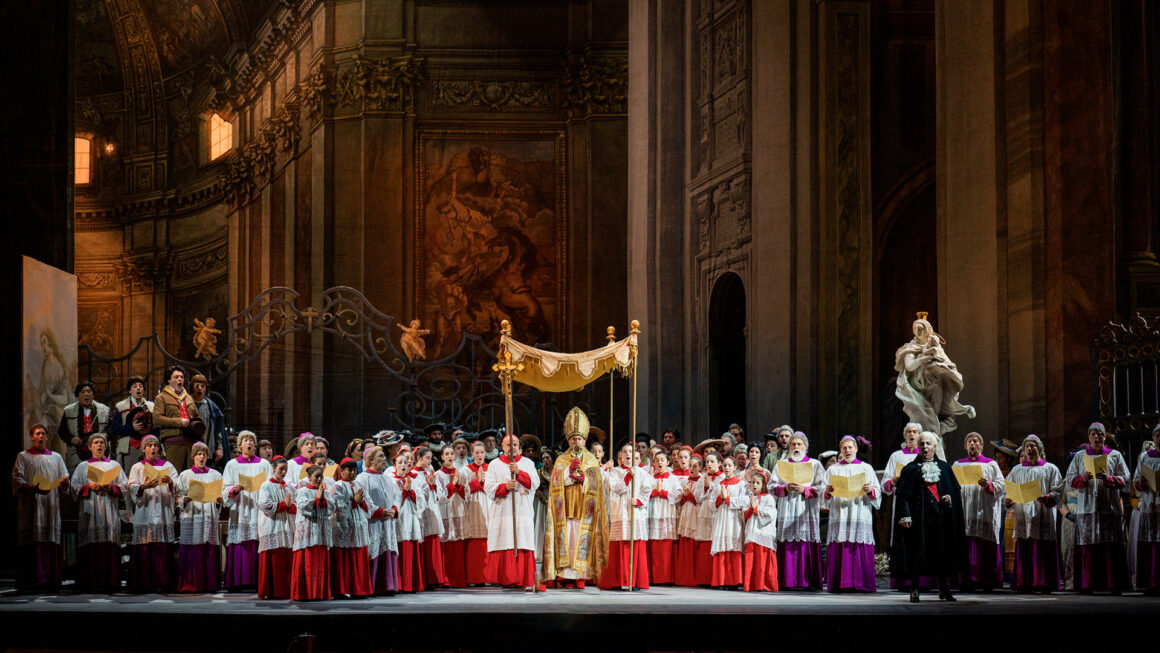
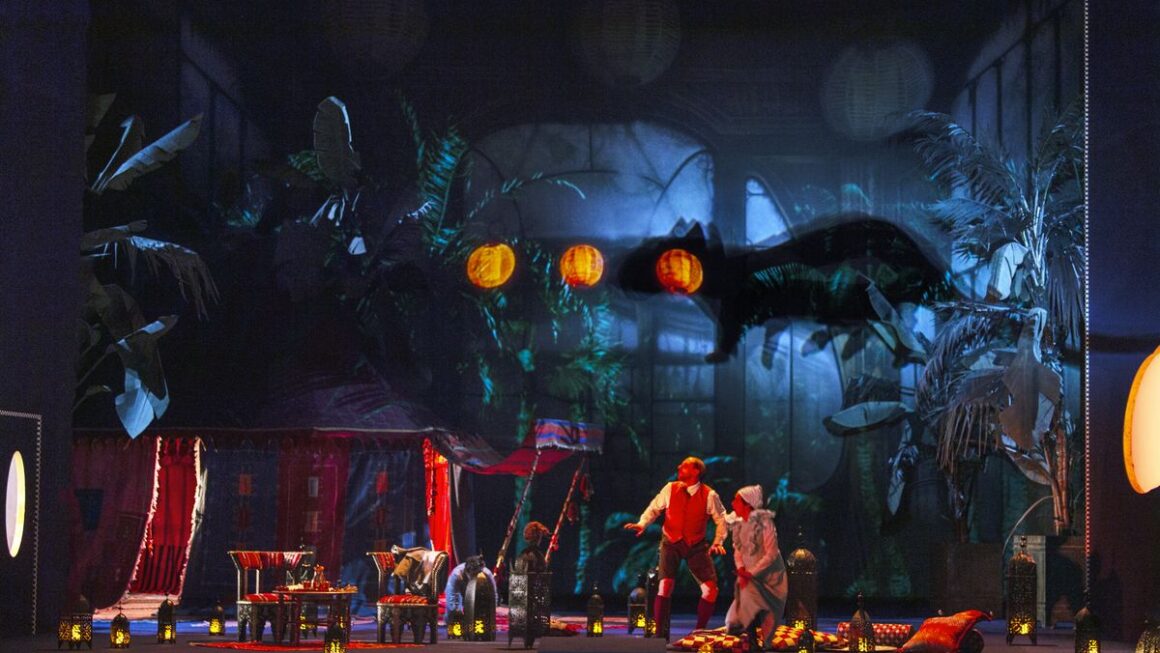
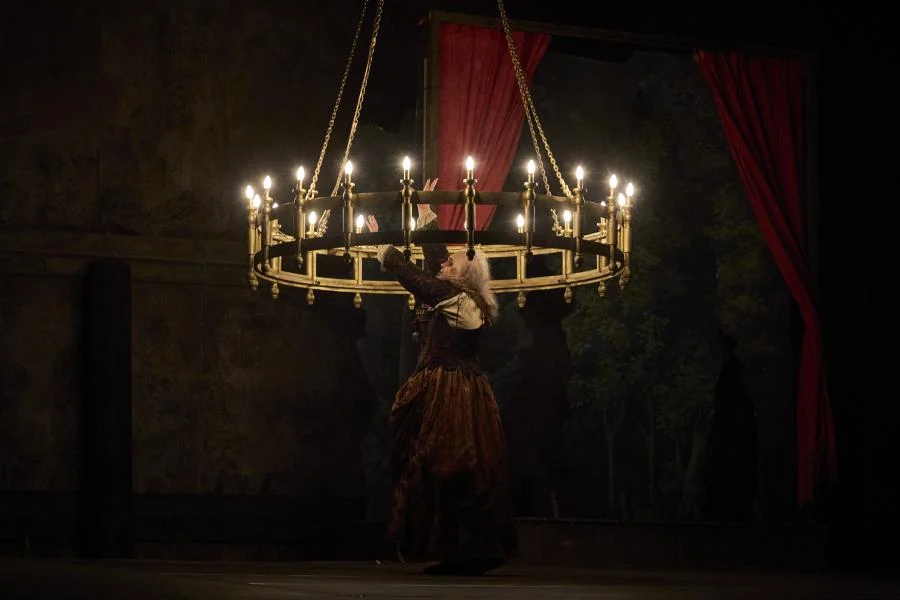
The sets were striking — almost painterly. At times, it felt like watching living canvases. Special mention must go to the penultimate act, where the costumes were extraordinarily elegant: richly colored without ever becoming excessive, allowing the principal characters to stand out clearly. Everything was readable, coherent, beautiful. You never had to guess what was happening — a gift in a work as dramatically dense as La Gioconda.
In the pit, Daniel Oren once again demonstrated why many consider him one of the great conductors of this repertoire. The Act III ballet was astonishing. At one point, I genuinely felt as though I were listening to a pristine vinyl recording — every line shaped, every crescendo controlled, every detail perfectly balanced. And yet this was live, breathing, immediate. As the seconds passed, it became even more impressive.
I chose to attend the second cast for this run — partly because Martin Muehle is a tenor I deeply appreciate, and partly because I had not seen Ekaterina Semenchuk live in quite some time.
Ekaterina Semenchuk – A Gioconda of Authority
Ekaterina Semenchuk brings gravitas. Known internationally for her powerful mezzo roles — from Amneris to Azucena — she has long been associated with dramatic intensity and vocal amplitude. Here, in the title role, she delivered a Gioconda of strength and control.
Her voice has that dark, burnished quality that cuts through orchestral textures without forcing. There is weight in the lower register, steel in the upper phrases, and a disciplined line that keeps the character grounded. She does not overplay the hysteria; instead, she builds Gioconda from the inside. It is a performance anchored in experience and vocal intelligence.
Martin Muehle – A Tenor Who Commits
Martin Muehle, a Brazilian tenor who has built a solid reputation in spinto repertoire, brought emotional sincerity to Enzo. His voice carries a bright, forward resonance — the kind that projects easily into a large house like the Liceu.
What I appreciate about Muehle is his commitment. He does not simply sing the notes; he leans into the drama. His phrasing in “Cielo e mar” was expansive without indulgence, and his upper register opened generously. There is a heroic quality to his sound, but also vulnerability — and Enzo needs both.
Varduhi Abrahamyan – A Laura Worth Listening To
Varduhi Abrahamyan’s Laura was a genuine highlight. The Armenian mezzo possesses a velvety timbre that immediately draws the ear. Her sound is round, warm, and centered — never pushed, always supported.
What struck me most was her musical refinement. In her duets, particularly with Gioconda, she managed to hold her own while maintaining a beautiful blend. Laura can sometimes feel secondary in this opera, but Abrahamyan gave her dignity and emotional presence. At moments, she nearly stole the spotlight — and deservedly so.
Alexander Köpeczi – Authority in Reserve
As Alvise Badoero, Alexander Köpeczi brought an imposing stage presence. The Hungarian bass has a dark, well-focused instrument that lends natural authority to the role. His delivery was measured and controlled, avoiding caricature.
There is something compelling about a bass who does not need to exaggerate to command attention. Köpeczi relied on vocal steadiness and physical stillness — and it worked.
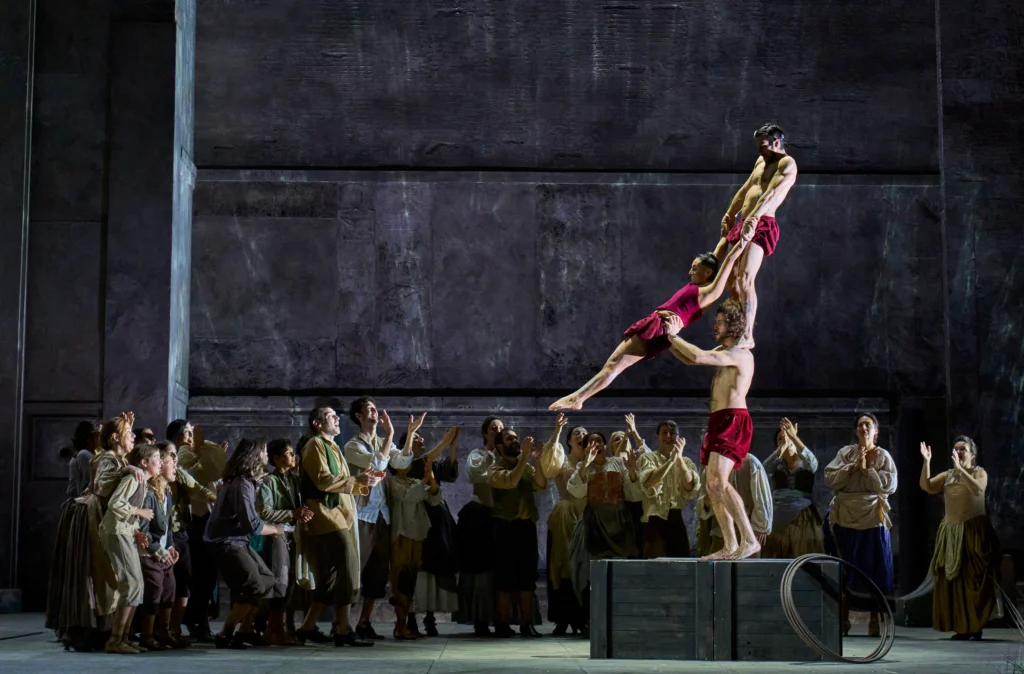
Àngel Òdena offered a solid Barnaba, and Violeta Urmana as La Cieca brought experience and depth to the role, her stage presence alone adding emotional weight to the production.
By the end of the evening, I realized something.
I may not have fallen instantly in love with La Gioconda years ago. But seeing it in Barcelona — with this cast, this conductor, and this staging — felt like rediscovering someone you thought you knew, only to realize there was much more to admire. With a touch of Verdi, a bit of Belcanto and ligns of “Andréa Chénier”… it’s a wonderful piece
Sometimes love in opera, like in life, grows stronger the second or third time around.
Obviously, as we sayed, the best for the last, a huge congratulations to all ballet dancers, and to the “mime” who performed a big part of the show!
And for that, I warmly thank the Liceu press service, who are always gracious, responsive, and a genuine pleasure to work with.
:::::::::::::::::::::::::::::::::::::::::
CAST
DIRECTOR
Daniel Oren
STAGING
Romain Gilbert
–
LA GIOCONDA
Ekaterina Semenchuk
LAURA ADORNO
Varduhi Abrahamyan
ALVISE BADOERO
Alexander Köpeczi
LA CIECA
Violeta Urmana
ENZO GRIMALDO
Martin Muehle
BARNABA
Àngel Òdena
ISÈPO
Roberto Covatta
ZUANE
Guillem Batllori
A BARNABOTTO / A PILOT / A CORNER GUARD
Alessandro Vandin