HÄNSEL & GRETEL | Bayerische Staatsoper
Some performances remind us that opera is, above all, an art of sharing — and this matinée was a perfect example. The auditorium was quite literally filled with children: tiny spectators, excited, absorbed, reacting to the slightest flicker of light. The entire atmosphere changed, charged with a kind of palpable magic. And one wonders whether, outside of Munich, any other house still manages to create events of such natural brilliance: families everywhere, and artistic quality absolutely uncompromised.
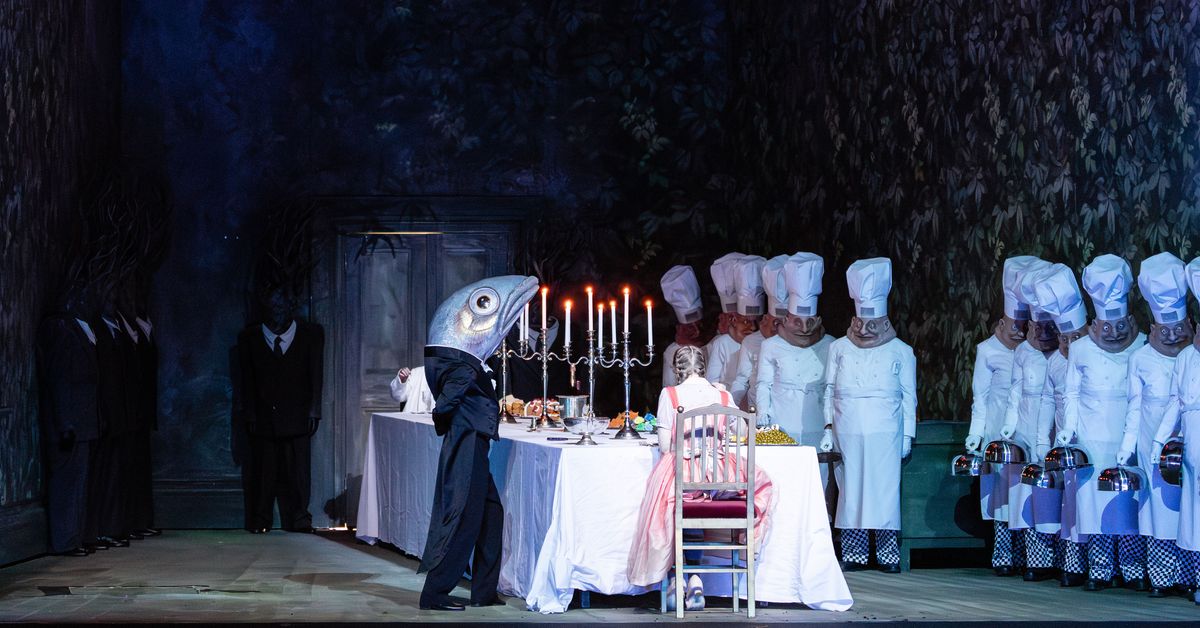
Richard Jones’s iconic staging withstands time with remarkable ease. John Macfarlane’s sets and costumes conjure a world where object theatre meets domestic surrealism, where fairy‑tale tropes are twisted without cynicism. The enchanted‑forest scenes of Act II — the animal ballet, the Sandman’s golden glow — took on an almost ritual dimension. The children reacted in waves: laughter, gasps, that wonderful spontaneous energy that turns every detail into an event.
In the pit, Vladimir Jurowski conducts with precision and tenderness. His Humperdinck rejects any notion of simplification: the music flows with Wagnerian amplitude — subtly woven leitmotifs, unfolding harmonies, suspended string textures of near‑chamber delicacy. What impresses most is that nothing is diluted simply because the audience is young. In the Act III finale, as the enchanted children awaken to rising harmonies bordering on the sacred, Jurowski lets the music breathe with an almost Brucknerian grandeur. And the children understood — instinctively. The lesson is simple: quality is access.
Emily Sierra (Hänsel) and Erika Baikoff (Gretel) are a superb pair. Sierra offers an energetic, warm‑toned Hänsel, vivid on stage. Baikoff’s radiant Gretel, with her pure line and luminous timbre, blossoms particularly in the long‑arched phrases of the gingerbread‑house duet in Act III, where enthusiasm merges with exquisite rubato. Their evening prayer was beautiful, of course — but their real magic emerged later, in the fear, excitement, and natural complicity.
Juliane Banse gives an incisive yet non‑caricatured Gertrud, while Thomas Mole brings a warm, human Peter, especially in his Act II entrance, where worry and kindness intertwine naturally.
Kevin Conners’ Witch is a theatrical delight — grotesque, funny, unsettling in just the right proportions. His Act III entrance, mannered and deliciously exaggerated, triggered waves of laughter across the hall.
Meg Brilleslyper (Sandman) and Iana Aivazian (Dew Fairy) bring their customary moments of poetic stillness, made even more poignant by the near‑religious silence that fell whenever the lights softened. The children’s chorus, prepared by Kamila Akhmedjanova, was flawless — their Act III awakening perfectly coordinated, irresistibly fresh.
All of this leads to an essential point: Hänsel und Gretel is often labelled a “children’s opera.” And yet, when a house like Munich approaches it with the same means, the same seriousness, the same artistic standard as a Wagner or a Strauss, the result is overwhelming. Youth does not justify simplification.
Quite the opposite: give children excellence, and they become the most receptive listeners.
Munich proves it once again. A lively, generous, meticulously crafted matinée where artistic excellence becomes an act of welcome — and where opera returns to its purest form: wonder.
Distribution
- Peter, the broom‑maker: Thomas Mole
- Gertrud: Juliane Banse
- Hänsel: Emily Sierra
- Gretel: Erika Baikoff
- The Witch: Kevin Conners
- Sandman: Meg Brilleslyper
- Dew Fairy: Iana Aivazian
- Conductor: Vladimir Jurowski
About the Author