NABUCCO | Bayerische Staatsoper
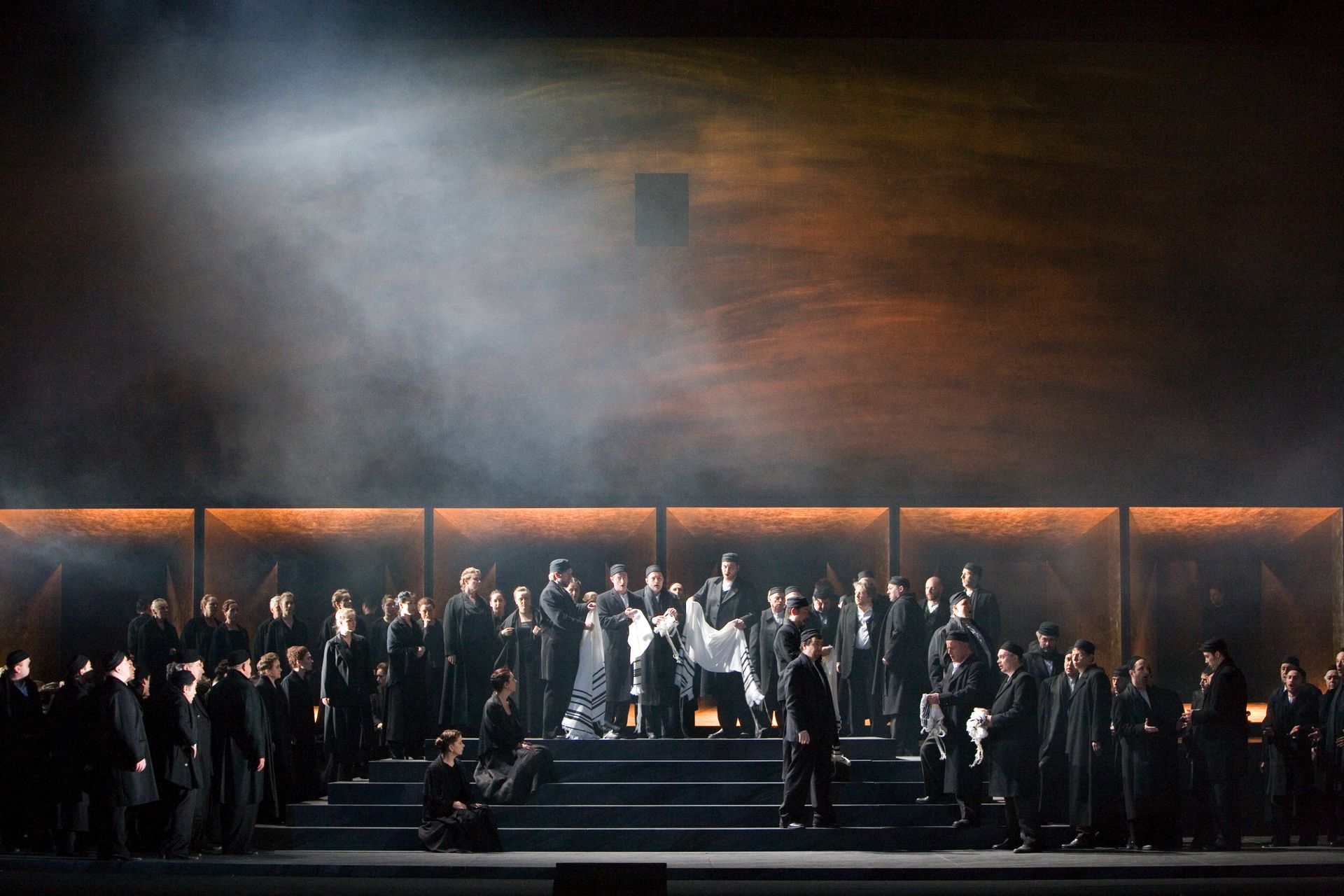
Opening nights of Nabucco often hinge on the ability of the conductor to grip Verdi’s early and volcanic writing with both discipline and imagination. What unfolded this evening under Francesco Ivan Ciampa was exactly that: a performance held together not by force, but by clarity. From his first downbeat, Ciampa imposed the kind of atmosphere that singers describe as a safe place: a pit in which gestures are legible, preparations unmistakable, and the dramatic trajectory is shaped with long‑breath confidence. His conducting is theatrical without ever being showy, and its generosity is what allows the entire structure to rise. The orchestra seems to respond instinctively to his guidance, leaning into Verdi’s sharply etched rhythms with precision, yet always finding space for the lyrical impulse that courses through even the harshest pages of this score.
It is in Act III that Ciampa’s vision becomes undeniable. The dramatic arc tightens, the contrasts sharpen, and the relationship between stage and pit attains its most natural balance. Verdi’s great tableaux – Zaccaria’s stern proclamations, the choruses surging like collective conscience – unfold with grandeur but never excess. The pacing is ideal, the brass disciplined but blazing, and Christoph Heil’s chorus reaches its highest level of cohesion. For a work whose reputation rests partly on its choral power, the musical architecture of Act III becomes the evening’s centre of gravity, shaped with a mastery that is both controlled and deeply felt. Nothing is left to routine; everything is alive.
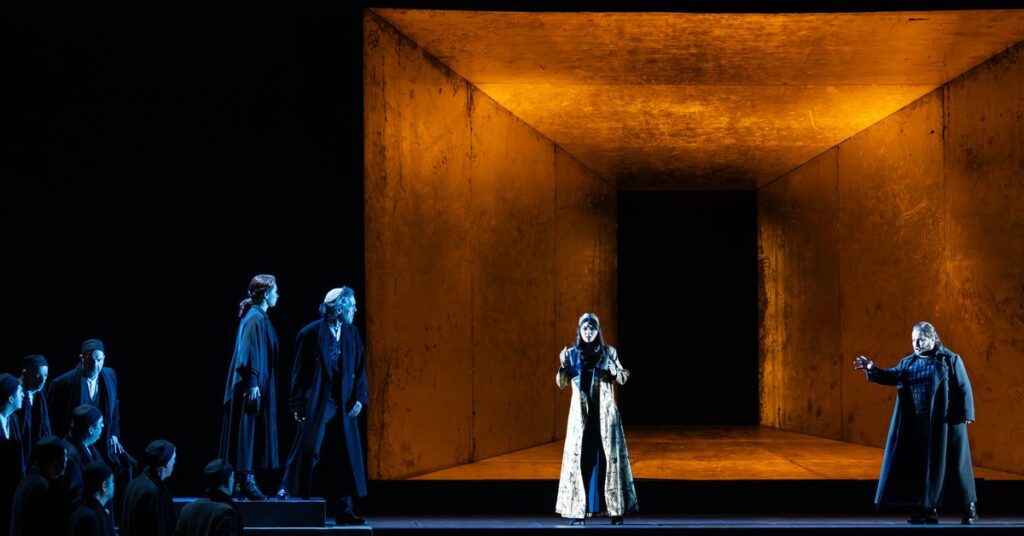
In the cast, the most remarkable impression comes from Kang Wang, making his house debut as Ismaele. It is not a large role, nor one designed to dominate the evening, and yet Wang’s presence does exactly that each time he steps onstage. His tenor carries a luminous, finely spun timbre, capable of striking ardour in his first exchanges with Fenena as well as of beautifully tapered lines in “Io t’amava.” There is already something unmistakably expansive in the way he phrases, something that suggests a voice and an artistry ready to grow far beyond this part. For a debut, it is nothing short of glorious, and it leaves one impatient to hear what roles will follow—Verdi certainly, but not only Verdi.
If Wang is the revelation, Elmina Hasan delivers the moment of the night. Her Fenena culminates in a radiant and profoundly sincere “Oh dischiuso è il firmamento,” sung with purity of line, warmth of timbre, and inner stillness that the orchestra—held back with exquisite care by Ciampa—wraps in a soft halo of strings. It is one of those rare instances where time seems to pause, not through volume or drama, but through the absolute rightness of breath, colour, intention. There is no doubt: this is the highlight of the performance.
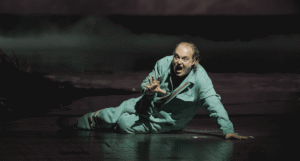
Around these standouts, the rest of the cast offers honest, if less incandescent, work. Vladislav Sulimsky’s Nabucco has weight and stature, particularly in “Dio di Giuda,” where he finds an affecting mixture of remorse and resolve, even if the singing sometimes prioritises impact over finesse.Ewa Płonka tackles Abigaille – Verdi’s Everest – with evident courage. In “Anch’io dischiuso un giorno” she navigates the treacherous writing with commitment, projecting fierce dramatic intent even when the lines momentarily tighten. Georg Zeppenfeld, as always, brings authority and textual clarity to Zaccaria; “Vieni, o Levita!” benefits from his dignified, resonant legato. The smaller roles are served reliably: Roman Chabaranok incisive as the High Priest, Kevin Conners articulate and nimble as Abdallo, Mirjam Mesak offering youthful brightness as Anna.
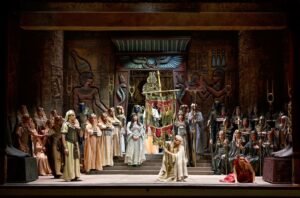
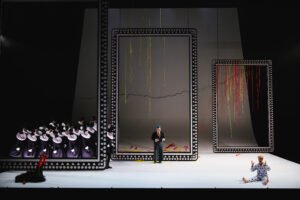
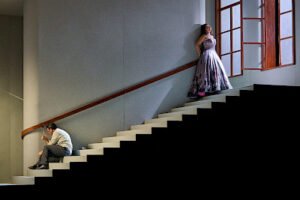
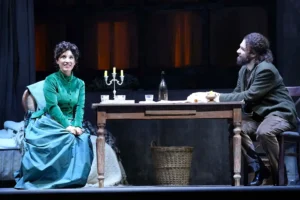
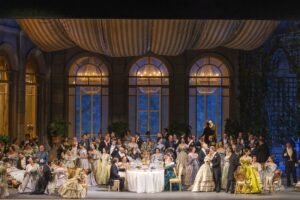
Visually, Yannis Kokkos proposes a staging of severe elegance: clean planes, concentrated gestures, a palette that avoids visual clutter. His world is not one of illustrative realism but of symbolic restraint, supported with care by Michael Bauer’s sculpted lighting. It is a production that never interferes with the music’s momentum, allowing Ciampa’s architectural approach to set the evening’s true dramatic rhythm.
Ultimately, this Nabucco is shaped less by scenic spectacle than by musical integrity – and at its heart is a conductor who understands that clarity and trust are the foundations upon which great Verdi is built. With a glorious house debut from Kang Wang, a luminous and unforgettable Fenena from Elmina Hasan, and an Act III that reaches an exceptional level of dramatic cohesion, the evening succeeds where it matters most: in letting Verdi’s fire burn with purpose and humanity.
About the Author