NORMA | Teatro Regio Parma
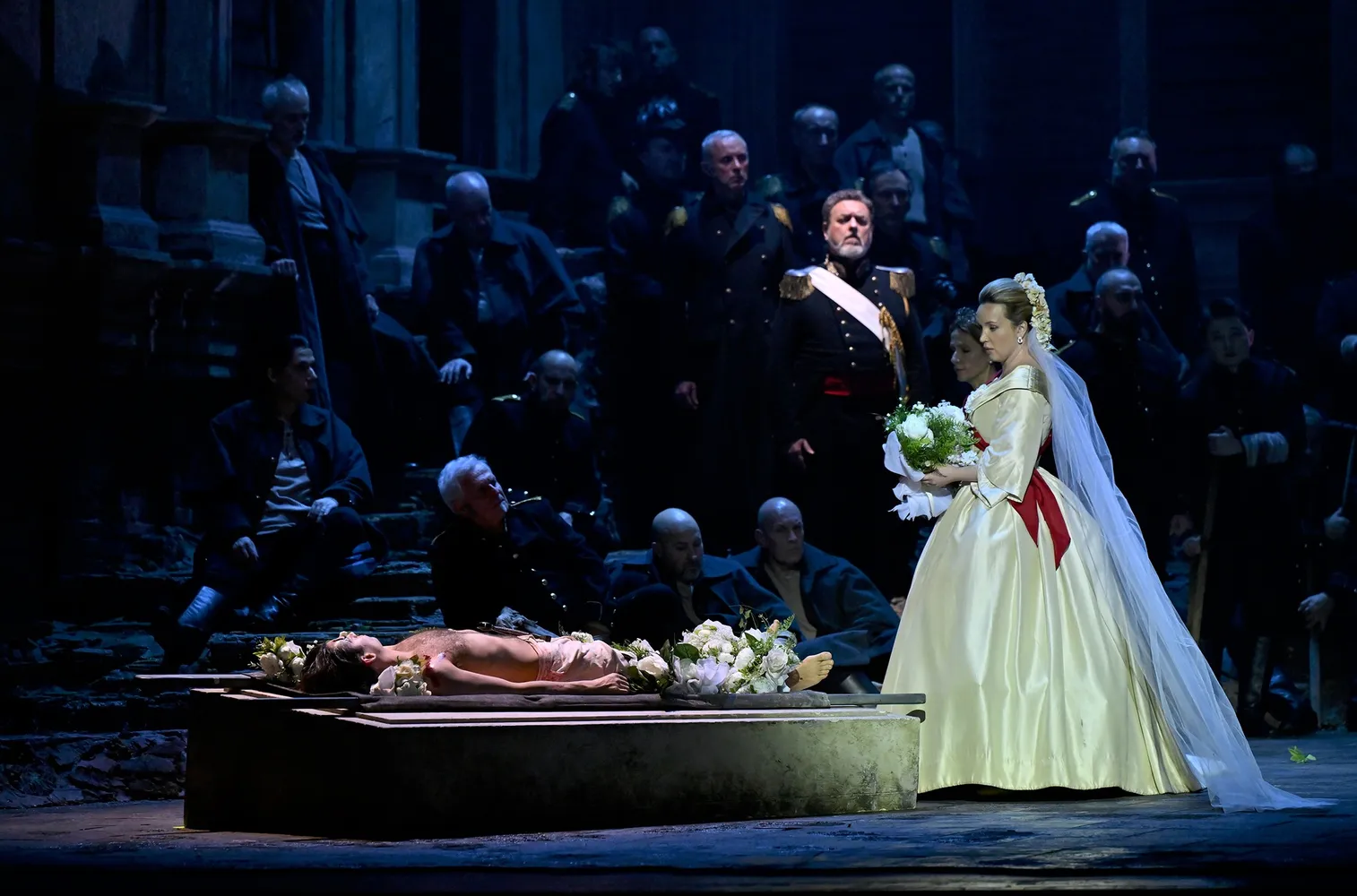
This was a date I had been waiting for for a long time.
The main reason was Vasilisa Berzhanskaya. I have seen her several times in bel canto repertoire, including as Adalgisa in Milan last summer, and I was extremely curious to see how this Rossini’s “school” would translate into the tragic grandeur of Norma. We all know examples like Gregory Kunde, after two decades of Rossini, he became one of the great interpreters of Verdi’s most tragic role, Otello. In my mind, Norma for Bellini is the equivalent of Otello for Verdi: a summit of dramatic intensity. And I had a strong feeling that Berzhanskaya could make that leap.
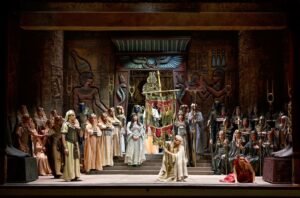
I was also particularly pleased that the production was directed by Nicolas Berlofa, whose work I admire. He does not overload his stagings with unnecessary details or conceptual excess. Instead, he offers elegance & traditional sets, period costumes, a certain old-fashioned beauty that suits the Teatro Regio di Parma perfectly. It was visually refined and entirely appropriate for the space.
But first and foremost: Vasilisa Berzhanskaya.
It was extraordinary.
Her entrance aria, “Casta Diva,” was good — even very good, to be completely honest. But what truly revealed her artistry was everything that followed. The recitatives, the dramatic exchanges, the moments where the voice hovers between speech and song — that is where she demonstrated her full command of the role. The tragic weight, the emotional authority, the psychological depth: it was breathtaking.
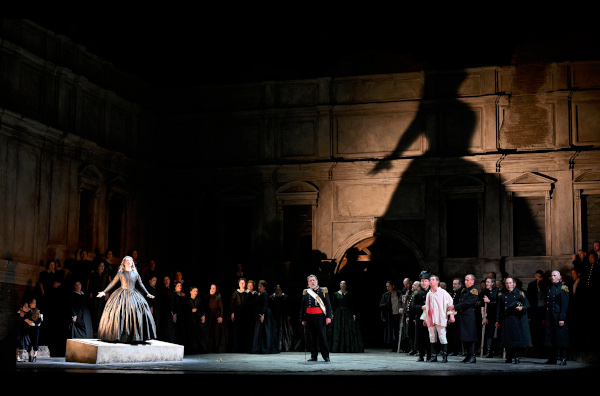
Watching her inhabit Norma was genuinely moving. For me, she is one of the artists who will shape the future of opera over the next thirty years. She is only 32, has already sung iconic roles, appears in major productions across the world — and here in Parma she delivered an astonishing, unforgettable Norma. It is difficult to find the right words. It was simply beautiful. Sublime.
The evening began somewhat less smoothly for Dmitry Korchak. The tenor was lightly booed after his first aria — the harsh but honest law of Italian audiences. And, to a certain extent, it was understandable. The opening was not ideal; compared to bel canto specialists like Freddie De Tommaso or Enea Scala at their best, it lacked brilliance.
However, he recovered impressively as the evening progressed. By the final act, he was genuinely moving. In the dramatic passages, particularly in the duets with Norma and Adalgisa, he found depth and intensity. By the end, he brought tears to my eyes. It was a redemption arc within a single performance.
Two other performances deserve special praise.
Maria Laura Iacobellis as Adalgisa was truly excellent. Adalgisa is sometimes underestimated, yet it is a crucial and beautiful role. At moments, she nearly stole the spotlight — and deservedly so. Her presence, vocal warmth, and sincerity were a real pleasure to hear.
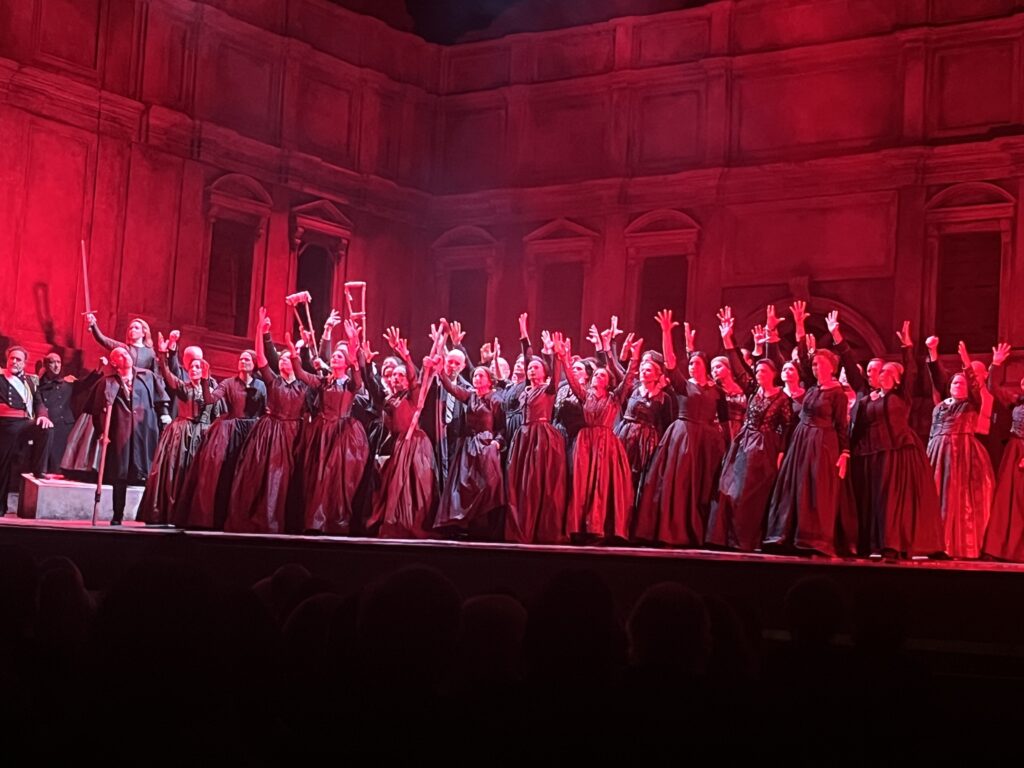
Carlo Lepore, as Oroveso, was another highlight. Interestingly, I had seen him and Berzhanskaya together only weeks ago in Turin in bel canto repertoire, and it was almost amusing — and quite touching — to see them reunited here in a very different dramatic context. Lepore is often associated with Rossini, where he shines with great comic flair — I often joke that he is the godfather or uncle we all wish we had. But here, in drama, he proved he can be just as compelling. Elegant, authoritative, and deeply musical.
A final word for conductor Renato Palumbo. He chose a version of Norma that is not frequently performed, which made the evening even more interesting. His reading was coherent and beautifully shaped from beginning to end. At times, I felt the pacing was slightly slow, even a touch heavy, but overall it supported the singers and sustained the dramatic arc effectively.
In the end, it was a beautiful evening at the Teatro Regio di Parma, one I will remember for a very long time, above all for an exceptional Norma who confirmed, beyond any doubt, that Vasilisa Berzhanskaya is an artist destined for greatness.
::::::::::::::::::::::::::::::::::::::::::::
CAST
Norma – VASILISA BERZHANSKAYA
Pollione – DMITRY KORCHAK
Oroveso – CARLO LEPORE
Adalgisa – MARIA LAURA IACOBELLIS
Clotilde – ALESSANDRA DELLA CROCE
Flavio – FRANCESCO CONGIU
–
Direttore – Renato Palumbo
Regia – Nicola Berloffa
Scene – Andrea Belli
Costumi – Valeria Donata Bettella
Luci – Simone Bovis
ORCHESTRA FILARMONICA ITALIANA
About the Author