IL TROVATORE | Hamburgische Staatsoper
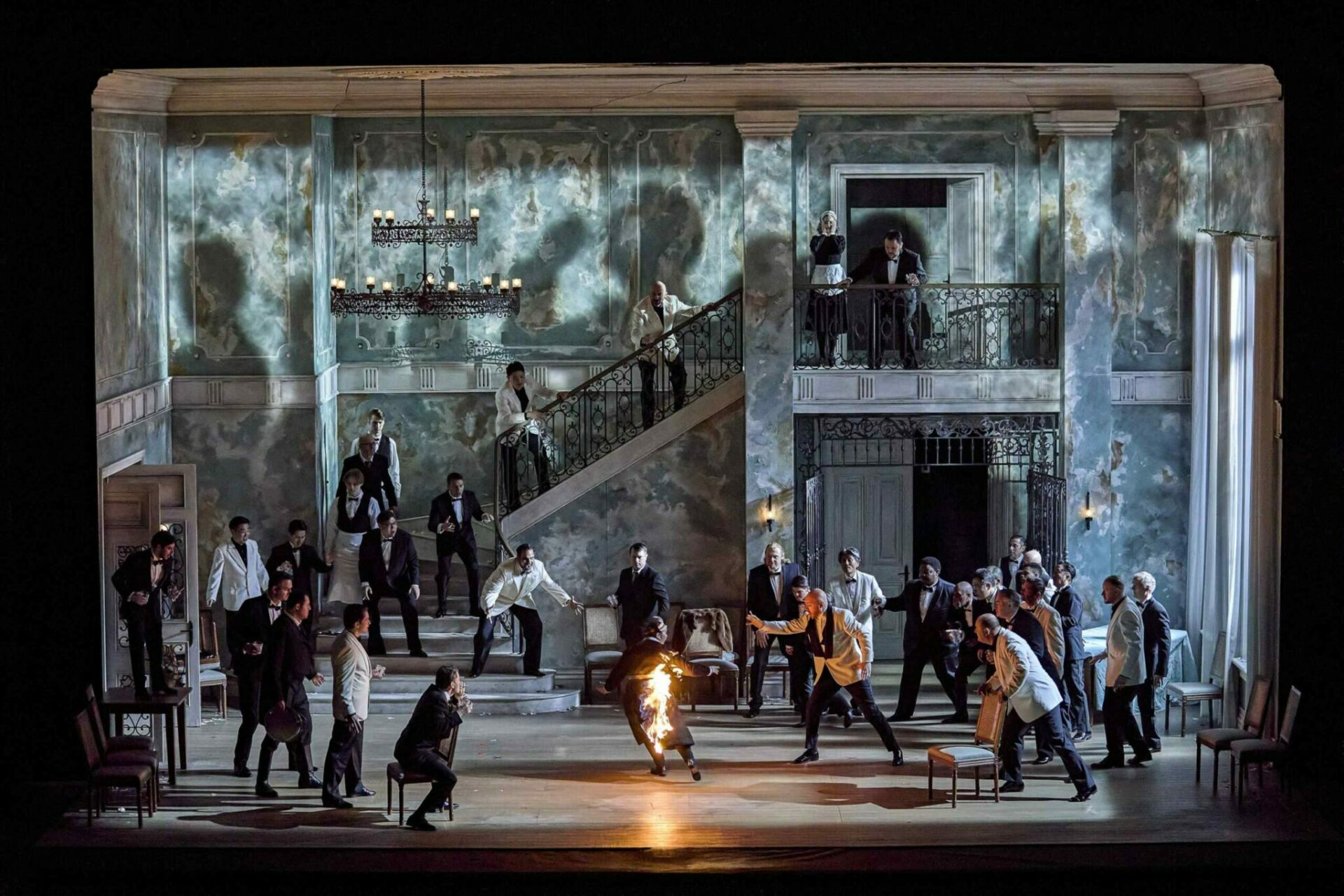
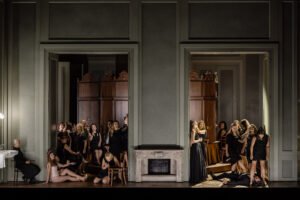
Staatsoper Hamburg Il Trovatore Besetzung: Musikalische Leitung Giampaolo Bisanti Inszenierung Immo Karaman Choreographie Fabian Posca Bühnenbild Alex Eales Kostüme Herbert Barz-Murauer Licht James Farncombe Video Philipp Contag-Lada Dramaturgie Ralf Waldschmidt Chorleitung Christian Günther Luna Aleksei Isaev Manrico Gwyn Hughes Jones Leonora Guanqun Yu Azucena Kristina Stanek Ferrando Alexander Roslavets Inez Olivia Boen Ruiz Aaron Godfrey-Mayes Ein alter Mann Chorsolist Chor Chor der Hamburgischen Staatsoper Orchester Philharmonisches Staatsorchester Hamburg
Il trovatore is, perhaps more than any other Verdi opera, a work of extremes: structurally fragmented, dramatically implausible at times, yet propelled by an almost unmatched musical urgency. It lives or dies on the sheer quality and commitment of its performers. In Hamburg, the balance ultimately tips in the right direction—largely thanks to an exceptional female pairing and a remarkably solid principal cast, despite a musical direction that raises legitimate questions.
Matteo Beltrami does not quite manage to impose a convincing Verdian architecture over the evening. From early on, a number of ensemble imprecisions emerge, occasionally putting the singers in uncomfortable situations. More broadly, the reading lacks contrast and dramatic relief: the great surges of tension that should organically structure the score feel somewhat flattened, as if deprived of their natural elasticity. While the Philharmonisches Staatsorchester Hamburg delivers moments of undeniable beauty in terms of timbre, one searches in vain for that sense of forward propulsion and chiaroscuro that makes this score so gripping.
Against this backdrop, Eleonora Buratto’s role debut as Leonora stands out as the evening’s defining achievement—and must be emphasized as such. After a few initial phrases that suggest a careful settling into the role, the performance quickly reaches an exceptional level. What is most striking is how little seems to be missing already from this assumption: the line is noble, the phrasing controlled, and above all, the lower register—so often a weak point in this role—is here fully grounded, rich, and entirely mastered. This technical security allows her to shape a Leonora of great coherence, both vocally and dramatically. The result is a portrayal that already feels complete, and whose margins for further development appear remarkably narrow. A total triumph.
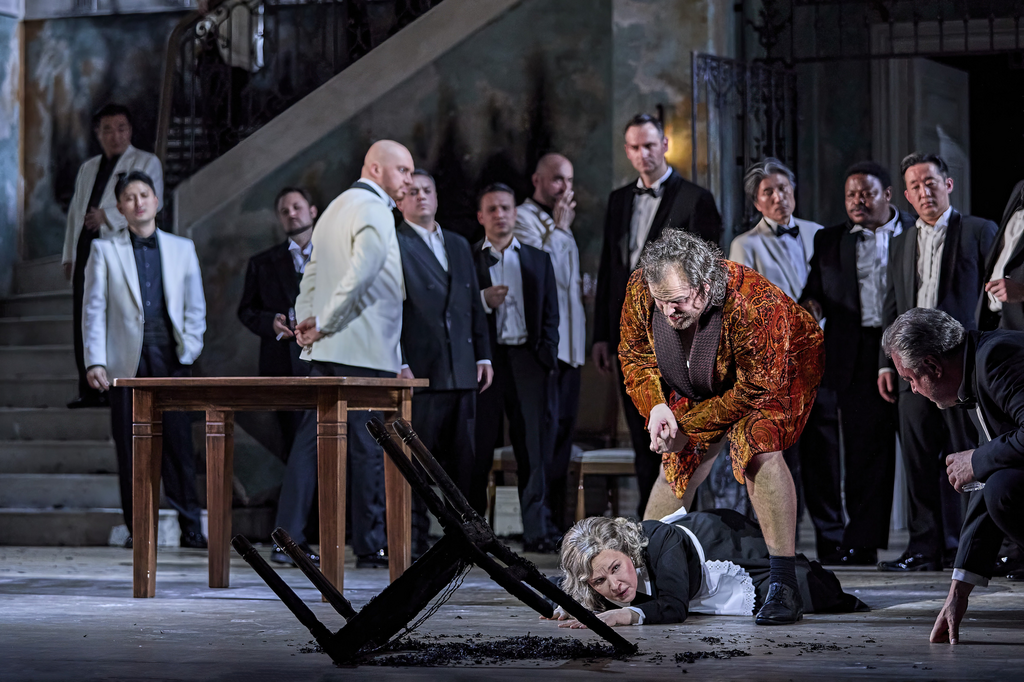
If Buratto provides the evening with its lyrical backbone, Clémentine Margaine offers its visceral core. Her Azucena is, quite simply, overwhelming. Everything about the performance suggests a role that sits at the absolute center of her vocal and dramatic means. The instrument, with its depth and amplitude, meets the character’s demands without the slightest strain; the timbre carries both darkness and clarity, and the expressive palette seems inexhaustible. One is left with the impression of witnessing a benchmark interpretation—arguably among the finest Azucenas on today’s stage. The pairing with Buratto only amplifies this impression: their shared scenes reach a level of intensity and musical authority that few productions can hope to match.
Opposite them, Boris Pinkhasovich delivers a very solid Luna, combining vocal presence with a convincing sense of line. The instrument is well projected, the phrasing coherent, and the character firmly anchored within the drama. A performance of high reliability and musical intelligence.
Enea Scala, initially an unexpected choice for Manrico, ultimately proves more convincing than anticipated. One might have feared a voice too predominantly lyrical for the role’s spinto demands; yet as the evening progresses, the instrument gains in weight and assertiveness. The upper register responds well under pressure, and the overall trajectory is one of increasing confidence. His “Di quella pira” is notably successful, combining clarity with sufficient thrust to carry the moment.
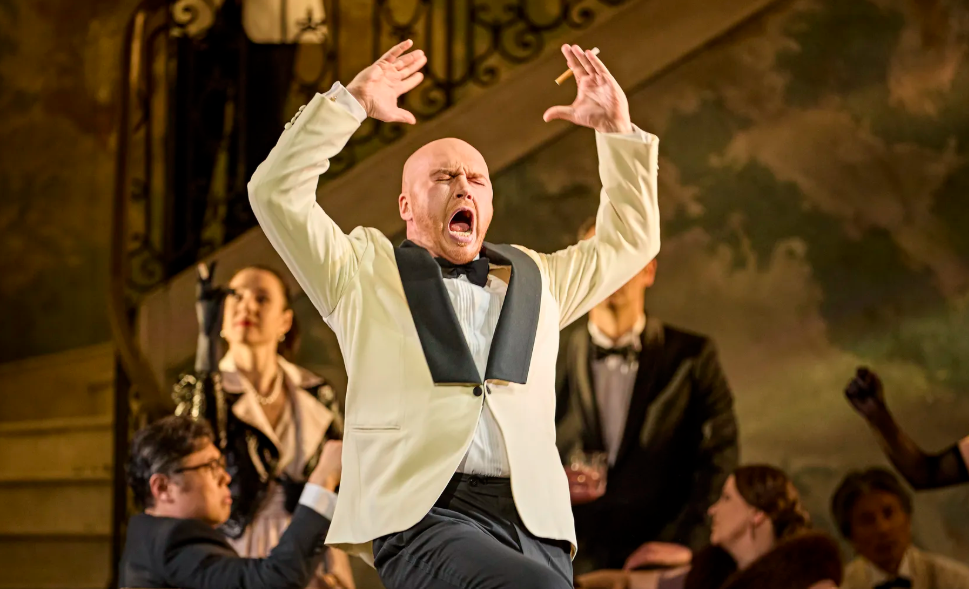
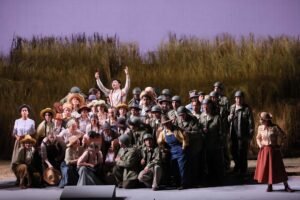
Alexander Roslavets offers a commendable Ferrando, delivering his opening narration with the authority and vocal stability required to set the opera’s dark tone. The supporting roles, from Mariana Poltorak’s Inez to Colin Aikins’ Ruiz, are all solidly taken, contributing to a well-balanced ensemble. The Chor der Hamburgischen Staatsoper, prepared by Christian Günther, fulfills its role effectively, providing the necessary mass and cohesion in the large-scale scenes.
In the end, this Hamburg Trovatore may not redefine the work from a musical or dramaturgical standpoint, but it secures its success where it matters most: in the voices. And when two artists reach the level displayed here by Buratto and Margaine, that is more than enough to justify the evening.
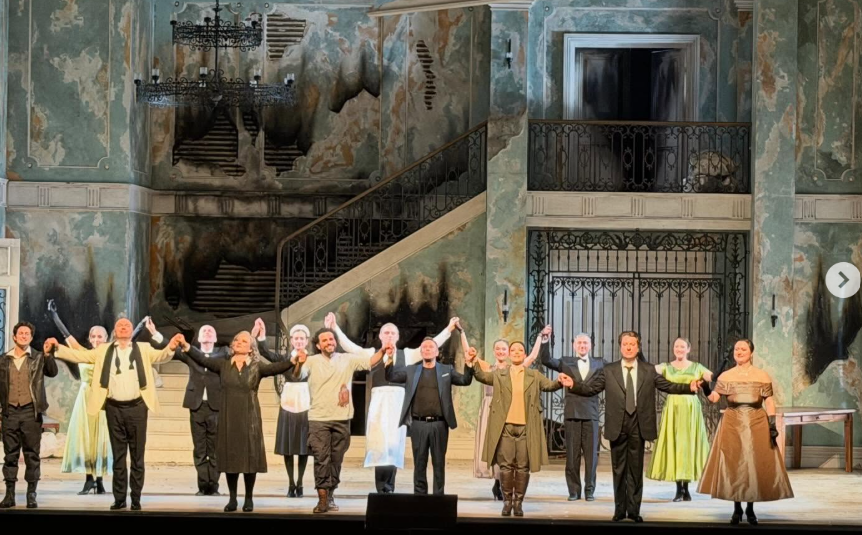
CAST
Leonora
Eleonora Buratto
Manrico
Enea Scala
Il Conte di Luna
Boris Pinkhasovich
Azucena
Clémentine Margaine
Ferrando
Alexander Roslavets
Inez
Mariana Poltorak
Ruiz
Colin Aikins
Chor
Chor der Hamburgischen Staatsoper
Orchester
Philharmonisches Staatsorchester Hamburg
———
Musical Team
Conductor
Matteo Beltrami
Chorus Master
Christian Günther
———
Production Team
Production after
Immo Karaman
Choreography after
Fabian Posca
Set Design
Alex Eales
Costume Design
Herbert Barz-Murauer
Lighting Design
James Farncombe
Video
Philipp Contag-Lada
Dramaturgy
Ralf Waldschmidt
About the Author