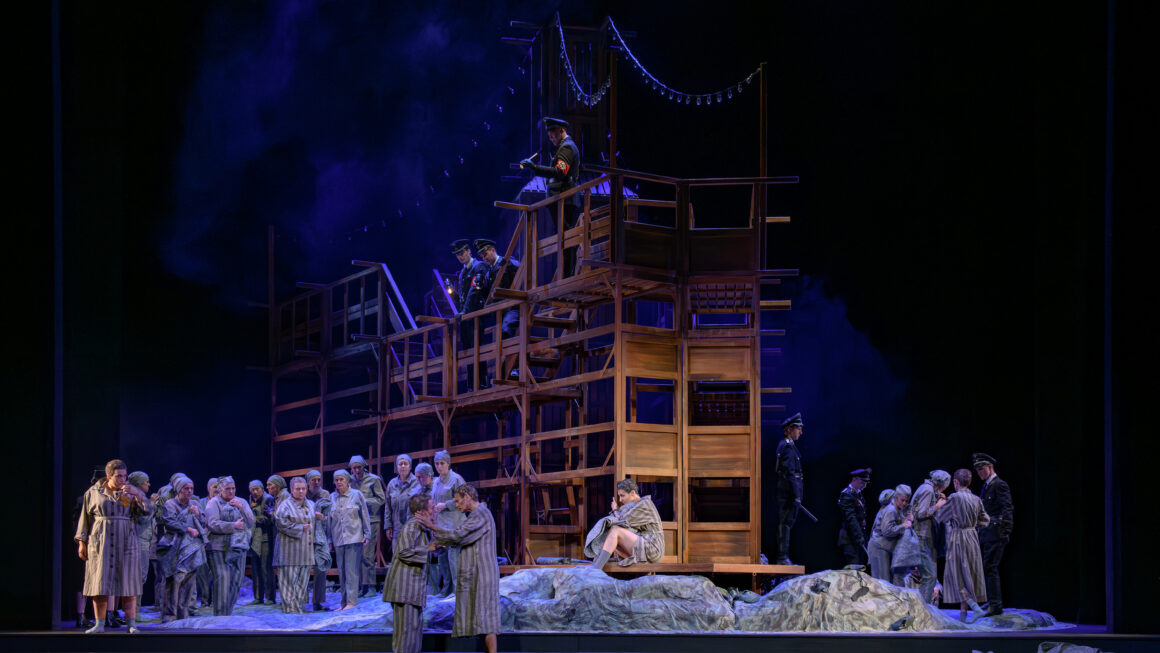
There are subjects that demand every ounce of tact one can summon merely to approach them, yet they cannot evade the obligation to evoke, as plainly as possible, the very essence they are presumed to embody. In such circumstances, words assume a profoundly heightened significance, for they are called upon to render the unrenderable, at times even the unbearable. Unlike the majority of works in the operatic repertoire, which stir excitement, impatience and a kind of trembling anticipation (feelings most often suffused with joyful exhilaration), this one announces itself through qualities seldom encountered elsewhere: one unmistakably historical, the other a musical mosaic of rare refinement, the two merging into a single breath the moment the curtain rises. There is no austerity, no harshness, but rather a deep and resonant dignity, giving rise to a duty of decency and respect that imposes upon the audience a moved solemnity and a reflection that reaches far beyond mere intellectual scrutiny. For art possesses the gift, so often underestimated, of conveying with formidable force the message it is entrusted to bear and, in doing so, irrigates both mind and spirit, permeating intellect and senses alike.
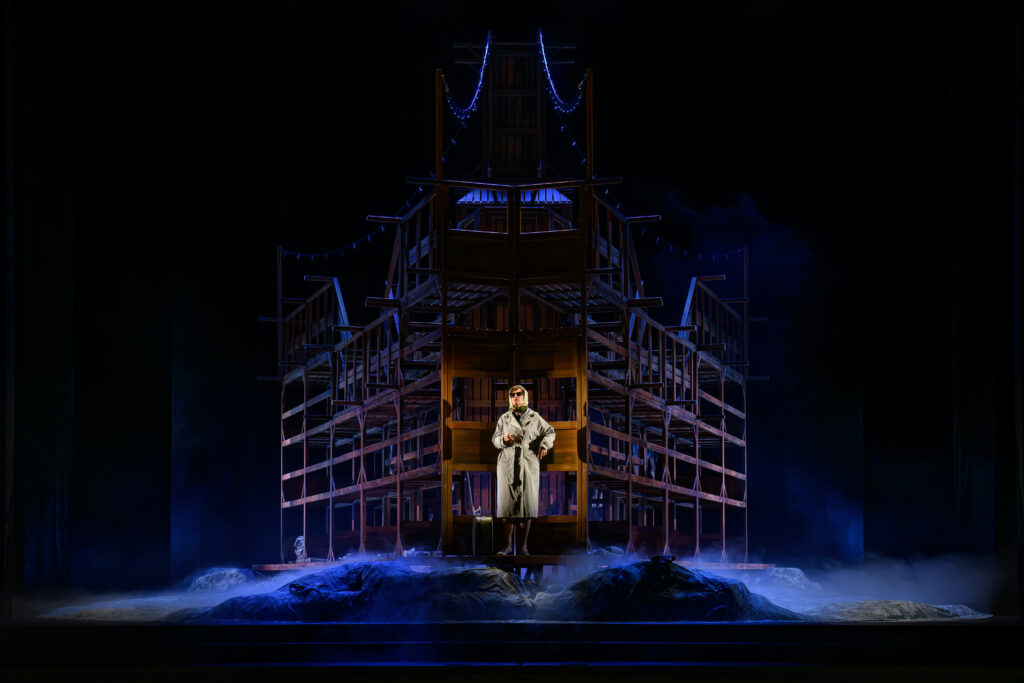
This marks the first time The Passenger has been performed in France. Warm gratitude is therefore owed, above all, to the Opéra National du Capitole de Toulouse, which has shown both courage and discernment in reviving the Tyroler Landestheater Innsbruck production and in bringing to the stage Mieczysław Weinberg’s lyrical masterpiece. Equal praise is due for the exemplary historical and musical contextualisation offered to the public, disseminated with admirable clarity across social media. Such an attitude proved a telling prelude to the calibre of what was to unfold on this opening night.
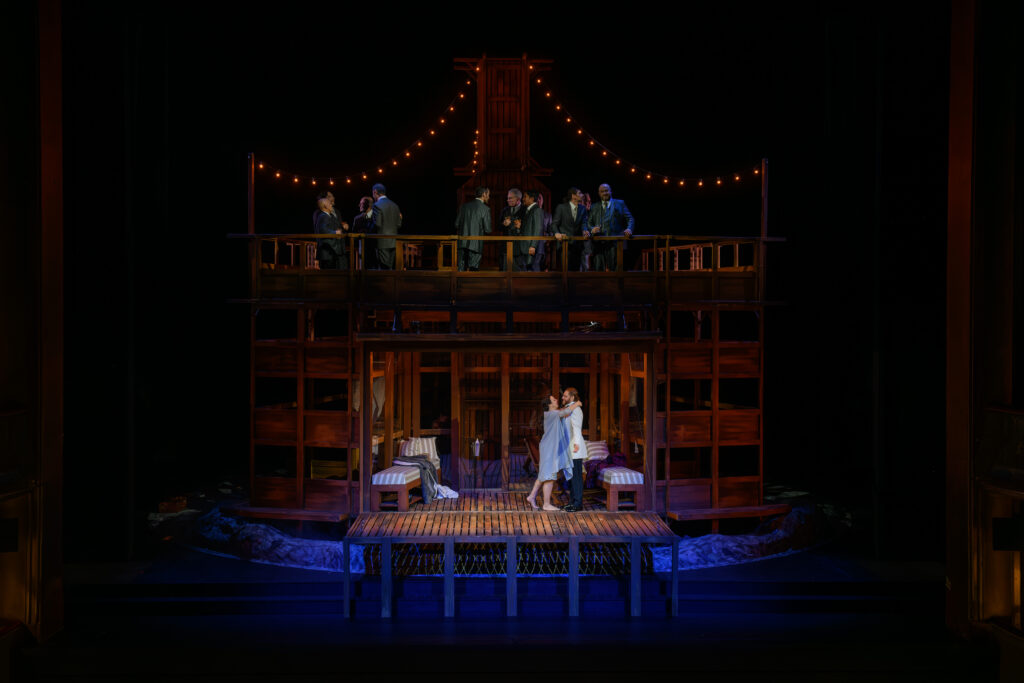
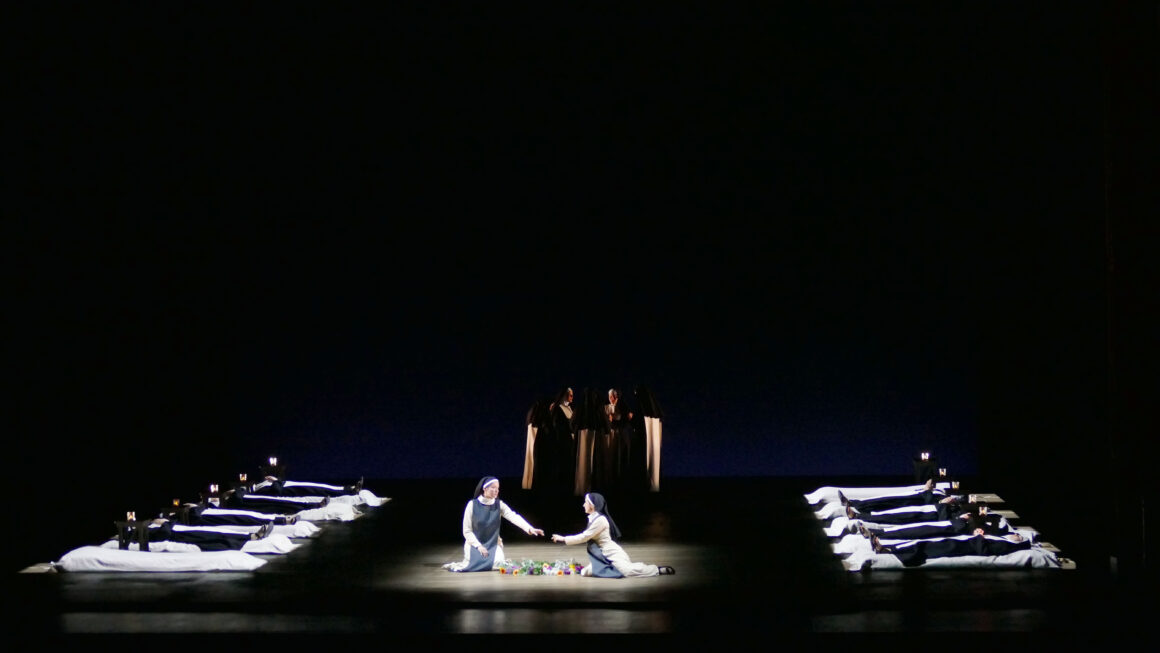
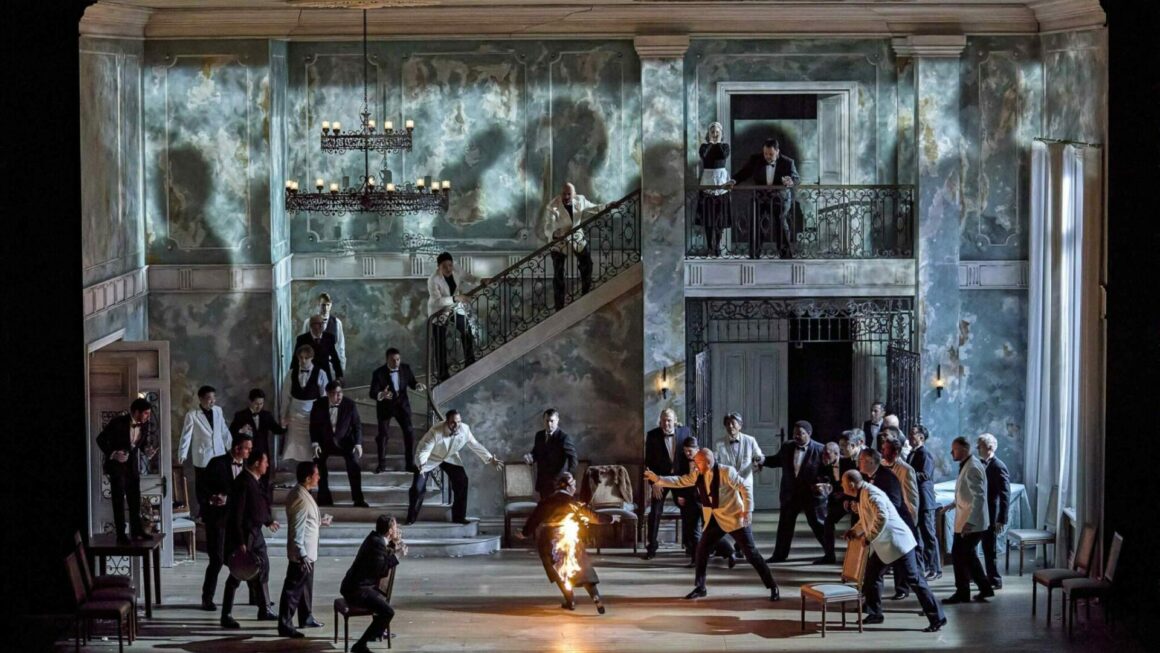
With an imposing and ingeniously conceived stage apparatus that evokes both an ocean liner and the prisoners’ barracks at Auschwitz, Johannes Reitmeier’s production, supported by Thomas Dörfler’s scenography, achieves with unwavering effectiveness the cinematic quality suggested by the libretto. Spatial and temporal shifts unfold with a fluidity that mirrors the musical progression and respects the audience’s ability to absorb the continual transitions of place and period.
At times delicate, at times vividly expressive, Francesco Angelico’s conducting is marked by an almost sacred reverence for the score. At most, he allows himself to cast a brighter light on a few fleeting details that surface only rarely in the work. For the rest, he lets the music, shaped by the Orchestre National du Capitole, pour over the audience with the intensity and colourings envisaged by Weinberg, guided by a refined economy of gesture and a supple, pliant line of direction that facilitates the opera’s shifts in space and time and supports the singers’ projection with unfailing sensitivity.
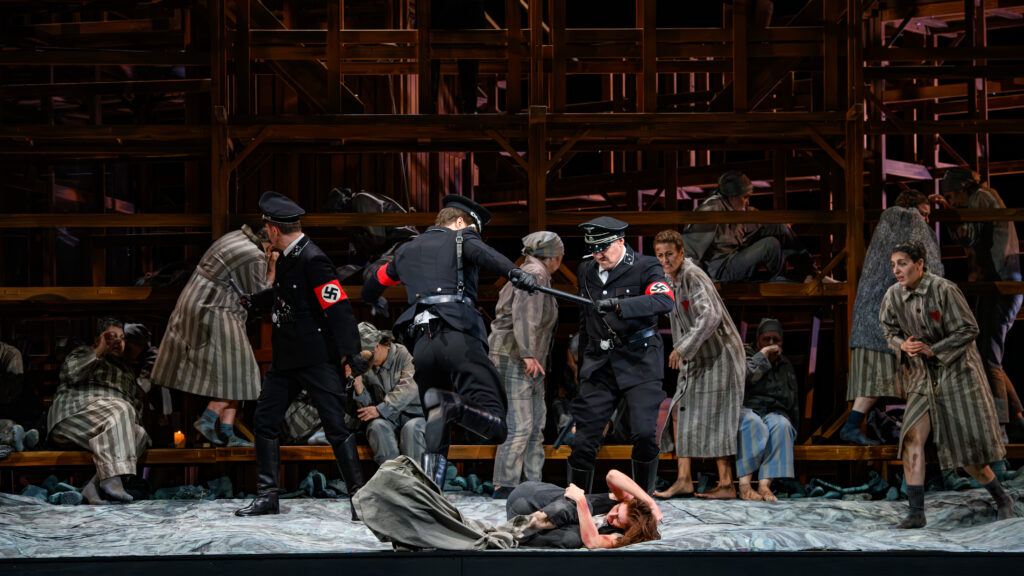
For it is a formidable undertaking that falls to them over the course of nearly three hours of performance, during which the tension remains unrelentingly taut. They confront the most harrowing emotions, singing in no fewer than six different languages (each artist performing in at least two foreign tongues), within a vocal architecture that frequently rises above a fully unleashed orchestra.
At the forefront stands Anaïk Morel as Lisa, her silvery, finely chiselled timbre capable of transforming in an instant, embodying by turns hypocritical tenderness and utter despair. Choosing to render the character as human as possible, without the slightest excess, the French mezzo deepens Lisa’s shadowed side and the cruelty that seeps through the words of the former SS guard. Nadja Stefanoff, who first took on Marta in the early 2020s, imbues the role with unshakeable dignity, while conveying with devastating sincerity the agony and intolerable distress that course through the character. The warm timbre and meticulous diction of Airam Hernandez suit perfectly a Walter who is as charming as he is unscrupulous. Nobility of bearing and integrity of spirit make Mikhail Timoshenko’s resolutely lyrical Tadeusz profoundly moving. With singing as powerful as it is spellbinding, Céline Laboire’s Katja deftly unites defiance and emotion. Revolt and compassion intertwine in the finely wrought performance of Victoire Bunel as Krystina. The candour and unwavering yearning for freedom of Vlasta are rendered with acuity by Anne‑Lise Polchlopek, whose luminous singing leaves a lasting impression. The Poulenc‑tinged colours and agile of Julie Goussot’s Yvette offer a moment of welcome grace. Janina Baechle (Bronka) enchants and moves with her rich, full-bodied voice and a poignant portrayal of a believer whose faith is pushed to its limits. Turpitude and cruelty are vividly embodied in the performances of the three SS guards, portrayed respectively by Damien Gastl, Baptiste Bouvier and Zachary McCulloch. Let us also salute the striking beauty of the Choeur de l’Opéra National du Capitole, spectacular from first moment to last.
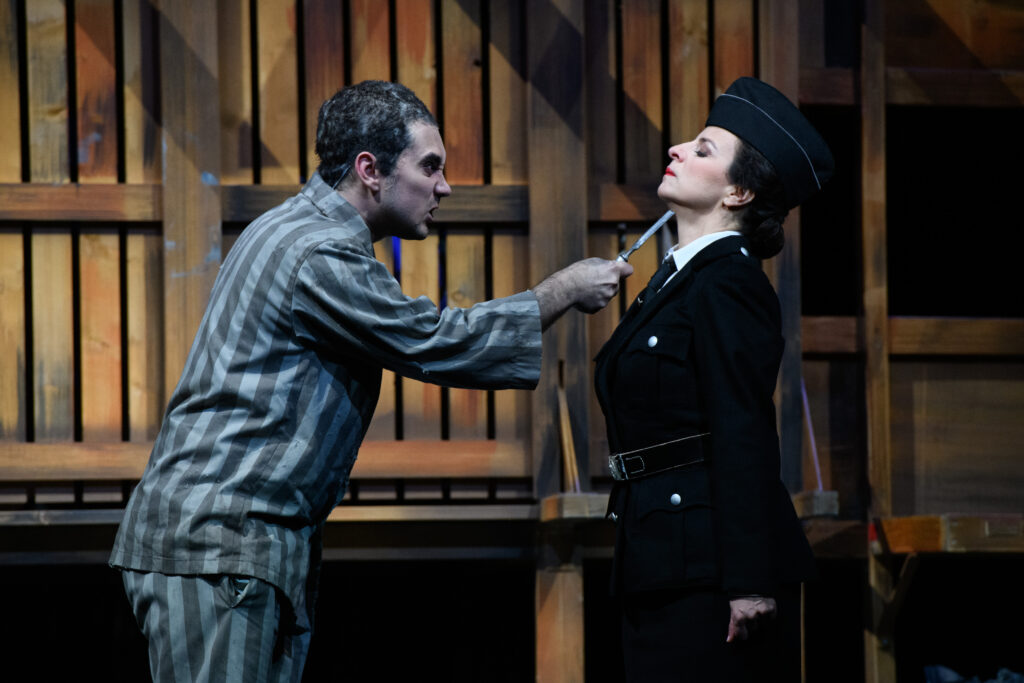
A work more necessary than ever, The Passenger has taken far too long to find its rightful audience. May the remarkable quality of the work accomplished in Toulouse, bringing together artists of the highest calibre, offer it the chance to be more widely known and, above all, more deeply understood at a time when the voices silenced by human savagery must continue to resonate.
***************
THE PASSENGER
Opera in two acts and one epilogue by Mieczysław Weinberg
Libretto by Alexander Medvedev based on the novel by Zofia Posmysz
Premiered in concert version on 25 December 2006 at the Stanislavski and Nemirovich-Danchenko Music Theatre in Moscow and in stage version on 21 July 2010 at the Bregenzer Festspiele in a multilingual adaptation of the libretto
Musical direction | Francesco Angelico · Choir Director | Gabriel Bourgoi · Staging | Johannes Reitmeier · Set design | Thomas Dörfler · Costumes | Michael D. Zimmermann · Lights | Ralph Kopp
Lisa | Anaïk Morel · Walter | Airam Hernández · Marta | Nadja Stefanoff · Tadeusz | Mikhail Timoshenko · Katja | Céline Laborie · Krystina | Victoire Bunel · Vlasta | Anne-Lise Polchlopek · Hannah | Sarah Laulan · Yvette | Julie Goussot · Bronka | Janina Baechle · An Old Woman | Ingrid Perruche · 1st SS | Damien Gastl · 2nd SS | Baptiste Bouvier · 3rd SS | Zachary McCulloch ·
An Old Passenger | Hazar Mürşitpinar · Kapo | Manuela Schütte · Steward | Frédéric Cyprien · Solo violin | Quentin Vogel · Orchestre national du Capitole · Chœur de l’Opéra national du Capitole
(For further informations) Link to the Opéra National du Capitole website: The Passenger