LA BELLE AU BOIS DORMANT | Opéra de Saint-Étienne
The Opéra de Saint-Étienne brings back to life a work that had disappeared for over a century: La Belle au bois dormant by Charles Silver.
This piece, recently rediscovered thanks to a recording by the Palazzetto Bru Zane, is presented here in a staged version.
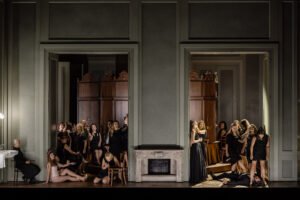
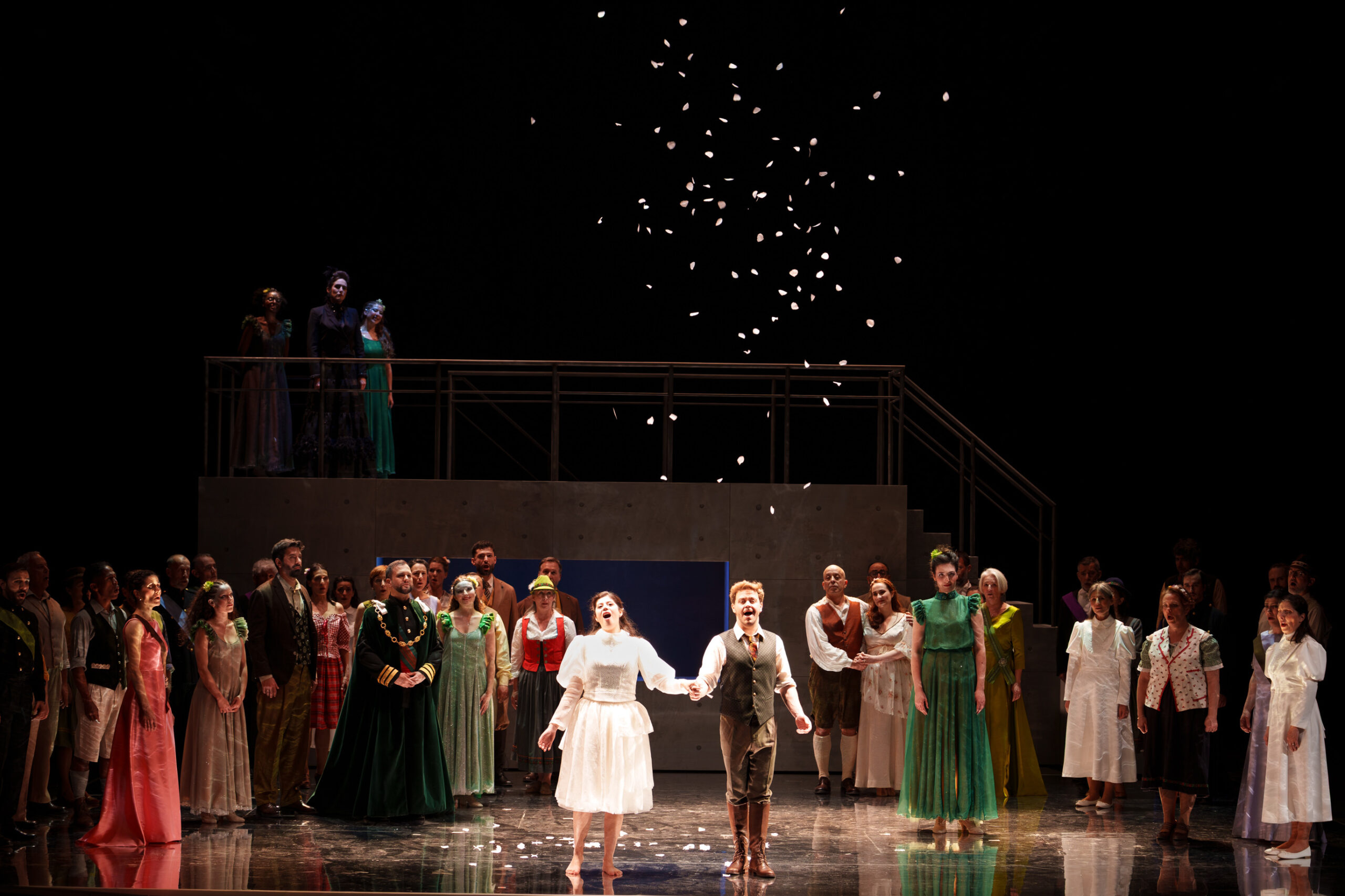
Entrusted to Laurent Delvert, the production offers a clear reading of a work whose story is familiar to all. He shows considerable inventiveness in conveying the moments of enchantment and magic suggested by the libretto. Four dancers portray the fairies with remarkable finesse. The lighting design by Nathalie Perrier contributes to the overall coherence and visual unity of the staging.
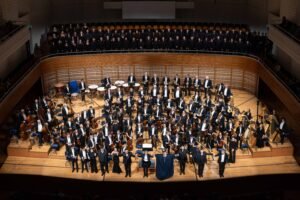
Presenting this work here, at the Théâtre Massenet, is especially fitting, as Charles Silver was one of the composer’s pupils. One indeed encounters superb pages of late 19th century lyricism that recall the great Stéphanois master. Conducted by Guillaume Tourniaire, the music is served with distinction, he notably had the excellent idea, during the curtain calls, of presenting the score to the applause of a large and delighted audience. The work is particularly interesting in that it may mark the end of a genre, before itself sinking, like its heroine, into a long slumber.
The Orchestre Symphonique Saint-Étienne Loire shines in this score, while the Saint-Étienne Chorus, directed by Laurent Touche, highlights the quality of Charles Silver’s vocal writing.The overall cohesion of the vocal cast is also worth emphasizing.
Among the supporting roles, Matthieu Lécroart stands out as an irresistible Barnabé, bringing out the character’s earthy humor.
Philippe Nicolas Martin portrays a sensitive and loving king, conveying the authority needed to make the role fully convincing.
Anne-Lise Polchlopek, in the spoken role of the Fairy Primevère, impresses with her flawless diction and committed stage presence.
Julie Ribard-Gendre, as the villainous Urgèle, is convincing through her vocal inflections and menacing lower register.
Finally, Héloïse Poulet shines in her roles as the Page and Jacotte, with a secure voice and striking high notes.
The leading couple is portrayed with great success.
Kevin Amiel, as the Prince, displays an elegant, youthful timbre with enough breadth to sustain the nobility of the role. His projection is solid, and his high notes unfold effortlessly. Following his performance as Nadir in this same house a few years ago, he once again delivers a fine role debut.
In the title role, Déborah Salazar possesses all the qualities of the princess. Her fragility and deep sensitivity emerge clearly in her portrayal. She makes the most of her vocal resources and earns a warm and well-deserved reception at the curtain calls.
In the end, this production of La Belle au bois dormant at the Opéra de Saint-Étienne is a great success. The company deserves praise for its bold choices and for bringing such treasures, remnants of a distant yet richly rewarding era back to light. One can only hope that the Opéra de Saint-Étienne will, in turn, become the “Prince Charming” that awakens other sleeping works.
Livret de Michel Carré et Paul Collin d’après le conte La Belle au bois dormant de Charles Perrault
Création le 8 janvier 1902 au Grand-Théâtre de Marseille
Direction musicale : Guillaume Tourniaire
Mise en scène : Laurent Delvert
Scénographie : Zoé Pautet
Costumes : Fanny Brouste
Chorégraphie : Sandrine Chapuis
Lumières : Nathalie Perrier
La Princesse Aurore, la Reine : Déborah Salazar
Urgèle : Julie Robard-Gendre
Le page, Jacotte : Héloïse Poulet
Dame Gudule, la fée Primevère : Anne-Lise Polchlopek
Le chevalier errant, le Prince : Kévin Amiel
Le Roi : Philippe-Nicolas Martin
Le grand sénéchal, Éloi : Antoine Foulon
Barnabé : Matthieu Lécroart
Orchestre Symphonique Saint-Étienne Loire
About the Author