DAS WUNDER DER HELIANE | Opéra National du Rhin
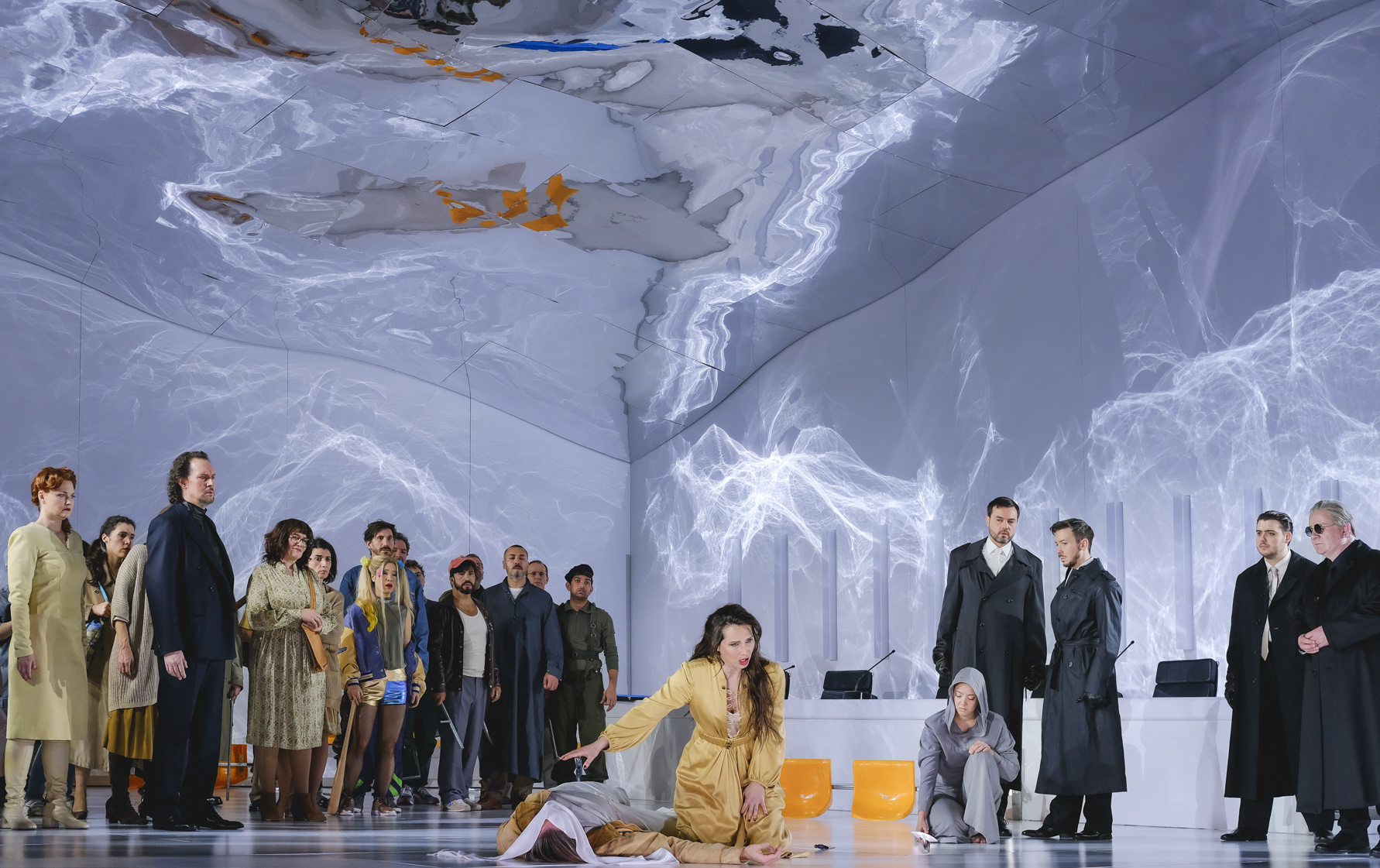
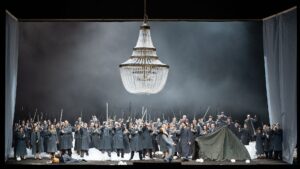
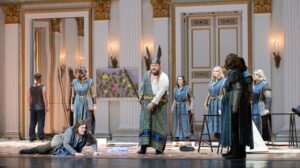
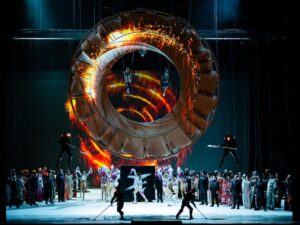
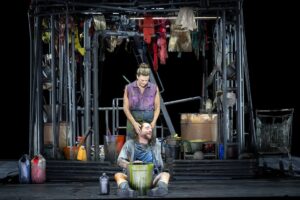
Das Wunder der Heliane? It unfolds in Strasbourg, upon the blessed stage of the Opéra national du Rhin which, true to its reputation, displays both daring and discernment in presenting (just as it did with Die tote Stadt in 2001) this extraordinary work for the very first time in France. The reasons for its rarity seem all the more unfathomable after the splendour unveiled in Strasbourg. Above all, an orchestral and vocal opulence, a veritable shower of Geminids cascading in turn from pit and stage, framed by a stripped‑back yet exquisitely astute production (signed by the Jakob Peters-Messer). A Korngoldian stronghold, the capital of Europe? Indisputably, and more than that: a sanctuary for beguiling music, a temple of emotion with the authority to remind us how vital it is to break ranks and restore to life scores so unjustly cast aside.
One of the keys to the triumph of this wondrous production lay in the perfect alignment of means and needs. Neither excess nor insufficiency: simply what is required, precisely where it is required, without waste or ostentation. For the music and the vocal writing alone command such respect for what is essential. A musical torrent, its long, imposing lyrical waves unfurled by a radiant Orchestre Philarmonique de Strasbourg at the height of its Jugendstil colours and in perfect synergy with Robert Houssart’s scintillating direction (how deeply must he cherish this opera to conduct it with such ease?), vocal surges rising to meet orchestral tempests: Heliane’s score permits neither extravagance nor, still less, mediocrity.
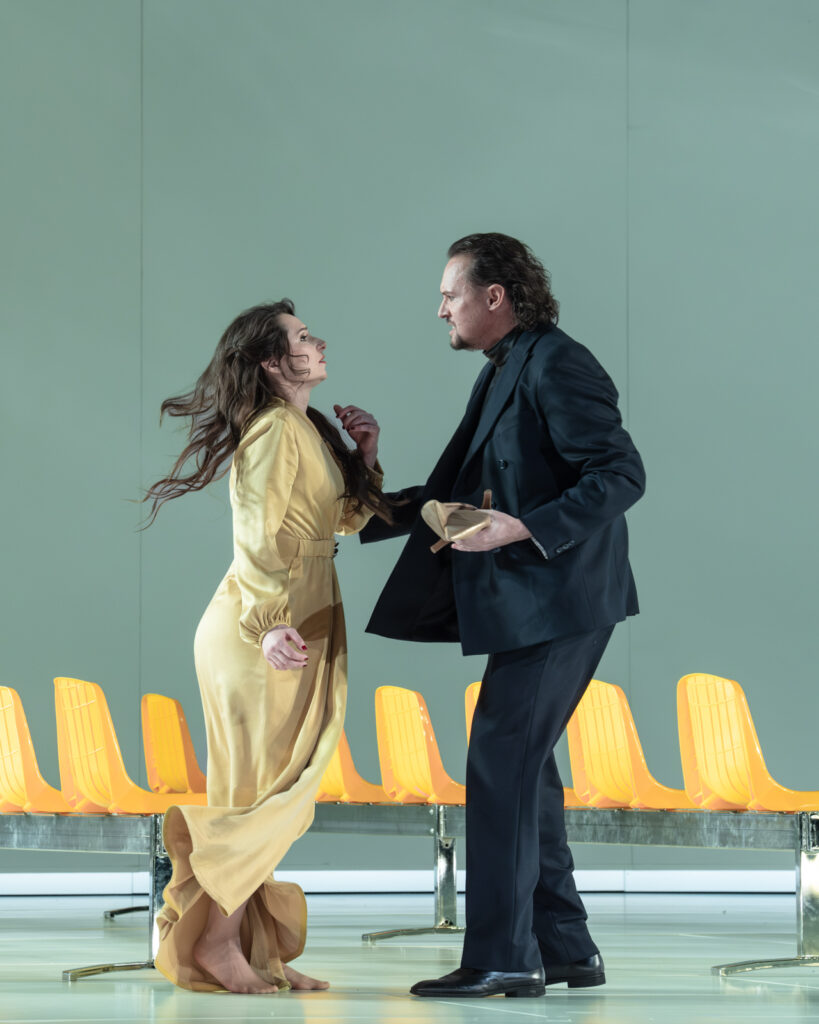
Such demands can be met only by a vocally opulent cast, one capable of unwavering dramatic and musical commitment. Camille Schnoor endows the character with the full intensity required for her metamorphosis, traversing, even vocally and with prodigious valour – never at the expense of delicacy of intent – the ordeals that precede redemption. Everything is there: the bearing, the poise, the disciplined vocal line which nonetheless allows her to adorn it with a wealth of colours and inflections; even her gait speaks volumes: a troubled sovereign relinquishing her station to become human, all too human (let yourself be swept away by the deepest emotion as you hear her deliver, with such purity of intent and such compassion, her doch sein Leib hab’ ich mit ihm getragen und bin in Schmerzen, in Schmerzen sein geworden), and thereby, paradoxically, nobler still.
A Heldentenor of firmly established renown across the Rhine, Ric Furman seizes the role of the Fremde with equal dramatic and vocal investment. One senses in him the accumulated experience of Tristan, Erik and other taxing roles, from which his free‑flowing upper register and overall vocal solidity draw their strength. Parallels with Christ are unavoidable, and it must be said that such talent, such commitment, such sheer beauty of performance fully justify the analogy with a figure of unmistakably messianic aura.
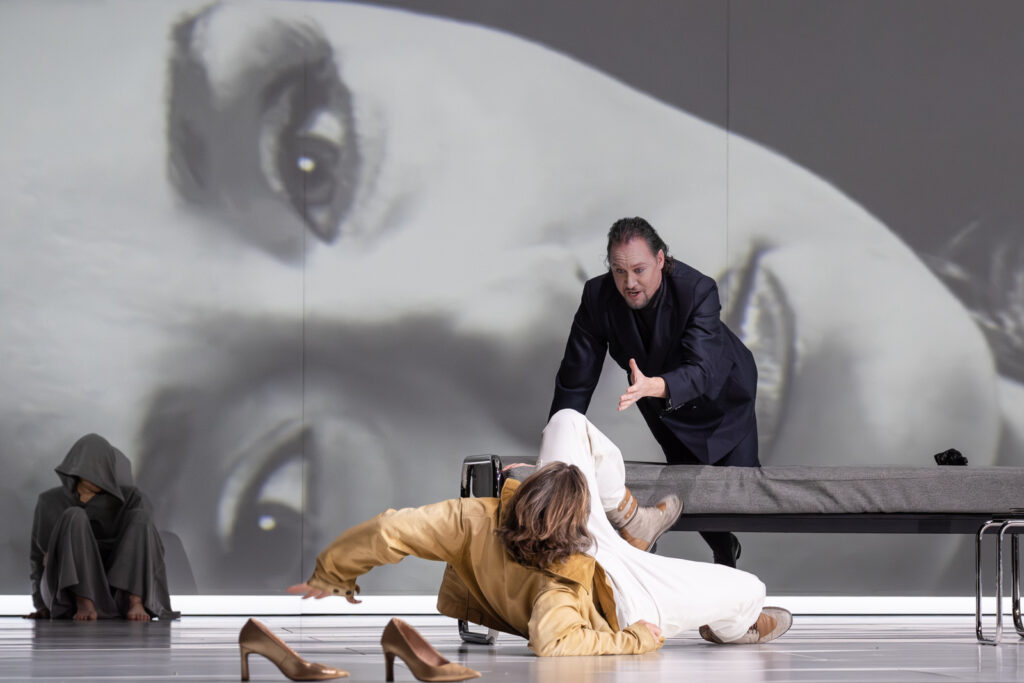
The balance is redressed by the shadowed presence introduced by the exceptional Josef Wagner in the guise of the Herrscher. Tyranny and darkness of character emerge, yet always suffused with a grandeur, an omnipotence that the Austrian baritone instils without the slightest hint of mannerism, and while steadfastly avoiding any trace of Manichaeism. A dignified bearing, an elegance of posture, even a certain charisma, fuse with a burnished, fervent, at times chilling timbre (as in his Nur einen von uns beiden trägt die Erde in Act I), projected with masterly control, revealing both an intimate grasp of the character’s psychology and a profound affinity with Korngold’s sound world.
A marvel, too, is Kai Rüütel‑Pajula’s Botin. She is all imprecation, stoking the Sovereign’s fury indeed, at times humiliating him (Duck dich! Kriech, wenn sie schnäbeln, als Wirt an ihrer Tür vorbei!), proclaiming the repression of the people, galvanising herself in the name of a cause she deems righteous, her implacable voice soaring above the orchestral tutti without the faintest suggestion of strain.
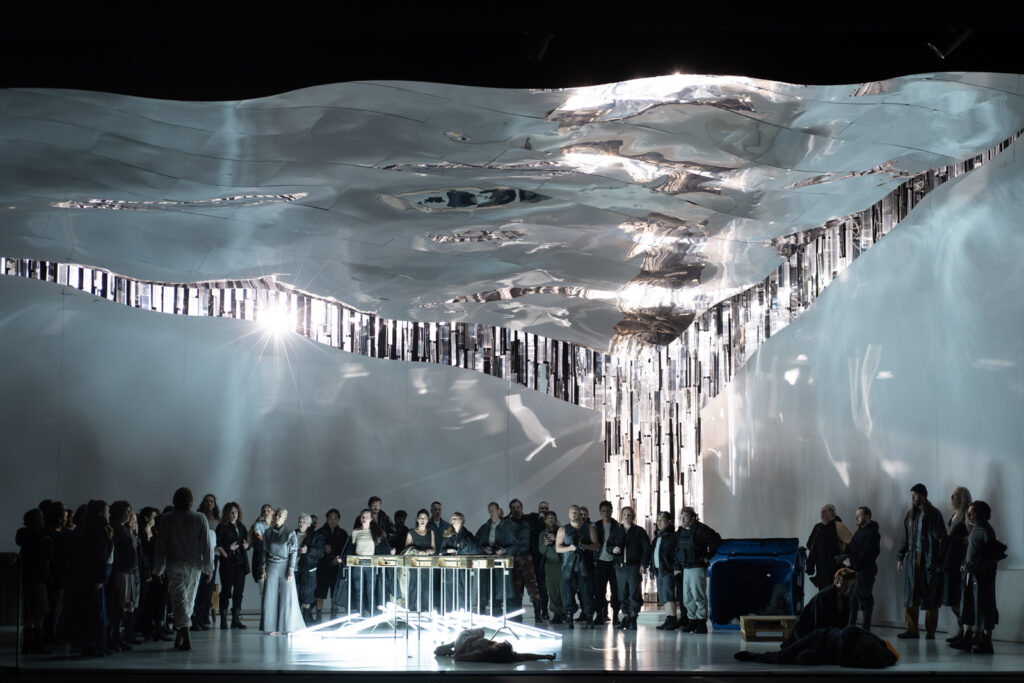
Delicate projection and meticulous diction lend great charm and deep humanity to Damien Pass’s portrayal of the Pförtner, just as Paul McNamara’s superb blinde Schwertrichter leaves a formidable impression: a career marked by the most demanding tenor roles has fashioned in this remarkable artist the ideal ambassador for the blend of wisdom and justice required by the part. The six singers (Glen Cunningham, Thomas Chenhall, Michał Karski, Pierre Romainville, Eduard Ferenczi Gurban and Daniel Dropulja) embodying the Richter are, for their part, every bit as exemplary as the rest of the cast, each contributing a distinctive hue to a palette of voices that makes the second act one of the evening’s high points.
A chorus of wonders, a celestial chorus indeed, that of the Chœur de l’OnR, shaped by inspired leadership and in perfect concord with every facet of this magnificent production.
With so many strengths aligned, the impression left by this Heliane could only be unanimous, enchanting an audience generous in its applause and winning over the critics alike. It stands as a perfect example of those rare productions for which one blesses fate for having been present, and which make us love the work all the more: a historic moment in many respects, whose beauty, beyond the immense labour required to attain it, bears, quite genuinely, the imprint of the miraculous. Never has an opera worn its title more fittingly.
******************************
DAS WUNDER DER HELIANE
Opera in three acts by Erich Wolfgang Korngold
Libretto by Hans Müller-Einigen, based on a mystery novel by Hans Kaltneker
Premiered on 7 October 1927 at the Stadttheater (Hamburg)
French première (production by the Nederlandse Reisopera)
Musical direction | Robert Houssart · Choir direction | Hendrik Haas · Stage direction | Jakob Peters-Messer · Costumes | Tanja Liebermann · Set designer, lights and videos | Guido Petzold
Heliane | Camille Schnoor · Der Herrscher | Josef Wagner · Der Fremde | Ric Furman · Die Botin | Kai Rüütel-Pajula · Der Pförtner | Damien Pass · Der blinde Schwertrichter | Paul McNamara · Der junge Mann | Massimo Frigato · 1. Richter | Glen Cunningham ·2. Richter | Thomas Chenhall · 3. Richter | Michał Karski · 4. Richter | Pierre Romainville · 5. Richter | Eduard Ferenczi Gurban · 6. Richter | Daniel Dropulja · Der Engel | Nicole van den Berg · Chœur de l’Opéra national du Rhin · Orchestre philharmonique de Strasbourg
(For further informations) Link to the Opéra national du Rhin website: Das Wunder der Heliane
About the Author