MACBETH | Teatro Regio Torino
Some evenings at the opera are planned weeks in advance. Others are dreamed about for months.
For me, this Macbeth at the Teatro Regio di Torino belonged firmly to the second category. It had been nine months since the theatre announced its 2026 season — nine months since I first saw that this production would be conducted by Riccardo Muti and led by the remarkable baritone Luca Micheletti. Nine months of anticipation.
You can imagine the excitement in the days leading up to the performance — the restless energy the night before, and the almost unbearable anticipation during the two hours before the curtain rose. With evenings like this, there is always a small fear of disappointment: a last-minute illness, an unexpected cancellation, something that breaks the magic before it even begins.
But the moment Riccardo Muti walked into the hall, all those doubts disappeared.
The orchestra rose to greet him. The audience applauded — not politely, but with genuine reverence. The ovation lasted long enough to remind everyone present exactly who stood before us. Even those attending the theatre for the first time must have understood instantly that they were witnessing a living legend. Muti is not just a conductor; he is part of the living history of opera. He has worked with generations of singers, shaped countless performances, and carries within him decades of musical memory.
To see him conduct Verdi’s Macbeth live was, quite simply, a privilege.
From the very first notes, the orchestra sounded sculpted and precise, yet full of dark energy. Muti’s reading avoided excess — everything felt controlled, deliberate, and intensely dramatic. The tension never dropped, and the score unfolded with the clarity of someone who knows every corner of Verdi’s language.
Luca Micheletti – A Magnetic Macbeth
The evening had another major attraction: Luca Micheletti in the title role.
For me, Micheletti is one of the most compelling baritones on the stage today. I have often said that his Iago in Otello is the finest I have seen — perhaps rivaled only by Ludovic Tézier — and his Macbeth confirmed once again the remarkable depth of his artistry.
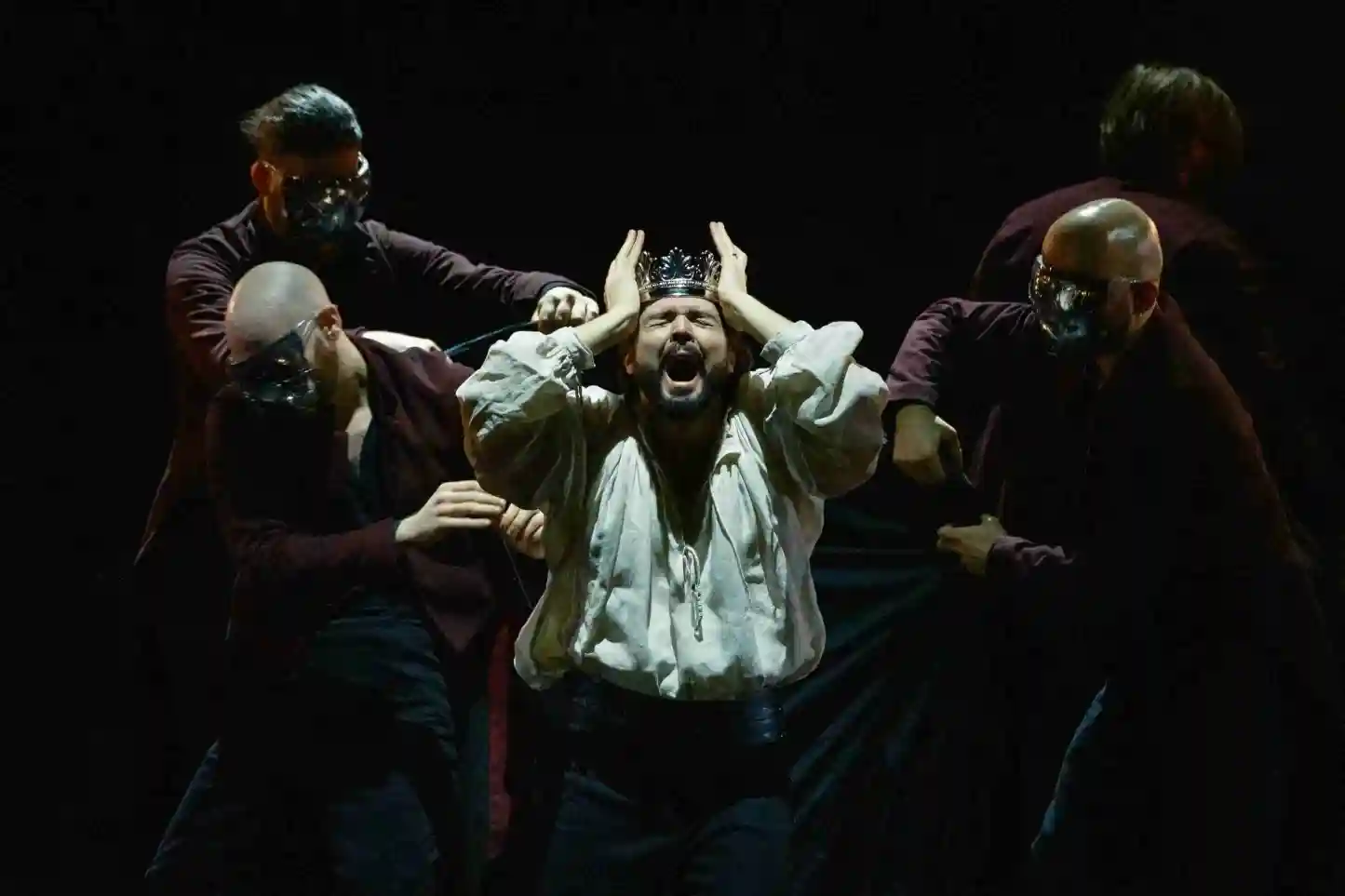
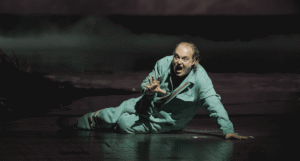
Micheletti possesses something rare: intelligence on stage. Every phrase seems thought through, every gesture carries intention. Vocally, his line is elegant and firmly grounded in Verdi style, but what makes him fascinating is the psychological detail he brings to his characters. His Macbeth was not merely ambitious or violent — he felt human, haunted, fragile in moments and terrifying in others.
It was a performance of precision and darkness, and the audience responded with the enthusiasm of a crowd that clearly knows it is witnessing an artist at the height of his powers.
Lidia Fridman – A Lady Macbeth of Steel
Opposite him, Lidia Fridman delivered a striking Lady Macbeth.
I had recently seen her in Lucrezia Borgia, Stiffelio, and other Verdi roles, but this was my first time hearing her tackle one of the most demanding parts in the repertoire. Lady Macbeth requires not only vocal power but an almost theatrical cruelty — and Fridman embraced both.
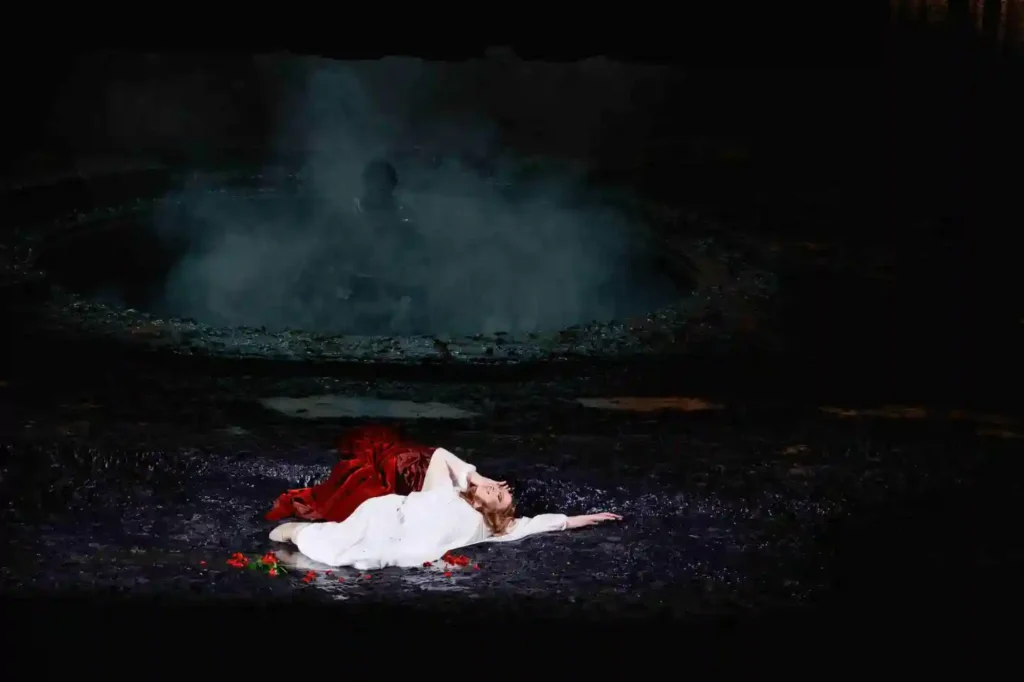
Her voice cuts through the orchestra with remarkable focus, and she possesses the dramatic instinct needed for such a dark character. Together with Micheletti, she formed a chilling partnership. They are both young artists, but they already sing with the authority of seasoned performers. It would not be surprising if they became two of the defining Verdi interpreters of their generation.
Maharram Huseynov – A Powerful Banco
A special mention must go to Maharram Huseynov as Banco.
I had the pleasure of seeing him only weeks earlier in La Cenerentola in the same theatre, where he already impressed. But hearing him in Verdi revealed another dimension of his voice. The darker repertoire suits him wonderfully.
His bass carries depth and authority, and in this production he was given a costume that made him look almost mythic — powerful, imposing, even a little dangerous. Dramatically and vocally, he brought real weight to the role. In truth, I may have preferred him here in Verdi even more than in Rossini.
Giovanni Sala – A Memorable Macduff
Giovanni Sala took on the role of Macduff — a relatively small part in Verdi’s catalogue, but one that contains one of the most emotional moments in the opera.
The Italian tenor delivered his aria with sincerity and elegance, and the response from the Turin audience was immediate. It was clear he had many admirers in the house, and rightly so. This was my first time hearing him live, but hopefully not the last.
A Strong Supporting Cast
The production also gave generous space to its supporting roles. Chiara Polese, Riccardo Rados, and Luca Dall’Amico were all clearly visible within the staging and contributed meaningfully to the dramatic texture of the evening. It is always refreshing to see secondary characters treated with such care — especially when they are portrayed by talented young singers.
Chiara Muti’s Staging
The staging, directed by Chiara Muti, deserves a few words as well.
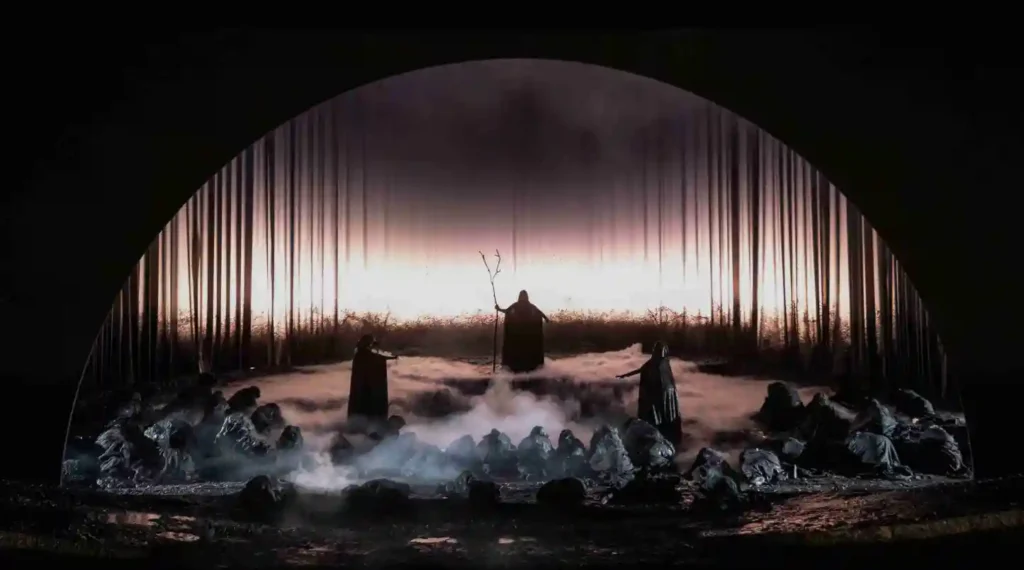
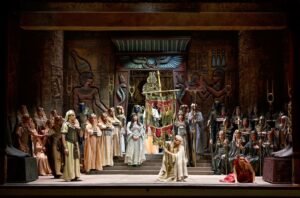
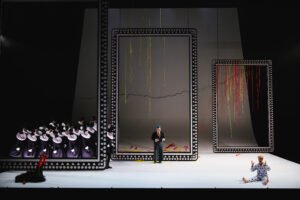
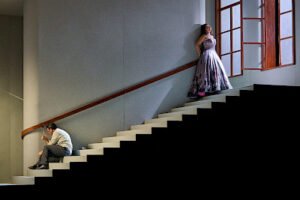
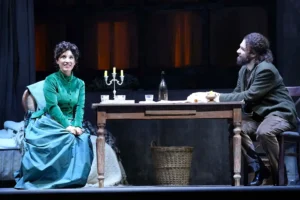
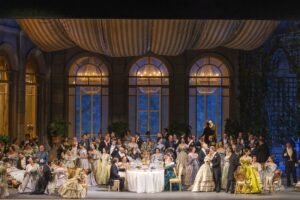
Her work does not always divide critics gently — some of her recent productions have been heavily debated. Yet here, the result felt surprisingly poetic. The production relied on shadows, light, smoke, and a dark, almost infernal stage floor. At times, the atmosphere suggested hell itself; at others, something strangely celestial.
It was minimal in narrative gesture but strong in visual mood — and it matched the psychological darkness of the opera very effectively.
A Theatre That Wins the Heart
Once again, I must thank the Teatro Regio di Torino for its warm welcome. The more time I spend there, the more it becomes a theatre I genuinely cherish.
I usually love historic opera houses — those that creak a little, that carry the marks of time. The Regio is more modern, yet it has one enormous advantage: from virtually every seat in the house, you can see the stage perfectly. That alone makes it a wonderful place to experience opera.
On Saturday night the theatre was, of course, completely sold out. For Macbeth with Riccardo Muti, it could hardly be otherwise.
And I am already looking forward to returning in a few weeks for I Puritani, directed by Pierre-Emmanuel Rousseau, and later in June for Tosca, the final opera of the season.
If the casting is anything like what we experienced on this extraordinary evening, I can only recommend one thing: get your tickets now.
CAST
Conductor
Riccardo Muti
Regia
Chiara Muti
–
Macbeth
Luca Micheletti
Lady Macbeth
Lidia Fridman
Banco
Maharram Huseynov
Macduff
Giovanni Sala
Dama di Lady Macbeth
Chiara Polese
Malcolm
Riccardo Rados
Il medico
Luca Dall’Amico
Un domestico
Eduardo Martínez
Il sicario
Tyler Zimmerman
L’araldo
Daniel Umbelino
About the Author



The Regio’s clear sightlines sound especially valuable for Chiara Muti’s shadow-heavy Macbeth. Lighting contrast matters too, since even an unobstructed view could leave Micheletti’s small, deliberate gestures hard to read. As a separate note, I work on DashedUp’s Sonic Wave guide, covering the Geometry Dash level’s history, difficulty and gameplay.