SEMIRAMIDE | Teatro Massimo Palermo
ph © rosellina garbo
Rossini’s monumental opera, composed for Venice’s La Fenice, where it premiered on February 3, 1823, with Isabella Colbran in the title role, returns to Palermo after an absence of nearly 150 years, to be performed for the first time on the stage of the Teatro Massimo, the largest opera house in Italy and among the most beautiful in the world.
Semiramide is a true apotheosis of Italian tragic opera, a grandiose and refined synthesis of Rossini’s music, in the theater where he achieved his first triumph with Tancredi and when he was preparing to leave Italy forever. An opera rich in grand arias, formidable duets, impetuous choruses and concertatos among the most majestic and passionate, an apotheosis of bel canto with all its corollaries of coloratura, trills, cadenzas, and agility, for a duration of over four hours.
The libretto by Gaetano Rossi is inspired by Voltaire’s Sémiramis, with an Oedipal plot and supernatural apparitions at the most dramatic moments of the tragedy, when incest is bordered on the brink and matricide is committed.
The Teatro Massimo deserves great credit for reviving this opera, offering an almost completely integral performance of a work that, unfortunately, has rarely been performed due to its Wagnerian length and the need for a leading quartet of exceptional technical prowess. All the greatest names of the Rossini Renaissance are associated with Semiramide, from Sutherland to Anderson, from Horne to Valentini Terrani, from Samuel Ramey to Rockwell Blake, to name just a few.
The Palermo performance was rewarding, with peaks of excellence from the protagonist and the orchestral direction, and a provocative yet elegant and visually captivating staging.
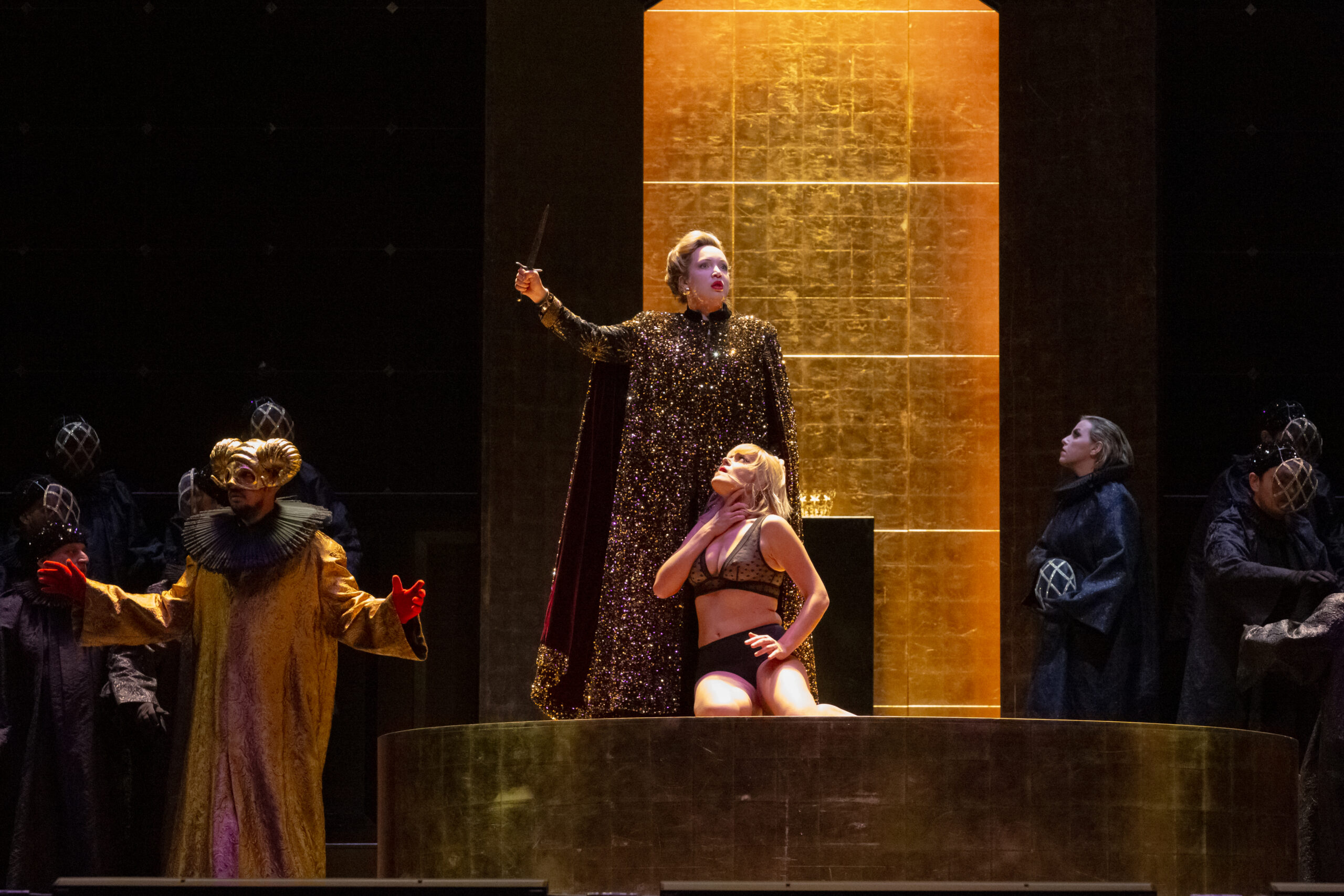
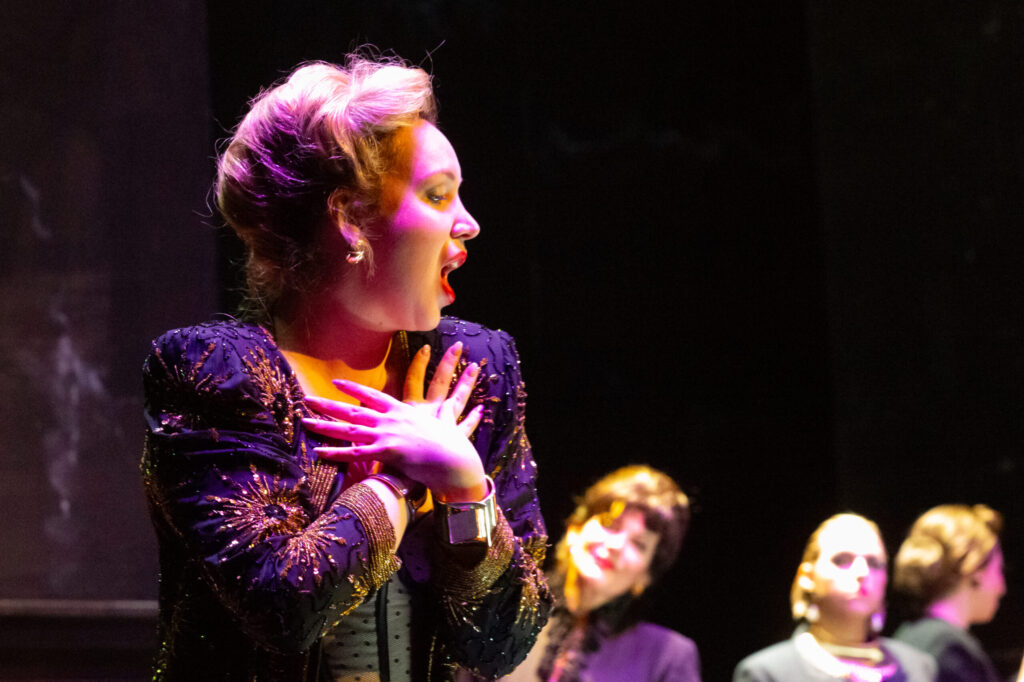
In her role debut as Semiramide, Vasilisa Berzhanskaya emerges an absolute triumph, regina e guerriera! It’s impressive how, in just a few months, the singer has seamlessly transitioned with perfect technical mastery from a contralto role, such as Cenerentola in Turin, to the dramatic soprano of Norma in Parma, to the cruel Queen of Babylon, the quintessential Colbran role. And it’s precisely the color of her voice and her mastery of the colossal tessitura required that make Berzhanskaya an almost ideal interpreter of the role, distancing herself from the purely virtuosic interpretations given by celebrated coloratura sopranos. A prime example of this, is her interpretation of the cavatina bel raggio lusinghiero, the opera’s most famous passage, where the singer forgoes introducing pyrotechnic variations in favor of a more expressive coloratura and embellishments that enhance the precious color of the mid-low range and fully convey the turmoil and anguish of Arsace’s waiting. Berzhanskaya’s performance intensifies throughout the evening, culminating in a formidable second act, particularly in the duets with Assur and Arsace, in which the accents and coloratura become more vibrant as the Queen’s emotions evolve. Throughout the evening, she confirms all the qualities that impressed us in her recent Norma in Parma, particularly her perfect diction, sculpted accents, and exemplary phrasing that gives meaning and prominence to Rossini’s astonishing melodies. The beauty and charm of her stage figure also contribute to making this Semiramide memorable, enhanced by the extraordinary, at times extremely revealing, costumes inspired by French haute couture, designed by Pierre-Emmanuel Rousseau.
The rest of the cast was of a good standard, though not quite as impressive as the title character. Making her debut in the travesti role of Arsace, mezzo-soprano from Palermo Chiara Amarù demonstrates a fine command of Rossini’s singing, with precise and punctual coloratura, ease in the high notes, and effective expressive intentions. It should be noted that the role requires greater volume and a more resonant lower register, and the singer struggles and succumbs in the duets with Semiramide, where the blend of timbre and sound of the two voices is essential to fully convey the musical wonders and prodigy of this miraculous score. Despite these vocal limitations, in a role that represents the pinnacle of contralto vocalism, Amarù finds her finest moment in the aria in sì barbara sciagura, with excellent expressive and technical skills in conveying the hero’s internal conflicts.
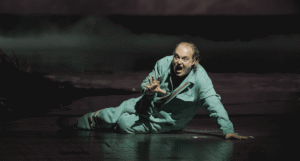
Possibly even more challenging is the role of Assur, written by Rossini for the bass Filippo Galli, also the first to perform Maometto secondo, another monstrous role. Mirco Palazzi has extensive experience in Rossini roles, where he has distinguished himself with his noble timbre and technical mastery. Although improving compared to his recent Lucrezia Borgia in Florence, Palazzi struggles to assert himself vocally and at times appears in difficulty, with excessive breathing in the flow of his singing and coloratura. Improving throughout the performance, the singer offers an excellent and convincing interpretation of the mad scene; an extraordinary passage that the composer, contrary to all contemporary conventions, entrusts not to the prima donna but to her antagonist; it is said that this was due to the already declining vocal abilities of Colbran, who had just become Signora Rossini.
The role of Idreno requires virtuosity and an enormous vocal range; tenor Maxim Mironov masters the challenging writing of the two arias with great bravado, featuring evocative contralto high notes and swirling coloratura, rendered with great skill.
In the role of Princess Azema, soprano Francesca Cucuzza stands out, with a voice of remarkable volume and a sharp timbre that lends itself well to the director’s dark interpretation. Adriano Gramigni, in the dual roles of Oroe and Ombra di Nino, displays a beautiful dark deep tone and excellent musical intentions; tenor Samuele di Leo, in the role of Mitrane, also performed very well, displaying good technical ability and elegant phrasing.
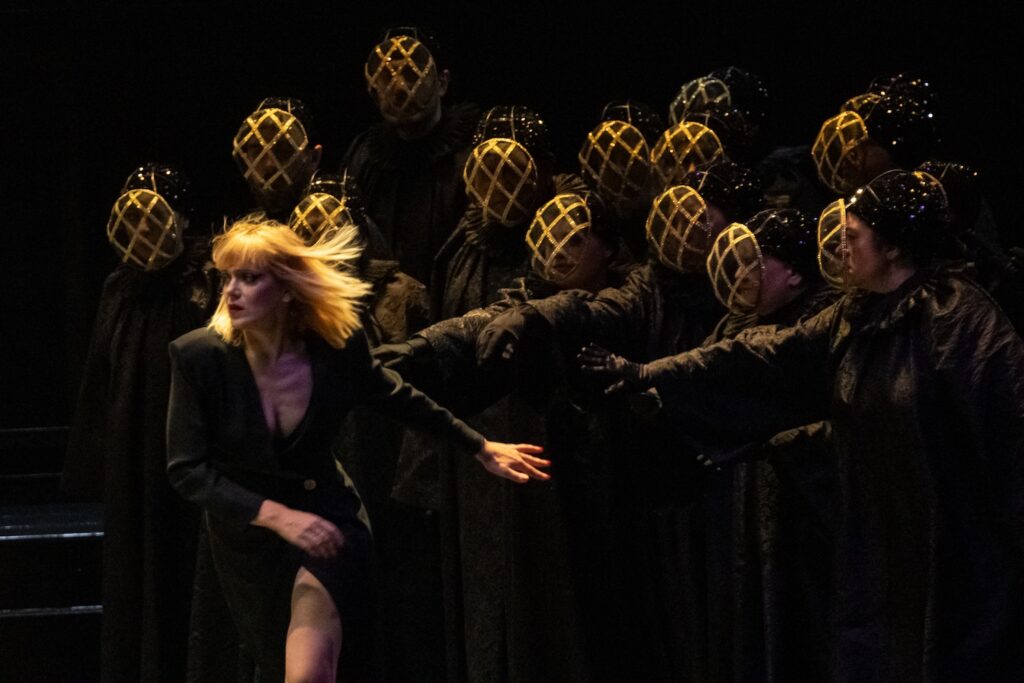
In a monumental score that is the quintessence of Italian opera and a triumph of Rossini’s invention, American conductor Christopher Franklin offers a remarkable performance, marked by praiseworthy orchestral transparency, vigor, and rhythmic precision, mastering both the dramatic and heroic aspects and the more intimate and mad sides. Franklin’s interpretation emerges clearly from the performance of the splendid symphony, grandiose and captivating, which Rossini revived after the experimentalism and innovations of his Neapolitan period: consider, in comparison, the electrifying and chilling opening of Zelmira. The control of dynamics is perfect, and Rossini’s crescendos emerge clearly and vividly from the soundscape, thanks in part to the wonderful performance of the Teatro Massimo orchestra, which also stands out for the excellence of its leading parts, such as the trumpet solos. Also worthy of praise in Franklin’s conducting is his ability to consistently maintain perfect balance with the stage, despite the different weights of the voices on stage. On the other side, the choir’s many important interventions were not always in focus, often lacking in incisiveness and precision.
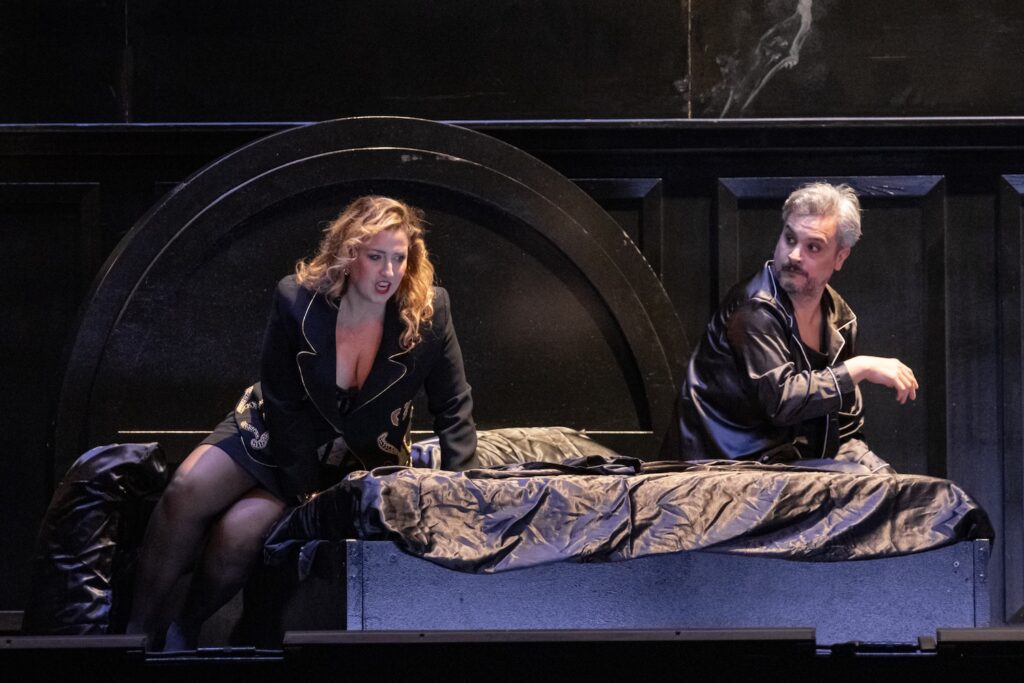
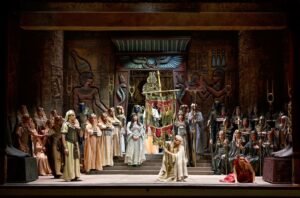
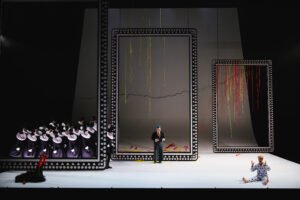
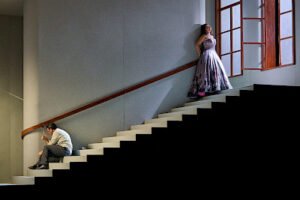
The stage design comes from the Opéra de Rouen Normandie, directed by Pierre-Emmanuel Rousseau, who also created the sets and costumes. The show’s underlying concept is highly captivating, drawing more from Dante Alighieri, che libito fé licito in sua legge, / per torre il biasmo in che era condotta than from Voltaire. The new Babylon, where every pleasure becomes permissible, is the New York of the movies, immortalized in cult films like Eyes Wide Shut and The Hunger, openly referenced and evoked by the director, with all their inventory of parties, orgies, murders, and Sapphic love affairs. In particular, the orgiastic masked party from Kubrick’s film is recreated, complete with an officiant and naked Bacchantes, while the character of Catherine Deneuve, vampire and femme fatal, is used from Tony Scott’s film. This directorial vision seems particularly fitting in an opera that stages the main taboos of our Western and Christian culture, namely incest and matricide, as Rousseau clearly highlighted in the symphony, where he inserted two flashbacks, to Ninia’s funeral and the murder of Nino, slaughtered by Semiramide and Assur. The production maintains a stylistic level of great elegance, even in the most violent and bloody scenes, thanks also to the excellent acting work of the singers and the beautiful costumes: Vasilisa, who enters the stage wearing a gold lamé dress, is candidate to become iconic in the glamour world of opera. Even the ending, totally different from the libretto, appears powerful and coherent with the directorial plan: the New York Babylon does not die out with the death of Queen Semiramis and the arrival of a new generation of power, but is perpetuated with the new Queen Azema who, as soon as she ascends to the throne, kills Arsace, in a cyclical continuity with the murder of Nino.
At the end of the show in a sold-out theater, the audience, probably intimidated by the length of the work and the novelty of the title, paid tribute with esteem to all the performers.
::::::::::::::::::::::::::::::::::::::::::::::
CAST
Semiramide Vasilisa Berzhanskaya
Arsace Chiara Amarù
Assur Mirco Palazzi
Idreno Maxim Mironov
Azema Francesca Cucuzza
Oroe / Ombra di Nino Adriano Gramigni
Mitrane Samuele Di Leo
–
Conductor Christopher Franklin
Director, Scene and Costume Designs Pierre-Emmanuel Rousseau
Lighting Designs Gilles Gentner
Assistant Director Achille Jourdain
Mime movements Carlo D’Abramo
About the Author