I PURITANI | Teatro Regio Torino
Some theaters become familiar over time.
And then there are theaters that slowly become part of your opera life.
Before even talking about I Puritani, I really need to once again thank the Teatro Regio di Torino. They are always incredibly generous, incredibly welcoming with the media, and especially with us at Opera Diary. Every single time we come to Turin, we are welcomed warmly, seated beautifully, and treated with genuine kindness. It honestly becomes rarer and rarer nowadays to feel this level of hospitality in big opera houses, and Turin continues to do it perfectly.
And what a theater.
The more I go, the more the Teatro Regio becomes one of my absolute favorites in Italy. The visibility is amazing from basically every seat, the atmosphere is elegant without being pretentious, and the audience has that wonderful Italian mix of passion and warmth that makes opera nights feel special before the orchestra even starts tuning.
The new 2026/2027 season was announced a few days ago and honestly… I’m already counting the days.
Cavalleria Rusticana/Pagliacci opening the season with Gregory Kunde? Yes please.
Leoncavallo’s La Bohème? Inject that directly into my veins.
And then Iris, La Traviata, Carmen with Erwin Schrott and the always electric Ramona Zaharia, Eugene Onegin, Edgar, Salome… honestly Turin is cooking something very serious next season. My friend and colleague Vinicius will probably already be booking flights for Salome as we speak.
But back to Bellini.
I Puritani had been sitting in my calendar for months already. First because I really wanted to see John Osborn again, a tenor I genuinely admire in this repertoire. Second because Pierre-Emmanuel Rousseau’s productions always manage to surprise me in one way or another. And third because I was very curious to hear Gilda Fiume again in the role of Elvira, which remains one of the most dangerous and unforgiving soprano roles in bel canto.
And honestly?
I had a really, really good time.
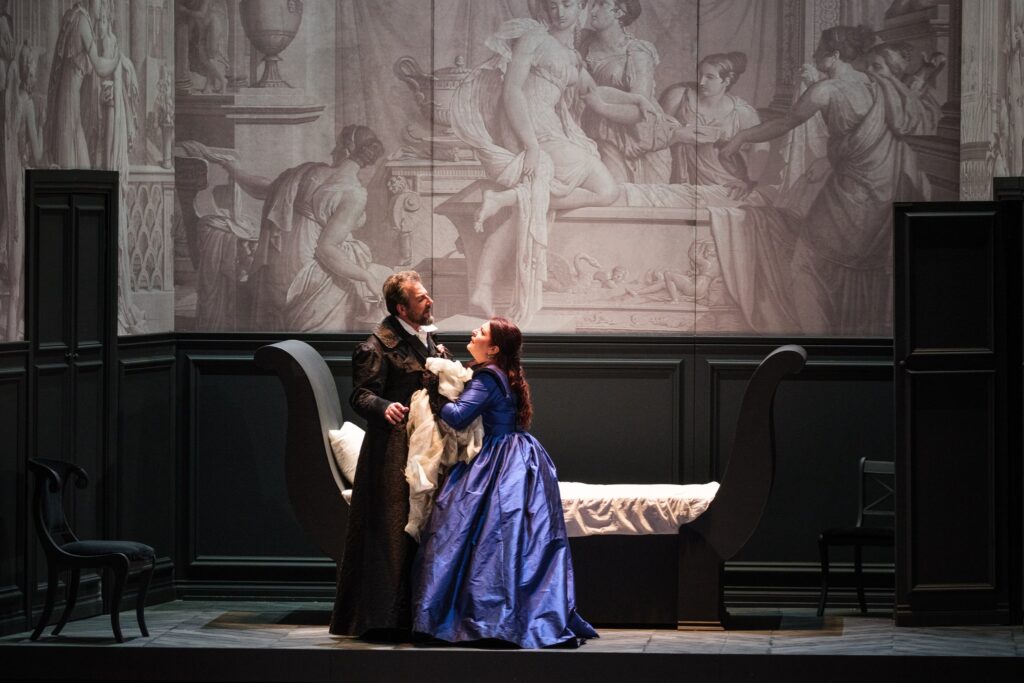
My favorite moment of the evening was without question John Osborn’s incredibly elegant staircase descent during “A te, o cara.” It had everything you want from bel canto: class, control, romance, style. Sometimes opera is simply about one man walking slowly down a staircase while singing Bellini beautifully and suddenly life makes sense again.
And of course… the final ten minutes.
Every bel canto fan waits for the ending of I Puritani the way people waited for the Titanic to hit the iceberg: you know it’s coming, you know it’s legendary, and you spend the entire evening mentally preparing yourself for the chaos.
John Osborn absolutely delivered.
That famous high F? Slightly cautious maybe, yes. But still thrilling to hear live. And honestly, any tenor willing to even approach that note deserves immediate respect and probably a free dinner afterward.
What makes Osborn so fascinating in this repertoire is that he never sings bel canto like a machine. There’s always elegance, intelligence, style, but also humanity underneath. You feel the effort, the risk, the emotion. And that makes the performance even more exciting.
Gilda Fiume was also extremely effective alongside him. And God knows I Puritani is not exactly a relaxing evening for a soprano. Every time I hear this opera, I inevitably think about Lisette Oropesa, who for me remains the absolute queen of Elvira today. But Gilda Fiume truly held her ground beautifully. The voice moves naturally through Bellini’s long phrases, and her chemistry with both the tenor and the baritone worked very well throughout the evening. Some of the ensemble moments were genuinely excellent.
Francesco Lanzillotta conducted with precision and elegance. Maybe not the most wildly colorful interpretation of Bellini ever heard, but very clean, very controlled, and with some accelerations here and there that I personally loved. You all know by now that I adore Italian opera when it suddenly feels like someone pressed x1.2 speed during the orchestral explosions. And Bellini, when played with momentum instead of excessive heaviness, becomes incredibly alive.
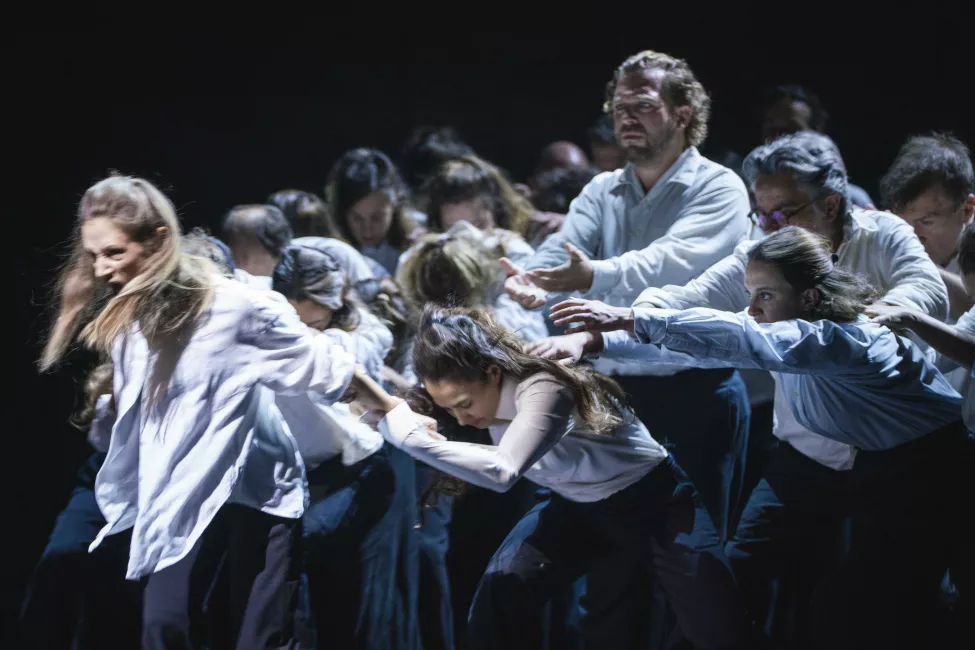
Nicola Ulivieri and Simone Del Savio both contributed strongly to the evening as well. I especially loved their interactions together. There’s one moment where the whole stage suddenly comes alive with lights everywhere, almost like a surreal ballroom or nightclub atmosphere, reminding me a little bit of the famous Roméo et Juliette production in Paris for those who know it. That entire section worked wonderfully visually and musically.
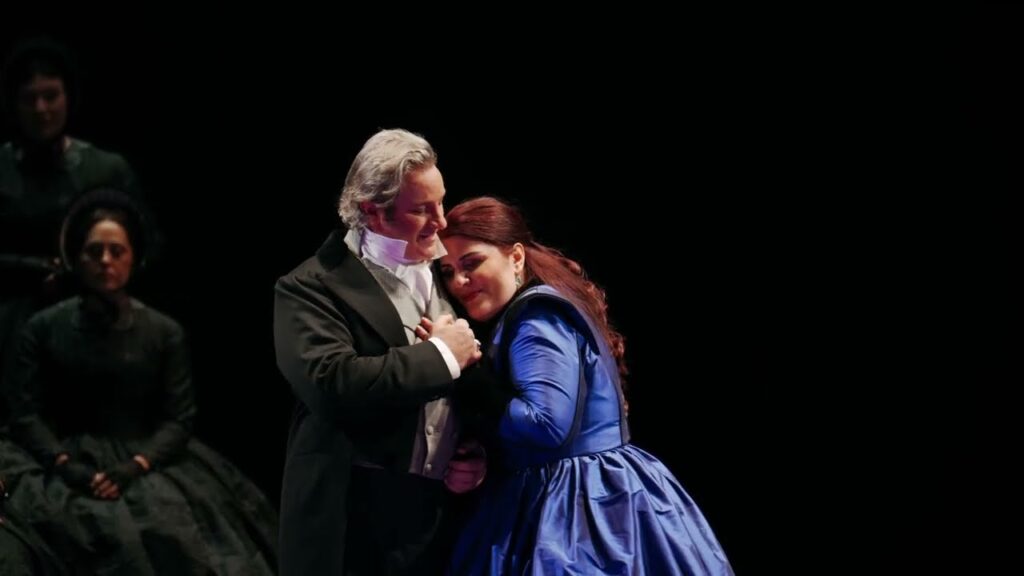
Nicola Ulivieri brought warmth and authority to Giorgio, while Simone Del Savio gave Riccardo a beautiful intensity and vocal solidity. Their scenes added real theatrical depth to the production.
Andrea Pellegrini, Chiara Tirotta and Saverio Fiore all completed the cast very convincingly, contributing to an ensemble that felt balanced, invested and musically very coherent from beginning to end.
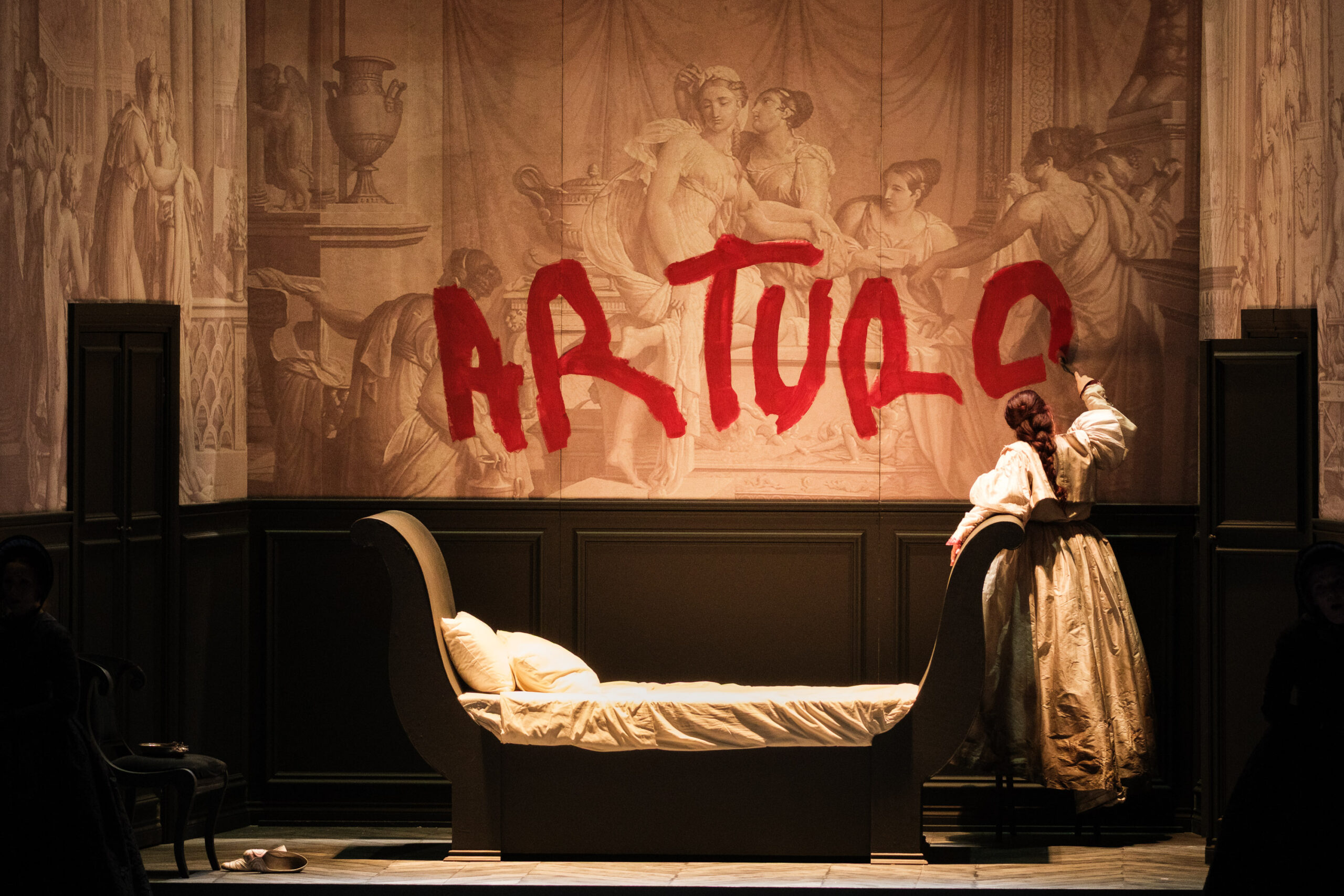
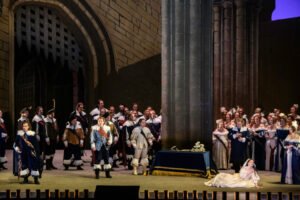
As for Pierre-Emmanuel Rousseau’s staging, once again he manages to create something elegant without overcomplicating things. The costumes and lighting created a world that felt romantic, poetic and theatrical without trying too hard to reinvent Bellini into some bizarre philosophical experiment involving supermarket carts and neon lights. Sometimes respecting the beauty of bel canto is already enough.
And honestly… after so many dark, hyper-conceptual productions all over Europe lately, it feels good to simply sit down and enjoy Bellini being Bellini.
Now I already cannot wait to come back to Turin in less than a month for Tosca — and not just once, but twice in less than 24 hours with two different casts. And that, my friends, is going to be VERY cool.
One final special mention for the kindness of the press office, especially Sara Zago, who is always incredibly reactive, helpful and kind in every exchange. When people like us spend half our lives organizing trains, flights, hotels and opera tickets across Europe, having someone so efficient and welcoming truly makes all the difference.
***************************
CAST
Elvira – Gilda Fiume
Arturo Talbo – John Osborn
Giorgio Valton – Nicola Ulivieri
Riccardo Forth – Simone Del Savio
Gualtiero Valton – Andrea Pellegrini
Dama di Villa Forte – Chiara Tirotta
Bruno Roberton – Saverio Fiore
–
Francesco Lanzillotta – direttore d’orchestra
Pierre-Emmanuel Rousseau – regia, scene e costumi
Carlo D’Abramo – coreografia
Gilles Gentner – luci
Achille Jourdain – assistente alla regia
Guillemine Burin des Roziers – assistente alle scene
Gea Garatti Ansini – maestro del coro
About the Author

Vielen Dank für diese hervorragende, treffende Kritik!
Besonders die Äußerungen in Bezug auf John Osborn fand ich in jeder Hinsicht gelungen. Ich sehe das Besondere an ihm genau wie der Autor und kann Kritiker nicht verstehen, die die Leistung eines Künstlers -gerade in dieser Oper – nur von den hohen Tönen abhängig machen! Danke!@