DER ROSENKAVALIER | Wiener Staatsoper
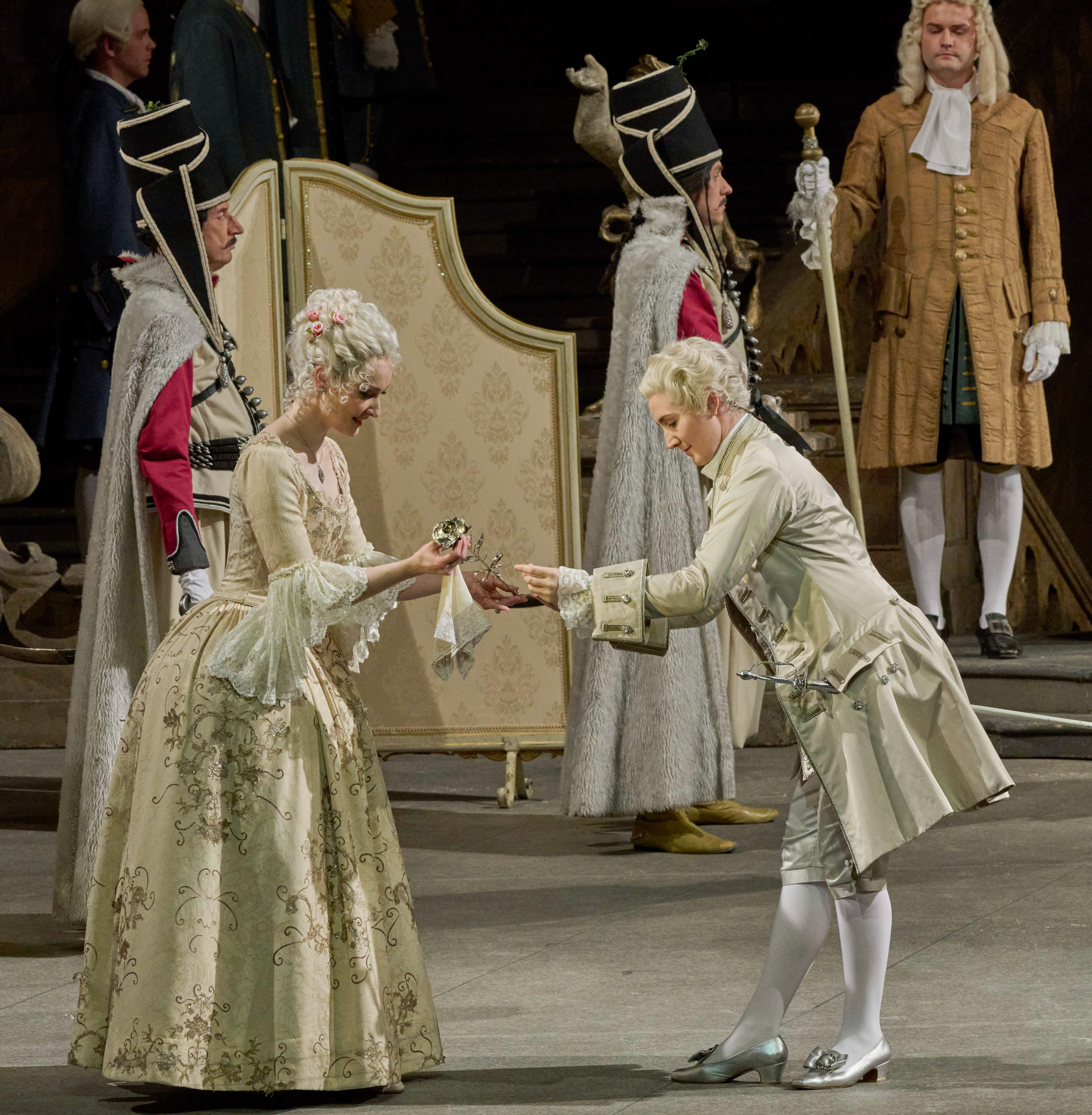
To hear and see this opera here makes more sense than anywhere else in the world – save perhaps Dresden – because this is where it happens, and where it was born. One only has to read the word ausverkauft on the ticket office website, a few hours before the performance, while checking whether the house will be full, to understand as much. For if one were forced – absurdly forced – to name only a single production, it would be this one. Because the cast is resplendent. Because in the pit stands one of the finest Straussians of our time, conducting the very orchestra which, together with that of the Bayerische Staatsoper, contends for the title of the Straussian orchestra par excellence.
Let us be plain: almost every promise is kept. “Almost”, only because one inevitably measures what is seen and heard here against the very best this work can offer. Yet even the few things one might still wish to refine threaten neither the quality of the performance nor the image one had formed, before entering the theatre, of what the evening might be. Anyway, what can one expect from a production in which the Italian singer is portrayed by the fabulous Michael Spyres? The very best – or something not far short of it.
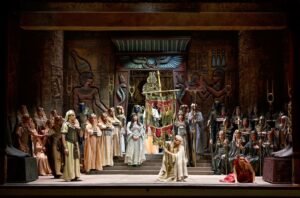
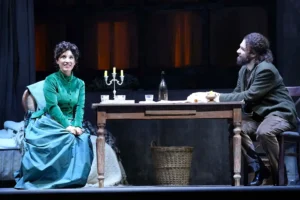
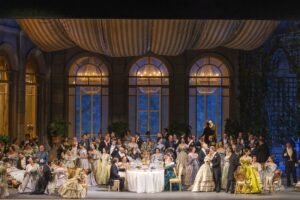
What admits of no criticism is this Maria Theresa Vienna which no other set, no other stage atmosphere devised to date, has managed to recreate with such authenticity and, at the same time, such restraint. Nothing crowds the eye. There is indescribable pleasure in those sumptuous costumes, in the exquisitely refined wall sets, in the lighting effects which, without ostentation, merely remind us that it is dawn in the Marschallin’s bedroom, or that we have arrived at the tavern in the third act. Otto Schenk understood that this work requires ritual – almost liturgy. He understood too the decadence that lies at its heart, and the need to place these characters in what feels like the most natural setting imaginable for them. At a time when so many productions labour to reinvent opera through concepts and reinterpretations that do not always justify themselves, it is deeply satisfying to discover how successful simplicity can be – or rather the choice to have remained simple, which is not at all the same thing as being simplistic.
The conducting, in a word: jubilant. To play Strauss like this can have only one effect: those who do not yet love this music will begin to love it, and those who already do will love it still more. One suspects the reason why the orchestral direction feels so complete, marrying nervous fluidity to delicate intensity: Alexander Soddy loves this score too much to conduct it otherwise. His reading lives and breathes, somewhere between Solti’s effervescence and Kleiber’s elegance. None of the work’s essential markers is sacrificed. Act I unfolds in opulent delicacy, erotic tension giving way to chamber-like lightness with absolute naturalness. Act II whirls with energy while preserving that sincere romanticism, that silvery shimmer one longs for in the Presentation of the Rose. Act III is more delightfully farcical than the finest operetta plot, and the final trio positively glows. Yet within these familiar sound worlds, which the listener almost awaits in advance, the British conductor reminds us that Strauss’s orchestral writing tolerates neither boredom nor half-measures. And still the clarity remains, as does that sovereign mastery of transitions. He quickens the pace, then loosens it, slips gently back into marching rhythm, lets the music smile mischievously for a moment before setting it once more in motion. And the Orchester der Wiener Staatsoper follows him willingly, answering the slightest gesture.
There is the lyricism of an Octavian (Samantha Hankey) unexpectedly poetic and luminous. Less impetuous perhaps, less agile than others heard recently, yet possessed of immense nobility: dignified always, with blazing top notes, more inward, more tender, and for that very reason more touching. There is the creamy freshness of Nikola Hillebrand’s Sophie, a talent already praised at length in an earlier review on this site and fully confirmed here, her voice cutting through the orchestra by virtue of its brilliance and clarity alone. There is the acid authority, the almost caricatural force, of a quite marvellous Mariane Leitmetzerin in Regine Hangler, who makes one tremble with impatience for Rofrano’s arrival at Faninal’s house at the beginning of Act II. The importance of that moment in the opera is too rarely acknowledged. It is there that all the magic of the Presentation of the Rose begins. It is there that anticipation becomes almost unbearable, before the encounter which gives the work its very title. Regine Hangler prepares the ground so perfectly that the emotion strikes all the harder. Beside her, Adrian Eröd contains Faninal’s excitement and nervous agitation within a finely nuanced performance.
Seductive, if not entirely complete, is Camilla Nylund’s Marschallin. She knows the role intimately and grasps the psychology of the character with absolute assurance. Yet one may reasonably wonder whether the voice of an Isolde, of the Brünnhilde she sang in this house’s Ring this season, of a Turandot, can entirely suit a character requiring such refinement of line and such suppleness – qualities liable to suffer from too frequent association with those vast lyric monsters. That evening, the emission, though broadly controlled, occasionally seemed just a shade too pressed. The passaggio did not always move with complete ease, and certain attacks lacked their usual floated quality. Yet that chiselled diction, never once compromised; that vibrato, always under control; those half-tints, delicate and elegant alike; and above all that ability to sustain high piani, might well make the Finnish soprano one of the rare exceptions proving the rule: not every dramatic soprano possesses the gifts required for this role.
Günther Groissböck, a basso cantante? Certainly. Ease across the entire range? Yes. Theatrical presence, aristocratic vulgarity? In abundance. But the projection is no longer what it once was, to the point that the text becomes difficult to grasp in passages approaching Sprechgesang. What has happened to that voice which once flooded the hall with musicality, sustaining effortlessly that noble Viennese line – purebred, yet touched with rustic dialect – and that vocal subtlety which lent the character even a form of seduction, musica e parola becoming one and the same thing? Fatigue perhaps, at the end of the operatic season. One hopes so. The character, at any rate, remains wholly there: palpable, fully inhabited, perhaps never more vividly embodied in all the buffoonery the stage allows him.
The feeling on leaving the theatre is that of having taken part in one of those rare moments one will be glad, one day, to say one was there to witness. And the certainty that a masterpiece such as this was made to continue to astonish us, with the sets of another age, the brilliance of today’s cast, and a beauty which will never be subject to the rule of time.
******************************
DER ROSENKAVALIER (op. 59)
Komödie für Musik von Richard Strauss
Libretto von Hugo von Hofmannsthal
Uraufführung am 26. Januar 1911 Staatsoper Dresden
406. Aufführung in dieser Inszenierung
Musikalische Leitung | Alexander Soddy · Inszenierung | Otto Schenk · Bühne | Rudolf Heinrich · Kostüme | Erni Kniepert · Choreinstudierung | Martin Schebesta
Feldmarschallin | Camilla Nylund · Baron Ochs auf Lerchenau | Günther Groissböck · Octavian | Samantha Hankey ·Herr von Faninal | Adrian Eröd · Sophie | Nikola Hillebrand · Jungfrau Marianne Leitmetzerin | Regine Hangler · Valzacchi | Thomas Ebenstein · Annina | Stephanie Houtzeel · Ein Polizeikommissar | Wolfgang Bankl · Der Haushofmeister bei der Feldmarschallin | Wolfram Igor Derntl · Der Haushofmeister bei Faninal | Lukas Schmidt · Ein Notar | Marcus Pelz · Ein Sänger | Michael Spyres · Eine Adelige Witwe | Jozefína Monarcha · Erste adelige Waise | Dijana Kos-Galic · Zweite adelige Waise | Irena Krsteska · Dritte adelige Waise | Arina Holecek · Eine Modistin | Hyejin Han · Ein Wirt | Jörg Schneider · Ein Tierhändler | Thomas Köber · Erster Lakai der Marschallin | Oleg Zalytskiy · Zweiter Lakei der Marschallin | Burkhard Höft · Dritter Lakei der Marschallin | Johannes Gisser · Vierter Lakei der Marschallin | Oleg Savran · Erster Kellner | Wolfram Igor Derntl · Zweiter Kellner | Martin Müller · Dritter Kellner | Konrad Huber · Vierter Kellner | Michael Wilder · Leopold, Diener des Barons | Jaroslav Pehal · Ein Hausknecht | Wataru Sano · Orchester der Wiener Staatsoper · Chor der Wiener Staatsoper · Bühnenorchester der Wiener Staatsoper· Kinder der Opernschule der Wiener Staatsoper · Komparserie der Wiener Staatsoper · Credit for the cover photo: ©Wiener Staatsoper/Michael Pöhn
(For further informations) Link to the Wiener Staatsoper: Der Rosenkavalier
About the Author