ELEKTRA | Opernhaus Zürich
©Monika Rittershaus
When seeing more makes us feel fess: Can visual excess diminish the emotional power of an extraordinary musical performance?
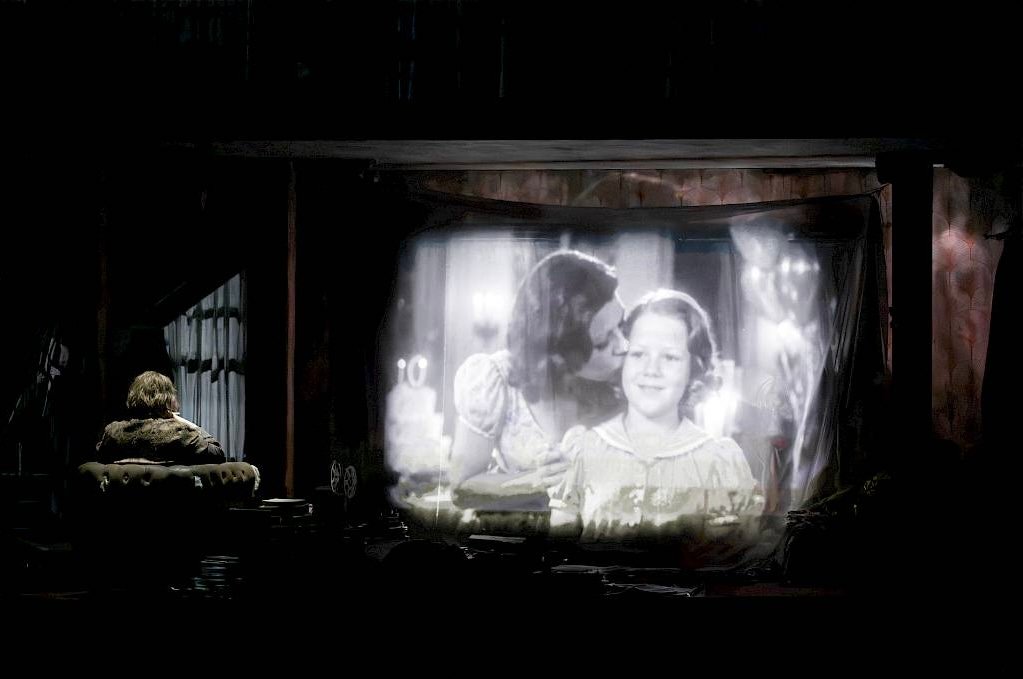
The auditorium falls silent. Black-and-white images appear on the screen, revealing a birthday celebration, family portraits and seemingly innocent childhood memories. Several minutes pass before the first notes of Richard Strauss’s Elektra emerge from the orchestra pit. The film continues, but what initially resembles a nostalgic family archive will gradually become a disturbing projection of a fractured mind.
For her new production at Opernhaus Zürich, Lydia Steier approaches the tragedy through the memories of a woman incapable of escaping her past. Yet while Strauss dispenses with a conventional overture, plunging us directly into the drama, Steier chooses to introduce the story through cinema. An intriguing proposition, although one that already raises questions about the relationship between music and image.
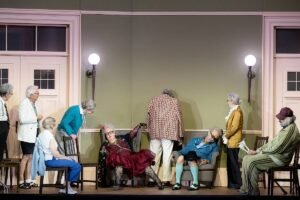
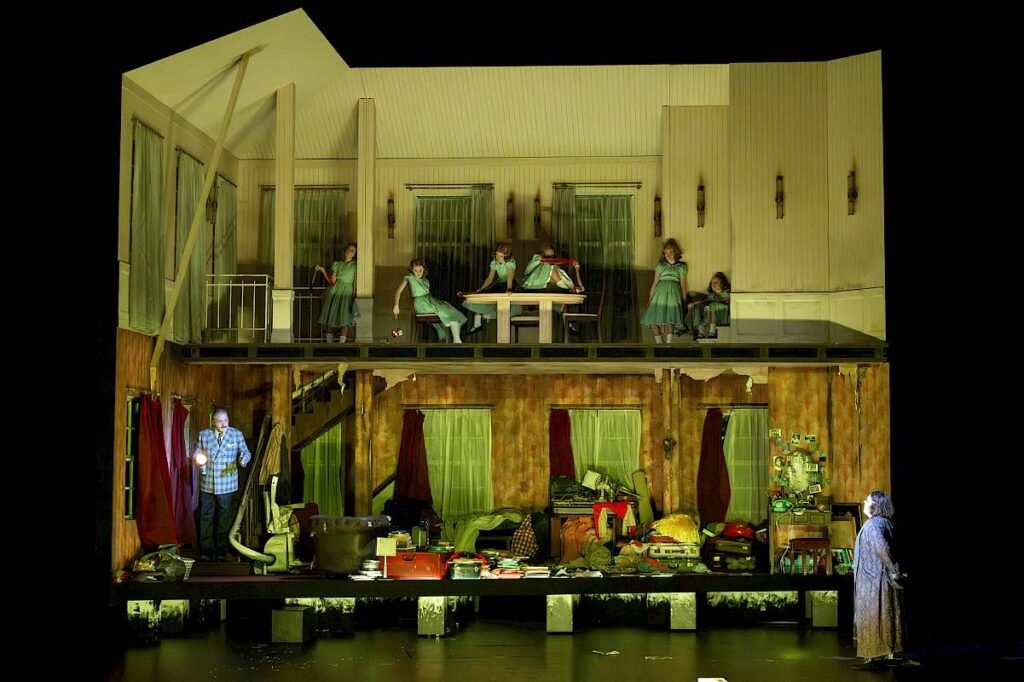
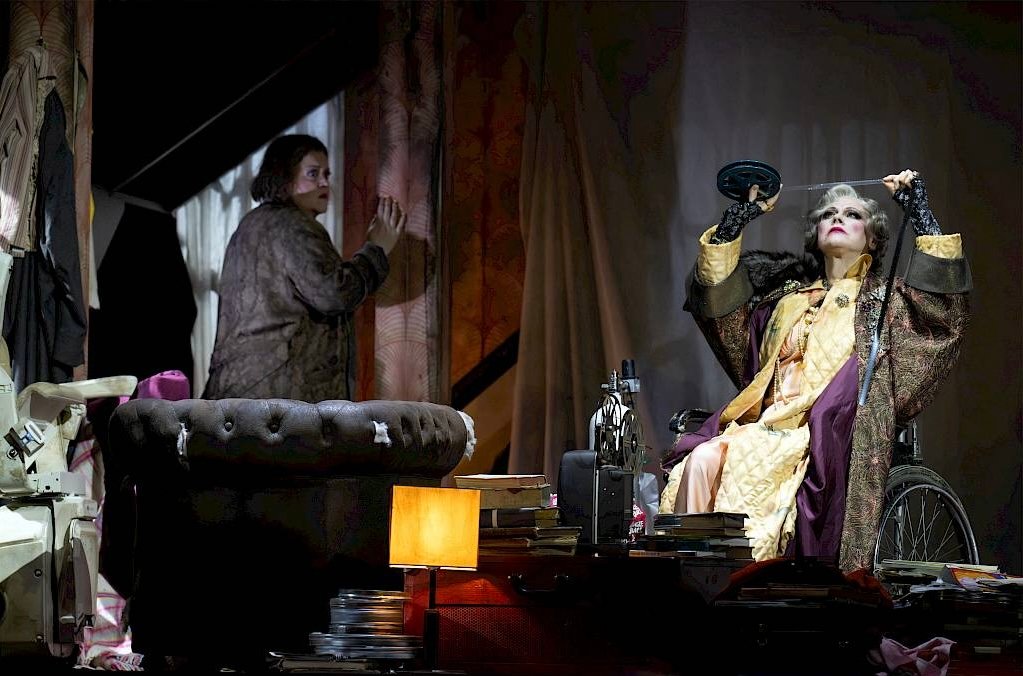
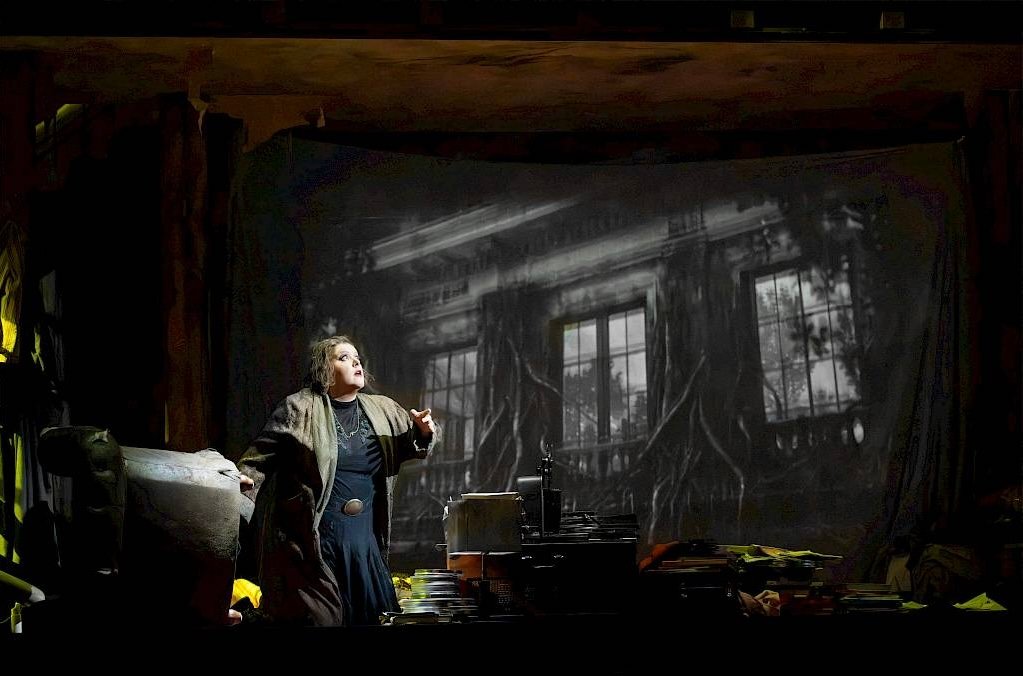
Drawing inspiration from the documentary Grey Gardens, Steier replaces the world of Greek mythology with a decaying family residence. Paul Zoller’s scenery offers an interesting psychological interpretation of the space inhabited by its characters. Upstairs, a relatively orderly dining room preserves something of the family’s former respectability. Beneath it, Elektra lives surrounded by books, photographs and films of a past she continues to relive.
The contrast invites a reading of the house as a representation of the human mind: the appearance of normality on the surface, concealing memories, resentment and unresolved trauma beneath it. This is one of the production’s most convincing ideas, allowing the scenery to acquire psychological significance without imposing a single interpretation.
The extensive use of video is less consistently persuasive. Created by Boris Eldagsen using artificial intelligence, the films recreate an imaginary family archive in which familiar images gradually become distorted. The technology offers fascinating possibilities for exploring the fragility of memory, yet the frequency and duration of the projections sometimes make it difficult to concentrate on the performers themselves.
While the combination of moving images and orchestral music can be compelling during instrumental passages, the projections often compete with the expressions and gestures of the singers during moments of considerable emotional intensity.
In seeking to bring us inside Elektra’s mind, the production sometimes distances us from Elektra herself.
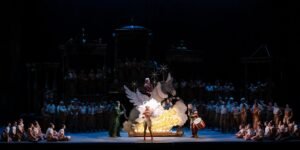
The appearance of several young Elektras gives physical form to the childhood trauma that continues to inhabit the protagonist. Yet these identically dressed figures, carrying axes, immediately remind me of the unsettling imagery of Stanley Kubrick’s The Shining. As the imagery becomes increasingly grotesque, the atmosphere of a horror film begins to take precedence over the psychological drama.
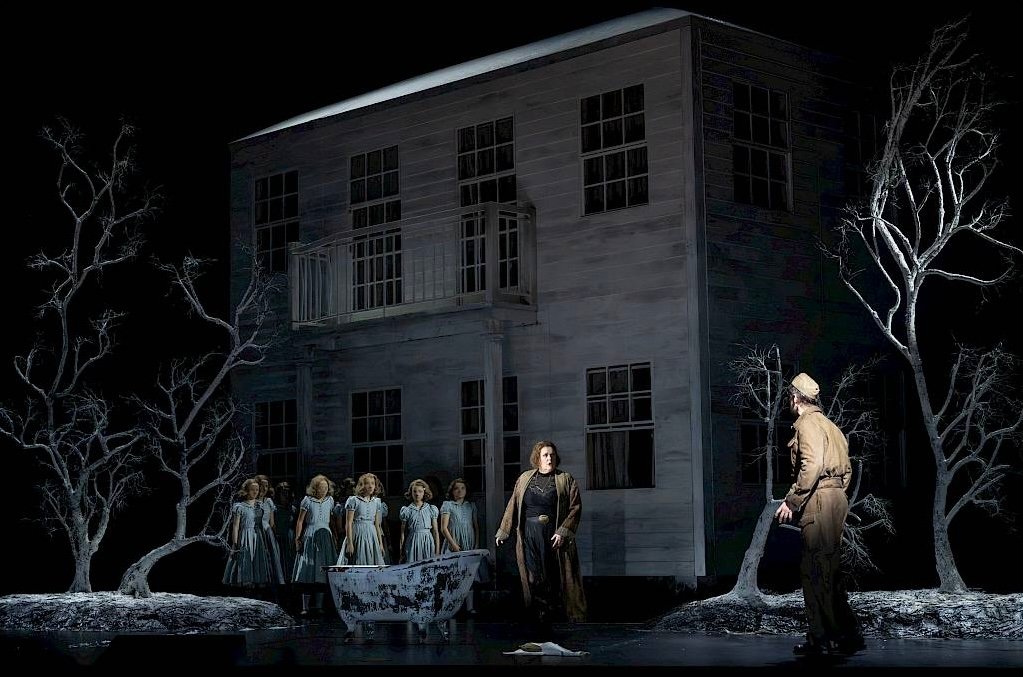
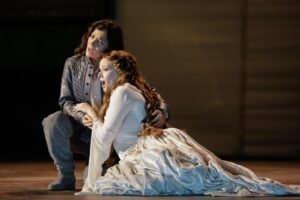
A welcome contrast comes when Elektra leaves the house. Trees emerge on both sides of the stage, transforming the previously confined space into an expansive woodland setting. The relative simplicity of the scenery allows the encounter between Elektra and Orest to acquire greater intimacy.
Appearing with a disturbing head wound, Orest seems suspended somewhere between reality and hallucination. Is Elektra finally reunited with her brother, or has her obsession led her to imagine the person she has been waiting for? Gábor Bretz brings vocal authority and dramatic credibility to this ambiguity, which remains one of the more intriguing aspects of Steier’s interpretation.
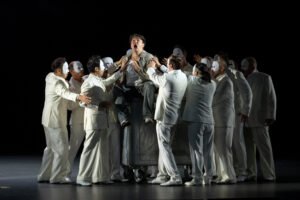
The final section, however, brings the production’s cinematic aesthetic to its most extreme expression. As the house revolves to reveal the bodies of its inhabitants, including those of the servants, Elektra’s revenge becomes an almost indiscriminate massacre.
Rather than developing the psychological tension towards its tragic conclusion, the staging seems to escalate primarily through the increasingly graphic representation of violence. Even Chrysothemis becomes a victim of Elektra’s revenge. The woman whose entire existence revolves around avenging her father ultimately appears as a triumphant murderer consumed by madness.
The horror is certainly visible, but the tragedy becomes increasingly difficult to feel.
Violence is inseparable from Elektra, and its explicit representation is not necessarily problematic. Yet by transforming Elektra into such a monstrous figure, the production leaves surprisingly little room for compassion towards its central character.
At the centre of this production, Miina-Liisa Värelä delivers a remarkably committed performance. Her expressive gaze conveys Elektra’s obsession with striking intensity, while her singing brings considerable emotional depth to this exceptionally demanding role, even if her voice occasionally seems overshadowed by the orchestra.
Alongside her, Sara Jakubiak is particularly impressive as Chrysothemis. Her beautiful timbre, remarkable projection and vocal control make her my highlight of the evening. Her voice emerges with apparent ease from the immense orchestral sound, bringing welcome moments of warmth and lyricism to an otherwise relentlessly tense musical world.
From a dramatic perspective, however, it is Tanja Ariane Baumgartner who fascinates me most. Her Klytämnestra seems almost to embody two different personalities, constantly oscillating between maternal vulnerability and cruelty. These contrasting emotions are reflected as much in her singing as in her acting, making her encounter with Elektra one of the evening’s most psychologically convincing moments.
Musically, the evening is outstanding. Under Lorenzo Viotti’s direction, the Philharmonia Zürich reveals not only the formidable power of Strauss’s orchestration but also its remarkable richness and elegance. Viotti seems particularly at home within this complex musical universe, where moments of unexpected tenderness emerge from the immense orchestral sound, revealing a humanity that the staging does not always allow us to discover.
There are moments when Strauss’s music reveals more about the characters than everything we are shown on stage.
I left Opernhaus Zürich fascinated by Strauss’s music and impressed by its interpreters, yet surprisingly little moved by Elektra’s tragedy. I would gladly experience the work again with the same musical forces, but within a different theatrical interpretation.
Perhaps, in showing us everything that makes Elektra a monster, the production loses sight of what still makes her human.
Pictures ©Monika Rittershaus
About the Author