DIALOGUES DES CARMELITES | Den Kongelige Opera
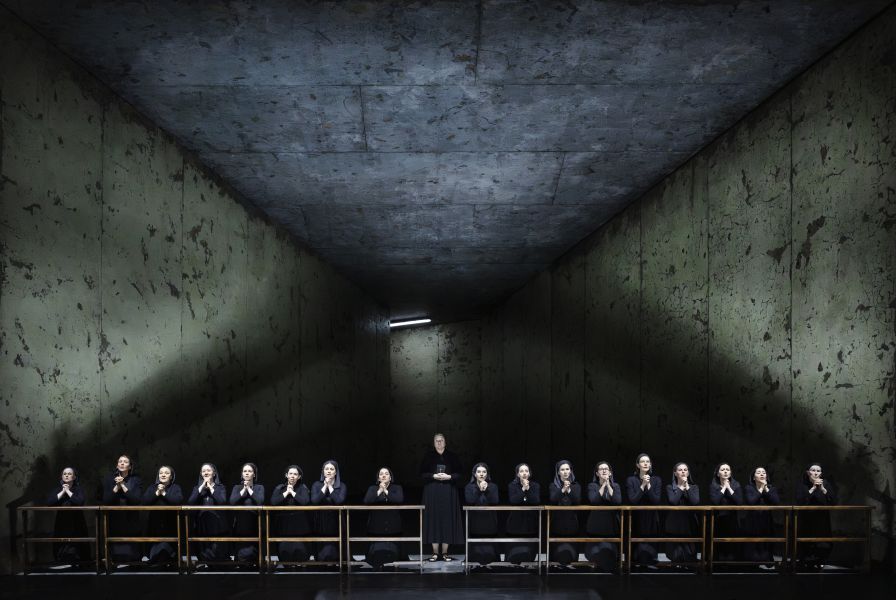
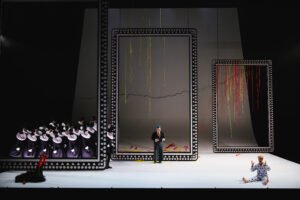
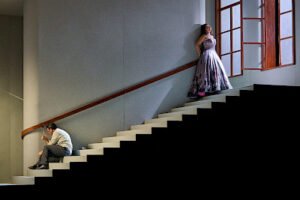
The spareness of the décor presages that of the work itself. From the instant the curtain rises, space is yielded to the full dramatic amplitude such an act of remembrance may engender. Gesture is pared back to an expression at once essential and unadorned: a modest buttress to the unfolding of the narrative. One is reminded, were reminder needed, that through means apparently devoid of pretension the sensation – whether of an approaching storm or of descending grace – acquires a far greater potency. Little wonder, given the stagecraft of a director such as Barrie Kosky.
Bringing together these various qualities, the production of Dialogues des Carmélites presented at the Danish Opera House is distinguished by a striking scenic and musical coherence, one that lends to the unfolding drama a compelling force commensurate with the spiritual and emotional magnitude of the narrative. To this is added a series of finely wrought performances, united by a commendable clarity of diction and an exemplary theatrical assimilation of the subtle gradations inherent in each character. Every performer demonstrates a keen sensitivity to the shifting contours of psychological and spiritual tension, shaping their role with both discernment and eloquence.
So it is with Elena Tsallagova’s Blanche: an assumption of the rôle at once ardent and ardently communicative, in a part that appears destined for her. One delights in recognising what seems self-evident: a delicacy of approach, an instinctive enthronement of intention, and the unforced deployment of a great lyric soprano’s resources, equal to the demands of a heroine fashioned from shifting sands, her tides by turns mystical and profoundly human. Fear? Assuredly, the kind that constricts the throat, yet inflected with so wide a spectrum of nuance as to forbid paralysis, until serenity is attained in the most formidable of combats, the one she elects to embrace.
The counterpoise resides in Juliana Zara’s Soeur Constance: a presence at once incandescent and luminously sung. In her stage bearing one readily perceives why Poulenc cherished the character so dearly: she is a shaft of light – dancing, singing, caressing, consoling – yet never divested of that lucid apprehension which allows her to grasp, with disarming clarity, the course of events.
Authority undone? Certainly not. Yet the agony is unmistakable. Marble veined, never shattered: Doris Lamprecht embodies Mme de Croissy with unadorned courage, relinquishing nothing of a vocal line that renders full justice to the text’s profundity (to her fall the score’s most searing utterances) while preserving intact the shadowed reserve befitting the Prieure.
Diana Haller presents a Mère Marie less Machiavellian than one might anticipate. Human, she hastens to align herself with Blanche, not in fear, but in a wish to support, and perhaps be supported by, the young sister.
Juan Francisco Gatell offers a Chevalier of overflowing lyricism, his declamation bearing the hallmark precision of a consummate Mozartean. Tenderness and apprehension entwine to reveal, in this distinguished belcantist, a character whose subtle complexity is often overlooked. Slightly rustic, yet suffused with the deepest benevolence, the Marquis of Jens Søndergaard charms through a warm timbre and an assured stage presence.
Sine Bundgaard shoulders the portrayal of Mme Lidoine. The Danish soprano brings both bearing and instrument to a part that demands a voice unwavering even when the character falters. Broad yet never overbearing, consciously gentle, imbued with humility and probity, yet possessing an intentional firmness as resolute as the rôle itself, her performance earned some of the warmest acclaims of the evening.
The remaining artists of the cast leave their indelible mark upon this triumphant evening: through their commitment and the refinement of their performances, Aileen Itani (Mère Jeanne), Sidsel Aja Eriksen (Sœur Mathilde), Jens Christian Tvilum (Aumônier), Michael Kristensen and Morten Lassenius Kramp (1er and 2nd Commissaires, respectively), William Pedersen (Officier), Magnus Berg (Geôlier), Frederik Rolin (Thierry) and Asmus Hanke (Dr. Javelinot) elevate the production, each contributing with a keen theatrical sensibility and voices of striking beauty.
The gestures are of unparalleled sensitivity, yet suffice to summon a music that resonates, strikes, and pierces. Asher Fisch renders the unbearable with a conducting of uncompromising rigour. The lyricism? Poulenc provided it in abundance, and it is present (honoured, realised with zest by a Royal Danish Orchestra at its peak), yet this direction confronts the listener with a reality that demands attention; it is this very materialisation, so seldom attained in the theatre, that imprints itself upon the memory of the evening.
Throughout and beyond these Dialogues, the question arises – and mercifully remains unanswered: is the ideal of sanctity, in the end, merely the struggle of the self within the realm of its own humanity, facing what is most vulnerable? And in so doing, is this struggle not, ultimately, that of us all, irrespective of the goal pursued? Though no answer is given, the avenues for reflection are manifold; it is through the confluence of so many talents, each commensurate with the intricate demands of these characters, that we are granted the space to ponder questions reaching far beyond the confines of the work itself.
******************************
DIALOGUES DES CARMELITES
Opéra en trois actes et douze tableaux
Musique de Francis Poulenc
Livret du compositeur avec les paroles de Georges Bernanos et Emmet Lavery
Création en italien : Teatro alla Scala, 26 février 1957
Première représentation en français : Opéra d Paris, 21 juin 1957
Conductor | Asher Fisch · Director | Barrie Kosky · Set- and Costume Design | Katrin Lea Tag · Lighting Design | Alessandro Carletti
Marquis de La Force | Jens Søndergaard · Blanche | Elena Tsallagova · Chevalier | Juan Francisco Gatell · Mme de Croissy, Prieure du Carmel | Doris Lamprecht · Mme Lidoine, nouvelle Prieure | Sine Bundgaard · Mère Marie de l’Incarnation | Diana Haller · Sœur Constance | Juliana Zara · Mère Jeanne de l’Enfant Jésus | Aileen Itani · Sœur Mathilde | Sidsel Aja Eriksen · Aumônier du Carmel | Jens Christian Tvilum ·1er Commissaire | Michael Kristensen · 2nd Commissaire | Morten Lassenius Kramp · Officier | William Pedersen · Geôlier | Magnus Berg · Thierry | Frederik Rolin · Dr. Javelinot | Asmus Hanke · Royal Danish Orchestra · Royal Danish Opera Chorus · Credit coverture photo: ©Miklos Szabo
(For further informations) Link to the Royal Danish Opera website: Dialogues des Carmélites
About the Author