ONEGIN | Bayerische Staatsoper
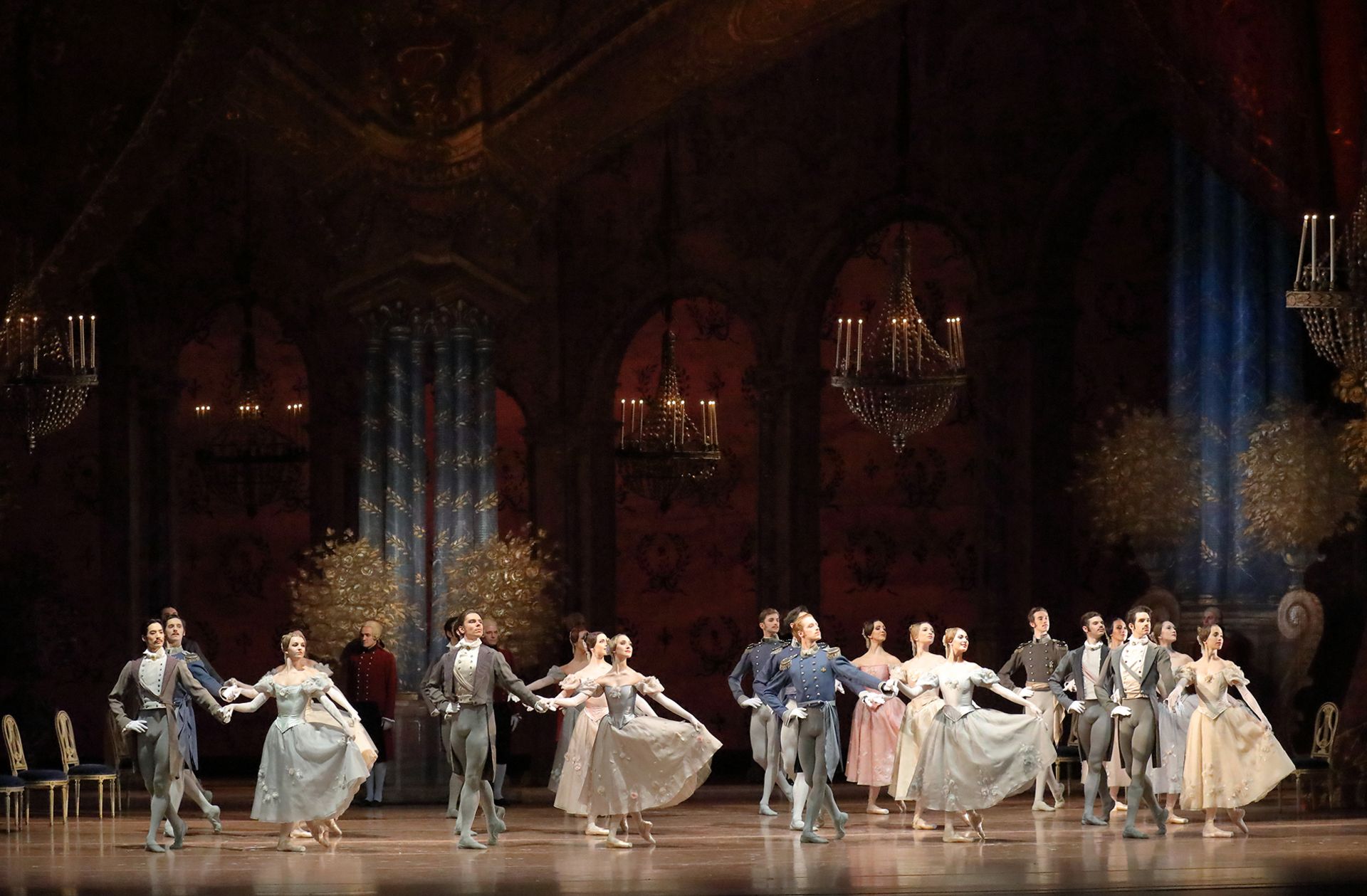
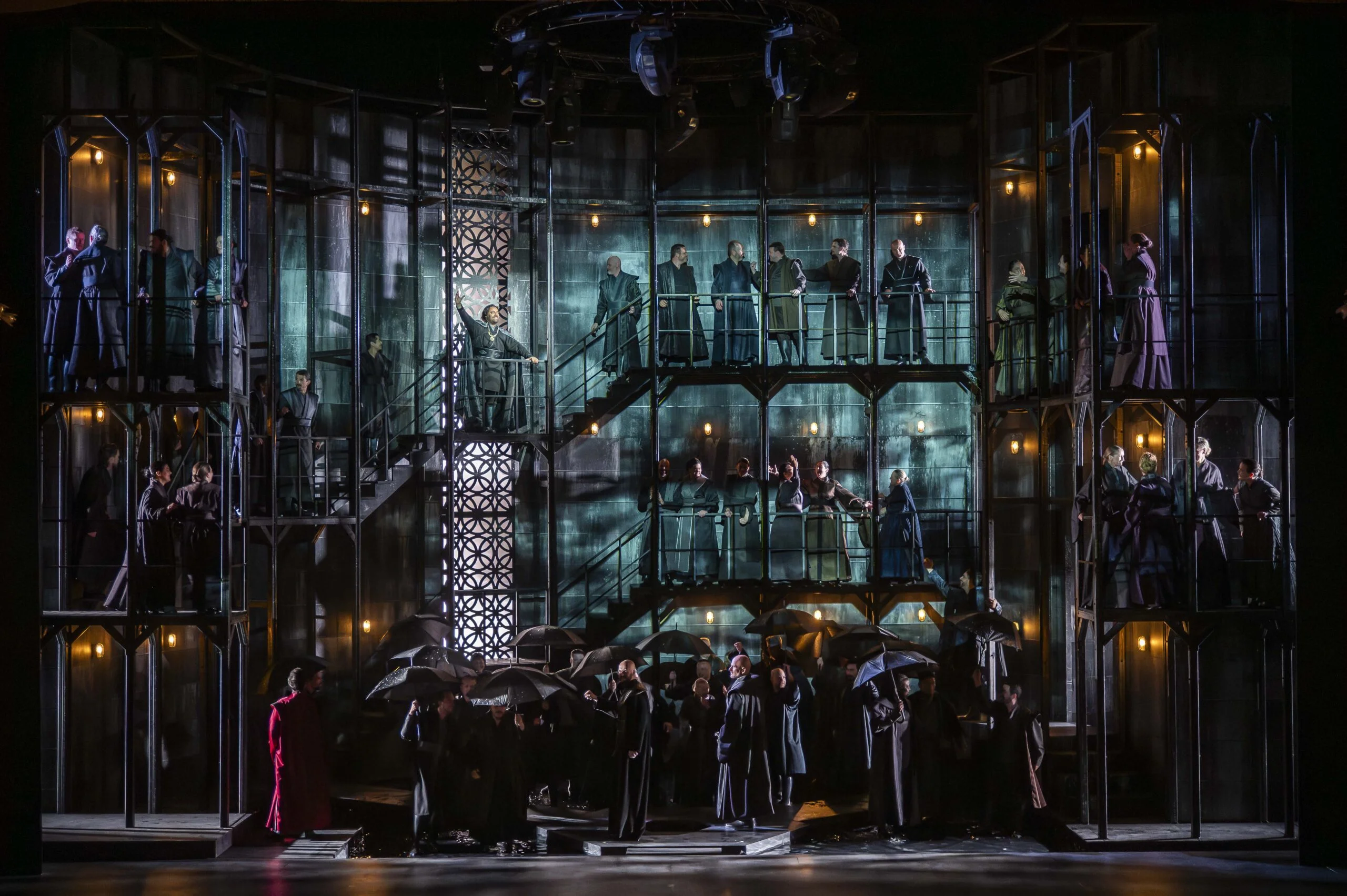
Created in 1965 by John Cranko and part of the repertoire of the Bayerisches Staatsballett since 1972, Onegin remains one of the most enduring narrative ballets of the 20th century. Based on the story of Tatiana and her doomed love for the arrogant Onegin, the work continues to fascinate through the richness of its characters and their psychological development — most notably Tatiana’s transformation from naive girl to mature woman, and Onegin’s gradual collapse into isolation.
For an opera audience, the interest lies precisely in this translation of a deeply psychological narrative — familiar from Eugene Onegin — into purely choreographic terms. Here, no words, no voices: everything is carried by movement, structure, and above all by the music of Pyotr Ilyich Tchaikovsky, assembled and orchestrated from his chamber works.
Under the direction of Marc Leroy-Calatayud, the musical result is one of the evening’s major successes. The arrangement is remarkably well handled: the selection of chamber pieces feels both coherent and dramatically apt, and the transition to orchestral texture is seamless. There is no sense of fragmentation — rather, a continuous musical flow, supported by a warm, flexible orchestral sound and a phrasing that often feels almost vocal in its shaping.
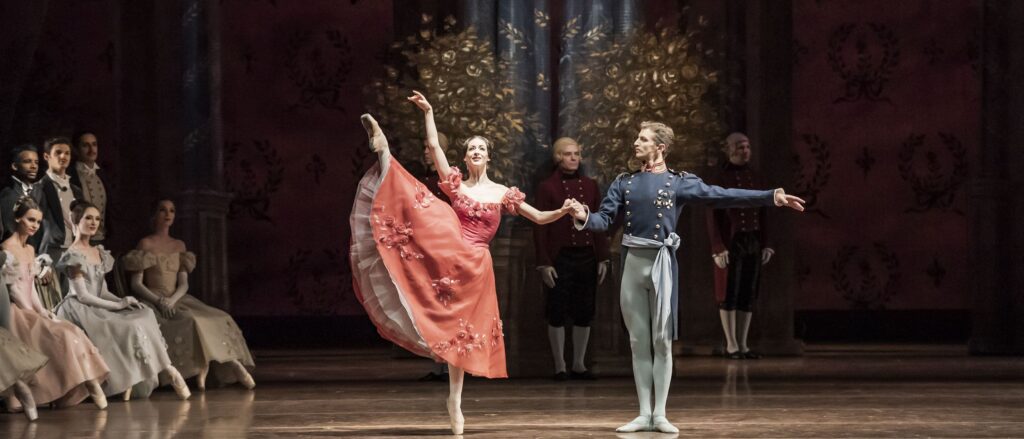
Dramatically, however, the chosen perspective raises some questions. Where Onegin is traditionally understood as a fundamentally narcissistic figure — incapable of genuine love, his final “awakening” being more an injury to his pride than a true emotional shift — this production presents him in a more passive, almost reactive light. He seems to be carried along by events rather than driving them. The consequence is a final confrontation with Tatiana that feels genuinely moving, but perhaps at the cost of the character’s deeper, more troubling ambiguity.
Choreographically, the work is undeniably effective. Cranko’s language is clear, structured, and consistently at the service of the narrative. The ballet unfolds with a strong sense of dramatic progression, and the pas de deux, in particular, reach a high level of expressive intensity, successfully replacing the introspective moments that, in the operatic version, are conveyed through text and voice.
Among the performers, two stand out in particular. Julian MacKay delivers a remarkable Lenski, combining technical precision with a deeply felt dramatic presence — especially in the lead-up to the duel, where the character’s inner tension is rendered with striking clarity.
In the title role, Jakob Feyferlik impresses with both control and stage authority. His interpretation aligns closely with the production’s reading — more introspective, less overtly dominant — but remains consistently compelling thanks to the quality and precision of his movement.
Elisabeth Tonev offers a refined and sensitive Tatiana, carefully tracing the character’s evolution throughout the evening. Violetta Keller brings lightness and energy to Olga, while Florian Ulrich Sollfrank provides a stable, grounded presence as Gremin.
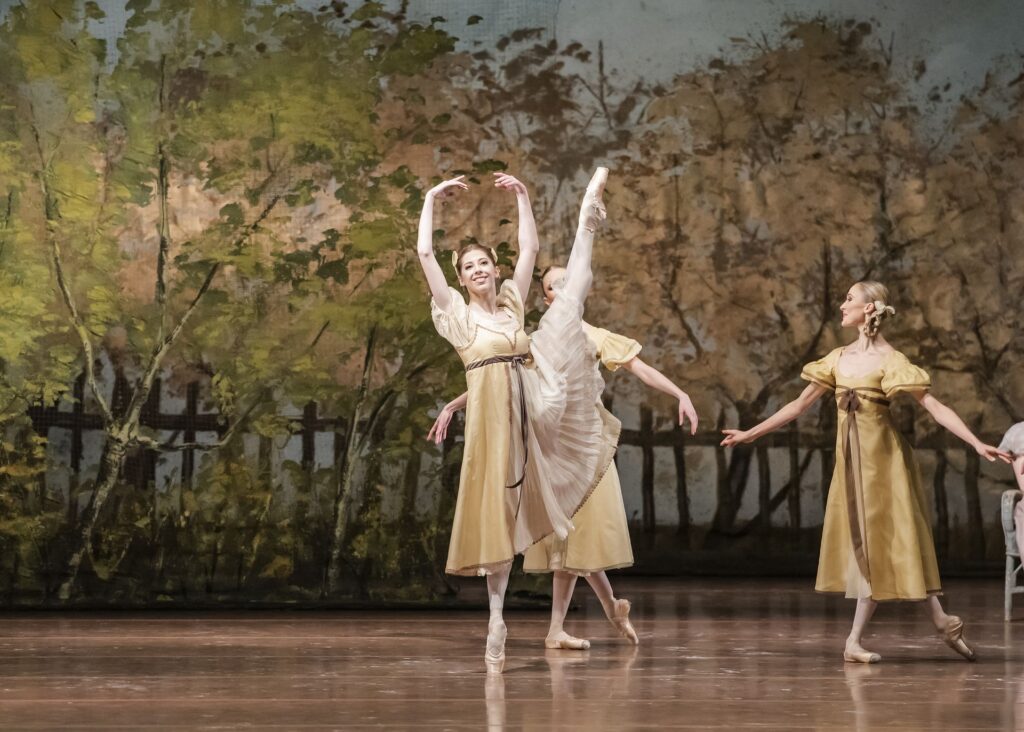
In the supporting roles, Séverine Ferrolier (Madame Larina) and Elaine Underwood (the Nurse) contribute effectively to the overall dramatic clarity.
Overall, this Onegin stands out for its musical intelligence and the strength of its choreographic storytelling. If the psychological portrait of the title character is somewhat softened, the production nevertheless offers a coherent and often compelling reimagining of a familiar operatic narrative.
***
Production details
Conductor: Marc Leroy-Calatayud
Choreography: John Cranko
Set and Costume Design: Jürgen Rose
Cast
Tatjana — Elisabeth Tonev
Onegin — Jakob Feyferlik
Olga — Violetta Keller
Lenski — Julian MacKay
Prince Gremin — Florian Ulrich Sollfrank
Madame Larina — Séverine Ferrolier
Nurse — Elaine Underwood
About the Author