OTELLO | Opéra de Liège
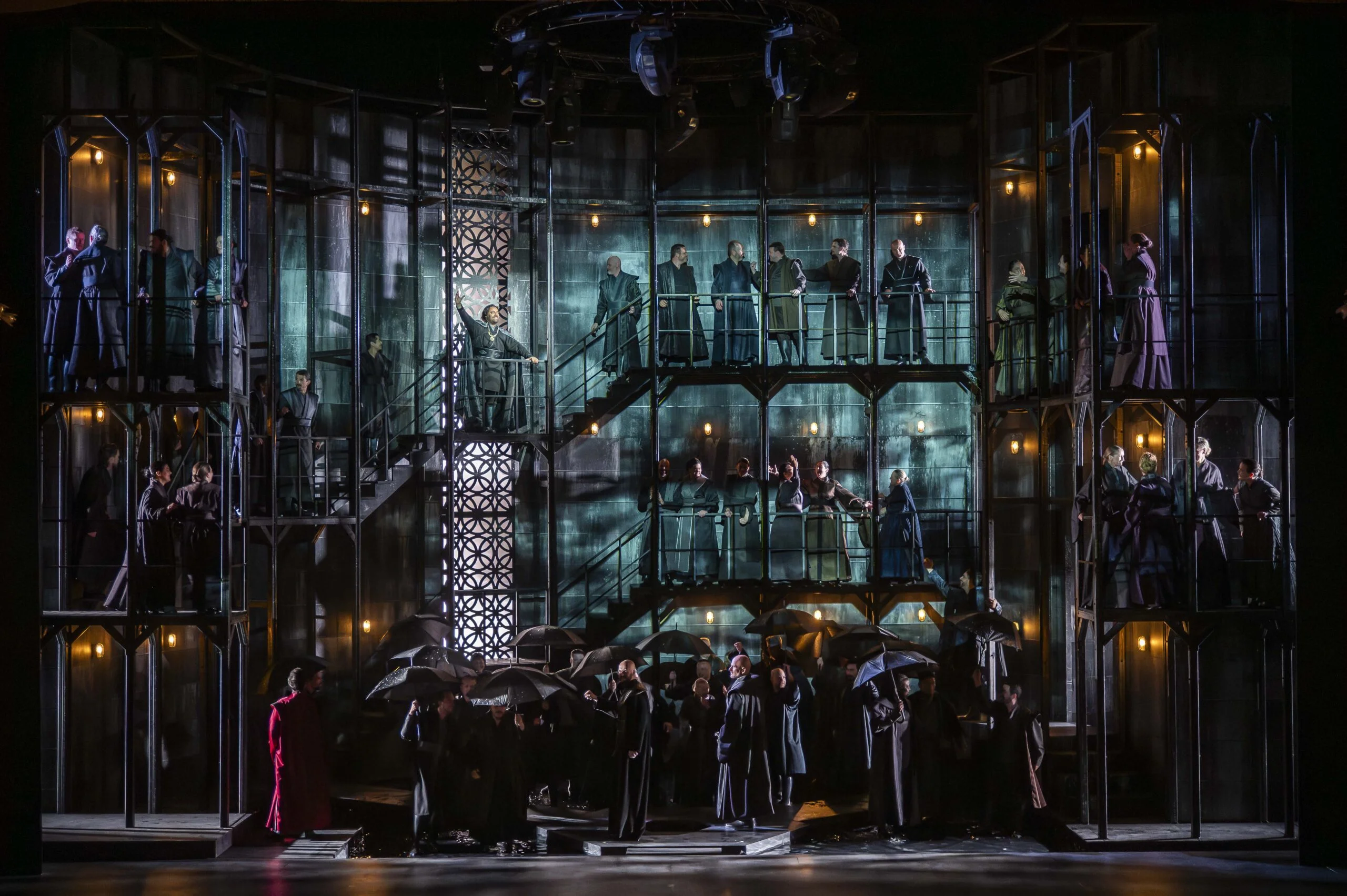
There are evenings that naturally attract attention, and this performance of Otello in Liège was certainly one of them.
Not only because we were talking about what is, in my eyes, the greatest opera ever written, but also because the evening brought together several important elements: Luciano Ganci making his role debut as Otello, Maria Teresa Leva taking on Desdemona for the first time, and my own first visit to the Opéra Royal de Wallonie-Liège.
For anyone who has never been there, the Opéra Royal de Wallonie is one of those theatres that deserves to be better known outside its borders. Opened in 1820 in the heart of the city, it has established itself as one of Belgium’s leading opera houses. Its renovation, completed a little over a decade ago, successfully preserved the elegance of the historic building while offering the comfort and technical capabilities of a modern theatre. It is the kind of house where you immediately feel welcome, and where the audience’s attachment to opera is evident from the moment you enter.
If you’ve followed Opera Diary for some time, you probably know one of my favourite sayings:
Where Otello is, I am.
Over the years, I’ve travelled thousands of kilometres across Europe to hear Verdi’s masterpiece. Every production reveals something different, every cast brings its own colours, and every theatre contributes its own atmosphere.
This particular production carried an additional element of curiosity for me, as it was staged by Allex Aguilera, whose work I have followed on several occasions in recent years.
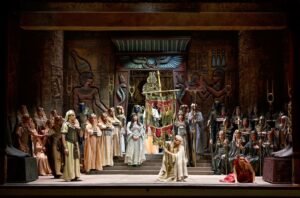
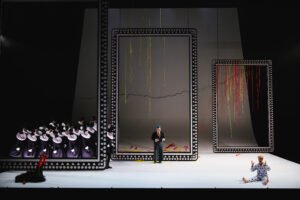
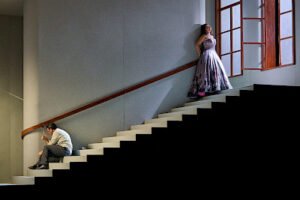
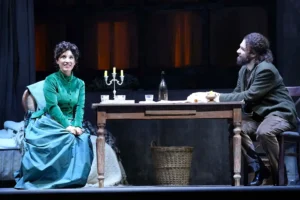
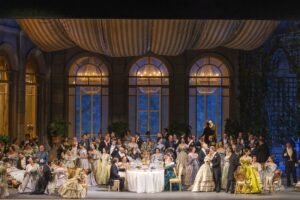
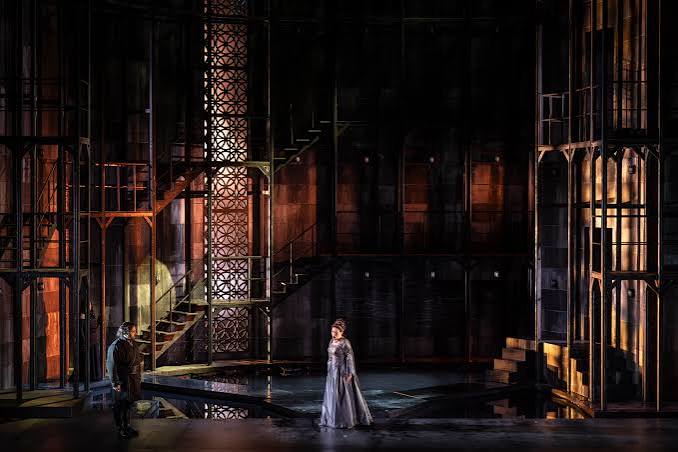
His approach is ambitious without becoming overwhelming. From the opening moments, the audience is immersed in the world of Cyprus and Venice. The production offers impressive visual scale while remaining focused on the drama itself, something I always appreciate in Otello. The sets designed by Bruno de Lavenère are striking and occasionally reminded me of some of Aguilera’s previous productions that I had seen in Rome, particularly during Desdemona’s final scene and the staging of the famous “Fuoco di gioia” at the beginning of Act I.
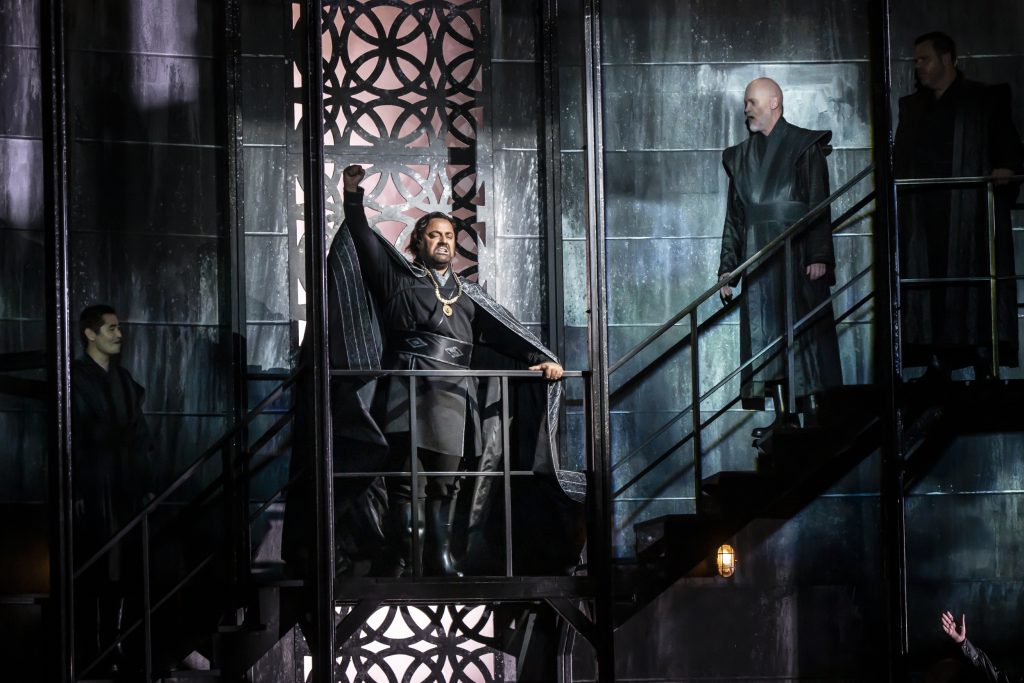
Most importantly, however, the production serves Verdi rather than competing with him.
And that is never a bad place to start.
As the evening progressed, it became clear that the performance was going to exceed my expectations.
Those expectations were already quite high.
Much of the anticipation naturally centred on Luciano Ganci. The last time I had seen him in a major Verdi role was at La Scala in La Forza del Destino at the end of 2024, and I arrived in Liège genuinely curious to discover how he would approach one of the most demanding roles in the entire repertoire.
The answer proved convincing.
Vocally, Ganci possesses the stamina required for the role, but what impressed me most was his ability to maintain lyricism throughout the evening. Otello’s strength often lies not only in his authority, but also in his vulnerability, and Ganci managed to capture both aspects of the character.
I particularly enjoyed the scenes with Desdemona, where his singing found a natural warmth and tenderness.
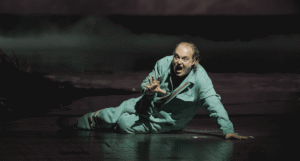
If I had one personal observation, it would concern “Dio! mi potevi scagliar”. This is one of those moments where I tend to favour an interpretation that feels completely devastated, almost as if the world is collapsing around Otello. Ganci opted for a more controlled approach, perhaps slightly less desperate than I personally imagine the character at that point.
But that remains very much a matter of individual taste rather than a criticism.
Maria Teresa Leva’s Desdemona was one of the evening’s most pleasant surprises.
The role suits her voice remarkably well. There is a natural elegance in her singing, combined with a fragility that serves the character beautifully. Throughout the performance she projected sincerity and emotional honesty, qualities that are essential for a convincing Desdemona.
The Willow Song and Ave Maria were delivered with simplicity and restraint, allowing the music itself to create the emotion.
It is easy to imagine this role becoming an important part of her repertoire in the years ahead.
As for Roman Burdenko, he once again demonstrated why Jago has become one of his strongest roles.
From his first appearance, he establishes an undeniable presence on stage. His portrayal avoids caricature and instead presents a character whose manipulation feels calculated and unsettling. Vocally secure throughout the evening, he brought authority to every scene in which he appeared.
One visual detail I particularly enjoyed was the decision to surround Jago with a group of followers who physically resembled him. It may seem simple, but it effectively reinforced the idea of his influence spreading throughout the drama.
Musically, the evening was in very good hands.
Having last encountered Francesco Lanzillotta a few weeks ago in Turin, it was a pleasure to hear him again, this time in Liège. His conducting remained consistently attentive to the singers while maintaining the dramatic tension that makes Otello such an extraordinary score.
The orchestra responded with precision and balance, never losing sight of the long musical architecture of the work.
The supporting cast also contributed significantly to the success of the evening.
A special mention should go to Paride Cataldo as Cassio. While the role may not be the largest in the opera, it is absolutely essential to the drama, and Cataldo brought both vocal quality and strong stage presence to his appearances.
By the end of the evening, I left the theatre with that familiar feeling every opera lover knows.
The feeling that the journey was worth it.
A new theatre discovered.
Another performance of Otello added to the list.
And another reminder of why Verdi’s final masterpiece continues to draw me across Europe year after year.
Finally, my sincere thanks to the Opéra Royal de Wallonie-Liège for allowing me to film excerpts from the production. You’ll be able to discover them on June 28th at 4 PM on Opera Diary’s Instagram account, @opera_diary.
After all, one of the greatest pleasures of any passion is sharing it with others.
***************************************
CAST
Luciano Ganci — Otello
Maria Teresa Leva — Desdemona
Roman Burdenko — Jago
Paride Cataldo — Cassio
Luca Dall’Amico — Lodovico
Blagoj Nacoski — Roderigo
Nicolò Donini — Montano
Bernard Aty Monga Ngoy — Un Araldo
Musical Direction — Francesco Lanzillotta
Production — Allex Aguilera
Set Design — Bruno de Lavenère
Costumes — Françoise Raybaud
Lighting Design — Laurent Castaingt
Video Design — Arnaud Pottier
About the Author