La Cenerentola / Palais Garnier
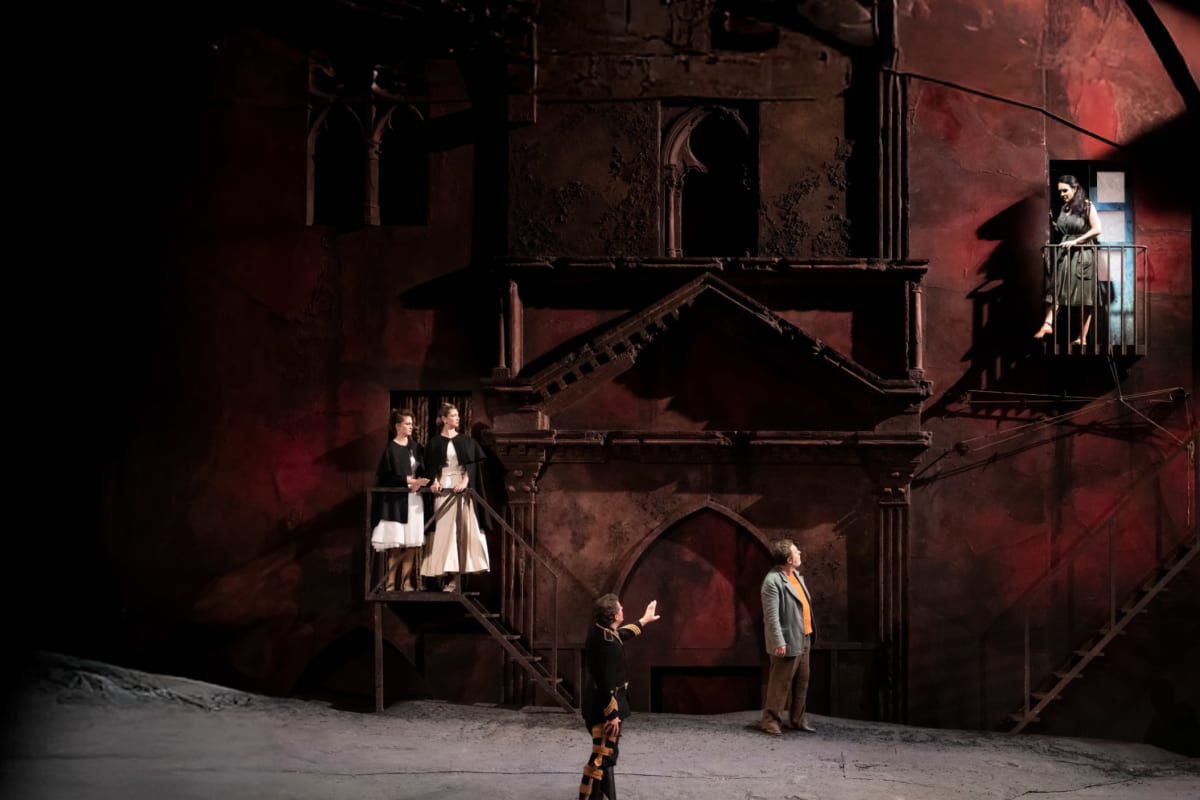
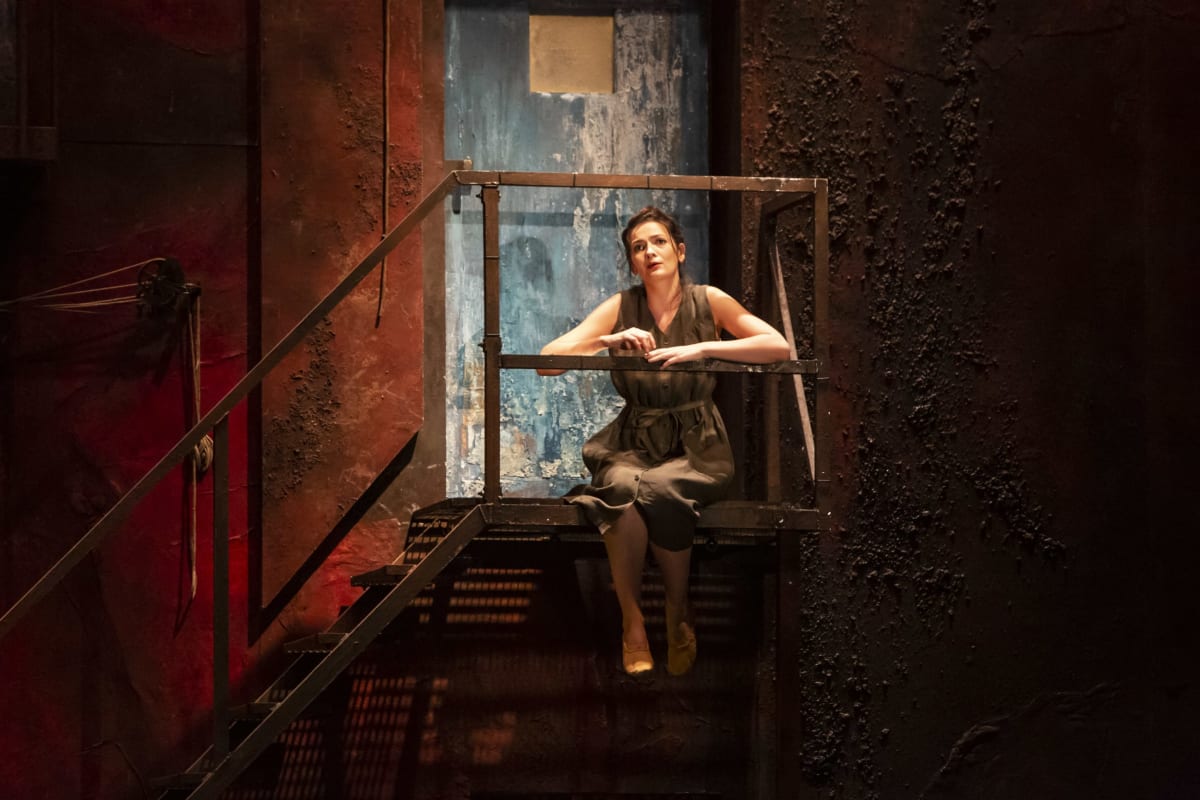
The volcano is already rumbling in the overture. Éric Ruf’s set — blackened walls fissured with subterranean light, the floor tilting ever so slightly toward an invisible precipice — tells you before a single voice enters that this Cinderella story carries geological weight. Guillaume Gallienne’s production, born at this very house in 2017, has aged into something richer than its first iterations: it now reads less as a directorial concept and more as a natural habitat for Rossini’s own contradictions, the way this music can be simultaneously frivolous and devastating within the same phrase.
At its centre, Vasilisa Berzhanskaya makes a case — quiet, steady, and ultimately overwhelming — for Angelina as Rossini’s most complete heroine. The Russian mezzo commands not through display but through accumulation: her “Una volta c’era un re” has the quality of a folk memory, unpretentious and slightly sad, before the role asks her to unfurl in the Act II rondo “Non più mesta.” When that moment came, the voice bloomed from a whisper into something vast, the coloratura landing with the inevitability of lava finding its course. The ornaments were not decorative but structural: each trill a further assertion of selfhood.
Lawrence Brownlee‘s Don Ramiro was, characteristically, a study in precision under pressure. The American tenor navigates the stratospheric demands of the role — Rossini wrote it for the extraordinary Giovanni David — with an ease that borders on the uncanny. His “Sì, ritrovarla io giuro” in Act II was a small masterpiece of soft high notes and burnished middle register, the voice moving between registers without seam. If there was any want, it was of a certain emotional rawness: Brownlee’s Ramiro is always princely, occasionally to the point of emotional distance.
No such accusation could be levelled at Nicola Alaimo. The Sicilian baritone played Don Magnifico as a man in constant free fall — his delusion never quite overcoming his self-awareness, his cruelty undercut by a fundamental buffoonery that made him genuinely pitiable. The buffo patter came with the speed of a natural phenomenon: Alaimo dispatches the syllables of “Sia qualunque delle figlie” as if they were effortless. What lingers is the slow deflation of his final humiliation, played with perfect comic timing and a trace of something almost touching.
Huw Montague Rendall gave Dandini the strutting confidence of a man delighted by his own imposture. The British baritone’s voice has a pleasing weight that grounds the comedy without sacrificing elegance; his duet scenes with Alaimo were among the evening’s most purely pleasurable. Adolfo Corrado brought Alidoro a magisterial gravity, the bass-baritone’s “Là del ciel nell’arcano profondo” serving as the production’s moral anchor, sung with breadth and dark solemnity. Ilanah Lobel-Torres and Maria Warenberg made Clorinda and Tisbe into a properly vicious double act — Lobel-Torres’s gleaming soprano and Warenberg’s warmer mezzo forming a well-matched pair of grotesques, never pushed into caricature.
Enrique Mazzola conducted the Orchestre de l’Opéra national de Paris with a lightness of touch that never became weightlessness. The famous Rossinian crescendi built with architectural logic, the wind solos in the overture shaped with particular care. He gave his singers room, shaped ensemble with precision, and let the score’s underlying melancholy surface through rather than imposing it. The Chœurs, prepared by Ching-Lien Wu, sang with homogeneity and presence.
The production’s great strength — and Gallienne understands this — is its refusal of easy redemption. Cendrillon’s final pardon of her tormentors is not cathartic release but something more ambiguous: the gesture of a woman who has transcended her circumstances precisely by refusing to be defined by them. The volcano at the back of Ruf’s set never erupts. It merely glows — a permanent reminder of what might have been, and what still could be.
CAST
- Angelina — Vasilisa Berzhanskaya
- Don Ramiro — Lawrence Brownlee
- Don Magnifico — Nicola Alaimo
- Dandini — Huw Montague Rendall
- Alidoro — Adolfo Corrado
- Clorinda — Ilanah Lobel-Torres
- Tisbe — Maria Warenberg
PRODUCTION
- Conductor — Enrique Mazzola
- Director — Guillaume Gallienne
- Sets — Éric Ruf
- Costumes — Olivier Bériot
- Lighting — Bertrand Couderc
- Choreography — Glysleïn Lefever
- Chorus Master — Ching-Lien Wu
About the Author