NORMA | Bayerische Staatsoper
Earlier this season, Jürgen Rose‘s long-serving production was heard at the Nationaltheater with Vasilisa Berzhanskaya, a mezzo-soprano who brought her own warm, darker colour to a role most often entrusted to a spinto. For the Münchner Opernfestspiele the same staging returns with Elena Stikhina in the title part — and there is a quiet pleasure, particular to a great repertory house, in hearing the priestess lit within a few weeks by two such different voices, each convincing on its own terms.
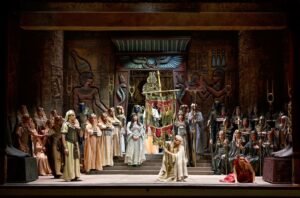
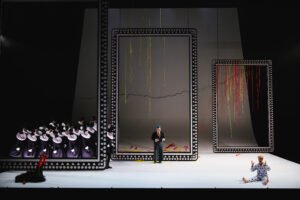
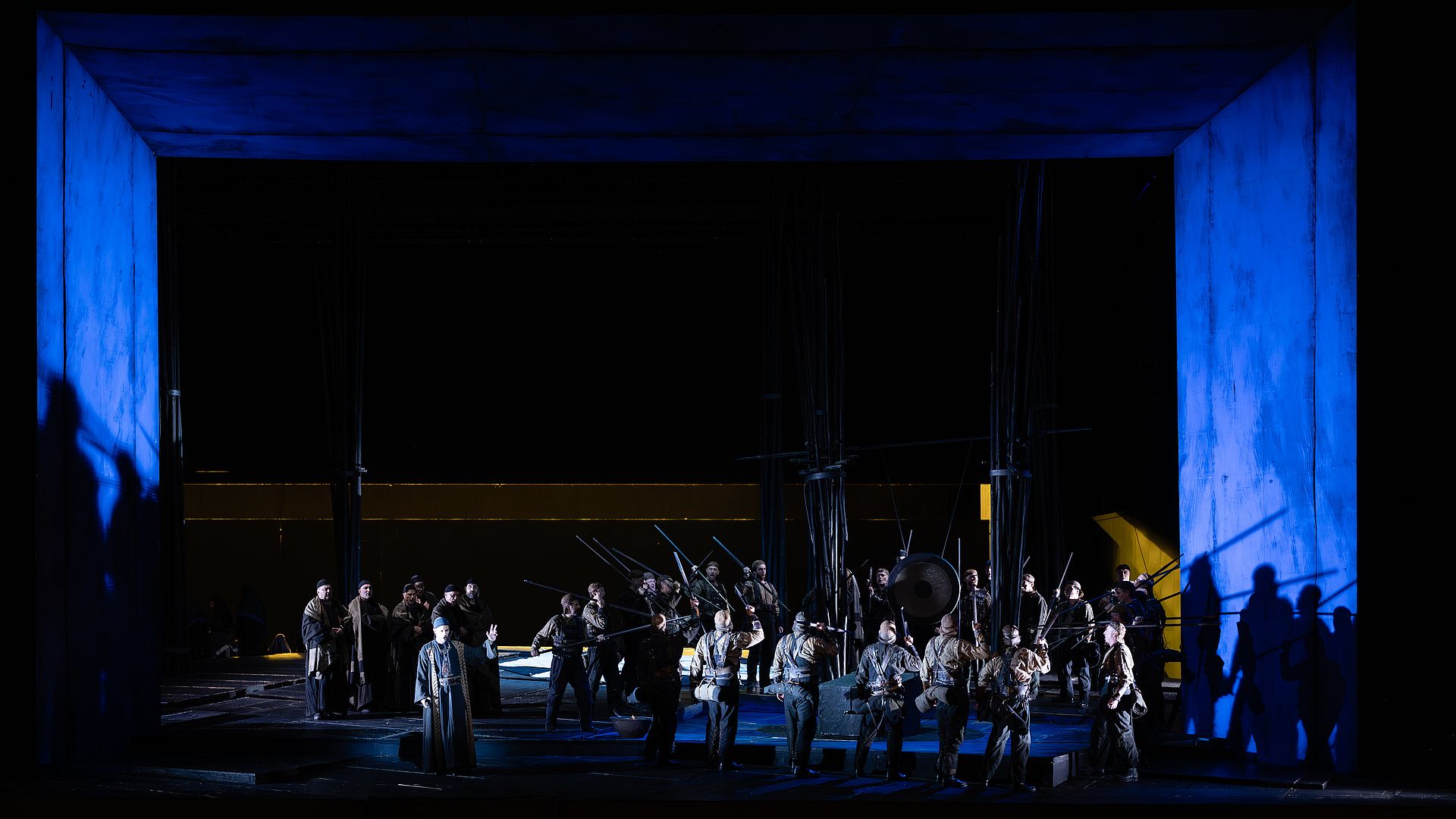
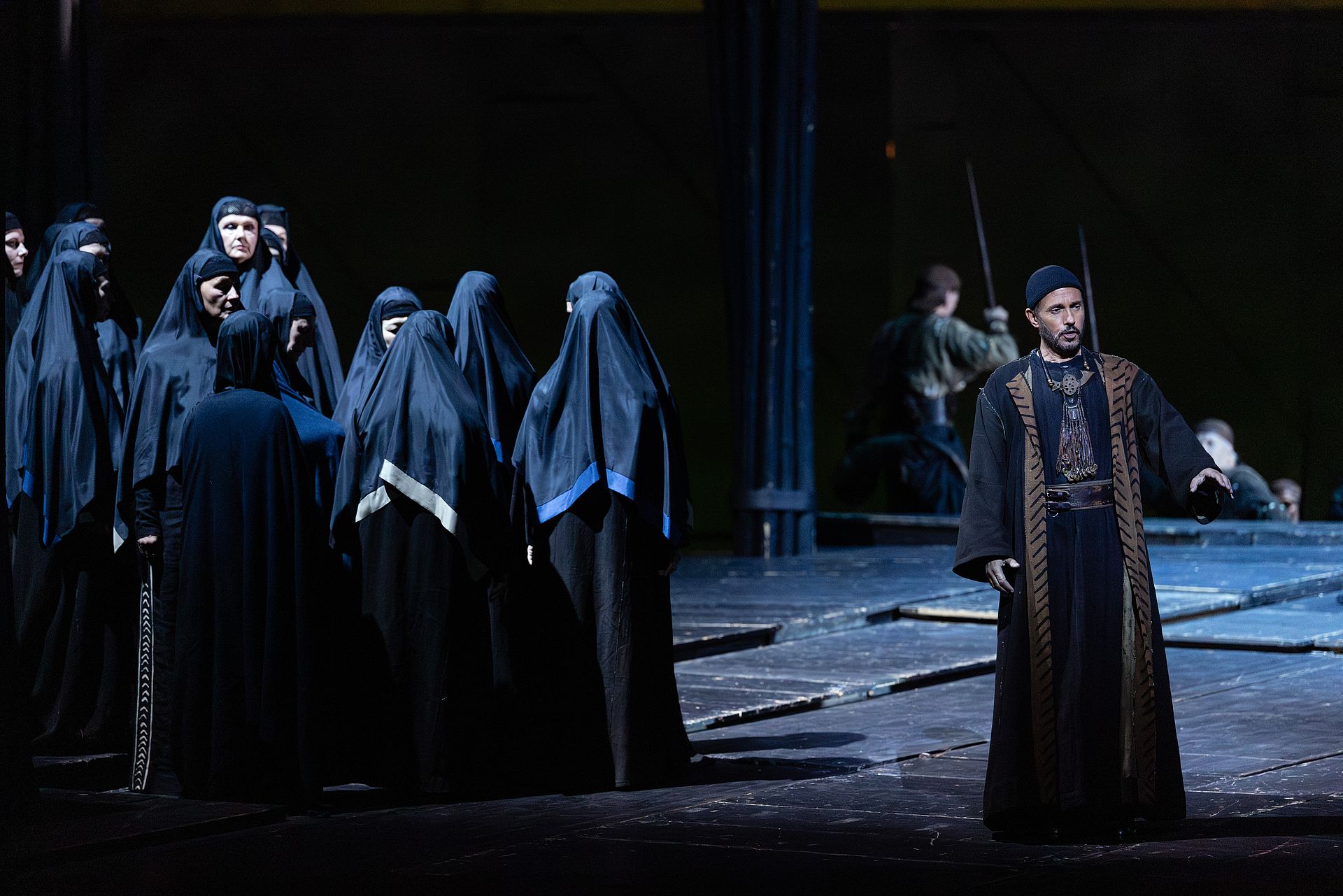
Rose‘s scenery I described at length in June and need only salute again here: the grove of dark timber and standing stones, the monumental gong, the druids massed under a low moon — grave, painterly, editorialising nothing. It asks only that the singers fill it, because in this opera the drama simply is the vocal line.
In the pit, Giacomo Sagripanti again drew from the Bayerisches Staatsorchester the bel canto instinct the piece lives on: unhurried, elastic, transparent, breathing with the stage rather than driving it. He kept Bellini‘s accompaniments from swelling into something more symphonic than they are, so the melody — always the true event — sat forward and lit, the war choruses biting without coarsening, the Act II finale gathering its pressure patiently.
Stikhina brought to the title role a full lyric-spinto soprano, and with it the brighter, more orthodox top the part was written around. Her “Casta diva” unfolded as a proper soprano cantilena — the long arc spun on an unbroken thread, the line floated above the staff with a silvery ease — where Berzhanskaya had offered instead the velvet of a mezzo’s middle. Two legitimate readings of the same prayer, and it was a genuine reward to have heard both.
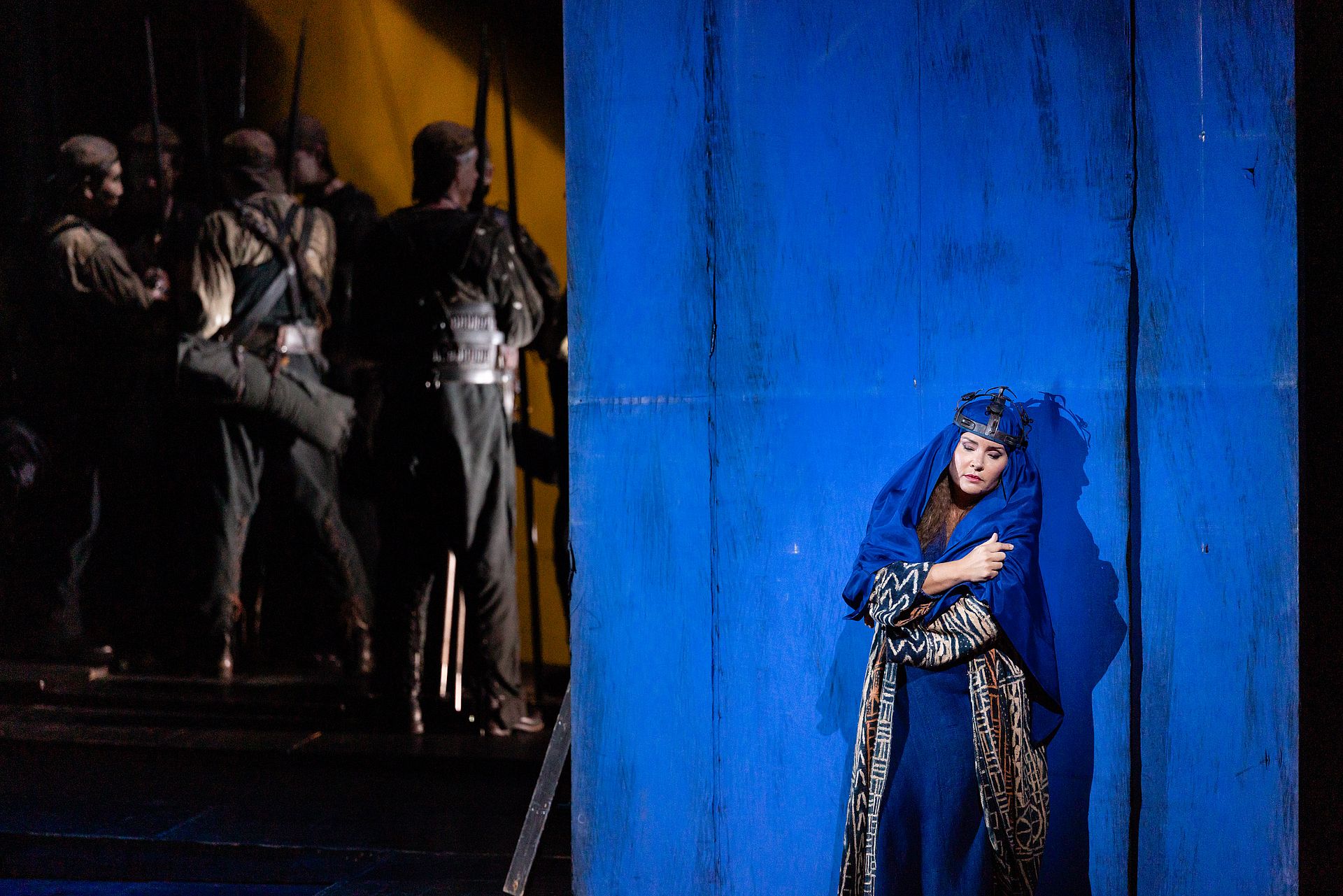
The dramatic half of the role was never in doubt. The imprecations of “In mia man alfin tu sei” and the summons to “Guerra, guerra” found Stikhina in full command, the middle voice dark and carrying, the top secure under pressure; and the authority gathered steadily across the night until the confession of the final scene landed with real weight. Hers is a Norma of stature and composure, monumental rather than feverish, and it wore the evening well.
The one fixed point across both casts was Emily Sierra‘s Adalgisa, the revelation of June and no less so here. Paired now with a soprano rather than a mezzo Norma, the duets — “Sola, furtiva, al tempio” and above all “Mira, o Norma” — wove a more homogeneous strand, the two like-voices blending and separating with that bittersweet precision that makes the number one of the summits of the repertoire. Her novice is again a fully realised creature, young and frightened and genuinely loving. What an artist.
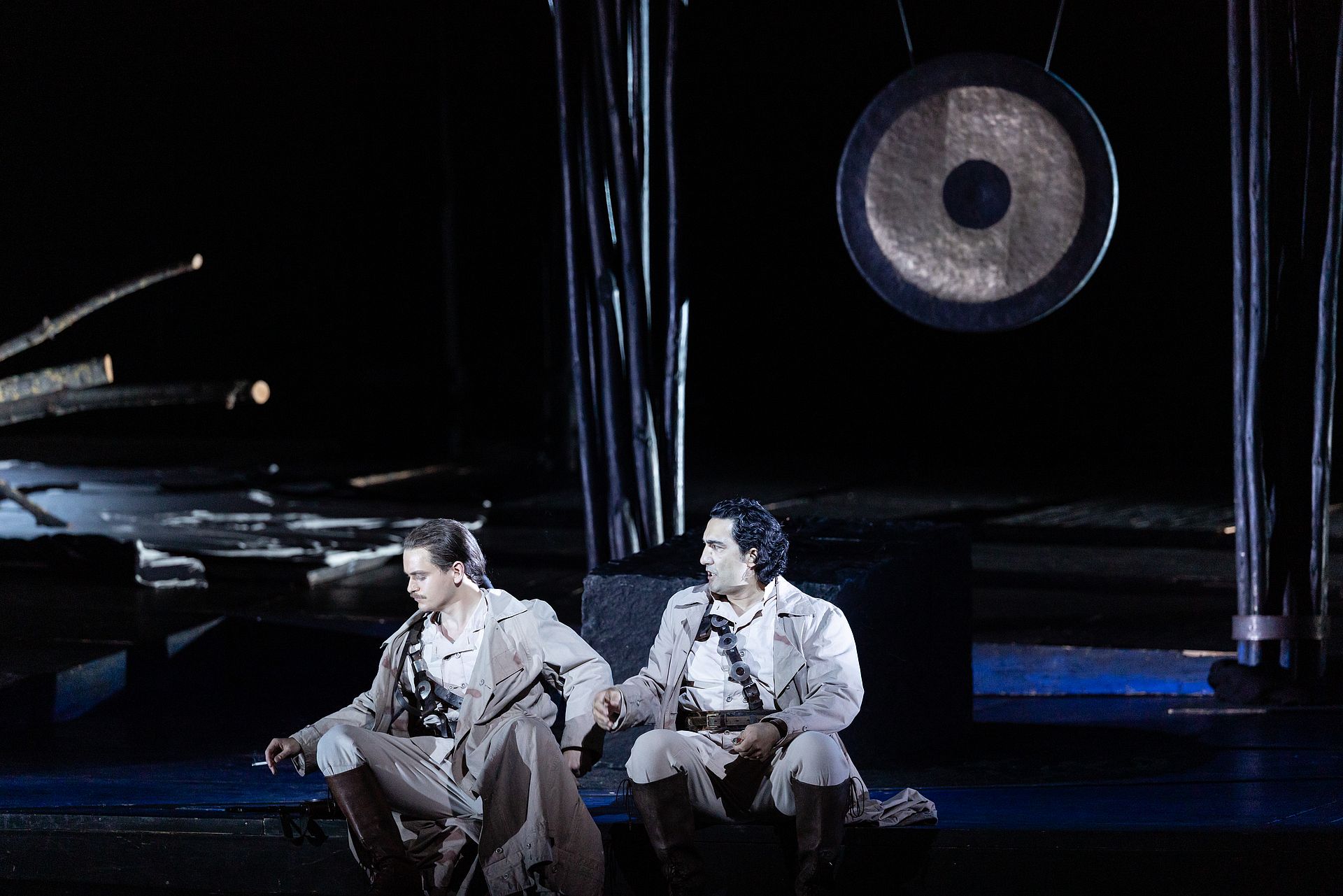
Najmiddin Mavlyanov, the Pollione of June too, remained a tenor of genuine weight, ardent in “Meco all’altar di Venere” if occasionally tightening under sustained pressure at the top. In place of Erwin Schrott‘s Oroveso, Roberto Tagliavini brought a more classical nobility to the archdruid, the paternal authority of “Ah! del Tebro” delivered with an even, well-schooled line. Among the comprimari, Michael Butler‘s Flavio carried over, Aebh Kelly‘s Clotilde was warmly attentive, and the chorus of Franz Obermair sang with massed conviction.
Within a single season, then, this steadfast old production has framed the priestess in two complementary lights — the mezzo’s and the soprano’s — and both left one grateful. On the evidence of an evening like this, bel canto survives not by reinvention but by voices willing to meet it honestly. Long live Bellini, long live the singers who still dare his summit.
***
CAST
- Norma — Elena Stikhina
- Pollione — Najmiddin Mavlyanov
- Adalgisa — Emily Sierra
- Oroveso — Roberto Tagliavini
- Flavio — Michael Butler
- Clotilde — Aebh Kelly
PRODUCTION
- Conductor — Giacomo Sagripanti
- Director & Designer — Jürgen Rose
- Choreography — Jo Siska
- Lighting — Michael Bauer
- Dramaturgy — Peter Heilker
- Chorus Master — Franz Obermair
- Bayerisches Staatsorchester & Chorus of the Bayerische Staatsoper
Photos: © Geoffroy Schied / Bayerische Staatsoper
About the Author