GÖTTERDÄMMERUNG | Lucerne Festival
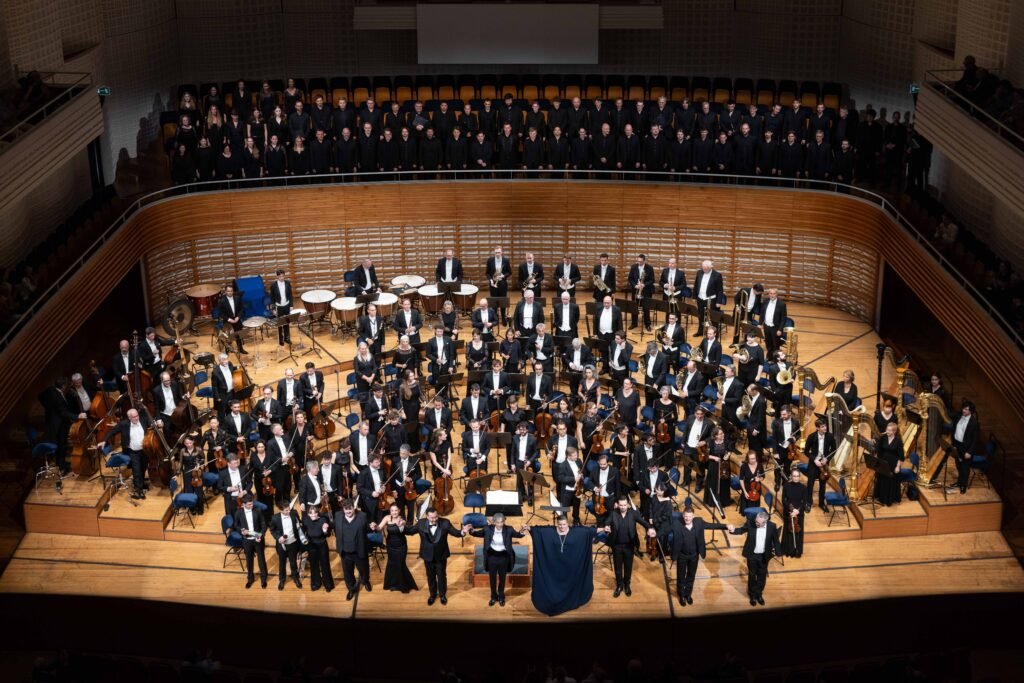
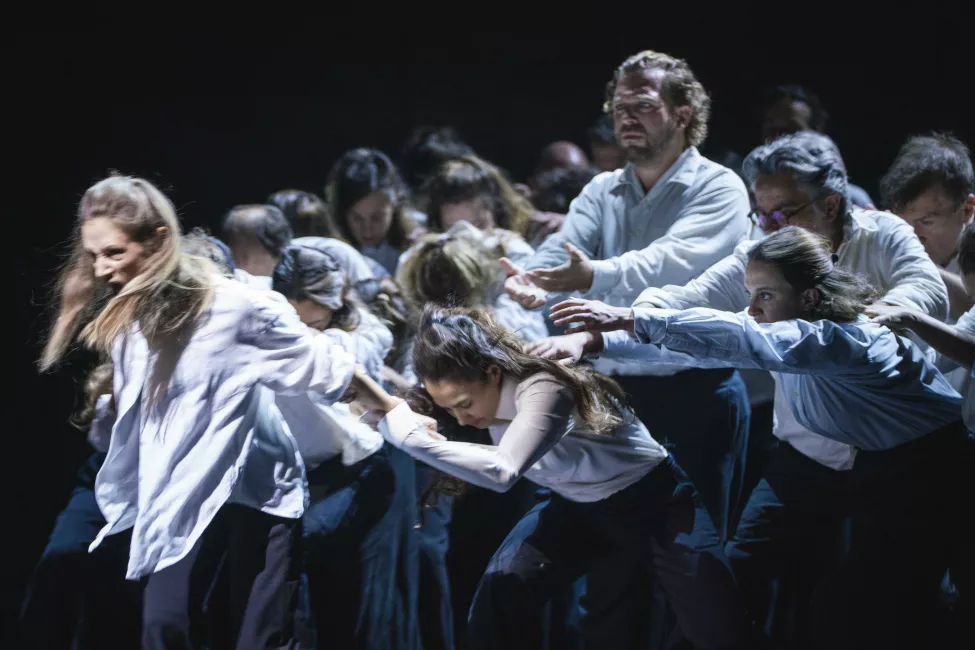
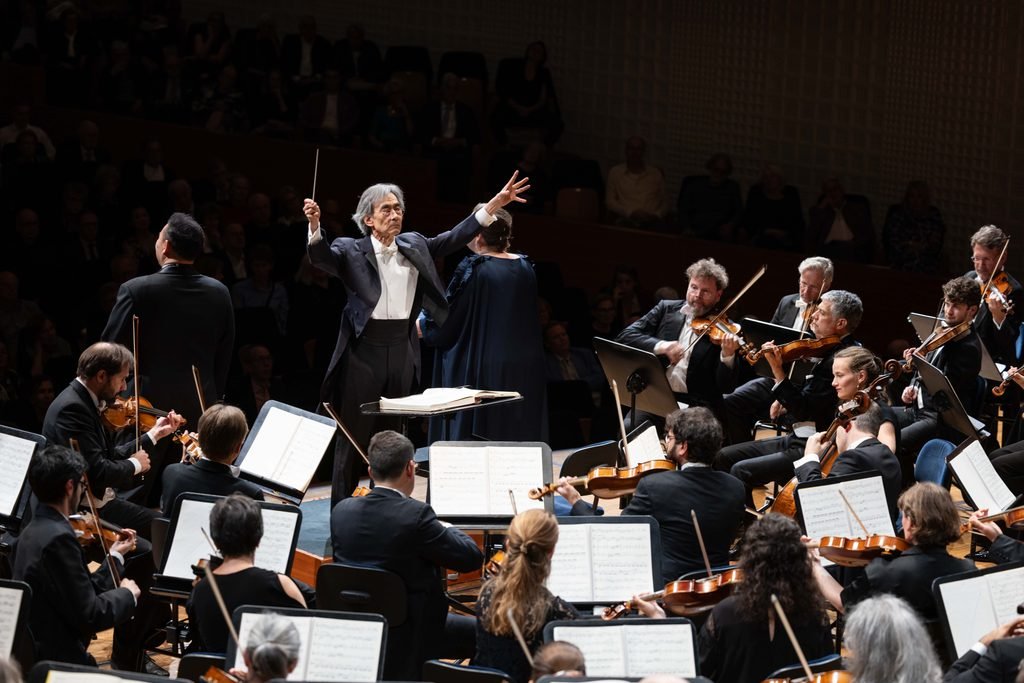
Lucerne Festival: Sommer-Festival 2026 | 10.092026 | Götterdämmerung| Dresdner Festspielorchester, Kent Nagano Copyright: © Manuela Jans/ Lucerne Festival
When Music Becomes Memory: Can looking 150 years into the past make Wagner feel new again?
We are accustomed to hearing Wagner’s Ring through the enormous modern orchestras it helped inspire: rich, powerful and capable of producing an almost overwhelming wall of sound. At the Lucerne Festival, Kent Nagano, the Dresden Festival Orchestra and Concerto Köln proposed something different. The Wagner Cycles has approached the tetralogy through historically informed performance practice, reconstructing instruments and playing techniques from Wagner’s era while also reconsidering the vocal and declamatory style of the period. In 2026, 150 years after the first complete Ring at Bayreuth, the project reached its conclusion with Götterdämmerung.
The fascinating thing was that looking backwards did not make Wagner feel old. Quite the opposite.
The orchestral sound was immediately different from the Wagner we normally hear. Warmer perhaps, but above all less dense around the voices. Rather than singers pushing through a massive orchestral body, there was a remarkable sense of harmony between voice and instrument, each seeming to leave space for the other
The brass and horns naturally offered some of the most distinctive colours. Particularly effective were Siegfried’s horn calls and the music surrounding the hunt, with musicians sounding from different parts of the hall and backstage. Without conventional scenery, sound itself created distance and space. The harps also caught my attention with an unusually clear, almost metallic quality that initially surprised me.
Different, however, certainly did not mean less powerful. When Wagner demanded sheer force, the orchestra had plenty of it. Siegfried’s Funeral March was immense, and the final pages reached an almost overwhelming intensity. This was not an attempt to make Wagner smaller, but to hear his scale through another palette of colours
At the centre of it all was Kent Nagano, conducting with remarkable precision and control. The concert presentation frequently placed singers behind him, making coordination particularly demanding, yet the balance between voices and orchestra remained impressively natural. He could unleash tremendous volume and then pull the music back towards passages approaching silence, while maintaining a dramatic momentum that never felt rushed.
Perhaps the simplest measure of his success was time itself: after five and a half hours, reaching the end still came with the strange realisation that all those hours had somehow already passed.
Among the singers, Åsa Jäger quickly established herself as the commanding presence of the evening. Brünnhilde demands enormous vocal power, but equally impressive was Jäger’s ability to sustain it across such a long and demanding work. Her authority seemed only to grow as the evening progressed.
More importantly, her Brünnhilde existed beyond the voice. Jäger never treated acting as optional. Sitting close to the stage made it particularly captivating to follow the emotions crossing her face: rage, fear and eventually the determination to bring everything to an end. By the Immolation Scene, the sheer vocal power was still there, but it was the combination of that strength with the emotional journey she had created that made her performance so compelling.
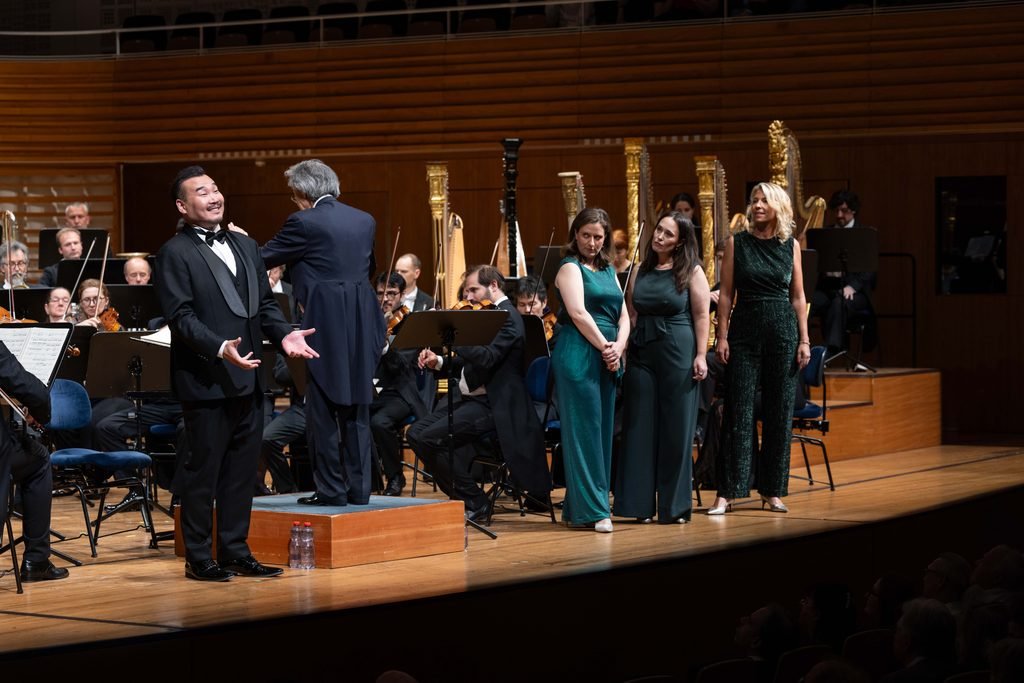
Young Woo Kim was similarly impressive in stamina. He began with such a powerful sound that I initially wondered whether he could possibly sustain that level throughout the evening. He did.
Kim also captured something essential about Siegfried: the character’s extraordinary, almost infuriating naïveté. Joyful, fearless and impulsive, this was a hero seemingly unaware of the consequences surrounding him, someone who has never really believed that anything can destroy him. Kim conveyed that quality not only vocally but through his expressions and physical presence.
His final moments also made me reconsider something I have often looked for in the character. I have tended to expect Siegfried’s death to reveal a suddenly more mature, romantic and introspective man. Yet Wagner does not really give us a different Siegfried. As his memory returns, everything around him falls away and his consciousness turns once again towards Brünnhilde, almost reliving their awakening together. Kim preserved the character’s directness and simplicity through that final recollection, reminding me that the power of the scene may lie less in transformation than in recognition.
Perhaps the most interesting dramatic evolution came from Patrick Zielke as Hagen. At first, there was a touch of the sad clown about him: bitter, resigned and strangely vulnerable rather than immediately terrifying. As the drama progressed, however, that resignation hardened
The decisive change came in Act II, when Hagen summoned the Gibichung vassals. The entrance of the male chorus immediately increased the intensity of the evening. After so much of the Ring had unfolded through individual voices, the sudden mass of sound produced a genuine thrill. Powerful and beautifully integrated with the orchestra, the chorus gave the scene additional weight and seemed to magnify Hagen himself. This was Zielke’s dramatic climax: the wounded, almost resigned figure had become furious, committed and consumed by revenge.
The strength of the evening extended beyond its three central performances.
Johannes Kammler as Gunther, Sophia Brommer as Gutrune, Olivia Vermeulen as Waltraute and Daniel Schmutzhard as Alberich contributed to a remarkably consistent ensemble. Jasmin Etminan, Marie Luise Dressen and Valentina Farcas established the sombre atmosphere of the Prologue as the three Norns, while Ania Vegry, Ida Aldrian and Eva Vogel brought a particularly beautiful return of the Rhinemaidens, reconnecting the conclusion of the Ring with the world from which everything began.
And it was in the final act that the concert format perhaps revealed its greatest strength.
With no staging competing for attention, Siegfried’s Funeral March belonged entirely to the music. The percussion, the sheer orchestral force and the gravity of the moment made it one of the peaks of the evening. But what affected me most was the return of Wagner’s leitmotifs.
One after another, themes from across the Ring resurfaced. By this point, they no longer felt simply like recurring musical ideas. They felt like memories.
A few notes could suddenly recall a character, an emotion or an entire previous chapter of the cycle. First Siegfried dies remembering Brünnhilde; then, in the Funeral March, the orchestra seems to remember Siegfried; and as the drama approaches its conclusion, the music begins remembering the whole world of the Ring. These returning motifs felt almost like flashbacks, fragments of an immense journey passing before us just as that world was preparing to disappear.
Again and again, they gave me goosebumps.
The return of the Rhinemaidens, Brünnhilde’s Immolation and Wagner’s extraordinary final pages then bring everything full circle. It is not simply the conclusion of Götterdämmerung. It is the end of a musical and dramatic world constructed across four operas.
When the final note disappeared, the KKL fell silent.
After five and a half hours – and symbolically at the end of the entire Ring – that silence felt almost religious. For a brief moment, nobody seemed willing to return to reality.
Perhaps that was the greatest achievement of this historically informed experiment. The Wagner Cycles set out to rediscover something of a sound world from nearly 150 years ago. Yet nothing about the evening felt archaeological. The orchestra sounded different but completely alive, the singers created theatre without needing a conventional production around them, and Wagner’s leitmotifs transformed musical history into something intensely immediate.
For five and a half hours, a world created in the nineteenth century felt entirely present.
And when that world finally disappeared, for a few precious seconds, nobody wanted to make a sound.
About the Author