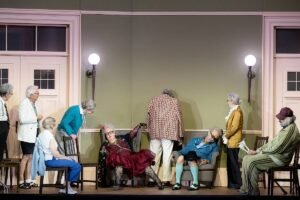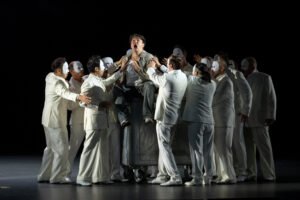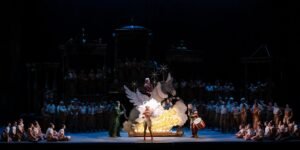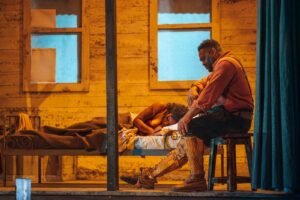
I CAPULETI E I MONTECCHI | Teatro Carlo Felice Genova
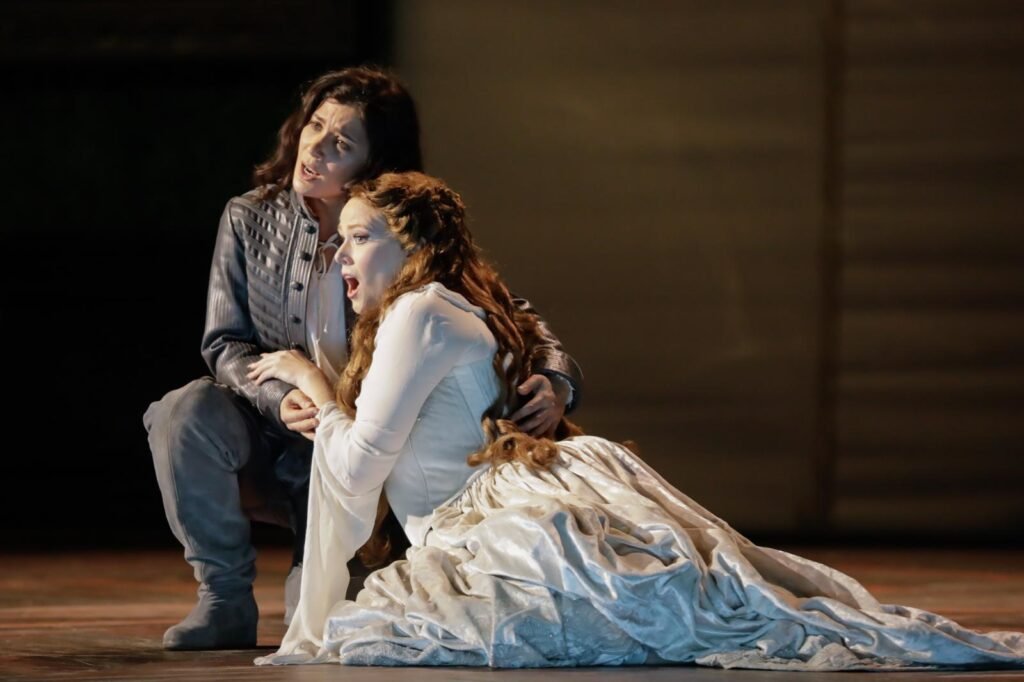
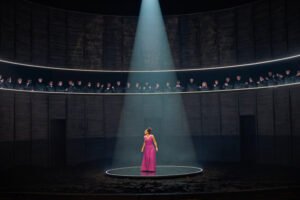
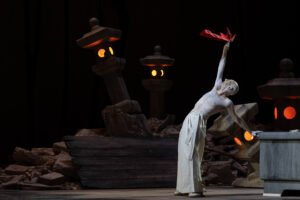
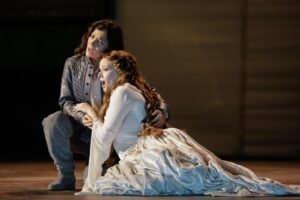
©Silvia Aresca (Photo taken during the dress rehearsal)
What happens when one of the greatest belcanto masterpieces is stripped down to a 45-minute highlight reel? At Genoa’s Carlo Felice, a union strike forced the theatre to cancel the full staging of Bellini’s I Capuleti e i Montecchi, leaving the audience with a concert-like selection performed on a single set without chorus and some instruments.
Following a season opener dedicated to Mozart, the second production of the Teatro Carlo Felice season is I Capuleti e i Montecchi, one of the emblematic works of Italian belcanto. Based on the famous, immortal story of Romeo and Juliet – which librettist Felice Romani drew from Italian Renaissance sources rather than Shakespeare’s masterpiece – the opera saw Vincenzo Bellini compose lunghe, lunghe, lunghe melodies of extraordinary lyrical intensity, partially adapting music from his earlier Zaira.
However, due to a strike called by several unions – which remained in effect for the second performance as well – the theatre was only able to stage a selection of excerpts rather than the complete opera, owing to the absence of the entire chorus and several orchestral musicians. The performance, lasting approximately 45 minutes, thus took place on a single fixed set – a Renaissance room decorated with paintings – though the singers still performed in full stage costumes. Without entering into the merits of the protest – in the firm conviction that the right to strike remains one of the pillars of our democracies – one nevertheless leaves the theatre with a touch of bitterness over what could have been an evening of the very highest musical calibre. Indeed, the bill featured two leading ladies who rank among today’s foremost interpreters of these roles, alongside a conductor capable of restoring to Bellini’s belcanto all of its purity and, at the same time, its theatricality.
In the en travesti role of Romeo, Brescia-born mezzo-soprano Annalisa Stroppa confirmed herself as a singer of great skill and musicality, who finds her natural element in belcanto. It is worth recalling when, in a bout of anti-philological fervour, the legendary Claudio Abbado at La Scala entrusted the role instead to tenor Giacomo Aragall, alongside Renata Scotto’s unforgettable Giulietta. Right from her entrance cavatina, “Se Romeo t’uccise un figlio”, Stroppa was able to showcase the strengths of her performance: her velvety, amber-hued timbre, crisp diction, and impeccable legato. She also mastered the heroic style of the famous cabaletta, “La tremenda ultrice spada”, delivering perfectly projected high notes and descending into the low register without ever forcing or overusing chest voice. Yet it was in the tomb aria, “Deh! tu, bell’anima”, and the final duet that her full artistic stature emerged, giving life to a truly moving and deeply felt interpretation.
Giulietta was sung by the magnificent Australian soprano Jessica Pratt, today’s benchmark interpreter of belcanto, capable of masterfully rendering the coloratura and style of Lucia, Elvira, Lucrezia Borgia, and many other Romantic heroines. Unfortunately, due to the strike by the solo harpist and horn player – who perform a famous instrumental introduction – the soprano was deprived of her entrance aria, “Oh! quante volte, oh quante”, one of the most celebrated and poetic pages in all of belcanto, in which Giulietta pines in melancholy awaiting her Romeo. Pratt thus opened her evening directly with the second-act prayer, “Morte io non temo, il sai”, the moment in which she overcomes her fear and drinks the potion that will induce a death-like sleep. In both the aria and the ensuing cabaletta, the Australian artist reaffirmed her stature as a supreme vocalist, while also displaying profound interpretive maturity through phrasing of rare emotional intensity – and missing no opportunity to display her famed extreme high notes. In the opera”s finale, alongside her customary brilliance, Pratt found a compelling and evocative chemistry with Stroppa: together, through their vocal and dramatic gifts, the two artists succeeded in bringing out the very best in one of Vincenzo Bellini’s most poignant finales.
Tenor Antonino Siragusa, as Tebaldo, was able to perform the gorgeous cavatina”È serbato a questo acciaro” with incisive accents and fine declamation, navigating both the forceful passages and the soaring high notes with assurance. Fine bass voices were displayed by Fabrizio Beggi as Capellio and Luca Dall’Amico as Lorenzo.
Renato Palumbo confirmed his credentials as a fine Bellinian conductor right from the overture, striking a precise balance between dramatic tension, timbral clarity, and cantabilità. Throughout the rest of the excerpts performed, he demonstrated a keen sense of theatre and proved an effective accompanist to the outstanding leading ladies, consistently ensuring rhythmic crispness and ensemble cohesion.
In the end, however, it was a great success and warm applause for the two amazing protagonists.
About the Author