HAYDN, ADÁMEK, BRAHMS | Symphonieorchester des Bayerischen Rundfunks
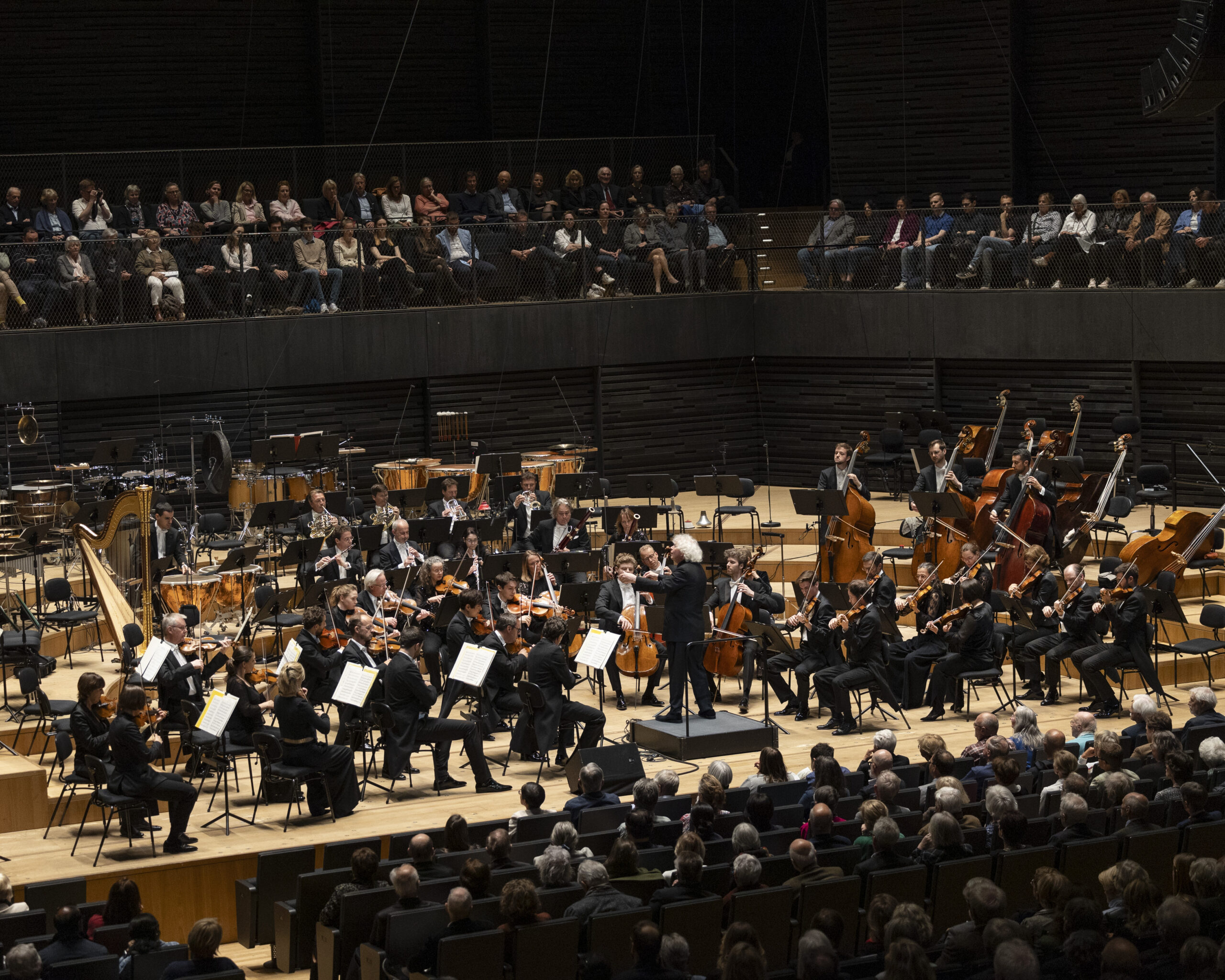
The D major symphony Hob. I:86, one of the Paris six, opened with the stillness one imagines from the great early-music conductors and almost never gets in the modern hall. Rattle took the Adagio introduction at a speaking pace, light vibrato, the pivot to the dominant placed with the rhetorical care a singer would bring to a recitative. The Allegro spiritoso that followed was not merely brisk: it was witty, the BRSO woodwinds — the oboes especially — phrasing in conversation rather than in turn. Haydn is a composer of the timed pause as much as of the phrase, and Rattle let those pauses breathe without ever risking inertia. The Largo was the surprise of the half: not pathos but song, with a long-lined cantilena that seemed to lift the second-violin desks fractionally off their seats. The minuet was a real Tempo di Menuetto, courtly and undriven; the finale danced. Haydn performed with the seriousness Beethoven is granted and the lightness Beethoven cannot have.
Adámek‘s Where Are You?, written for Magdalena Kožená and premiered by these forces during the pandemic, has finally arrived in the room it was made for. The cycle gathers fragments addressed to a withholding God — Czech, biblical, folk — and the writing for voice is forbidding: glottal attacks, micro-tonal slides, whispered consonants, sudden full-throated calls into the hall. Kožená treated these not as effects but as singing. The middle voice retains its grain; the top is cleaner now than at any point in the last decade; she found a piano on a high E that was true mezza voce, not a falsetto trick. The diction was the percussion section of the orchestra. Adámek‘s scoring — air-pumped flutes, bowed crotales, amplified prepared piano — could have swallowed a smaller voice; Kožená sat over it without forcing. Rattle managed the dynamic terrain with the chamber-music attentiveness he brings to Janáček and Berg: nothing inflated, everything spoken.
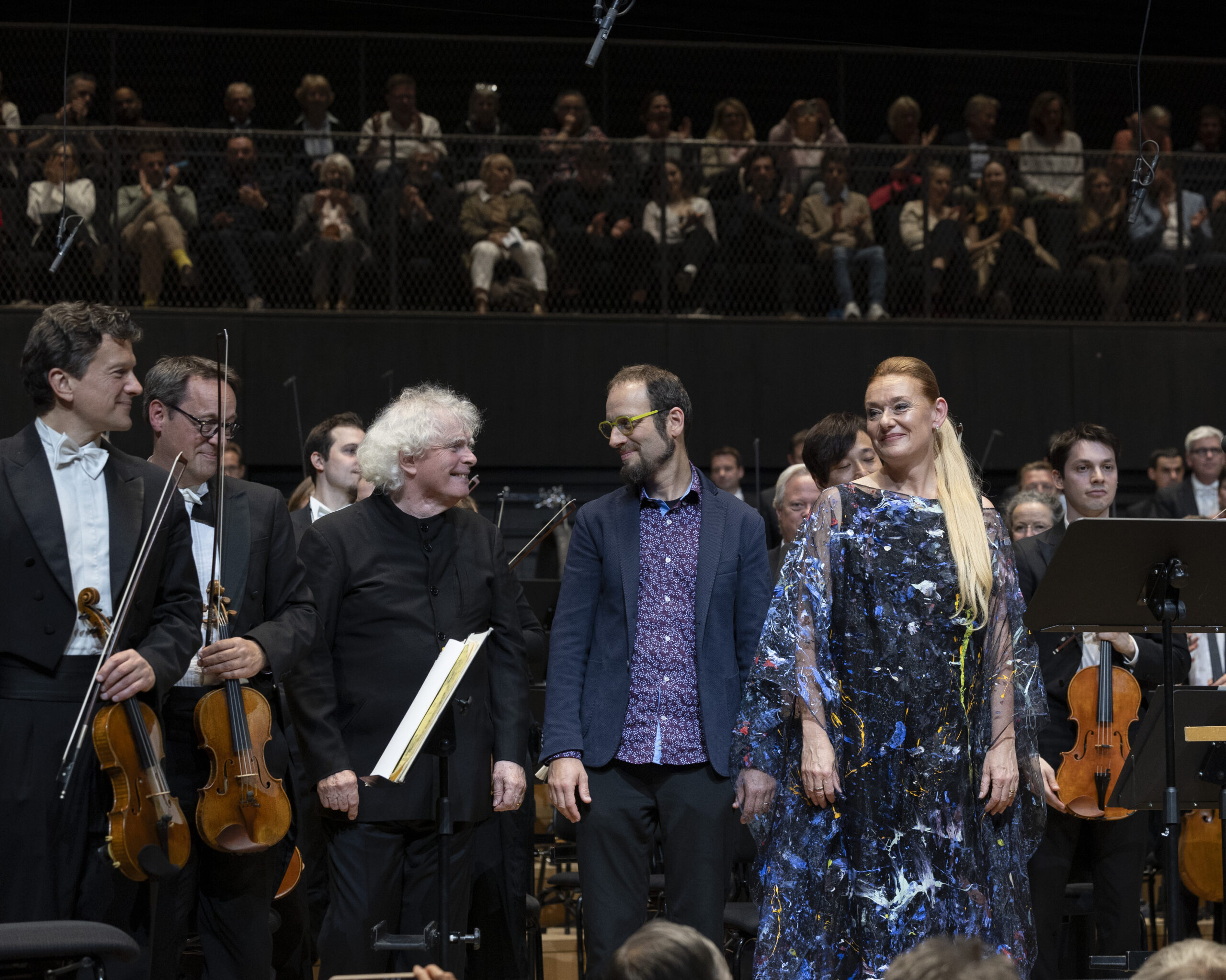
The Brahms Fourth after the interval was the night’s deepest reading. Rattle has recorded the work before, with Berlin and earlier with Birmingham, and one might have feared a museum performance. He delivered the opposite: a Fourth full of forward motion, the opening theme phrased as falling thirds rather than as the sighing it has so often become, the development driven without rhetoric. The Andante moderato found a Phrygian gravity that pointed toward the late chamber music; the scherzo had real weight, a German Allegro giocoso and not a French scherzando. The passacaglia finale was the moment one understood why this orchestra accepted Rattle as Mariss Jansons‘ successor: variations built with an inexorability that never tipped into bombast, the flute solo in variation twelve played with the parlando freedom of a song accompaniment. The final E minor cadence was not catastrophe but completion. A Fourth without false sublimity, which is the only kind worth hearing twice.
A word for our operatic readers, since this remains, after all, an opera publication. Kožená sings less and less in the theatre now, and a song cycle of this density is itself a kind of monodrama — Adámek‘s Where Are You? sits closer to Schoenberg‘s Erwartung than to any recital programme. Rattle, who built a near-second career around twentieth-century opera at Glyndebourne and Aix, conducts it as theatre, with the breathing and the silences of a stage director. One left the Isarphilharmonie thinking less about symphonic Munich than about the operatic listening this conductor and this orchestra are quietly preparing us for.
Long live Rattle, long live the BRSO.
***
BESETZUNG
- Mezzo-soprano — Magdalena Kožená
PRODUCTION
- Conductor — Sir Simon Rattle
- Orchestra — Symphonieorchester des Bayerischen Rundfunks
About the Author