CAVALLERIA RUSTICANA / PAGLIACCI | Teatro Fraschini di Pavia
©Teatro Fraschini
Teatro Fraschini has that rare ability to make you feel special simply by being inside it, and seeing two great works of the Italian repertoire in such beautiful surroundings made the experience even more enjoyable
Cavalleria rusticana & Pagliacci at Teatro Fraschini, Pavia: Two Tragedies, One Beautiful Evening
I first visited this magnificent theatre two years ago for Madama Butterfly, and I still remember the impression it made on me. The first time you walk inside, you almost wonder whether you have entered an opera house or a museum. Every detail is so beautiful, so elegant and so wonderfully preserved that it is difficult not to spend half the evening simply looking around. Returning on Saturday 31 October for Cavalleria rusticana and Pagliacci was therefore a real pleasure, and this time I was lucky enough to experience the evening from a side box, invited by the theatre and with a view that allowed me to admire the stage, the orchestra and the extraordinary architecture all at once. Honestly, I cannot think of many better ways to enjoy an evening at the opera.
Before talking about the performances, I would like to thank Teatro Fraschini and everyone involved in organising this evening for their warm welcome and generosity. It had also been at least a year since I had last seen these two operas live, so returning to the world of Cavalleria rusticana and Pagliacci felt particularly welcome. Both are emblematic works of Italian verismo, two separate operas with different characters, different stories and their own dramatic identities, but which have become almost inseparable in the minds of opera lovers. Mascagni’s Cavalleria rusticana, first performed at Rome’s Teatro Costanzi on 17 May 1890, and Leoncavallo’s Pagliacci, which premiered at Milan’s Teatro Dal Verme on 21 May 1892, offer two different portraits of passion, jealousy, betrayal and ultimately murder. Seeing them together remains one of the great pleasures of the Italian repertoire.
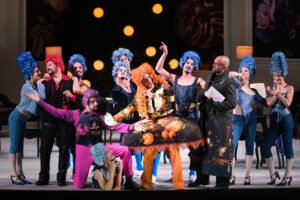
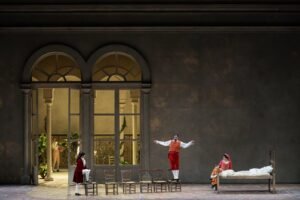
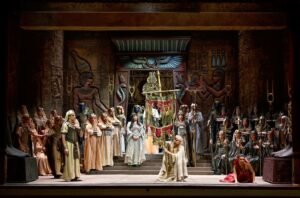
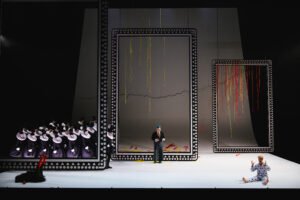
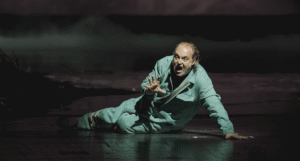
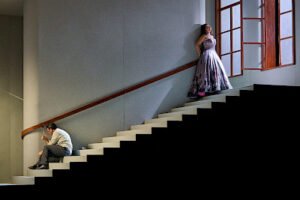
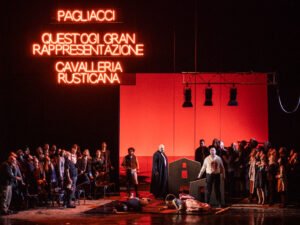
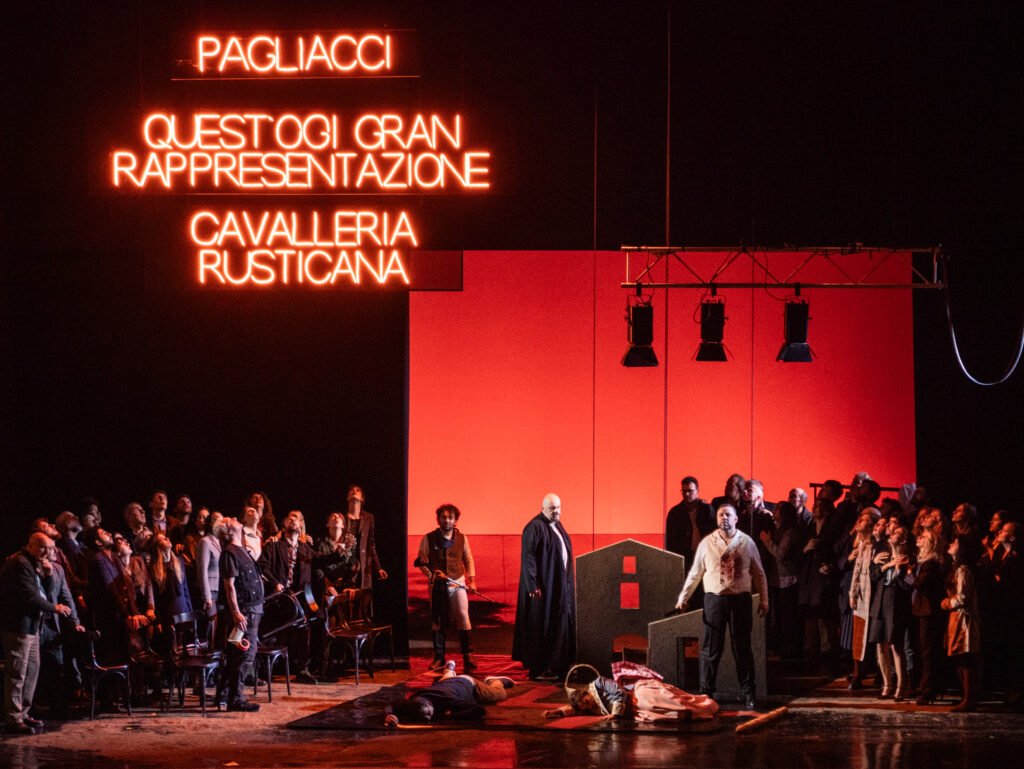
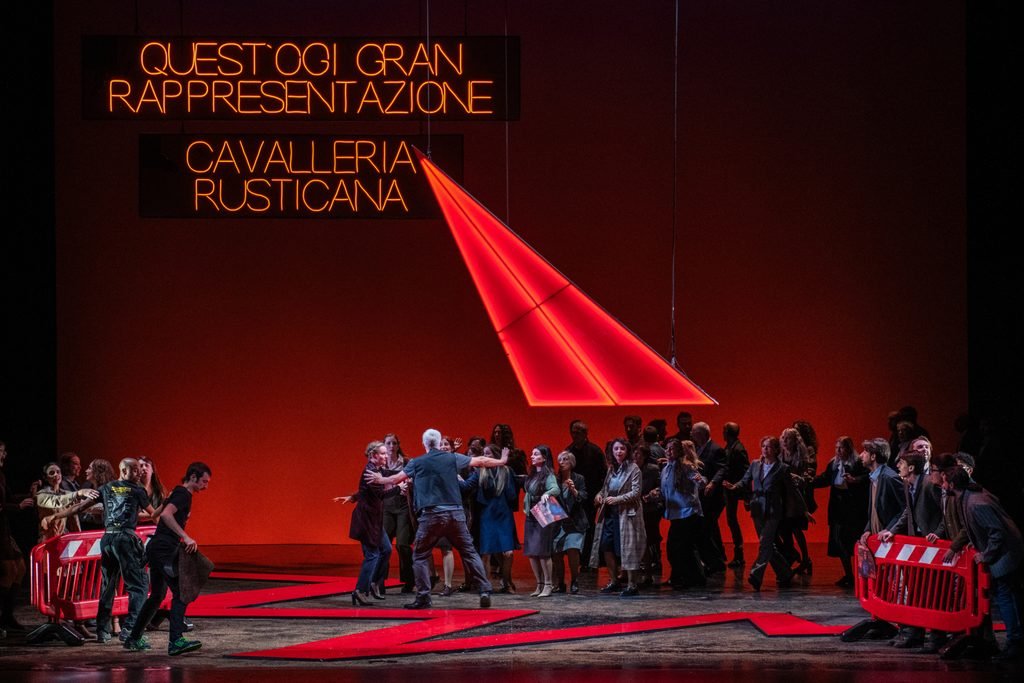
What I particularly enjoyed about this new production, directed by Davide Marranchelli, was the way the two works were connected visually. Cavalleria rusticana opened the evening, and its final image, just as the curtain fell, was almost like a frozen photograph. After the interval, Pagliacci began from that very same final image. Rather than treating the two operas as completely independent productions, the staging created a visual continuity between them, as if the second tragedy were emerging directly from the first. I found this idea particularly clever and effective. The shared scenic world, designed by Francesca Sgariboldi, gave the evening a sense of unity without taking away the individual identity of either opera. It was a thoughtful directorial choice, and one that made the double bill feel like a single theatrical experience rather than simply two works placed next to one another. We are, after all, in Pavia, not Milan or Naples, and productions outside the largest opera houses do not always have the same resources. But this is precisely why I appreciate initiatives like this one: with imagination, intelligence and a good artistic team, you can
create something genuinely interesting without needing an enormous budget.
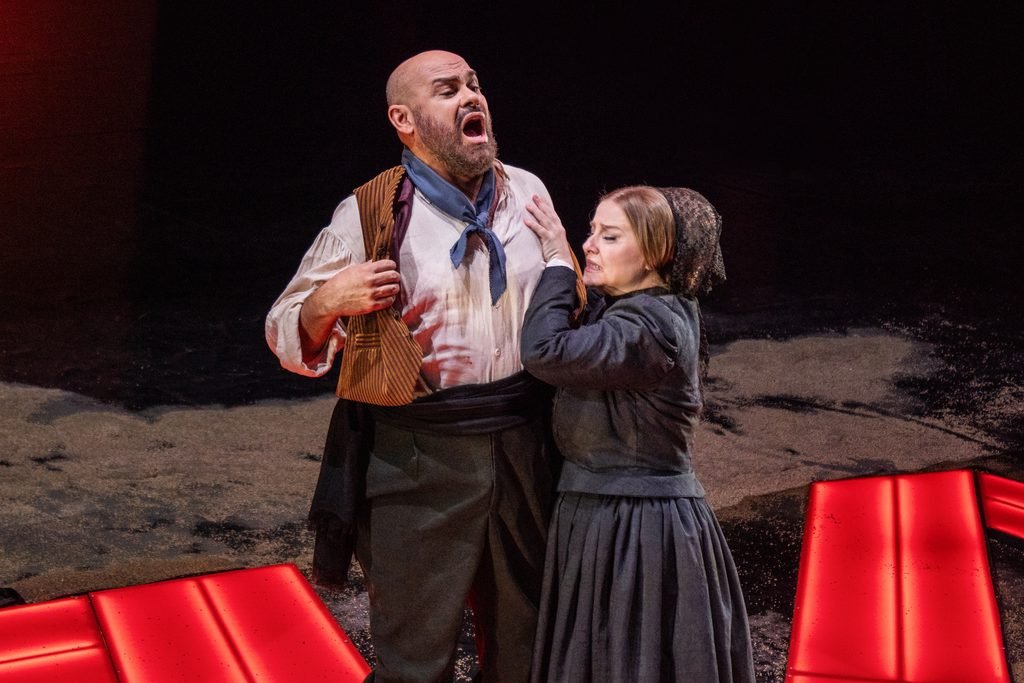
The evening opened with Cavalleria rusticana, and I want to start with Clarissa Costanzo, who was simply extraordinary as Santuzza. I do not think I had heard her before, although her face seemed somehow familiar, but what a discovery she was. Her voice immediately caught my attention, with an intensity and presence that made it difficult to look anywhere else. She brought real emotional weight to the character, and watching her sing from just a few metres away was a special experience. Those who regularly read my reviews will know that singers are my superheroes. Sopranos, mezzo-sopranos, tenors, baritones and basses: I never get tired of watching them, listening to them and wondering how on earth they manage to do what they do. It does not matter whether I know them personally, have seen them on stage dozens of times or am discovering them for the first time; I am always impressed. Clarissa Costanzo gave me one of those evenings when you simply sit back and think: wow. She was one of the great highlights of the entire performance.
Opposite her, Max Jota gave us a very good Turiddu. I had previously seen him in Tosca
in Como, in an outdoor performance last year, so it was nice to meet him again on stage in
a completely different setting. He has a lovely stage presence and delivered a convincing
performance, particularly in his scenes with Santuzza. The relationship between the two
characters felt alive, with the tension and emotional complications that make this opera so
powerful. There was a genuine connection between them, and that made their exchanges all
the more interesting to watch.
I was also happy to see Carlotta Vichi as Mamma Lucia. It is always amusing how often the opera world brings familiar faces back into your life: I had seen her only a month earlier in La traviata in Milan, so finding her again in Pavia was a nice coincidence. She is a very capable performer, and once again she brought experience and assurance to her role. I can only wish her continued success and hope to see her career continue to flourish. Sebastian Catana, meanwhile, appeared as Alfio in the first opera before returning as Tonio in Pagliacci, giving him a rather important role in linking the two halves of the evening. I have seen him on several occasions in Italian theatres, and he is one of those performers whose face you simply do not forget. He has a particularly distinctive look, capable of suggesting both a rather intimidating villain and, at other moments, an unexpectedly kind character. It was a pleasure to see him again in these two very different roles.
Then came Pagliacci, and another discovery of the evening: Lorenzo Martelli as Beppe. It may not be the largest role in the opera, but he certainly made an impression on me. His voice was lovely, and there was something particularly charming about his performance. His appearance during the famous musical episode in which Beppe takes part in the commedia dell’arte entertainment was a real pleasure. Sometimes a relatively small role is all it takes for a singer to catch your attention, and Martelli did exactly that. I would happily see him again in a larger part.
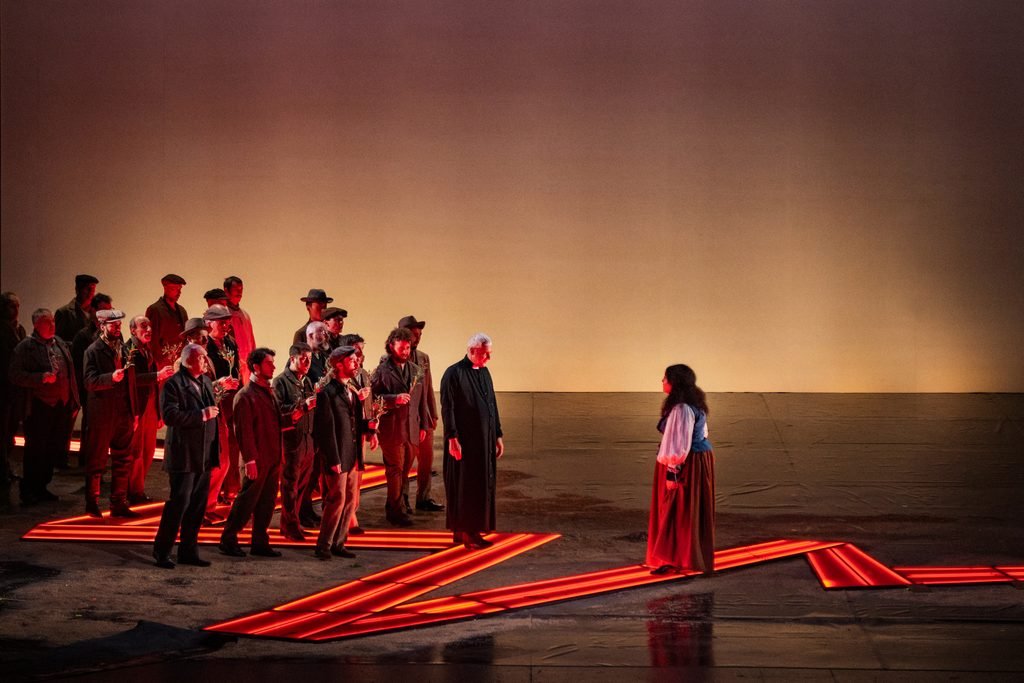
As Nedda, Laura Brasó was another of the evening’s highlights. The Spanish soprano brought elegance and a very attractive stage presence to the role, and her scenes with Mikheil Sheshaberidze as Canio worked particularly well. I genuinely believed in the relationship between them, which is essential in an opera where the boundary between theatrical performance and real-life betrayal becomes increasingly blurred. Their exchanges had the right mixture of affection, tension and danger, and they made the central drama convincing. Sheshaberidze gave us a solid Canio, carrying the emotional weight of a character whose jealousy gradually takes control of everything around him. The final moments of Pagliacci are never easy to watch, and the production made sure that the tragedy remained at the centre of the evening.
The musical direction was entrusted to Biagio Micciulla, leading the Orchestra I Pomeriggi Musicali, alongside the Coro OperaLombardia and, in Pagliacci. The musical team provided the framework for these two intense verismo dramas, while the staging by Davide Marranchelli, the sets by Francesca Sgariboldi, costumes by Gianluca Carrozza and lighting by Giulia Bandera helped create a coherent theatrical world across both works. It was a production that understood the importance of atmosphere and storytelling, and I particularly appreciated the decision to make the transition between the two operas part of the artistic concept itself.
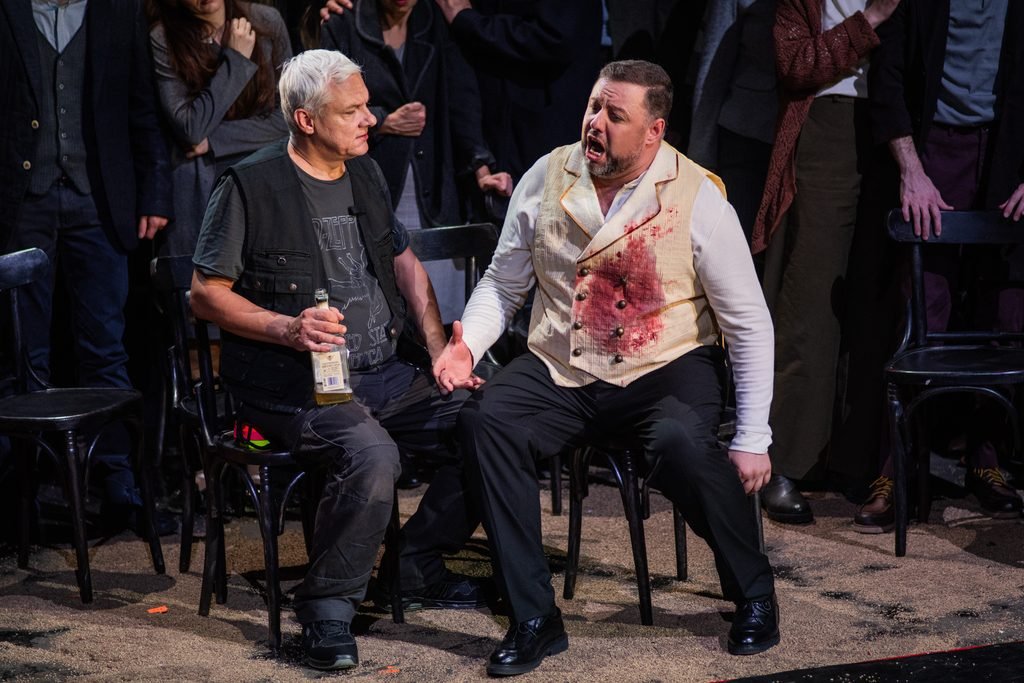
All in all, it was a lovely evening in a theatre that deserves to be discovered by many more opera lovers. Teatro Fraschini has that rare ability to make you feel special simply by being inside it, and seeing two great works of the Italian repertoire in such beautiful surroundings made the experience even more enjoyable. I left Pavia very happy, with two wonderful new memories and, above all, the pleasure of having discovered Clarissa Costanzo and enjoyed several familiar faces once again.
A big thank you once more to Teatro Fraschini, to the entire organisation and to everyone who made this evening possible. I will not have to wait too long before returning: in just a few weeks, I will be back for Verdi’s Un ballo in maschera, followed by L’italiana in Algeri. Two more reasons to make the journey to Pavia, and certainly two more evenings I am already looking forward to.
Until next time, Teatro Fraschini. A presto, Pavia!
About the Author