INTERVIEW | Constantin Philippoff
A long time ago, I dreamed of having the chance to spend some time and talk with Larry Brownlee, so I reached out to someone at his agency, PrimaFila. I was fortunate enough to connect with a very kind and understanding man who agreed to the request, and with whom I have since built a friendship over the years. It is important to me to share this aspect of the industry with you, as it plays a truly significant role in the passion we all share. Constantin has kindly agreed to answer a few of my questions.
Geoffrey Grand: To begin with, could you introduce yourself? Who are you, what do you do, and how long has opera been part of your everyday life?
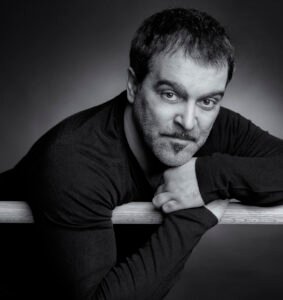
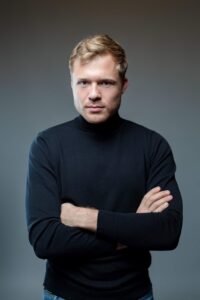
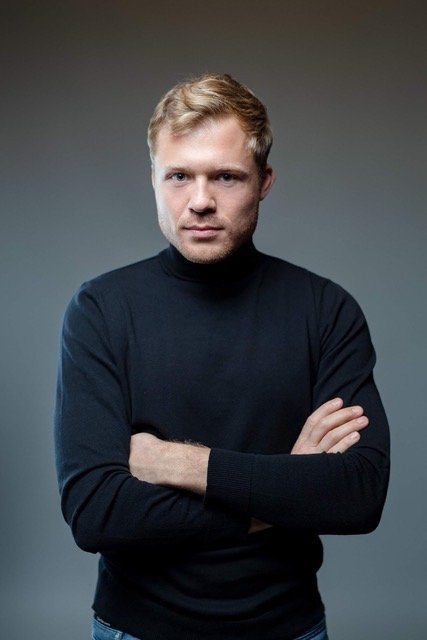
Constantin Philippoff: My name is Constantin Philippoff, and I am an artist manager at PrimaFila Artists, based between Paris and Munich. My work consists of discovering young talent and promoting singers in the international world of opera and classical music. I have always been a music lover. As a child, I listened to a lot of rock and soul music, and gradually developedan interest in classical music, particularly instrumental music. I am a great admirer of the piano as an instrument and of piano concertos, which gradually led me to German Lieder. I became very fond of this repertoire, listened to it extensively, and eventually found my way to opera in the broader sense. Music inspired me so much that I wanted to become a singer myself, and I went on to study singing in Germany. Later, working with singers felt like a natural choice, as I realised that I enjoyed listening to music and being involved in its creation and management much more than performing on stage myself. I have a great affection for artists and enormous respect for what they do every day. It is an incrediblydemanding but wonderful profession.
Geoffrey Grand: Tell us about the first artist you managed. Who was it, and what was that experience like?
Constantin Philippoff: Not exactly the first, but certainly one of the first singers I personally worked with, represented and accompanied in his career was Jonas Hacker, a young American tenor. I first noticed him while working as an assistant at Hilbert Artists Management in Munich. Later, when I becamean artist manager at PrimaFila Artists, I was very keen to represent Jonas. We signed an agreement, and since then we have come a long way together. This year, he made his debut at the Salzburg Festival, he is about to make his debut at La Monnaie, and he has just made his debut at the Komische Oper Berlin. He also has some wonderful upcoming engagements and debuts in his calendar. I am very happy for him. And by the way, I have a particular weakness for tenors. They are probably my favourite and most fascinatingvoice type. I adore tenors of every kind!
Geoffrey Grand: If you could relive one production you have seen in your life, which would it be and why?
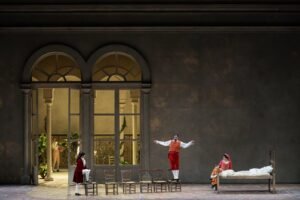
Constantin Philippoff: Perhaps my answer will be a little unconventional. I would choose a production that I would love to see again, and that everyone will have the opportunity to see in Darmstadt this season. It is Philip Glass’s Les Enfants Terribles, a production originally presented at the Opéra de Lille, directed by the young German director Matthias Piro. It is an absolutely wonderful production, somewhere between opera and spoken theatre. I believe productions like this represent the future of opera because they are so compelling. It is visually beautiful, dramatically engaging, contemporary, vivid, lively and accessible. The productionaddresses contemporary questions while remaining thoroughly captivating. And incidentally, another tenor I represent, the wonderful young Parisian singer Abel Zamora, will be performingin it.
Geoffrey Grand: What is the most beautiful moment you have experienced thanks to one of your artists?
Constantin Philippoff: One of the most beautiful moments I have experienced thanks to my artists happened just a week ago,when a young baritone we represent, Jiazhou Wang, won the Neue Stimmen competition in Germany. He is only 22 years old. An absolutely wonderful and gifted young man. When he sang Mein Sehnen, mein Wähnen, I had tears running down my face, and I certainly wasn’t the only one in the audience. And when he performed Rossini’s Largo al factotum in the final, it was another extraordinary moment. I was incredibly proud of him, and it reminded me once again why I do this job. There is nothing more beautifulthan seeing such a young, sincere singer on stage, someone who simply loves music and who so clearly deserves to be exactly where he is.
Geoffrey Grand: Have social media become essential for building a career?
Constantin Philippoff: Social media are important, but I don’t think we should overestimate their influence. Yes, we live ina world where, unfortunately, it is difficult to ignore the constant noise of social media. It plays a significant role in shaping how we see the world. After all, algorithms are designed to subtly influence the way we think, sometimes making it harder to form an accurate picture of reality. But what matters most is your talent, your voice, your musicality, diction, energy, acting abilities and appearance.All of these are far more important than social media, which can certainly help to a certain extent with visibility and maintaining a connection with your audience, but ultimately have a limited influence on a career itself. I believe singers should focus first and foremost on their artistic substance rather than the impression theycreate on social media. And that applies not only to singers.
Geoffrey Grand: At what age can you recognise a talented singer with a promising future? Do you have an example?
Constantin Philippoff: I don’t think there are any rules. I have just mentioned the example of the young singer Jiazhou Wang, who, at 22, already possesses an extraordinary talent that is impossible to miss. But some people mature later, and some voices develop later too. Certain personal experiences and events inlife may also come at a later stage. So there really are no fixed rules. Being younger doesn’t necessarily mean being better or more talented. It is not a race. The only person each of us is competing with is ourselves. Everyone should continue working, studying and applying their intelligence and talent in the right direction, without falling for false promises or expecting undeserved gifts from fate, because in our profession, those simply don’t exist. None of this guarantees success, but it certainly increases the chances of achieving it.
About the Author