INTERVIEW | Francesco Micheli
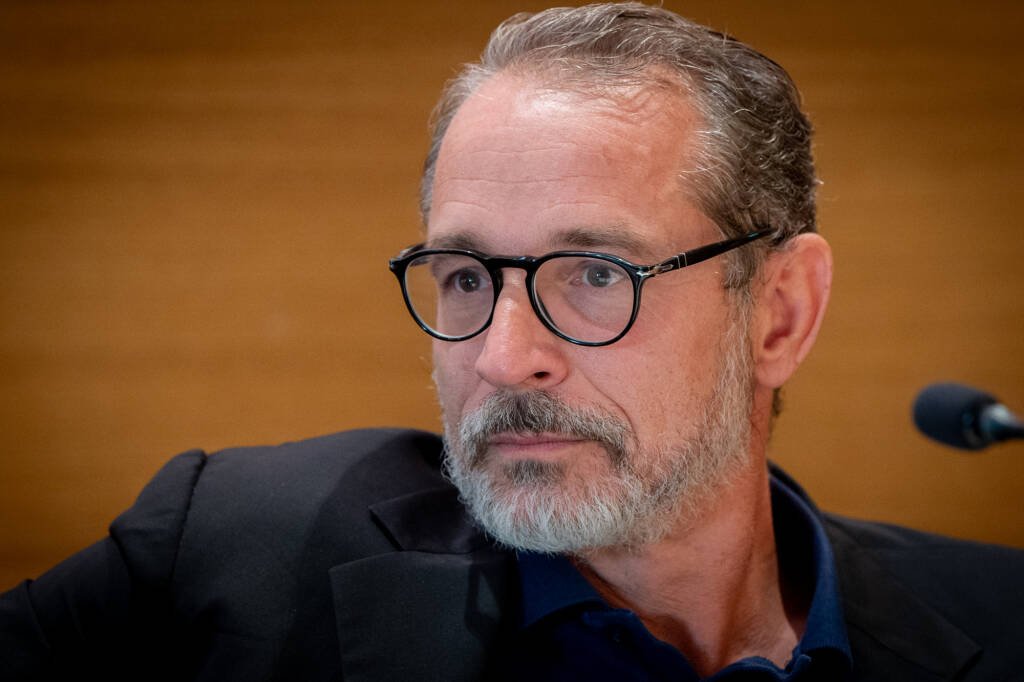
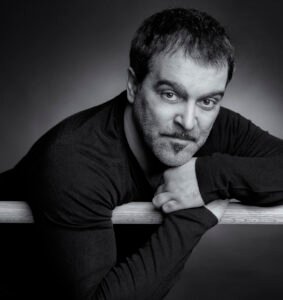
Francesco Micheli (Bergamo, 1972) è un regista teatrale e direttore artistico italiano, noto per il suo impegno nel rinnovamento dell’opera lirica e nella divulgazione musicale. Laureato in Lettere Moderne e diplomato alla Scuola d’Arte Drammatica Paolo Grassi di Milano, ha diretto importanti istituzioni come il Macerata Opera Festival e il Donizetti Opera di Bergamo, distinguendosi per una visione innovativa capace di avvicinare il grande pubblico al teatro musicale
Geoffrey Grand: What does Leoncavallo’s La Bohème do better than Puccini’s La Bohème?
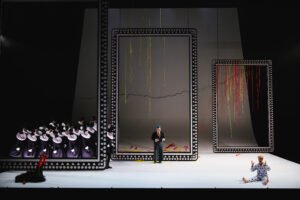
Francesco Micheli: The real problem for Leoncavallo’s La Bohème is that it is constantly judged in comparison with Puccini’s, but we have to understand that, fundamentally, these are two completely different operas. They are two entirely different ways of approaching the same subject. Murger’s novel is not a linear story; it is made up of sketches, scenes, situations and snapshots of everyday life, what we might callslices of life. And the way the two composers approach this community is completely different. We can certainly say that Leoncavallo remains much more faithful to the spirit of the original novel, particularly in his portrayal of the community as a whole.Puccini, on the other hand, focuses more on the relationship between Mimì – the true protagonist of his opera – and the bohemians, especially, of course, Rodolfo. I also believe that the fact that Leoncavallo has always had to contend with comparisons to Puccini has not helped the success of hisopera. And I think this is also connected to the modernity of the work. We know that opera traditionally focuses on protagonists, heroes and heroines. In Leoncavallo’s La Bohème, however, what really matters is the community itself: its problems, its relationship with the law, with social rules, with the city – the big city – and with the challenge young people face when trying to find work. I think about the protests of young students, even in France today, and there is something very similar here. In a way, it is a revolution – a revolution of the young. It reflects that generational conflict that exists between young people and the society around them, a conflict that becomes even more pronounced when those young people are artists. And that is truly extraordinary. The way Leoncavallo depicts the spirit of this artistic community throughout the four seasons of humanlife is absolutely remarkable. It genuinely surprised me and moved me deeply.
Geoffrey Grand: If you could direct one opera, and one opera only, for the rest of your life, which would it be?
Francesco Micheli: It would definitely be La Bohème. My life is very closely connected to this opera. I have directed it three times, creating three different productions, and the most recent one has become the longest-running production of my career. It first premiered in 2011, and we are stillperforming it today at La Fenice in Venice. What is particularly funny is that Turin and Venice are the two cities associated with the premieres of Puccini’s La Bohème and Leoncavallo’s La Bohème, respectively. I directed Puccini’s La Bohème in Venice, and here in Turin, I directed Leoncavallo’s version. So I feel a very strong personal connection to this opera. Perhaps my dream now would be to create a third La Bohème — a contemporary interpretation of the work. We have already explored some of these ideas, for example, but there is still so much to discover. The melodies, the situations and the characters that Leoncavallo and Puccini created are truly moving.They have an extraordinary emotional power, and I think that is precisely why this opera continues to mean so much to me.
Geoffrey Grand: After all these years working in opera, is there still a work you dream of directing, or a composer you would particularly like to explore?
Francesco Micheli: The La Scala production featuring Zeffirelli’s staging, with Teresa Stratas, Plácido Domingo and Juan Pons, is prettymuch ideal. That said, when it comes to the verismo tradition in general, I have to admit that I am not particularly fond of some of the older productions. There is a rather Guignol-like tradition in the way these works are staged, and that does not really appeal to me. What I can say, however, is that I absolutely loved working with the soloists on this production. It was a real surprise, because wedid not have very much time, but both on Pagliacci and on La Bohème, we managed to develop a genuine dialogue of ideas. Each artist brought their own thoughts, perspectives and artistic vision to the process, and that enriched me enormously. So, in a way, I can say that my ideal production is the one we have created here: working with the wonderful conductor Andrea Battistoni,the entire cast, and Daniele Menghini, with whom I shared the project for the VERISMO Festival. It was truly the production experience I had always dreamed of, but never dared to imagine could actually become a reality.
About the Author