INTERVIEW | Mathieu Jouvin
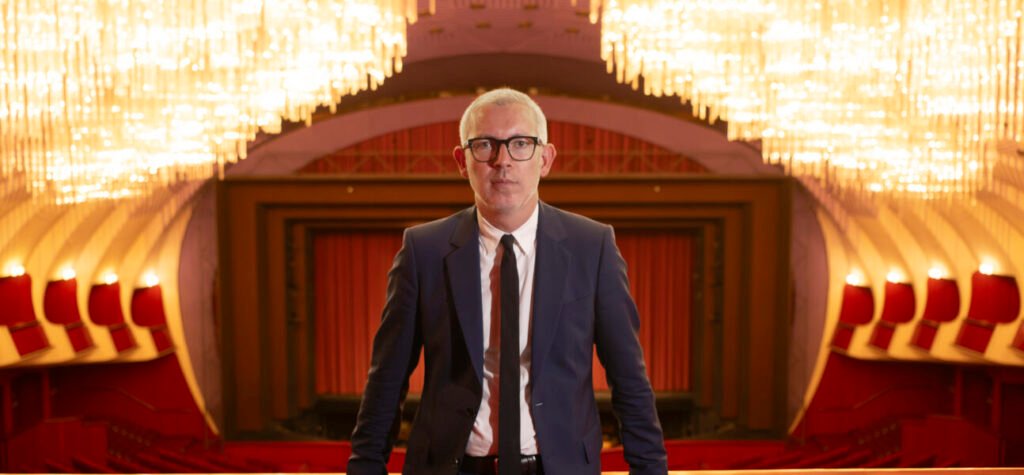
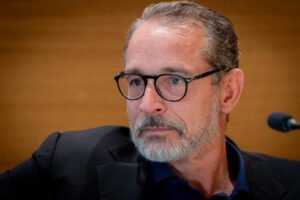
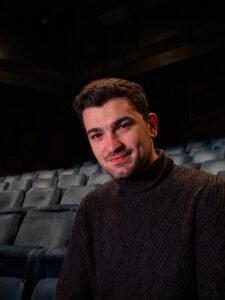
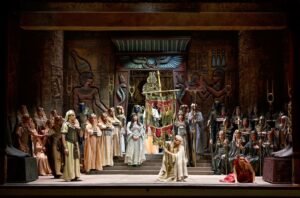
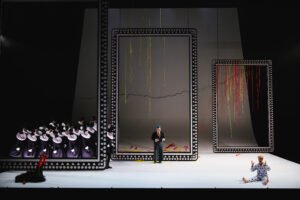
On the occasion of the presentation of Cavalleria rusticana, Pagliacci, Iris and La Bohème for the VERISMO FESTIVAL at the Teatro Regio di Torino, we met with Mathieu Jouvin, Superintendent of the Teatro Regio di Torino. He talks about what connects these works, the future of the Teatro Regio, his artistic and regional ambitions, as well as some more personal choices surrounding the operas that have accompanied him since the beginning of his career.
Geoffrey Grand: In your view, what is the essential common thread between La Bohème, Iris, Pagliacci and Cavalleria rusticana?
Mathieu Jouvin: For me, above all, it is humanity. There is a particularly heightened Italian sensitivity in these works, a very distinctive way of experiencing and relating to the world that can be found throughout Italian music of that period. They tell stories about human beings, emotions and relationships. And ultimately, opera exists to tell us what it means to be human. I find this sensitivity particularly powerful in the verismo repertoire. Even La Bohème, which tells a very French story, takes on a very distinctive flavour when it is translated musically and dramatically by an Italian librettist and composer. Cavalleria rusticana and Pagliacci obviously share this same human dimension, while Iris also opens a window onto the wider world. It is, incidentally, the first opera to be set in Japan, long before Madama Butterfly, and that is something worth highlighting. So there is this Italian sensitivity that creates a very particular kind of emotion. When you go to see a verismo production, you know you are going to come away moved, or even, to use a word that spontaneously comes to me in Italian, deeply shaken.
Geoffrey Grand: When you come to the Teatro Regio, you get the impression that the theatre is currently enjoying a very positive momentum. What is the next step for you?
Mathieu Jouvin: The first thing is to consolidate. Over the past four years, we have worked very hard to get things back on track. When I was appointed, the theatre was emerging from a genuine period of crisis, which went well beyond the issues linked to Covid. There had been a significant financial crisis that had had a major impact on the organisation and its people. Fortunately, we have come through those difficulties, and we worked on every aspect of the organisation to put everything back on a solid footing. Today, we are seeing very positive signs. First of all, in terms of the quality of our productions: we have received Abbiati Awards for three consecutive years, including recognition for a production, a project, and the sets and costumes of Hamlet. We have also regained the trust of our audience, with strong growth in subscriptions. We recorded a 10% increase in subscriptions and a 15% increase in season ticket booklets between last season and the previous one, continuing a positive trend that had already begun earlier. Our objective is therefore to consolidate all of this. Internally, an opera house is also a business. The Teatro Regio currently employs around 300 people, and we are working to strengthen in particular the technical department, which was particularly affected by the restructuring period, as well as certain areas of the administration. Artistically, we have an orchestra of 93 musicians and a choir of 70 singers, which gives us what we need to do what we set out to do. And beyond the numbers, we have an extremely high level of artistic excellence. That is obviously one of the key ingredients behind the success of recent years.
Geoffrey Grand: And artistically, what are your ambitions for the coming years?
Mathieu Jouvin: We need to continue focusing on originality in our programming. Programming a theatre is a constant challenge. It is very easy to fall back into familiar habits and less ambitious choices. We want to maintain this level of ambition, but in a way that remains economically and humanly sustainable. We also want to continue developing our work with our new Music Director, who has only been with us for a little over a year. There is still a great deal to develop, particularly in terms of repertoire. We also want to explore areas that we may have focused on less in recent years: Wagner, Baroque music, and other directions as well. I am not approaching this from the perspective that we absolutely need to invite stars. What interests me more is continuing to build the image of a theatre that is original, of the highest quality and open to Europe. For me, these are three fundamental pillars.
Geoffrey Grand: A slightly lighter question: if you had to choose just one of the two, Cavalleria rusticana or Pagliacci?
Mathieu Jouvin: That’s difficult! Historically, I think I would have answered Cavalleria rusticana. It was the work that initially moved me the most, with something I found particularly powerful and profound. But my perspective has evolved. There was, in particular, an exhibition I saw in Paris centred around the figure of the artist as a clown, which had a strong impact on me. And when you have the opportunity to work in a theatre and be close to artists, the whole question of the relationship between theatre and life takes on a very particular dimension. There is something very profound about this question in Pagliacci. But ultimately, what we are lucky enough to have at the Teatro Regio is that we do not have to choose: we are going to see both! And Iris and La Bohème as well. That said, I remain very attached to the religious dimension of Cavalleria rusticana. I am not religious at all, but I find that this presence of spirituality gives the work remarkable strength and emotional power. And Easter is, for me, a very beautiful time of year. It is a moment of transition in nature, between winter and spring. It is certainly no coincidence that this period has taken on such importance in our calendar.
Geoffrey Grand: For Pagliacci, if you could put together your ideal cast, with the artists of your choice, who would you choose?
Mathieu Jouvin: In fact, all you need to do is buy a ticket and come and see our production! Conducting it, we have Andrea Battistoni who, in my view, is exactly the person we needed. He has the right balance: he brings great expressiveness to the music while maintaining a certain restraint, a sensitivity that is particularly well suited to Turin. We also have a splendid vocal cast, including Carolina López Moreno, who I consider an exceptional singer and who is really beginning to make her mark. We also have Martin Muehle, Carlo Ventre and Gregory Kunde. This loyalty to artists is also important to us. Some of them return to the Teatro Regio several times, and the relationships built over time also enhance the emotion we are able to offer our audience. There are, of course, some magnificent historical references, particularly the film with Plácido Domingo. But I feel that we have managed to bring together a cast of artists today that is, in my view, absolutely remarkable.
Geoffrey Grand: And what is your own personal relationship with Cavalleria rusticana?
Mathieu Jouvin: The Intermezzo remains an immense emotional experience for me. These are truly the operas that made me fall in love with opera. I was 17 when I discovered it. I was with some friends of my parents, who were farmers near Avignon and of Italian origin. I particularly remember one of the men, a very big man who must have been over 70, who spent two and a half hours crying throughout the opera. It made a huge impression on me. Seeing someone experience such powerful emotion through a work certainly helped awaken that emotion in me as well. Then my mother bought me the CD, and I started listening to it over and over again, almost obsessively. That is probably how some passions begin: with an emotion we see in someone else, which eventually becomes our own.
Experience the four works during the VERISMO festival at the Teatro Regio di Torino, from October 15 to November 22, 2026.
About the Author