CAVALLERIA RUSTICANA / PAGLIACCI | Teatro Regio Torino
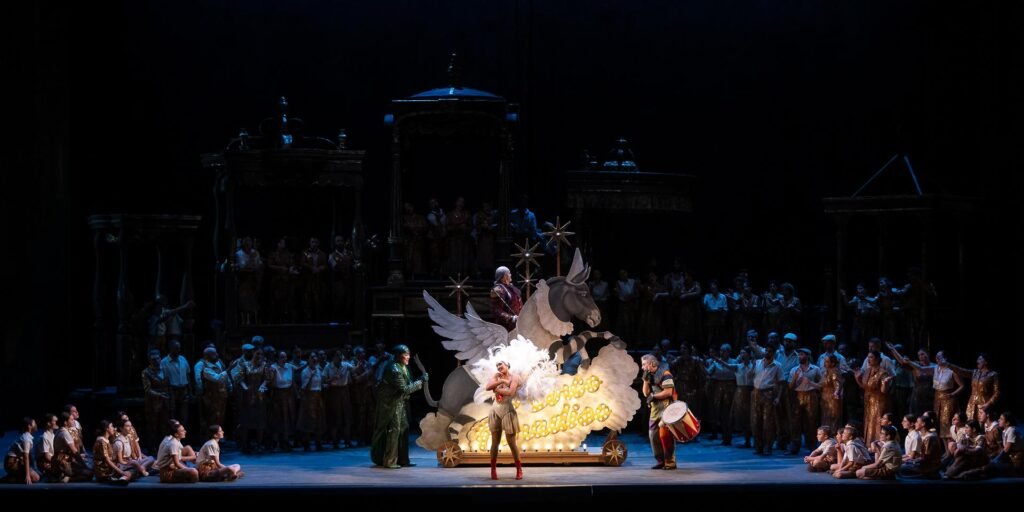
Two different directors, two different productions, but, as we would discover during the evening, two theatrical worlds that had been conceived to speak to one another.
Cavalleria rusticana & Pagliacci at Teatro Regio di Torino: A Veritable Verismo
The more time I spend at Teatro Regio di Torino, the more I fall in love with this theatre. And I am not exaggerating. There is something about this place that gets to me every single time: the welcome, the comfort, the atmosphere, the orchestra, the people working behind the scenes, and that very special feeling you get when you walk into a theatre where everything seems to come together. The orchestra is simply extraordinary, and with Andrea Battistoni on the podium, it is difficult not to be impressed. He works absolute magic with the Orchestra del Teatro Regio, one of the finest orchestras I have had the pleasure of hearing. Every time I return to Turin, I find another reason to love this house a little more.
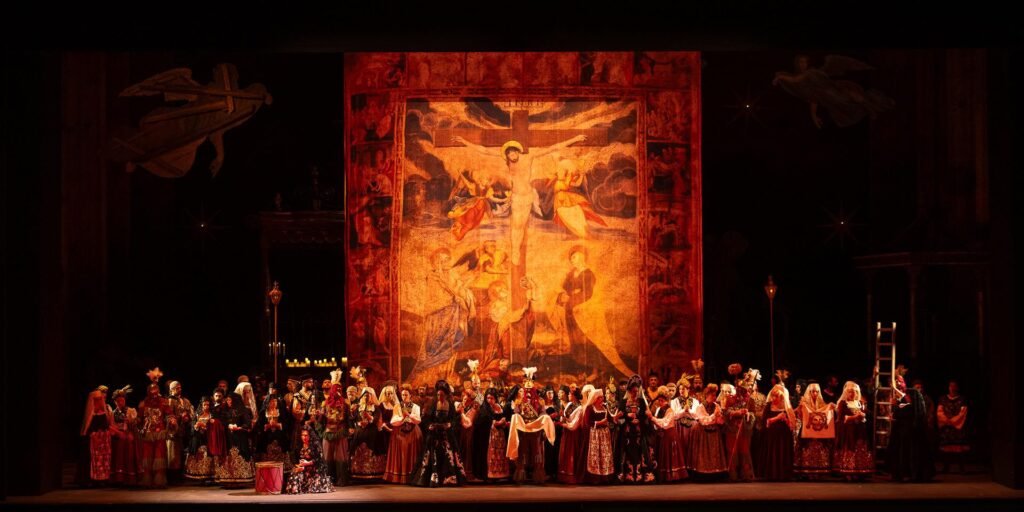
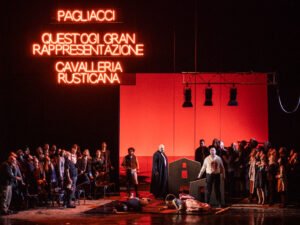
On Saturday 14 November, less than a week after seeing Cavalleria rusticana at Teatro Fraschini in Pavia, just an hour and a half away, I had the pleasure of experiencing the two great verismo titles once again, this time at Teatro Regio di Torino. The performances were part of the theatre’s wonderful Verismo Festival, which ran throughout October and November, bringing together several works from this fascinating period of Italian opera, including Iris and Leoncavallo’s La Bohème. And what a programme it was! There was something particularly interesting about this double bill, too: Cavalleria rusticana was staged by Daniele Menghini, while Pagliacci was directed by Francesco Micheli. Two different directors, two different productions, but, as we would discover during the evening, two theatrical worlds that had been conceived to speak to one another.
I was especially excited because I had already had the opportunity to attend rehearsals for Cavalleria rusticana a couple of months earlier. For someone like me, who loves absolutely everything about the world of opera, this makes the experience even more special. I love singers, actors, extras, stage managers, technicians, musicians, costume departments, production teams and everyone who works behind the scenes to make a performance happen. I am fascinated by the process, by the hours of preparation, by all those little details that the audience may never notice but without which the magic would simply not exist. Watching the final result after having witnessed some of the work that goes into it is a little like spending hours and hours cooking a wonderful meal, smelling all the ingredients as they come together, and finally sitting down to enjoy what you have prepared. And believe me, on Saturday evening, the result was absolutely delicious.
Cavalleria rusticana: A production that stays with you
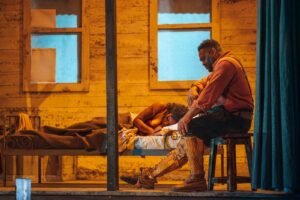
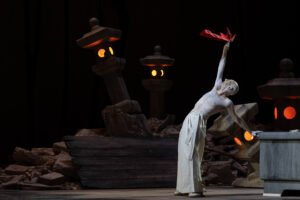
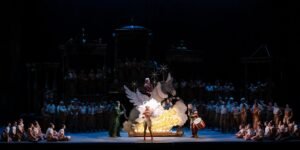
Let me say this straight away: this may well be the best staging of Cavalleria rusticana I have ever seen. And God knows I have seen quite a few! Daniele Menghini’s production was beautiful, intelligent and deeply moving. It is one of those productions that does not simply illustrate the story but finds a way of getting under your skin, making you think and, at the same time, bringing tears to your eyes. I was also watching it during a rather complicated personal period, which perhaps made certain moments resonate even more strongly with me. But even putting that aside, there was something genuinely special about the way this production approached Mascagni’s tragedy. It understood the emotional heart of the opera and allowed the drama to unfold with great sensitivity. I left the first part of the evening feeling that I had witnessed something truly memorable.
As Turiddu, Amadi Laga was a wonderful discovery for me. I had not seen him before, and he immediately caught my attention. There is something about his interpretation that made me think of a rather unexpected combination of Nemorino and Turiddu. It may sound like a strange comparison, but I mean it as a compliment! He has a certain freshness and charm, alongside the dramatic intensity required by the role, and his voice was a real pleasure to hear. He gave us a Turiddu who was engaging and convincing, and I would certainly be happy to see him again.
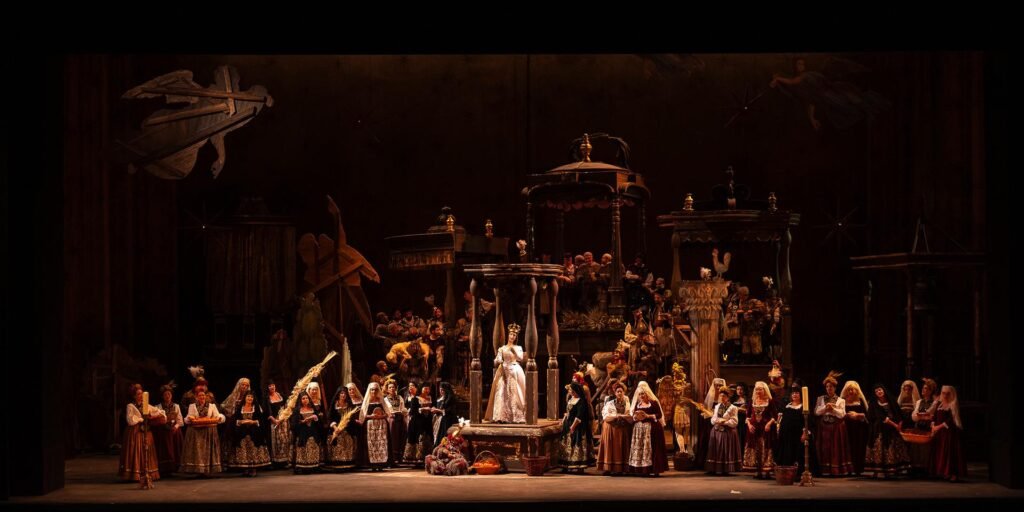
Opposite him, Simone Piazzola appeared as Alfio. I have to say that Simone is probably one of the baritones I have seen most often in my opera-going life, almost without ever planning it! I have crossed paths with him in so many different theatres and productions, and only a few months ago I had the pleasure of seeing him as Iago in Otello in Catania. This time, seeing him as Alfio was another lovely occasion. He brought his usual stage presence and authority to the role, and it was particularly interesting to see him alongside Amadi Laga.
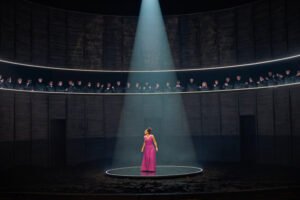
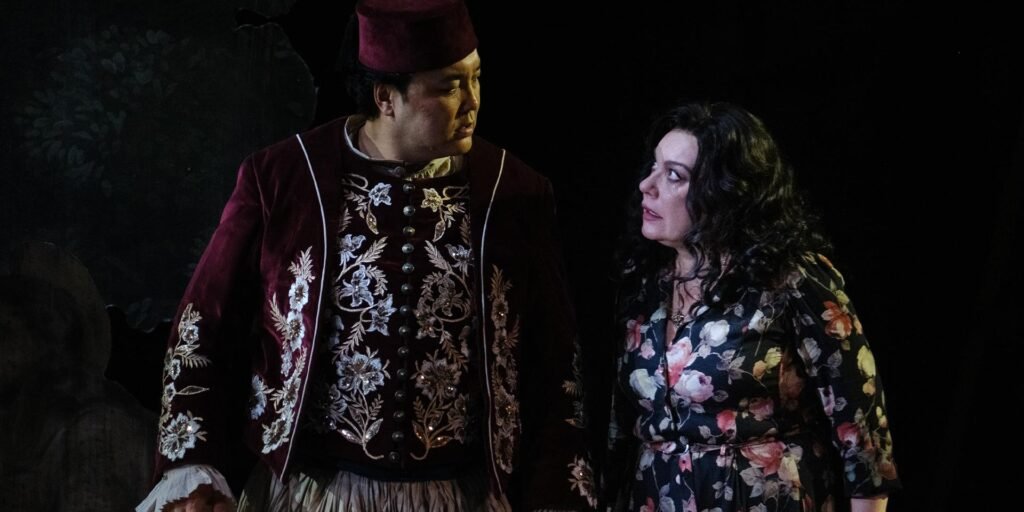
And then there was Maria Teresa Leva as Santuzza. What a soprano! Her voice, her presence and her ability to carry the emotional weight of this character made her performance one of the highlights of the evening. The three principal performers worked beautifully together, creating the dramatic tension that this opera needs. We all know the story of Cavalleria rusticana, we know the betrayal, the jealousy, the confrontation and the tragic ending, but knowing what happens does not make it any less powerful when it is performed well. Sometimes there is very little to say beyond the fact that an opera has simply worked. And this one did. Spectacularly. Cavalleria rusticana is definitely one of those works that you need to experience rather than attempt to describe. You have to sit there, let the music take over and allow the tragedy to do its work.
Pagliacci: A little laughter before the tears
Now, here is a question I regularly ask singers and musicians whenever I get the chance: Do you prefer Cavalleria rusticana or Pagliacci? It is a difficult choice, because I genuinely love both. Cavalleria has a very special place in my heart, not least because its famous Intermezzo was played at my uncle’s funeral, which has given that music an emotional significance that will always stay with me. But if I had to choose, I would probably go for Pagliacci.
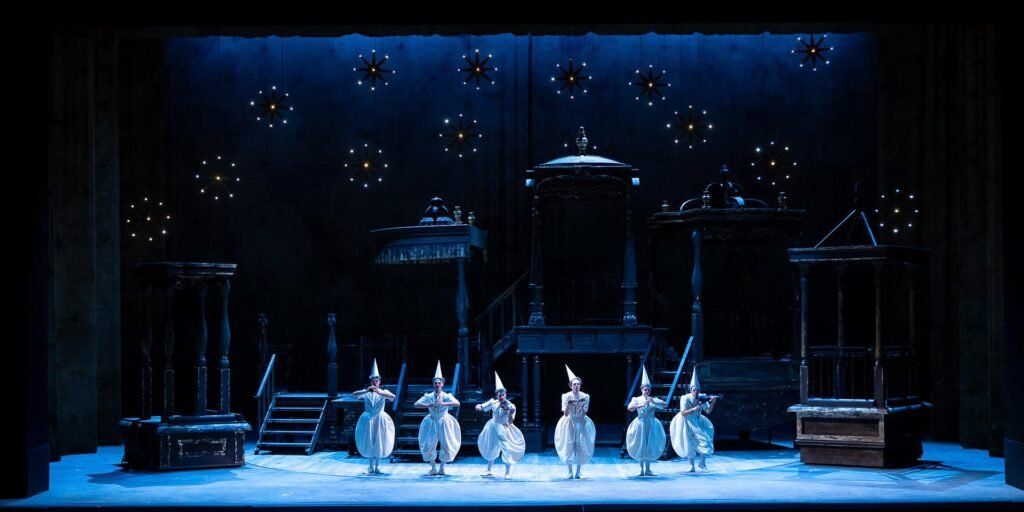
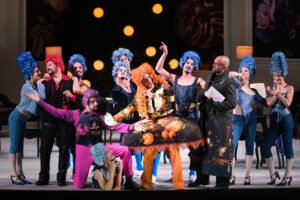
For me, Pagliacci is almost a breath of fresh air. It is a fascinating mixture of Rossini and Verdi, comedy and tragedy, laughter and heartbreak, all wrapped up in one extraordinary piece of theatre. And when the comic side of the evening is entrusted to Fabien Veloz as Tonio, well, you have my full attention.
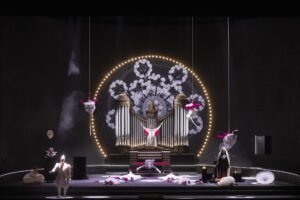
I absolutely fell in love with this Tonio from the very first second. His entrance was one of my favourite moments of the evening. He appeared from within the orchestra and the audience to deliver the famous Prologue, dressed in a magnificent white costume, with a spotlight following him as he moved through the theatre. It was such a wonderful way to introduce the character and establish the atmosphere of the opera. And Fabien Veloz has exactly the kind of personality that makes you want to spend an evening with him. He has a face that makes you think he could be your uncle, your best friend, the person you would happily invite for a drink just to listen to his stories and have a laugh. There is something incredibly likeable about him, and that is precisely what made his Tonio so enjoyable. Add to that a fantastic voice, a remarkable stage presence and a real sense of fun, and you have a performance that I absolutely adored. I could have watched him for much longer.
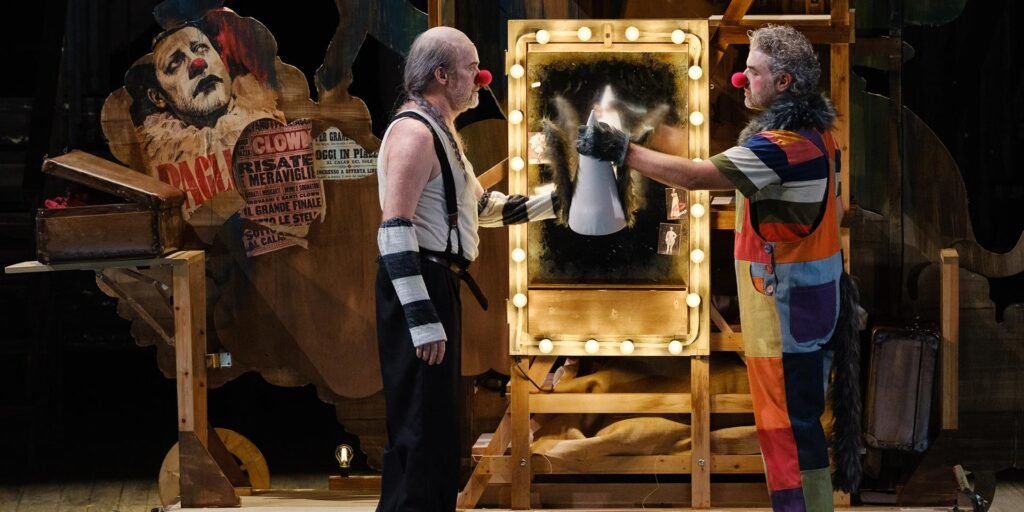
Of course, the other side of this dramatic equation was Carlo Ventre as Canio. I have to admit that his first moments surprised me a little. His opening notes had a rather unexpected colour, almost making me wonder whether I was listening to a baritone rather than the tenor I had anticipated. But then came Vesti la giubba, and what a moment that was! He delivered a wonderful interpretation, with the emotional intensity and dramatic impact that this famous aria demands. Ventre also has a very imposing stage presence. He is a performer you simply cannot ignore, and his costume and appearance made him a particularly striking figure on stage. His Canio gradually revealed the darker side of the character, and by the final scenes the tension had become almost unbearable.
Facing him as Nedda was Maria Teresa Leva, who, after her Santuzza in the first opera, returned for another major role in the second half of the evening. What a challenge to take on both characters in the same evening, and what a pleasure to see her do so! Together with Carlo Ventre, she created a convincing and emotionally charged relationship. You really believed in the connection between the two characters, and the tension between them grew throughout the performance. Their final scenes were particularly powerful, and the atmosphere in the theatre became increasingly intense. I would genuinely encourage anyone who has the opportunity to see this production to do so, or at the very least to look out for the video excerpts. There are moments here that deserve to be experienced.
One of the most interesting aspects of the evening was the way the two productions, despite being directed by different people, complemented one another. Daniele Menghini’s Cavalleria rusticana and Francesco Micheletti’s Pagliacci each had their own identity, but together they created a theatrical journey through two sides of the same world: passion, betrayal, jealousy, performance and the terrible consequences of human emotions. It was a very clever way to approach a double bill that can sometimes feel like two separate evenings placed together.
And, naturally, a huge part of the success belongs to Andrea Battistoni and the Orchestra del Teatro Regio di Torino. I have already said it, but I will say it again: what an orchestra! Battistoni conducted with extraordinary energy and sensitivity, bringing out the drama, the colour and the intensity of both scores. He seems to have a particularly wonderful relationship with this orchestra, and the result is music-making that makes you want to stay in your seat long after the curtain has fallen. The Teatro Regio’s orchestra is one of the great reasons I keep coming back to Turin, and this evening was another reminder of just how special it is.
Back to Turin, of course!
I left Teatro Regio on Saturday evening with a huge smile, feeling incredibly lucky to have experienced these two works in such a wonderful setting. A big thank you to the Teatro Regio di Torino for another unforgettable evening, and to everyone who contributed to making this Verismo Festival such a special event. From the artists on stage to the musicians, technicians, production teams and everyone working behind the scenes, congratulations to all of you.
And a very special thank you to Sara, if you happen to read these lines: you know who you are! Thank you for your kindness, your warmth and for always making me feel so welcome.
I will not have to wait long before returning, as I will be back on Saturday 21 November for the final performance. I am slightly disappointed that I cannot see this production three, four, five or six times, because I honestly would have loved to! But I am already looking forward to discovering the second cast, and especially to seeing Gregory Kunde, one of my favourite tenors, in the role of Tonio.
So, Teatro Regio, thank you once again. The more I come, the more I love you. And I have a feeling this is becoming a very long-term relationship.
A presto, Torino!
About the Author