RACHMANINOW: DIE DREI OPERN | Opernhaus Zürich
©Monika Rittershaus
Three Operas, One Troubled Mind, and a Descent into Hell.
When the Game Becomes Reality: Can we escape the stories we tell ourselves, or do they follow us even into Hell?
When the Game Becomes Reality: Can we escape the stories we tell ourselves, or do they follow us even into Hell?
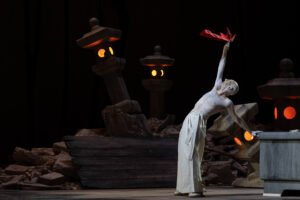
This is one of the most striking moments of Dmitri Tcherniakov’s ambitious production at Opernhaus Zürich, bringing together Sergei Rachmaninov’s three completed operas: Aleko, The Miserly Knight and Francesca da Rimini. Although celebrated for his piano concertos and symphonies, Rachmaninov’s operatic works remain surprisingly unfamiliar. Rarely performed together, they offer a fascinating opportunity to discover another side of the composer, spanning thirteen years of his musical development.
But rather than presenting three independent tragedies, Tcherniakov creates a single psychological journey.
The operas explore different destructive passions: jealousy in Aleko, greed in The Miserly Knight, and forbidden love and betrayal in Francesca da Rimini. Yet the director identifies a common thread: men consumed by resentment and unable to escape their emotional wounds. As he explains in his production interview, the Baron from The Miserly Knight becomes the central character throughout the evening, assuming different identities while repeatedly reliving the same obsessions. What changes are the circumstances, but never his underlying sense of betrayal, turning the three stories into variations of the same personal tragedy.
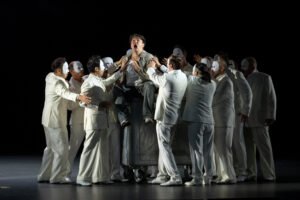
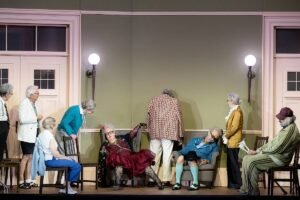
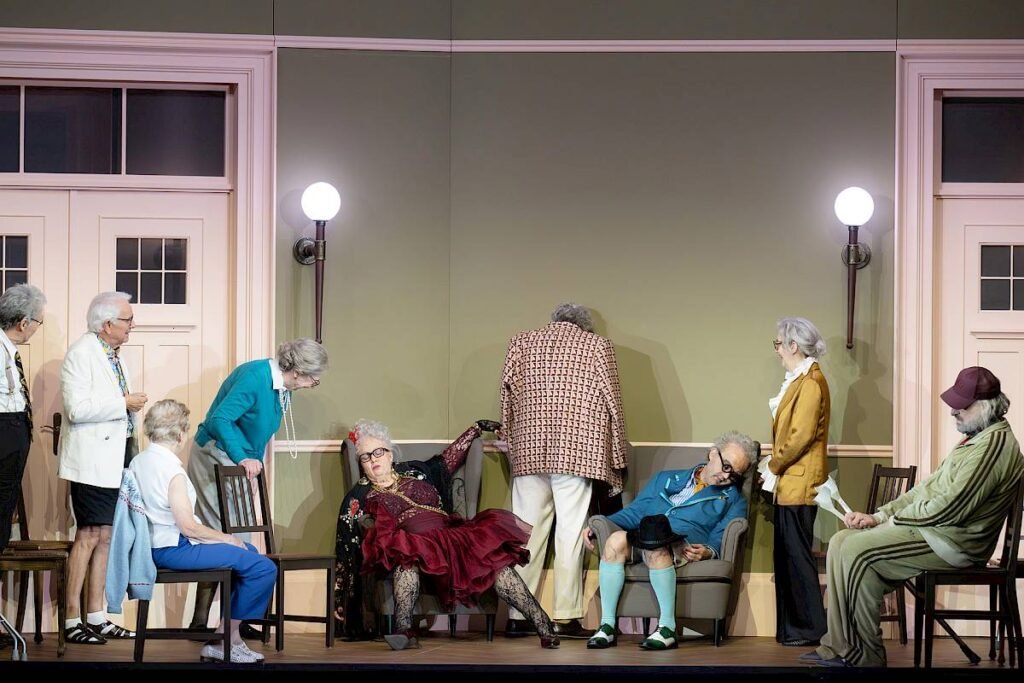
The action unfolds in an ambiguous setting resembling a retirement home, where elderly residents entertain themselves by performing the operas. This intriguing theatre within a theatre initially brings unexpected moments of humor, as the residents enthusiastically assume their fictional identities.
But while the others seem aware of the game, the Baron gradually loses himself in his roles, apparently unable to distinguish imagination from reality.
The contrast between their playful attitude and his increasingly desperate conviction makes the situation both amusing and deeply unsettling.
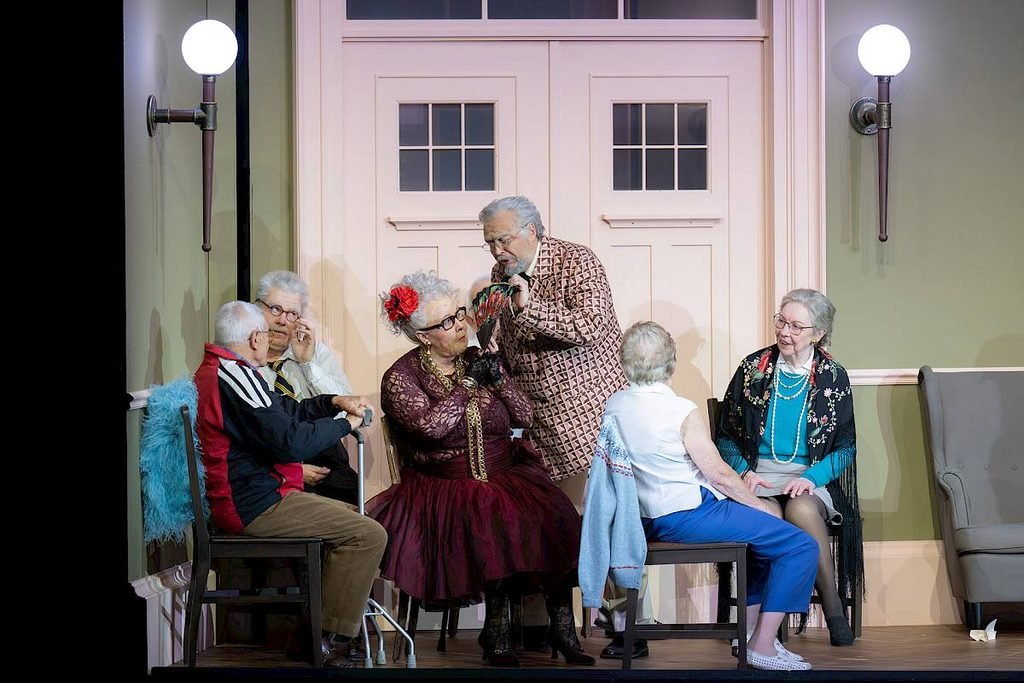
Could this also be a reflection on dementia, on the frightening experience of a man losing his grasp on the world around him? The interpretation becomes increasingly compelling as his personality remains recognizable across all three works, even as reality begins to dissolve. The production wisely leaves room for interpretation, suggesting that imagination, memory and obsession can become inseparable when the mind begins to lose its bearings.
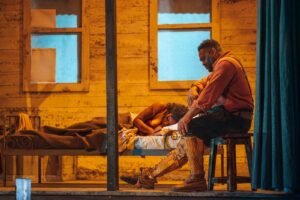
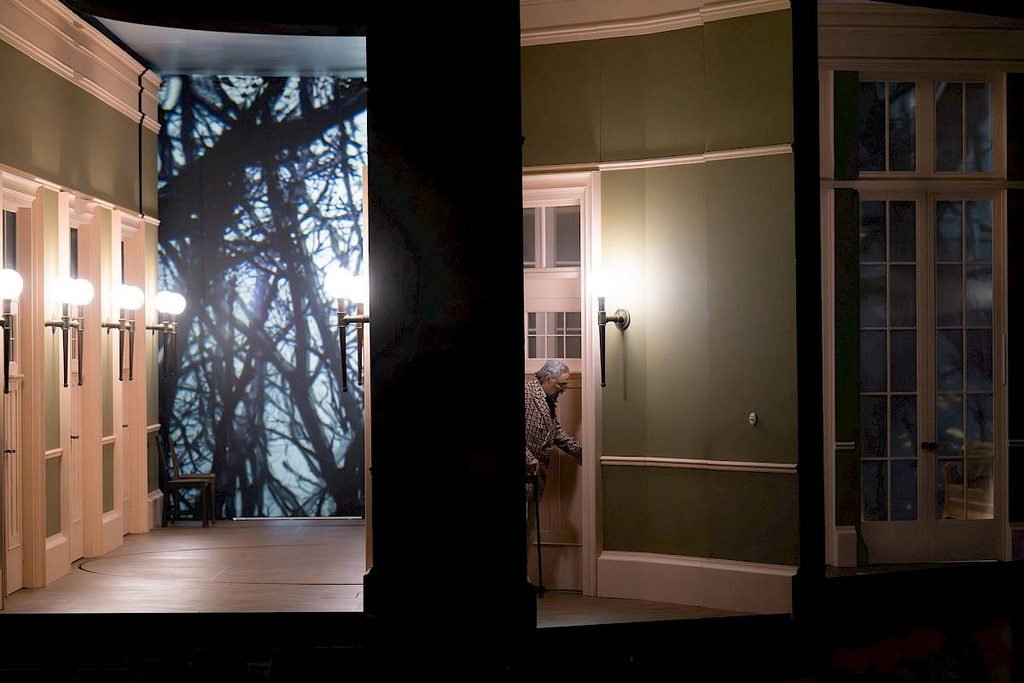
The concept is fascinating, although not always easy to follow. The Miserly Knight, the psychological center of the production, occasionally feels drawn out, particularly during extended orchestral passages where the stage action struggles to maintain momentum. The constant movement of characters through numerous doors also creates moments of confusion. While this disorientation is clearly part of Tcherniakov’s intention, it sometimes risks distancing the audience from the drama. Nevertheless, the middle opera provides an important insight into the Baron’s personality, revealing how his desire for control and possession lies beneath the different identities he assumes.
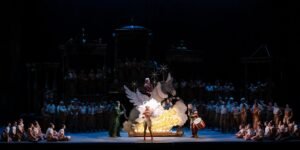
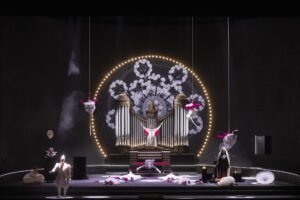
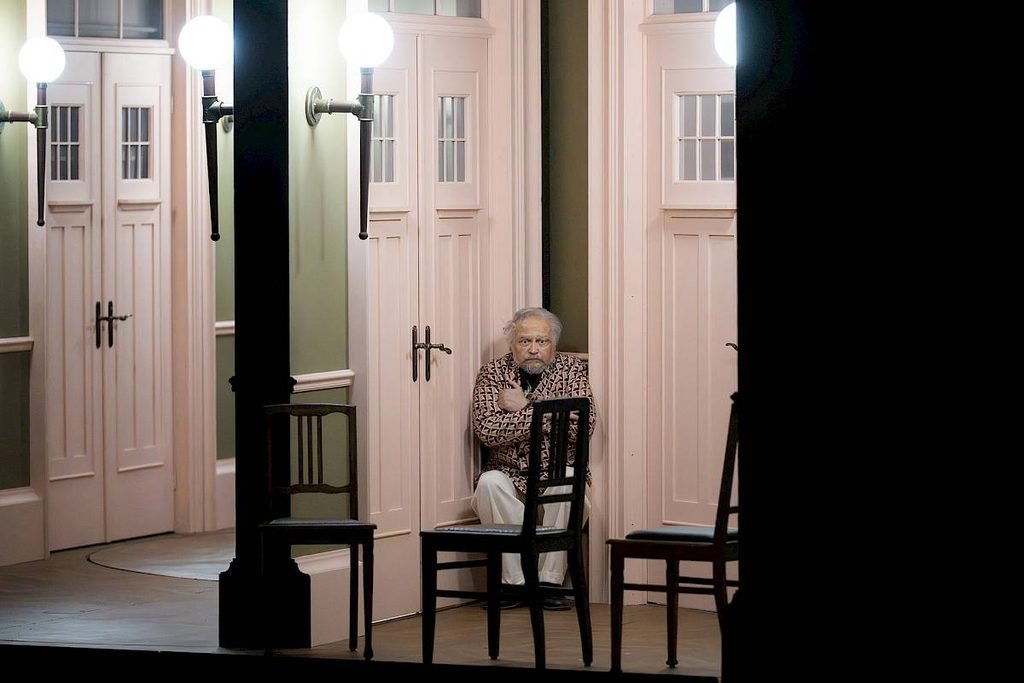
The final Francesca da Rimini, however, brings the concept to its most spectacular expression. Following the Baron’s apparent death, the fragmented, revolving scenery evokes both Dante’s inferno and the gradual collapse of the protagonist’s consciousness. Tcherniakov describes this disintegration of space as a reflection of the breakdown of spatial logic within the Baron’s mind. Rooms shift, doors appear and disappear, and the stage seems to become a living projection of his inner turmoil.
But could this also represent his passage into the afterlife? Or are we witnessing a descent into his own psychological Hell, where memories, guilt and obsession become an eternal prison? The staging can become visually overwhelming, but its combination of movement, lighting and music is genuinely hypnotic. What begins as a theatrical game has evolved into something far more disturbing, a man seemingly trapped in a world from which there is no escape.
At the center of this demanding production, Vladislav Sulimsky delivers a remarkable performance across three substantial baritone roles. His powerful voice is matched by exceptional dramatic presence, conveying madness, jealousy and passion with striking intensity, particularly through his expressive gaze. His ability to sustain the same troubled personality across three very different dramatic situations gives the production much of its emotional credibility.
Alongside him, Elena Stikhina and Bekhzod Davronov impress with their beautiful contrasting timbres, clear and powerful voices, and convincing chemistry. Their expressive acting brings welcome moments of humor and humanity to an otherwise increasingly dark narrative, while their passionate encounters with Sulimsky make the emotional conflicts feel credible even when the staging becomes more abstract.
Musically, the evening is outstanding. Under Gianandrea Noseda‘s intensely committed direction, the Philharmonia Zürich reveals the remarkable evolution of Rachmaninov’s writing, from the expansive lyricism of Aleko to the darker psychological intensity of The Miserly Knight and the overwhelming orchestral drama of Francesca da Rimini. Noseda shapes these contrasts with tremendous energy, allowing the orchestra to become an essential dramatic voice rather than a simple accompaniment.
In the final opera, the combination of orchestral power and revolving scenery creates an almost physical sensation of falling into Hell.
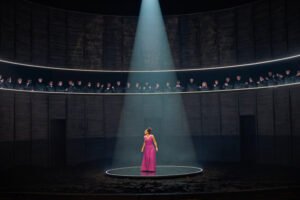
Equally memorable is the chorus, positioned high in the galleries on both sides of the auditorium. The voices emerge from above, surrounding the audience with extraordinary acoustic intensity. Beyond the sheer power of the sound, this spatial arrangement creates a remarkable sense of immersion, as though the drama has escaped the stage and enveloped the entire opera house.
Tcherniakov’s production occasionally challenges the audience with its complexity and uneven pacing. Yet bringing three rarely performed operas into one convincing psychological narrative is a considerable achievement, elevated by exceptional musical performances and a remarkable central portrayal by Sulimsky.
I left the opera fascinated by its theatrical imagination and overwhelmed by Rachmaninov’s music. But above all, I was left thinking about that final descent into the inferno.
Perhaps the most disturbing possibility is that, for the Baron, Dante’s Hell and the prison of his own mind had become the same place
About the Author