When Music Becomes Memory: Götterdämmerung at the Lucerne Festival
Can looking 150 years into the past make Wagner feel new again?
We are accustomed to hearing Wagner’s Ring through the enormous modern orchestras it helped inspire: rich, powerful and capable of producing an almost overwhelming wall of sound. At the Lucerne Festival, Kent Nagano, the Dresden Festival Orchestra and Concerto Köln proposed something different. The Wagner Cycles has approached the tetralogy through historically informed performance practice, reconstructing instruments and playing techniques from Wagner’s era while also reconsidering the vocal and declamatory style of the period. In 2026, 150 years after the first complete Ring at Bayreuth, the project reached its conclusion with Götterdämmerung.
The fascinating thing was that looking backwards did not make Wagner feel old. Quite the opposite.
The orchestral sound was immediately different from the Wagner we normally hear. Warmer perhaps, but above all less dense around the voices. Rather than singers pushing through a massive orchestral body, there was a remarkable sense of harmony between voice and instrument, each seeming to leave space for the other.
The brass and horns naturally offered some of the most distinctive colours. Particularly effective were Siegfried’s horn calls and the music surrounding the hunt, with musicians sounding from different parts of the hall and backstage. Without conventional scenery, sound itself created distance and space. The harps also caught my attention with an unusually clear, almost metallic quality that initially surprised me.
Different, however, certainly did not mean less powerful. When Wagner demanded sheer force, the orchestra had plenty of it. Siegfried’s Funeral March was immense, and the final pages reached an almost overwhelming intensity. This was not an attempt to make Wagner smaller, but to hear his scale through another palette of colours.
At the centre of it all was Kent Nagano, conducting with remarkable precision and control. The concert presentation frequently placed singers behind him, making coordination particularly demanding, yet the balance between voices and orchestra remained impressively natural. He could unleash tremendous volume and then pull the music back towards passages approaching silence, while maintaining a dramatic momentum that never felt rushed.
Perhaps the simplest measure of his success was time itself: after five and a half hours, reaching the end still came with the strange realisation that all those hours had somehow already passed.
Among the singers, Åsa Jäger quickly established herself as the commanding presence of the evening. Brünnhilde demands enormous vocal power, but equally impressive was Jäger’s ability to sustain it across such a long and demanding work. Her authority seemed only to grow as the evening progressed.
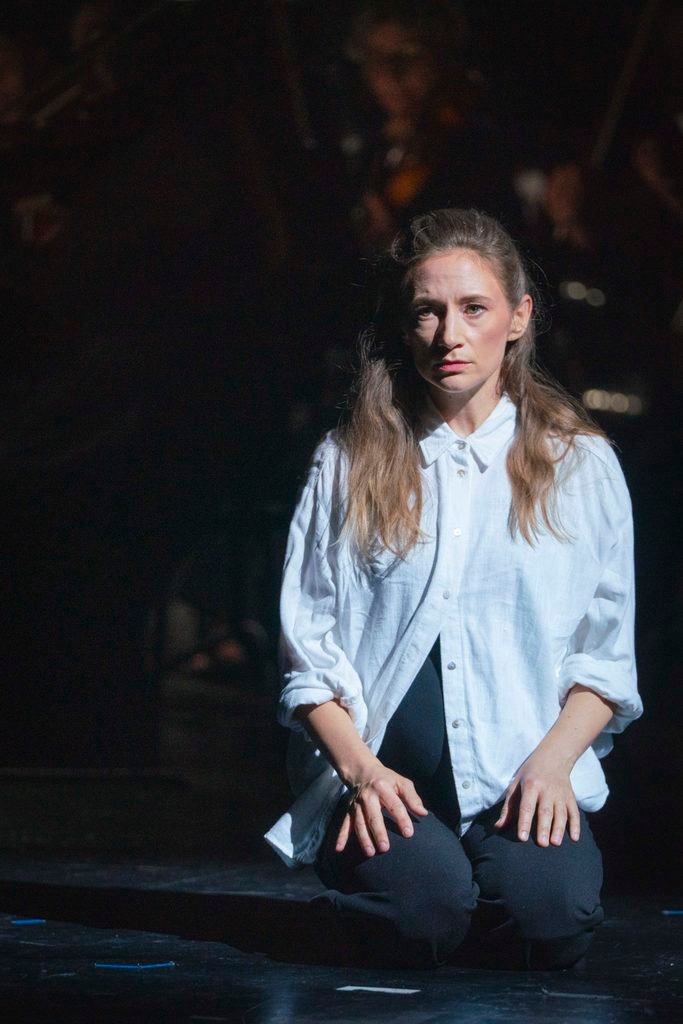
More importantly, her Brünnhilde existed beyond the voice. Jäger never treated acting as optional. Sitting close to the stage made it particularly captivating to follow the emotions crossing her face: rage, fear and eventually the determination to bring everything to an end. By the Immolation Scene, the sheer vocal power was still there, but it was the combination of that strength with the emotional journey she had created that made her performance so compelling.
Toujours aussi à l’aise dans ce répertoire, l’ensemble Pygmalion brille d’intensité et de justesse. L’ouverture et le final sont attribués à de l’harmonica de verre, moments toujours aussi rares.
Le chœur de l’ensemble Pygmalion se met au diapason de son orchestre. Véritable personnage à part entière, il convainc autant par son excellence musicale que par son jeu.
Ce sont pratiquement les mêmes solistes, déjà présents à Salzbourg en 2025, qui reprennent ici leurs rôles.
Le timbre charnu et la projection assurée de la mezzo Xenia Puskarz Thomas confèrent à son personnage, Persada, une force intéressante, elle qui fait la douloureuse découverte de ses origines.
Matthew Swensen souffre ce soir d’un manque de projection de son côté et ne permet malheureusement pas une caractérisation très forte du cruel Soliman.
Une belle découverte de la soirée est celle d’Hugo Brady. En Gomatz, le ténor au timbre délicat et clair laisse entrevoir de très jolies possibilités pour l’avenir, dans de nombreux rôles. À suivre !
Annoncé souffrant, l’Allazim de Johannes Martin Kränzle est absolument impeccable de justesse et d’engagement, tant dans son chant que dans ses récitatifs.
Enfin, dans le rôle-titre, Sabine Devieilhe émeut sans jamais surjouer. Son timbre si reconnaissable est au service d’une interprétation poignante et élégante.
C’est une reprise de très grande qualité que nous propose ici l’Opéra Comique, transfiguré par un lieu parfaitement choisi. Une très belle façon d’ouvrir sa saison hors les murs.