
SIMON BOCCANEGRA | Münchner Rundfunkorchester
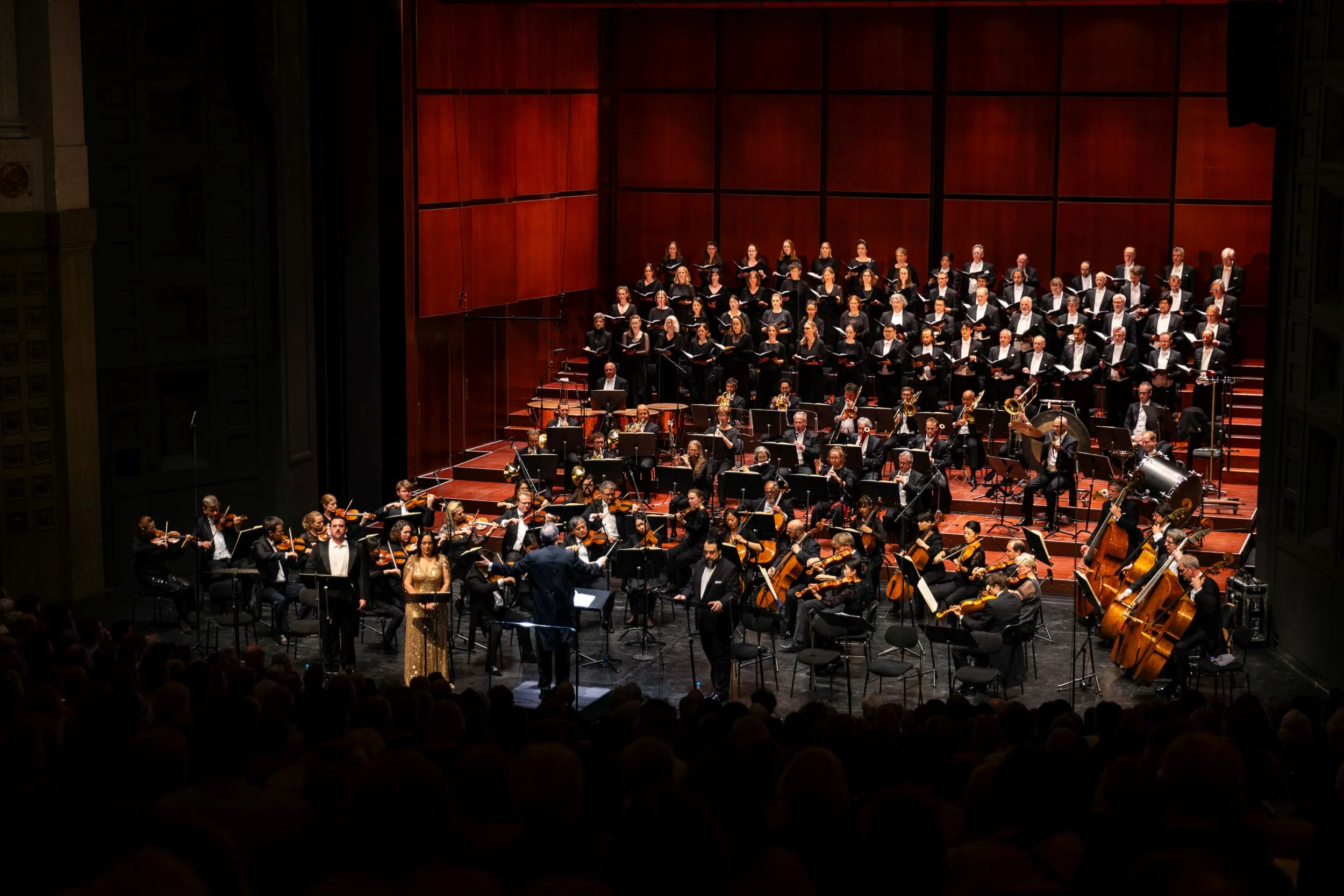
There is a snobbery about concert performances of opera that the genre rarely deserves and almost never bears out. Strip away the costumes, the projections, the trapdoors and the directorial interventions of varying intelligence: what remains is the score, the voices, and the conductor’s reading of the relationship between the two. Few operas reward this stripping more candidly than Simon Boccanegra — Verdi‘s gravest, most architectural, most public work, an opera of councils and ceremonies whose theatre lives entirely in the sound itself. The Münchner Rundfunkorchester‘s konzertant Sunday at the Prinzregententheater closed Ivan Repušić‘s Verdi cycle as the orchestra’s Chefdirigent, a six-year survey of the early and rarer titles that has been one of Munich‘s most quietly serious projects, and which here arrived at the largest of those underplayed scores.
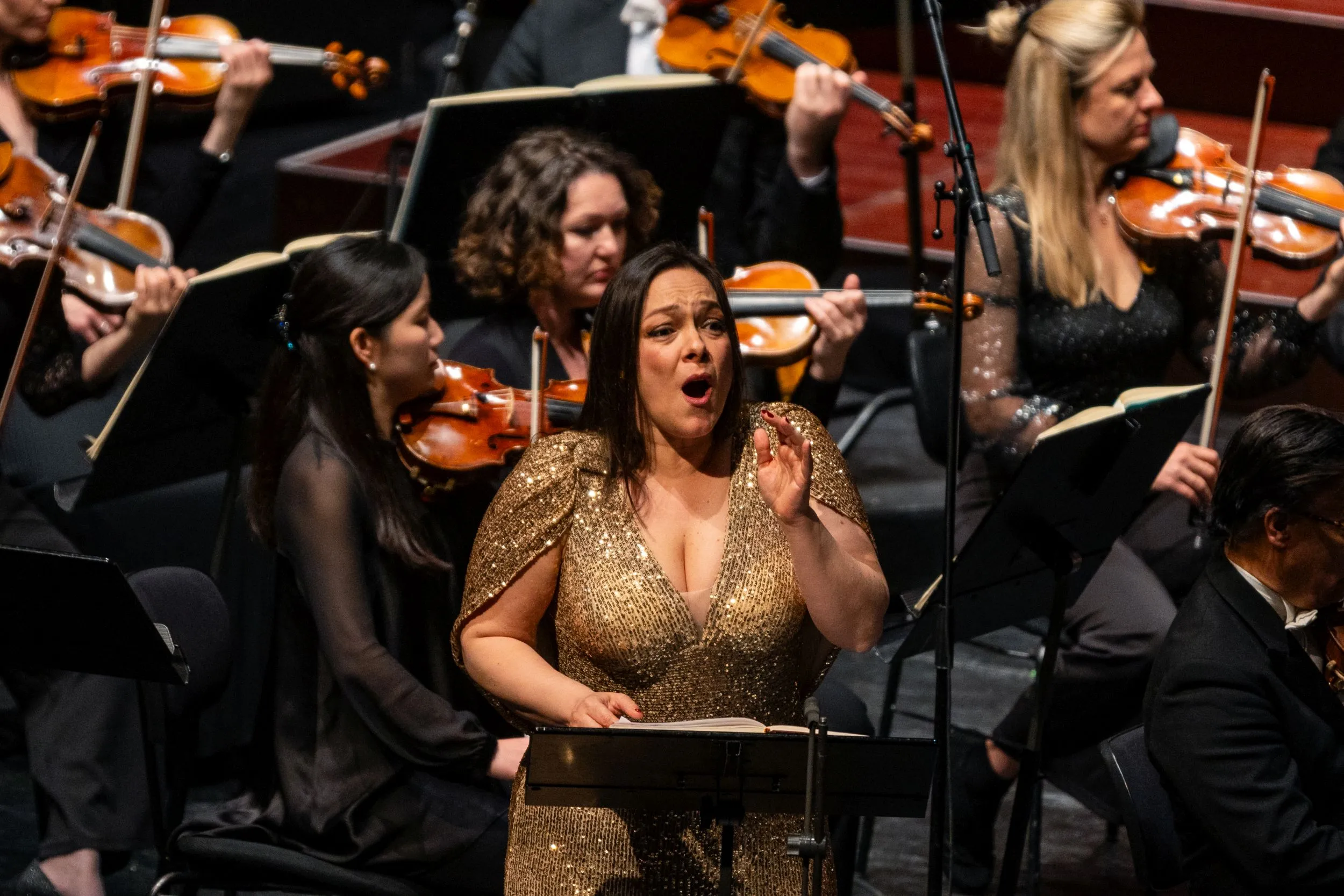
The Amelia Grimaldi of Eleonora Buratto was, simply, exceptional. There are sopranos who give you accuracy and sopranos who give you brilliance; Buratto gives you both, and adds to that combination a quality of utterance — call it presence, call it candour — that turned “Come in quest’ora bruna” into a moment of true suspension. The opening recitative floated on a long, even legato; the aria itself was sung with a tonal beauty that admitted shadow without forfeiting its silver, and the climactic phrase was placed rather than launched, its top note sitting in the line as though it had always been there. The cantilena was unbroken, the passaggio invisible, the dramatic temperature constantly inhabited. What an artist.
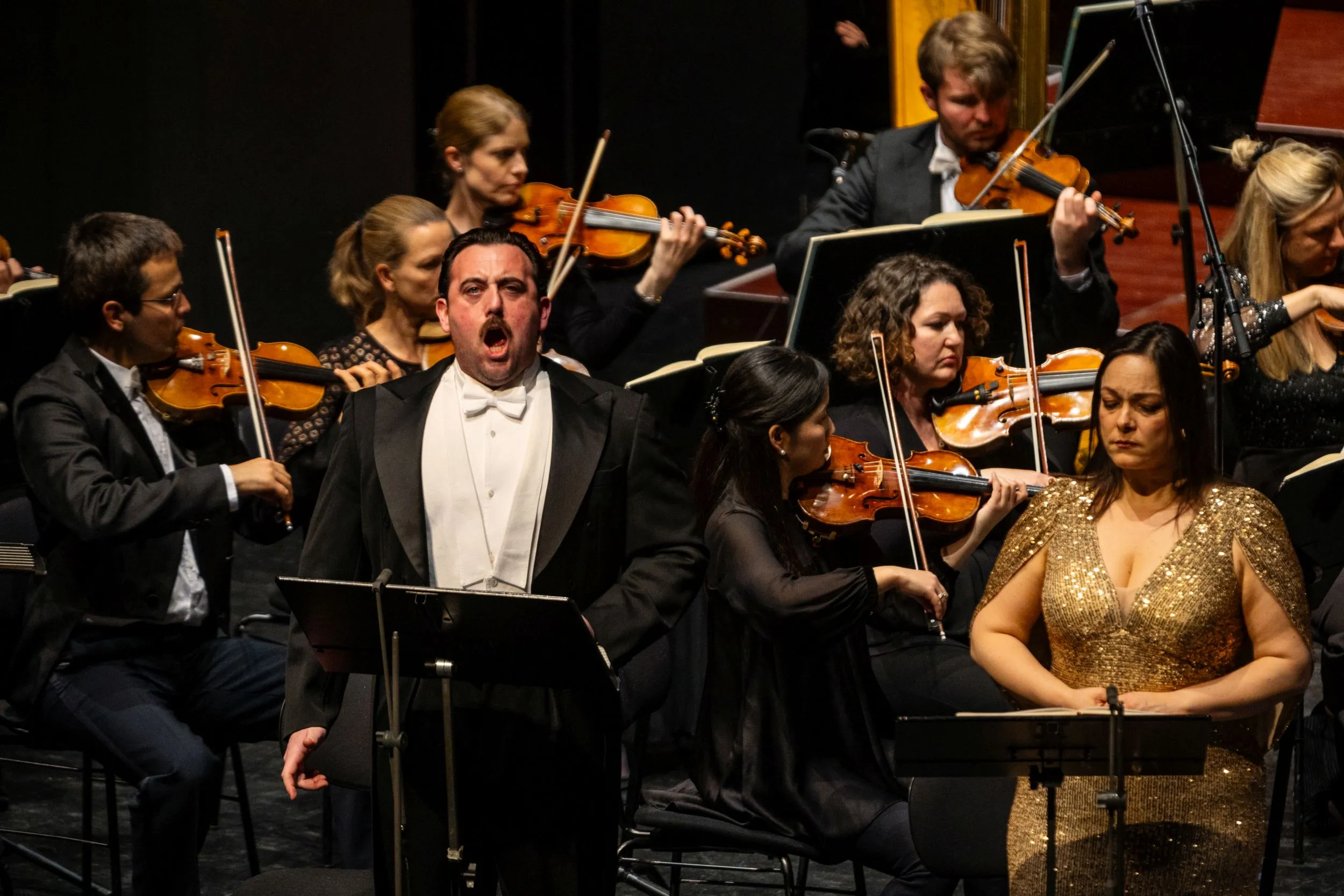
Stepping in for an indisposed Fabio Sartori, Freddie De Tommaso sang Gabriele Adorno as if he had been preparing the role for years. His timbre is squarely heroic, with a baritonal core that fits the aristocratic, jealous Genoese to perfection; “Sento avvampar nell’anima” ignited with full-throated squillo and the kind of forward placement young Italian tenors are no longer expected to possess. The duets with Buratto had what concert opera so rarely produces: real erotic charge, two voices listening to each other and adjusting their colours in real time. A tenor moving fast, and in exactly the right direction.
George Petean‘s Boccanegra was, as so often with this artist, a study in cultivated baritonal authority — clear, lyric, Italianate, and prized for those qualities by a certain school of Verdi conducting that wants the title role sung rather than barked. Petean has lived inside the 1881 revisions for years, and the inwardness of his “Plebe! Patrizi! Popolo!” in the Council Scene was the evening’s first hairpin moment; the second was the great recognition duet with Amelia, where the warmth of his middle voice did the dramatic work no costume could have done.
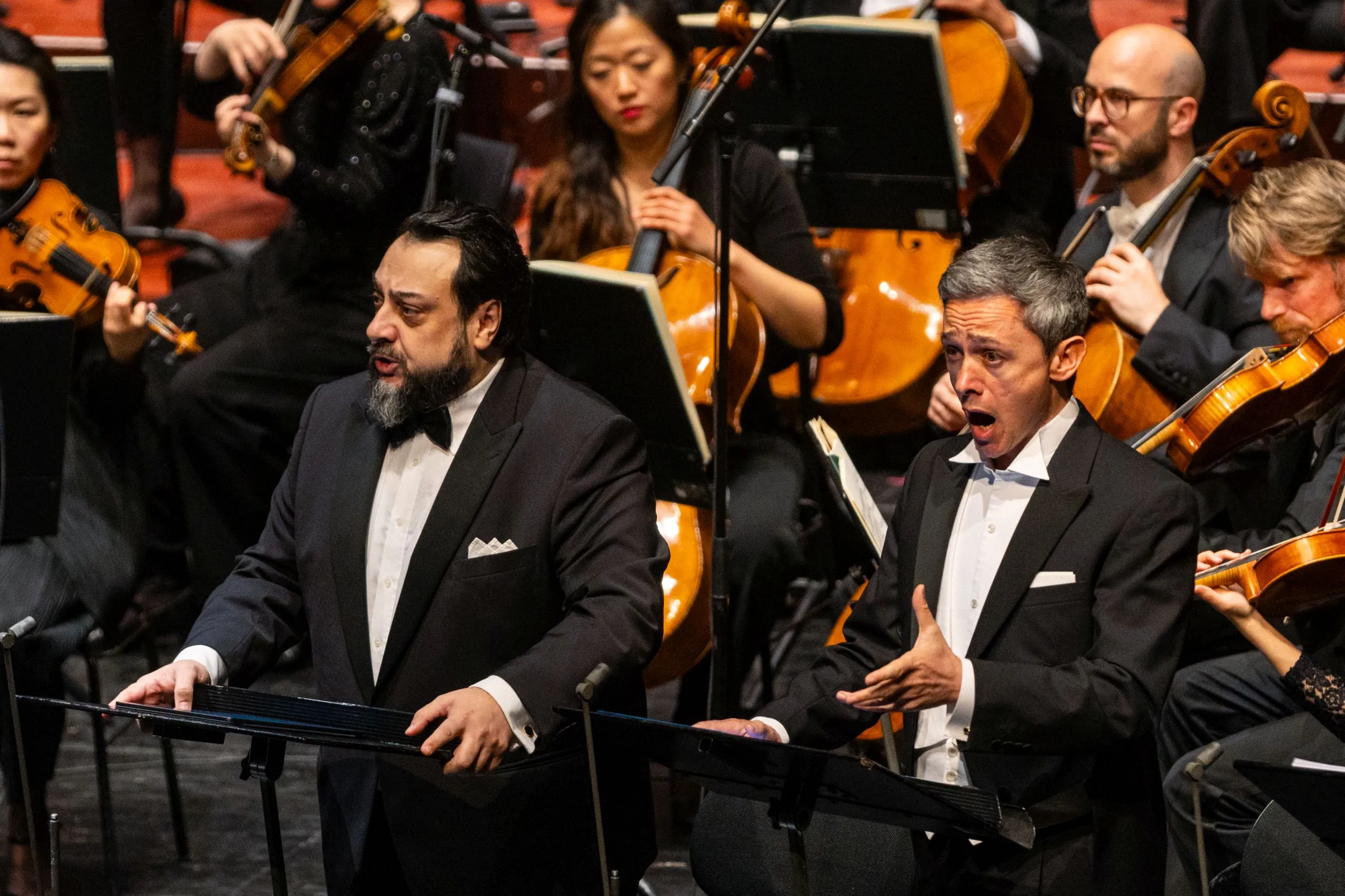
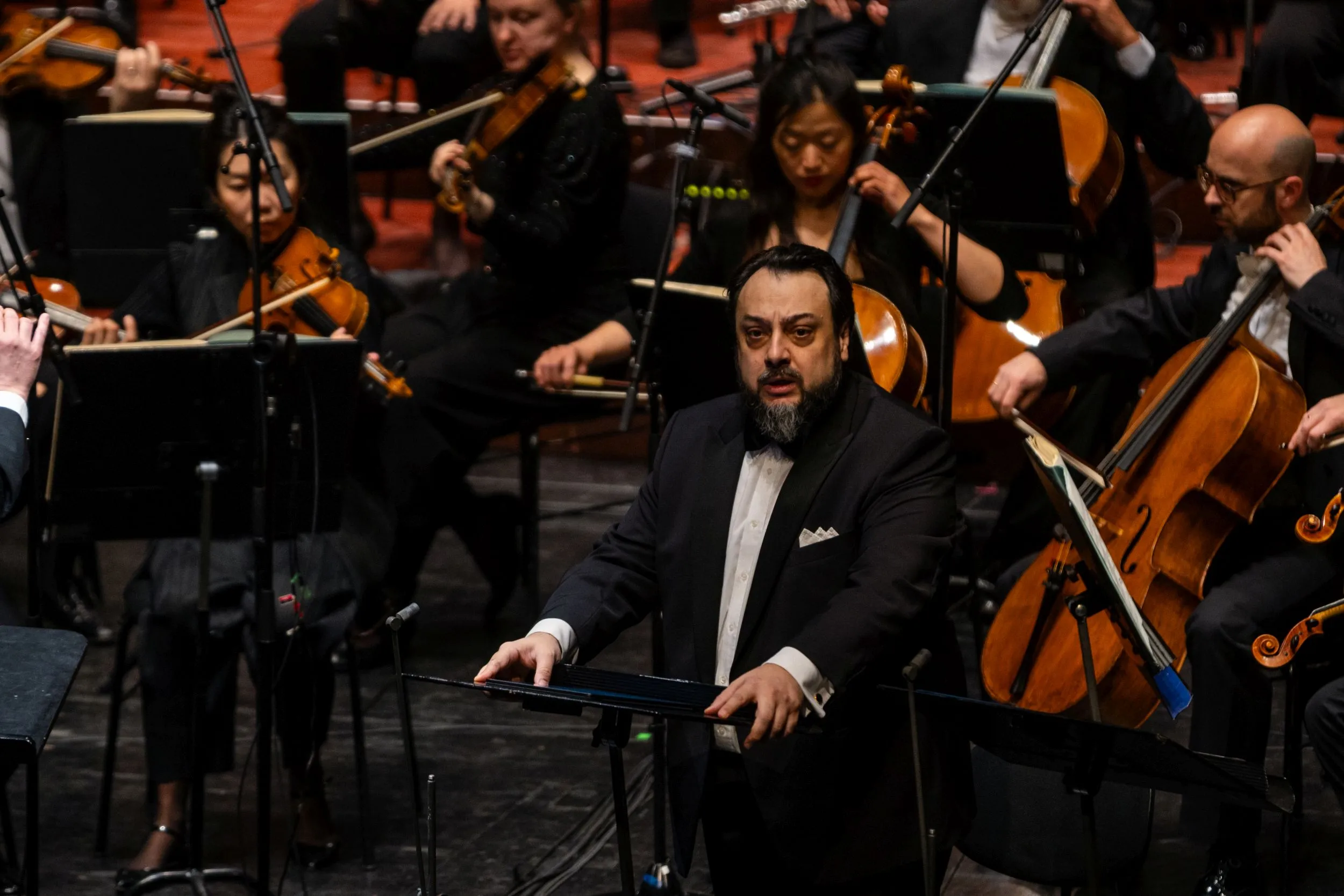
The pairing with the Fiesco of Alexander Vinogradov produced the production’s most interesting timbral conversation: Vinogradov‘s bass darker, more granular, more old-school Slavic in its fundamental colour, set against Petean‘s bright lyric baritone — a contrast that paid extraordinary dividends in the shared scenes, above all the closing reconciliation, where the dying Doge’s “Gran Dio, li benedici” had the gravity the piece has been asking for since the prologue. Vinogradov was at his best in those duets; alone, his Fiesco was solid rather than thrilling, but the chemistry with Petean lifted everyone around it.
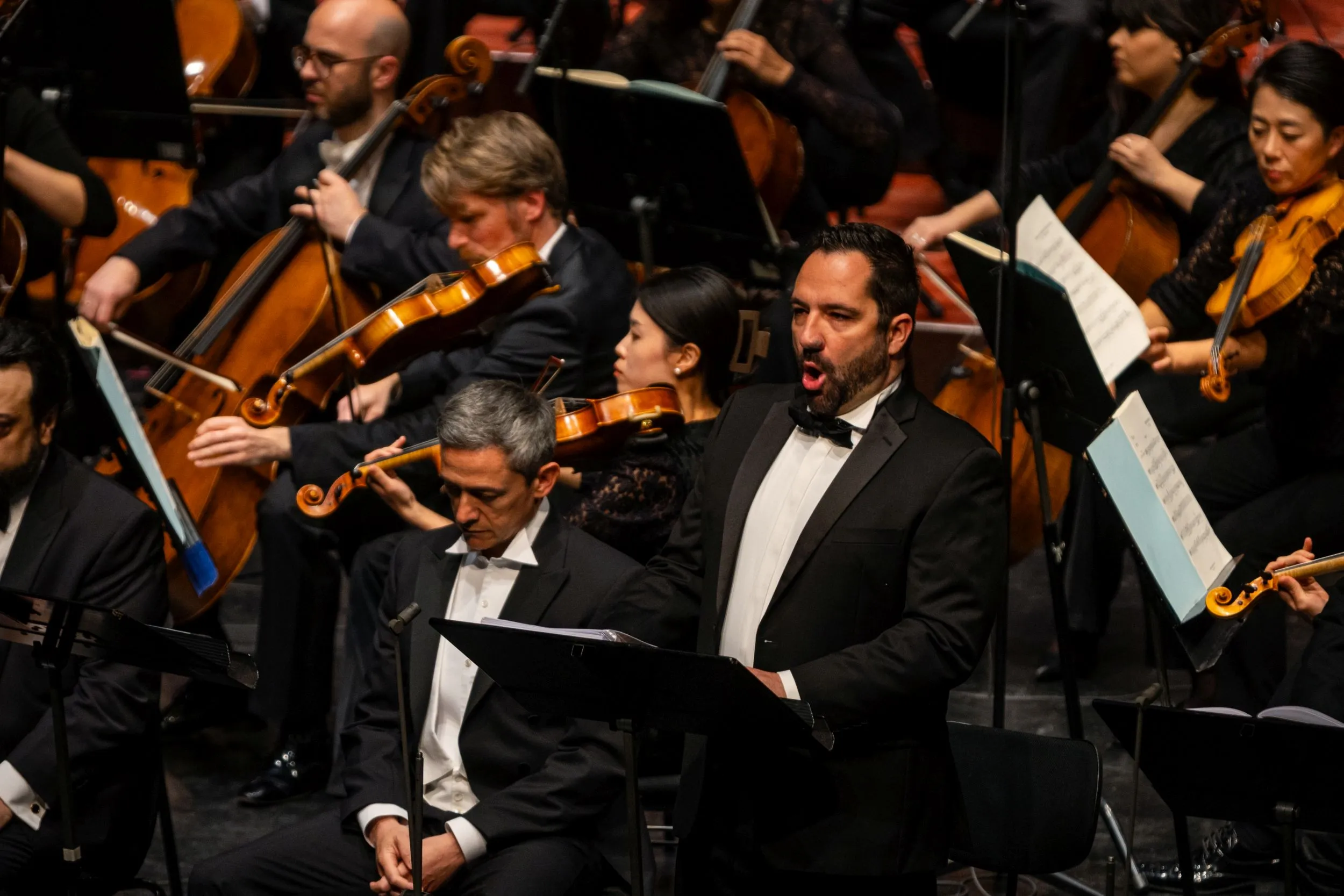
Ljubomir Puškarić was a true discovery as Paolo Albiani, a baritone of focused, slightly metallic timbre, cleanly projected and dramatically committed enough to make the curse scene the obsidian-black centre Verdi intended. Miklós Sebestyén‘s Pietro was the kind of comprimario performance the role almost never receives: fully present, vocally distinct, dramatically aware. The smaller voices drawn from the Chor des Bayerischen Rundfunks for the various interjections that survive in the 1881 score were equally honourable, and the chorus itself, in the Council Scene and the closing tableau, sang with the burnished cohesion that has long been one of Munich‘s quiet glories.
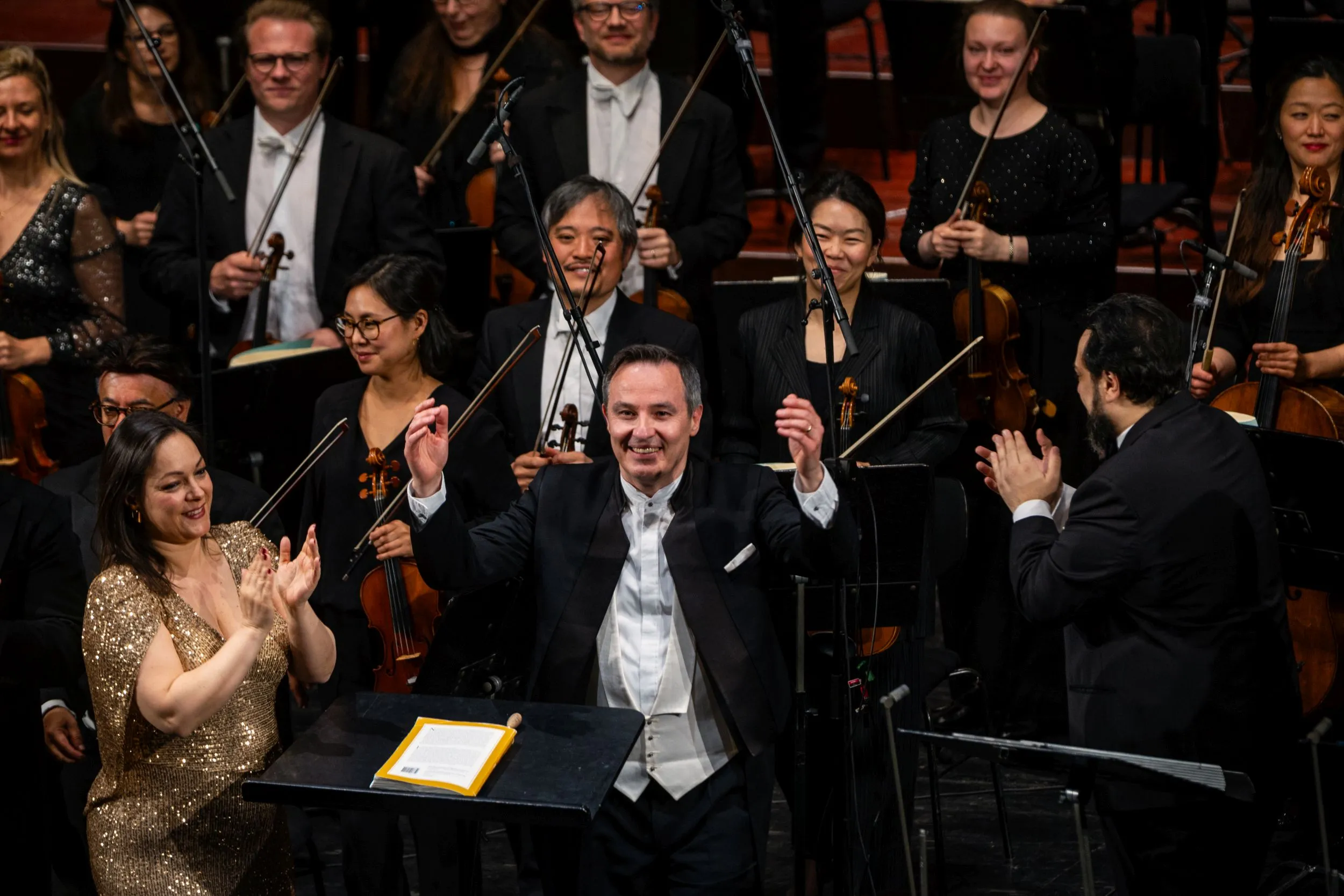
And presiding over it all, Ivan Repušić — not merely conducting but sustaining the evening as a piece of theatre. The binding of orchestra to voice was of the kind one normally attributes only to long-tenured opera-house Kapellmeister: phrases breathed where the singers needed to breathe, accompaniments thinned where the words mattered, tutti unleashed where Verdi asks for sea and storm. The concert format offered no scenic crutch, and yet the Council Scene crashed through the Prinzregententheater with full theatrical inevitability, the trumpet calls answered by the chorus as if from across a real Genoese square. The Wellenmotiv that opens the 1881 prologue — those rocking strings Boito persuaded Verdi to write in place of an earlier orchestral introduction — set the tide on which the whole performance ran, and the orchestra played for him with the focused commitment of musicians who know they are doing something that matters. That this was his farewell as the orchestra’s Chefdirigent was felt without being underlined; one only hopes that it is not also a farewell to this repertoire in this hall.
On a Sunday evening in Munich, with no set, no costume and no director, an opera the composer himself once nearly disowned was vindicated as one of his greatest. Long live Verdi, long live Boccanegra, long live the conductor and the cast worthy of such a summit.
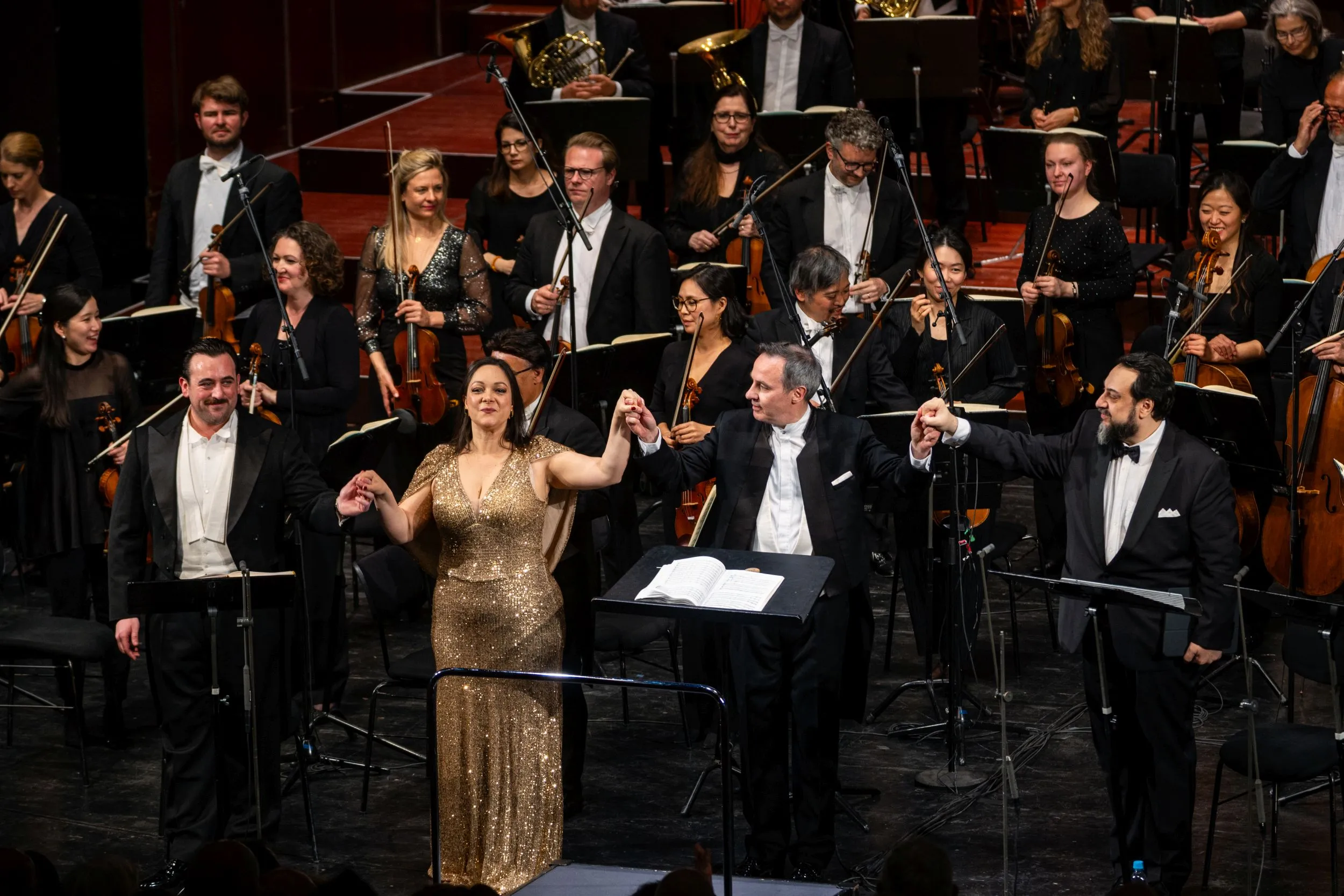
DISTRIBUTION
- Simon Boccanegra — George Petean
- Amelia Grimaldi — Eleonora Buratto
- Gabriele Adorno — Freddie De Tommaso
- Jacopo Fiesco — Alexander Vinogradov
- Paolo Albiani — Ljubomir Puškarić
- Pietro — Miklós Sebestyén
PRODUCTION
- Conductor — Ivan Repušić
- Orchestra — Münchner Rundfunkorchester
- Chorus — Chor des Bayerischen Rundfunks
- Surtitles — Urte Regler
- Concert version (no staging)
About the Author



Volle Übereistimmung und Zustimmung. Genau so war es. Zumindest am Radio bzw. beim Audio on demand: Online bis 26. Mai 2026. Man kann nur hoffen, dass diese große Aufnahme auch als CD erscheint (im Gegensatz zum Ernani, was außerordentlich zu bedauern ist). // Complete agreement and concurrence. That is exactly how it was – at least on the radio or via audio-on-demand, where it remains available online until May 26, 2026. One can only hope that this magnificent recording will also be released on CD (unlike *Ernani* – a matter of profound regret).