LA DEA DELLE SCENE | Festival Barocco Alessandro Stradella
Between late August and early September, the Tuscia region hosts a music festival dedicated to Alessandro Stradella (Bologna, July 3, 1643 – Genoa, February 25, 1682), one of the greatest composers of his era. His musical output spans from opera and oratorio to instrumental music—including the invention of the concerto grosso—and stands out for its revolutionary, modern traits that would deeply shape the evolution of Baroque music. Stradella’s private life was riddled with scandals, fraud, and dangerous liaisons with wealthy, powerful noblewomen; it ultimately led to his murder in Genoa at the age of 38, where he was stabbed to death by three assassins.
The festival takes place in the Viterbo area of Tuscia, a region in Central Italy nestled between Rome and Tuscany. This land marks the composer’s family roots, where he spent his childhood in the Lazial town of Nepi. The performances are held within architectural gems of immense value, ranging from medieval churches to historic Renaissance palaces.
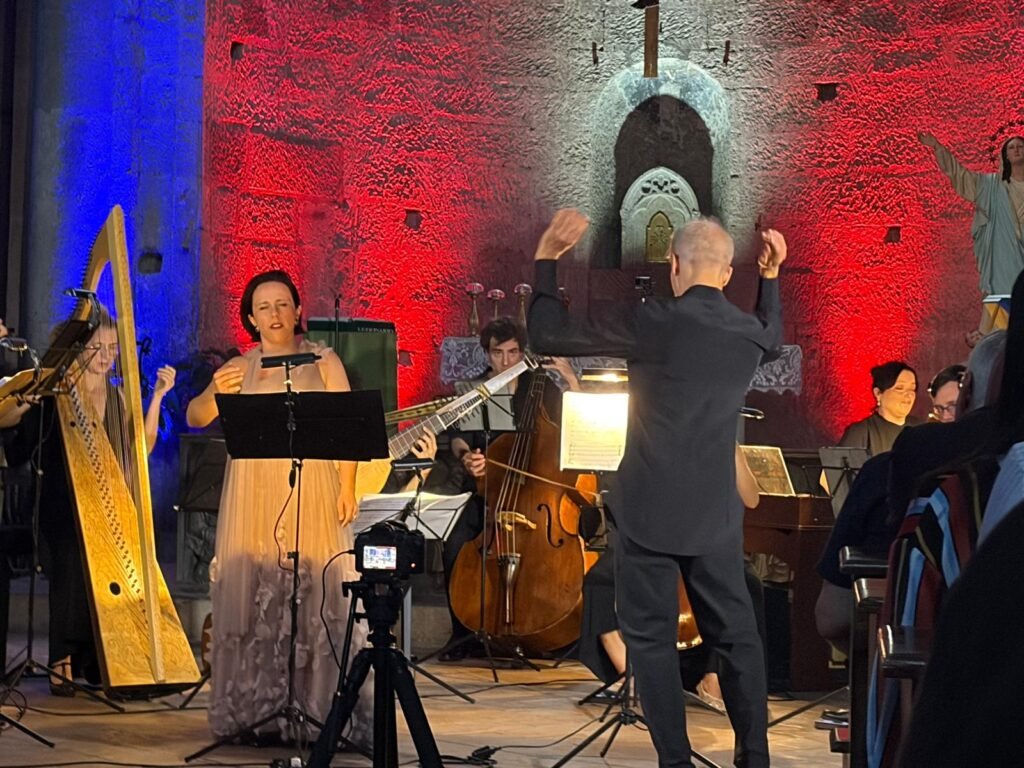
The Festival’s opening concert was dedicated to the singer Caterina Angela Botteghi. Artistic director Andrea De Carlo presented arias from the composer’s vast catalogue, written specifically for her by Stradella, who admiringly called her “the goddess of the stage.” Botteghi was a celebrated singer, sought after and praised in Italy’s major theatres for her commanding stage presence, her ability to stir emotions, and her power to captivate audiences. Her nickname, “la Centoventi” (The One-Hundred-and-Twenty), is highly telling: it derived from the exceptional fee of 120 gold scudi that she received for a single Carnival performance.
Conductor Andrea De Carlo and soprano Silvia Frigato crafted a musical journey around this 17th-century Diva. They alternated arias and instrumental pieces from Stradella’s operas—such as Il trespolo tutore, La forza dell’amore paterno, and Le gare dell’amor eroico—with selections from Amor per vendetta, ovvero l’Alcasta by Bernardo Pasquini, a contemporary composer who was both a friend and a rival on the Roman musical scene.
Silvia Frigato stands as one of the finest interpreters of Baroque singing and early music, renowned for her warm, velvety timbre, as well as the purity and linearity of her vocal emission, which is entirely free of any “artificial vibrato.” In her interpretations, the soprano shines for her exemplary recitar cantando, which allows her to give weight and emphasis to every single word, bringing a striking theatrical vividness to the selected arias. Frigato excels equally in lyrical, melodic lines and in agile passagework; in the aria “Fuggi, fuggi dal mio cuor,” she tackled the brilliant coloratura and vocal embellishments with absolute confidence and precision.
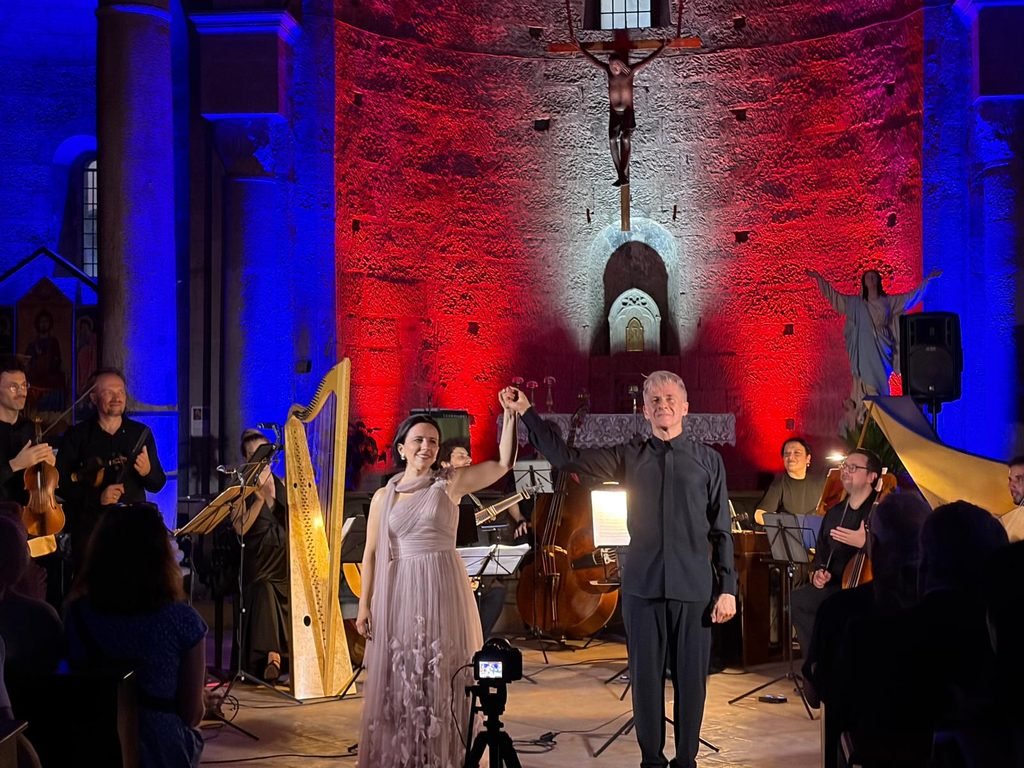
Andrea De Carlo is a leading scholar and performer of Alessandro Stradella’s music. He conducts with rigorous precision balanced by a keen theatrical instinct, leading the superb Ensemble Mare Nostrum—a Baroque orchestra performing on period instruments according to historically informed performance practices. Most notably, De Carlo serves as the musical director of “The Stradella Project,” a monumental recording venture by the Belgian label Arcana dedicated to the composer’s complete works, bringing many unpublished or long-forgotten scores back to light.
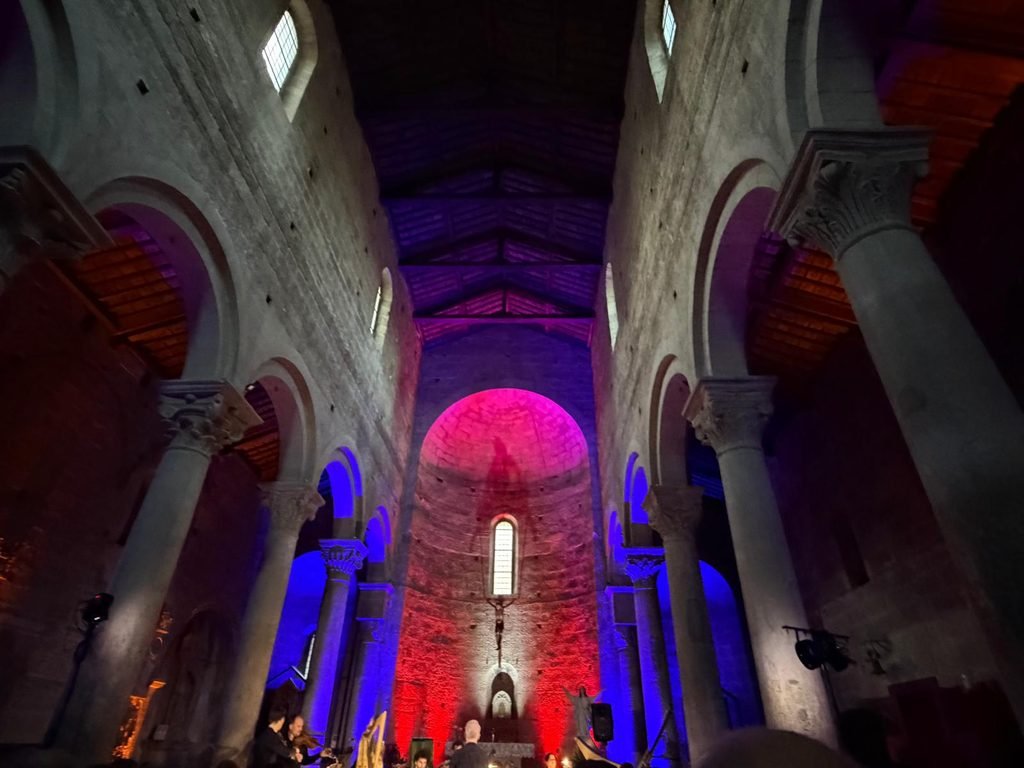
The concert took place in the medieval church of Santa Maria Nuova in Viterbo before a completely sold-out crowd. The audience granted a triumphant success to the musicians, showering particular acclaim on Frigato. The artists rewarded the enthusiastic public with two encores, both drawn from Stradella’s operatic repertoire.
LA DEA DELLE SCENE
SILVIA FRIGATO – soprano
ANDREA DE CARLO – direttore
ENSEMBLE MARE NOSTRUM
Alessandro Stradella
Sinfonia avanti l’Opera Artemisia
Aria “Quando mai fra tanti e tanti”
“Cieli dunque che farò”
Recitativo “Ma già le luci mie”
Sinfonia avanti il Secondo Atto
dalla commedia in musica “Il Trespolo Tutore”, Genova, Teatro Falcone, 1679
Stratonica
Aria “Sulla nave della vita”
Aria “Chi non ha d’aquila gli occhi”
dal dramma per musica “La forza dell’amor paterno”, Genova, Teatro Falcone, 1678
Sinfonia avanti il III atto
dalla commedia in musica “Il Trespolo Tutore”, Genova, Teatro Falcone, 1679
Stratonica
Aria “Quanto tardate, oh quanto?”
Recitativo “Correte momenti”
Aria “Fuggi, fuggi dal mio cuor”
Aria “Fra speranza e fra timore”
dal dramma per musica “La forza dell’amor paterno”, Genova, Teatro Falcone, 1678
Sinfonia avanti il Prologo
Balletto
dalla commedia in prosa e in musica “Il Biante”, Roma, 1671 (?)
Bernardo Pasquini (1637-1710)
Alcasta
Aria “Di costanza armati, oh cor”
Suite di danze
Ballo di schiavi – Giga – Grave – Sarabanda
dal dramma per musica “Amor per vendetta, ovvero l’Alcasta“, Roma, Teatro Tordinona 1673 /”Amor stravagante“, Genova, Teatro Falcone 1677
Alessandro Stradella
Elisa
Aria “Misera e che farò”
dal dramma in musica “Le gare dell’amor eroico”, Genova, Teatro Falcone 1679
About the Author