INTERVIEW | Lorenzo Giovati – Media
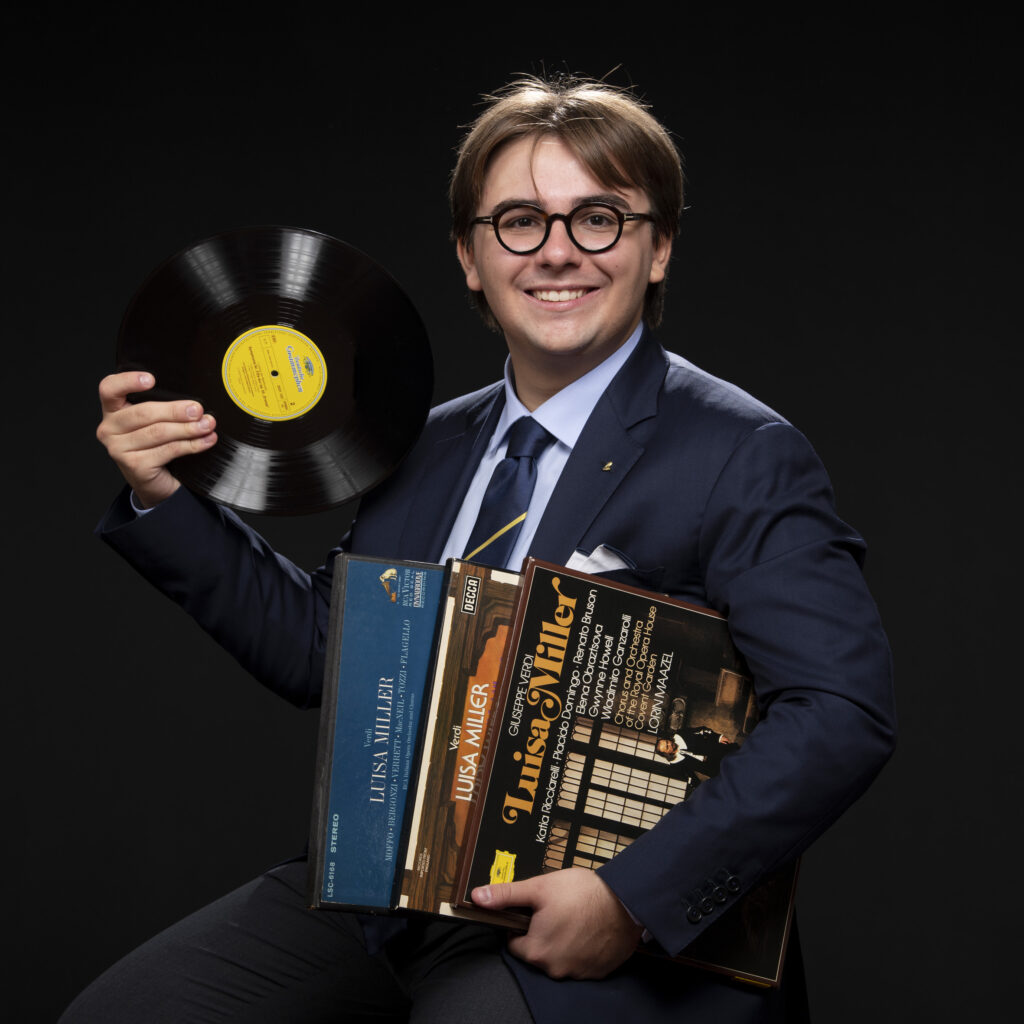
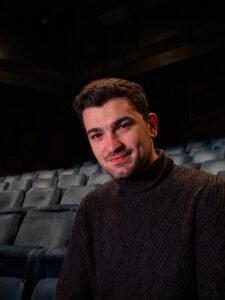
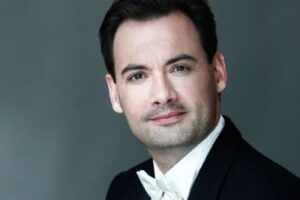
I first met Lorenzo Giovati a few years ago in Verona; we had already connected on Instagram about our shared passions. I remember him as a very friendly, cheerful, and passionate guy. Now a member of the Verdi Club’s 27, a reviews chronicler and the manager of a website dedicated to opera, I didn’t want to miss the opportunity to introduce you to someone who is well worth getting to know.
To begin with, could you introduce yourself? Who are you, what do you do, and how long has opera been part of your life?
My name is Lorenzo Giovati, and officially I am a law student at the Bocconi University. Ever since I was born, however, I have nurtured a deep passion for classical music, which led me, three years ago, to launch my own review website, Classicamente. In truth, this passion began even before I was born, while I was still in my mother’s womb, where, apparently, the only thing that could calm me down was Mozart’s The Marriage of Figaro. Later on, I continued to cultivate my love for Mozart through Don Giovanni and The Magic Flute, especially in the historic recordings conducted by John Eliot Gardiner and James Levine. From there I moved on to Beethoven, beginning with Fidelio, which to this day remains the only opera capable of making me fall asleep almost instantly. At the same time, I also began exploring symphonic music, first with Beethoven’s Seventh Symphony and then Mahler’s Third.
My first encounter with Verdi, on the other hand, came through the Messa da Requiem. I could never have imagined that this first listening experience would spark such a profound passion that, many years later, it would lead me to hold the title of Luisa Miller within Parma’s Club dei 27.
Those early experiences only made me more curious, and from that moment on I never stopped listening, studying, and learning. Today, my musical interests range from Monteverdi to contemporary music.
Do you remember the first time you went to the opera? What was the performance like, and how did it make you feel?
My theatrical “debut” dates back to 2012, at the Teatro dell’Opera in Rome, with Mozart’s The Magic Flute. I still remember being too short to see over the front of the box, so I ended up kneeling on a chair. Other than that, I remember very little because I was still very young. My parents often tell me, however, that I followed the performance with great attention, probably because I already knew the opera by heart, having watched and listened to it on DVD at least a thousand times.
There are, however, two experiences from those years that remain much clearer in my memory. The first was my very first visit to Teatro alla Scala, for Aida. Above all, I remember the excitement of seeing Maestro Zubin Mehta conducting live, after having known him only through the DVDs I watched at home. Incidentally, Mehta had stepped in unexpectedly following the passing of Maestro Lorin Maazel.
The second was a performance of Verdi’s Messa da Requiem, conducted by Daniele Gatti at the Teatro Regio in Parma, which also marked my very first visit to my hometown’s opera house. I still vividly remember the overwhelming impact of the Dies irae, although I must admit that I also fell asleep during parts of the evening. What I remember as if it were yesterday, though, is that after the performance, carried “in the arms” of Falstaff from the Club dei 27, I went backstage, where we met Maestro Gatti. After the usual greetings, I looked at him and, in complete innocence, said: “What a magnificent Dies irae, Maestro.” He couldn’t help but burst into laughter.
How did your interest in opera begin?
My interest in opera undoubtedly grew out of listening—often unconsciously—to opera at home, where it has always been present and still is today. I was fortunate enough to grow up with a father who was deeply passionate about music and a mother who, in everyday life, encouraged and nurtured this passion. Thanks to them, I was introduced to this world from a very early age.
In fact, my musical journey began with opera, and only later did I start exploring symphonic music, which today actually makes up the larger part of my regular listening. As much as I love opera, it demands time, attention, and concentration. Moreover, it is not that common to experience truly unforgettable opera performances, because opera is an extraordinarily complex art form in which countless elements must work together: the orchestra, the conductor, the singers, the stage direction, the sets, and the relationship that develops among all these components. Unfortunately, they do not always achieve the right balance.
An equally important role in my musical education was played by the children’s programmes organised by the Teatro Regio in Parma, where operas were presented in shortened versions designed specifically for younger audiences. Thanks to those experiences, I discovered works such as Il trovatore, Rigoletto, Turandot, and many others, gradually building a broader and broader knowledge of the operatic repertoire.
If you could relive one evening at the opera, which one would you choose?
It is a very difficult choice. Among the performances I have personally attended, I would probably choose Macbeth, conducted by Philippe Jordan at the 2025 Salzburg Festival. For me, it was a revelatory performance, almost a demonstration of how Verdi ought to be performed: magnificent conducting, a production that sparked considerable controversy but which I personally found brilliant, and a cast that was rather unconventional for Macbeth but remarkably effective within the overall conception of the production. That evening proved that creating a great Verdi performance does not necessarily require a cast made up exclusively of internationally renowned stars. What truly matters is a group of artists capable of merging seamlessly with the conductor, the orchestra, and the staging, creating a single theatrical organism able to communicate pure emotion.
If, however, I could choose from any opera performance in history—including those I never had the chance to witness—I certainly would not want to miss the legendary Otello conducted by Carlos Kleiber at La Scala. Kleiber was an absolute genius on the podium, and his interpretation of Otello has become truly legendary. More generally, I would love to travel back in time and hear live the great conductors whom I can fortunately know today through recordings: Kleiber, Bernstein, Karajan, Furtwängler, Giulini. My greatest regret remains never having had the opportunity to hear Claudio Abbado conduct live, despite belonging to a generation that, at least in theory, could have done so.
What is the strongest emotion you have ever experienced during a performance?
The most powerful emotion I have ever felt came in 2019, during Verdi’s Messa da Requiem, conducted by Teodor Currentzis at the Vienna Konzerthaus. It was a revolutionary performance, completely new in the way it approached the score. The work was neither interpreted as a generic Requiem nor as an opera—as Verdi himself explicitly warned against—but as a true Mass, understood in its deepest liturgical meaning. It was a spiritual, intense, and profoundly moving performance.
To this day, I consider it the finest interpretation of the Messa da Requiem I have ever heard and perhaps one of the greatest of all time, rivalled only, in my opinion, by Solti’s historic recording with Pavarotti, Talvela, Sutherland, and Horne.
That evening I truly felt the immensity of the work. It was almost a physical pain because I had the sensation of being completely drawn into the music, as though the music itself had taken possession of me. It was a genuine physical feeling, concentrated somewhere between my heart and my throat, so intense that I wanted to stand up, climb onto the podium, and somehow become part of what was happening. It was an extraordinary experience.
I experienced something very similar again a few months ago, once more in Vienna, during Mahler’s Third Symphony, conducted by Andris Nelsons with the Vienna Philharmonic. In the final movement—which Mahler originally entitled What Love Tells Me, within a symphony that, in its original conception, was meant to embrace “everything”—there unfolds a breathtaking Adagio capable of taking hold of the soul and moving the listener profoundly. I have rarely been brought to tears in the concert hall, but on that occasion I simply could not hold them back.
If you had to convince someone who has never been to the opera to give it a try, what would you say?
First of all, I would tell them not to let themselves be influenced by prejudices or by opinions heard second-hand. Opera is an art form that invites a deeply personal response: it can move you, entertain you, make you laugh—or perhaps not appeal to you at all—but I believe it deserves to be experienced firsthand, without beginning with the preconceived idea that it is inevitably long and boring.
I would also encourage them to approach the evening naturally, without worrying about understanding every detail or fearing they will be judged because they do not know the title, the music, or the conventions of the opera house. There is no need to study before walking into the theatre. Although it can certainly be helpful to know the plot and have a few basic points of reference, the most important thing is simply to let yourself be carried away by the performance.
That said, I would avoid arriving completely unprepared—like the tourist who, not long ago at La Scala, programme in hand, asked me whether “Giuseppi Verdi” was the conductor.
I do believe, however, that for a first experience it is extremely valuable to be guided by someone who can recommend the right work. Not every opera is equally accessible, and choosing the wrong one can completely ruin a first encounter with the genre. My first recommendation would undoubtedly be The Marriage of Figaro: an immortal masterpiece, with extraordinary music, a wonderfully lively story, and an endless variety of situations that immediately demonstrate how opera can still be vibrant, relevant, and genuinely entertaining today.
It is only natural that opera may seem boring if you begin with the wrong work. Had my own journey started with Alban Berg’s Lulu, I probably would have ended up listening to trap music instead.
About the Author