LA TRAVIATA | Teatro Dell’Opera Di Roma
When Rome Took Inspiration from FIFA: La Traviata and the Era of Cooling Breaks
Some farewells are simply too important to miss.
Knowing that these were among Ermonela Jaho’s final appearances as Violetta, travelling from Zürich to Rome was never really a question. It was an opportunity to witness one of the defining interpreters of the role bid farewell to a character she has embodied for more than three hundred performances. Expectations were immense.
They were fully justified.
From the very first notes, it became clear that this would be an evening of exceptional musical quality. Yet, paradoxically, what should have been an unforgettable La Traviata never quite reached its full emotional potential, not because of the artists on stage, but because of everything surrounding them.
Rome was experiencing one of its hottest weekends of the summer when I attended on 26 June. La Traviata, perhaps the world’s most popular opera, naturally attracted a particularly diverse audience. A few glowing phone screens, occasional conversations and a rather relaxed attitude towards theatre etiquette occasionally distracted from the performance, but this remained a secondary issue.
The evening’s real challenge came from its structure.
A typical La Traviata lasts around two and a half hours. In Rome, however, three thirty-minute intervals stretched the experience to almost four hours. It may not officially have been the longest La Traviata ever staged, but it surely deserved a place on the podium. One could almost imagine that Rome had borrowed FIFA’s famous cooling breaks.
The joke, however, quickly stopped being funny.
Verdi conceived La Traviata as a continuous emotional journey. Every act deepens Violetta’s tragedy until the devastating intimacy of the finale. Here, that emotional progression was repeatedly interrupted. Each return from the foyer required the audience to reconnect with a drama that had only moments earlier reached full intensity.
Opera thrives on emotional immersion. Once that spell is broken, rebuilding it is far harder than simply restarting the music. Every interruption weakens the emotional thread, and by the final act, it became increasingly difficult to recover the fragile atmosphere that Verdi had so carefully built.
Visually, the production offered much to admire.
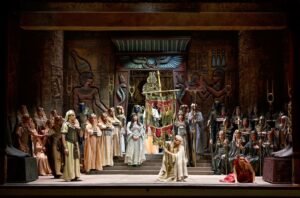
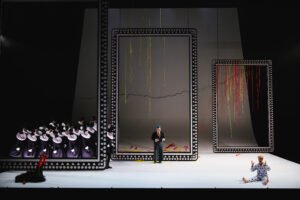
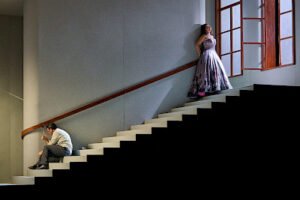
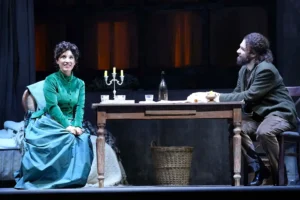
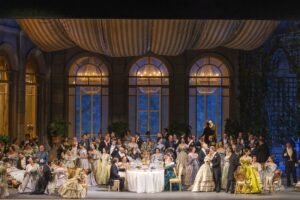
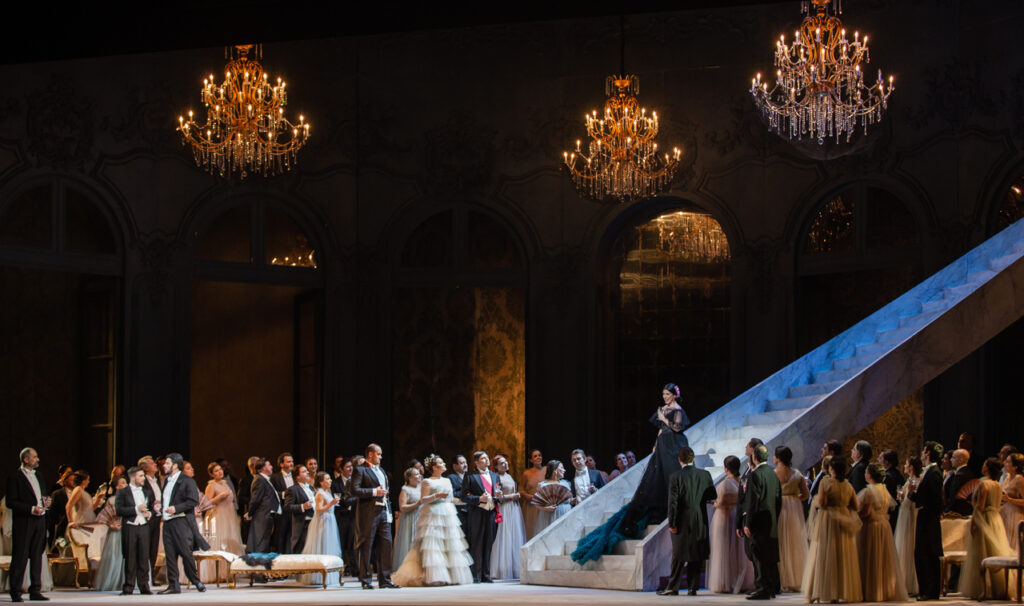
Sofia Coppola’s staging is elegant, refined and undeniably beautiful. Valentino’s magnificent costumes complete a world of timeless Italian glamour, while the monumental staircase dominating the first act provides the evening’s most striking theatrical image, placing Violetta at the very centre of a dazzling society that both celebrates and ultimately destroys her.
Everything looks beautiful. Perhaps a little too beautiful.
Beyond its visual elegance, the production rarely uncovers new emotional or psychological dimensions. It tells the story with refinement rather than reinterpretation. Ironically, its greatest strength may also explain its greatest weakness. The scale of the scenery appears to require lengthy scene changes, ultimately sacrificing the dramatic continuity that Verdi’s score so desperately needs.
The third act illustrates this most clearly. By this point, Violetta has sacrificed everything. She has sold her possessions, lost her fortune and is approaching death in poverty. Yet the staging presents her in a spacious, elegant bedroom that feels unexpectedly comfortable. Beautiful as the setting is, it sits uneasily alongside the libretto. A darker, more austere room, almost stripped bare, would have reflected her physical and emotional decline with greater honesty and made her final moments even more devastating.
Fortunately, the music never lost sight of Verdi’s intentions. Under Francesco Ivan Ciampa’s baton, the orchestra played with precision, colour and remarkable sensitivity. Every nuance of Verdi’s score was given room to breathe, from the intimate fragility of Violetta’s confessions to the brilliance of the great ensemble scenes. If the evening occasionally lost its dramatic momentum, it was certainly never because of the musicians.
Then came the true reason for the journey.
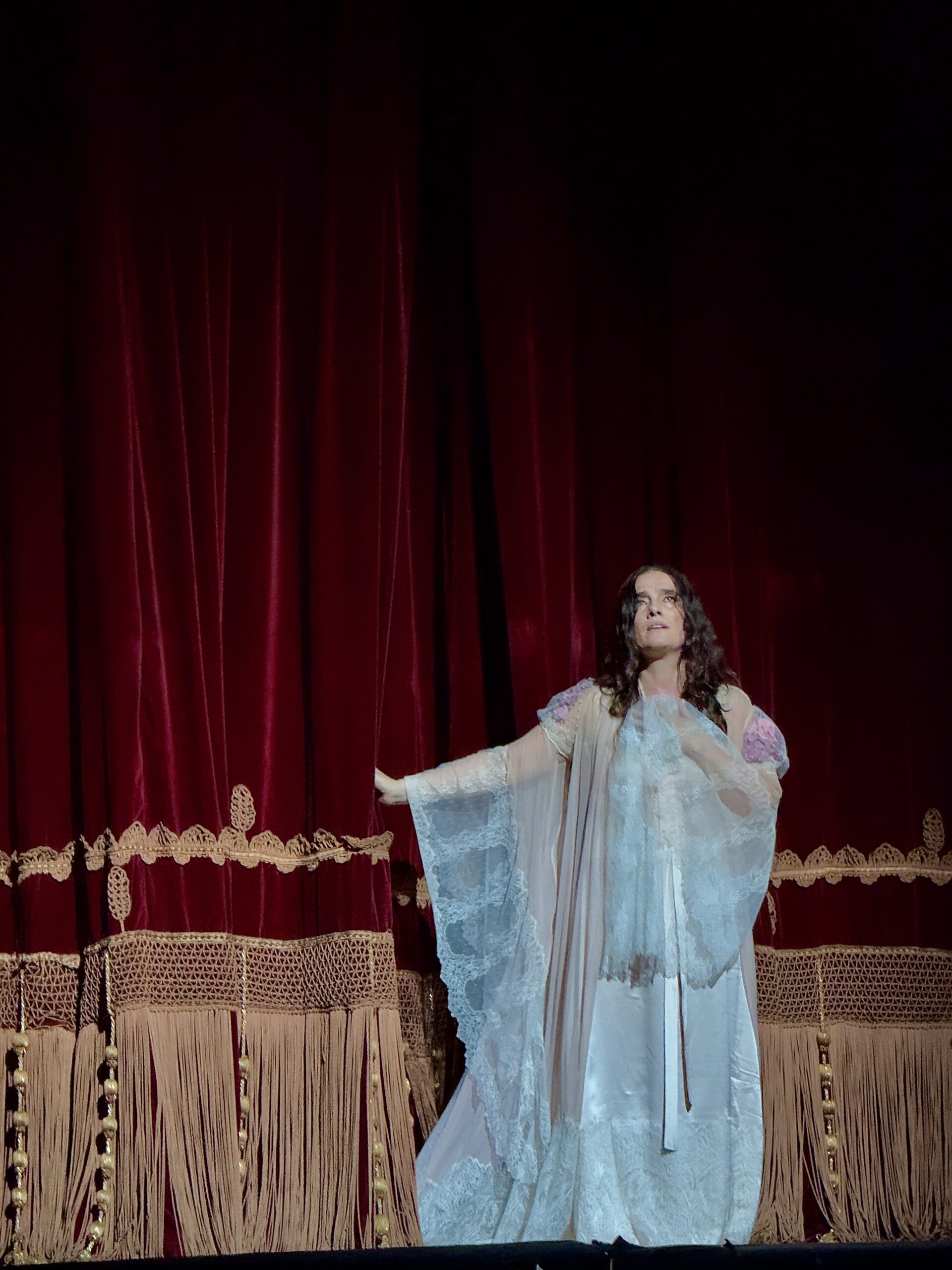
There is little left to say about Ermonela Jaho’s Violetta that has not already been written. She remains one of the defining interpreters of the role of our time. Her voice continues to move effortlessly, but it is her extraordinary dramatic commitment that makes her portrayal unforgettable. Every phrase feels lived. Every silence carries meaning. Every gesture seems instinctive rather than performed.
She does not simply portray Violetta. She becomes her.
Knowing that this was among her final performances in the role gave every scene an additional emotional weight. It felt less like attending another revival and more like saying goodbye to an interpretation that has profoundly marked an entire generation of opera lovers. It was a privilege simply to be there.
Xabier Anduaga was the revelation of the evening. The young Spanish tenor combines lyrical elegance with effortless vocal brilliance and a remarkably natural stage presence. Although already well established internationally, he was one of my own most exciting operatic discoveries in recent years, and certainly a singer whose career I will continue to follow closely.
Alongside them, Ludovic Tézier offered a Giorgio Germont of immense authority, refinement and humanity. Noble in phrasing and impeccable in style, he completed what can only be described as a dream cast.
Would I travel from Zürich to Rome again for this performance? Without the slightest hesitation.
Because long after the memory of the intervals has faded, what will remain is something far more precious: the privilege of having witnessed one of Ermonela Jaho’s final Violettas, surrounded by an exceptional cast and guided by Francesco Ivan Ciampa’s inspired musical direction.
That is the memory that deserves to last.
Cast & Creatives
Conductor — Francesco Ivan Ciampa
Director — Sofia Coppola
Chorus Master — Ciro Visco
Sets Designer — Nathan Crowley
Assistant Set Designer — Leila Freitas
Costume designer — Valentino Garavani, Maria Grazia Chiuri and Pierpaolo Piccioli
Choreography — Stéphane Phavorin
Lighting Designer — Vinicio Cheli
Video — Officine K
Assitant Director — Marina Bianchi
–
Violetta Valéry — Ermonela Jaho
Alfredo Germont — Xabier Anduaga
Giorgio Germont — Ludovic Tézier
Flora Bervoix — Maria Elena Pepi
Annina — Sofia Barbashova
Baron Douphol — Arturo Espinosa
Marquis d’Obigny — Alejo Álvarez Castillo
Gastone — Guangwei Yao
Doctor Grenvil — Adriano Gramigni
About the Author