INTERVIEW | Allex Aguilera – Stage Director
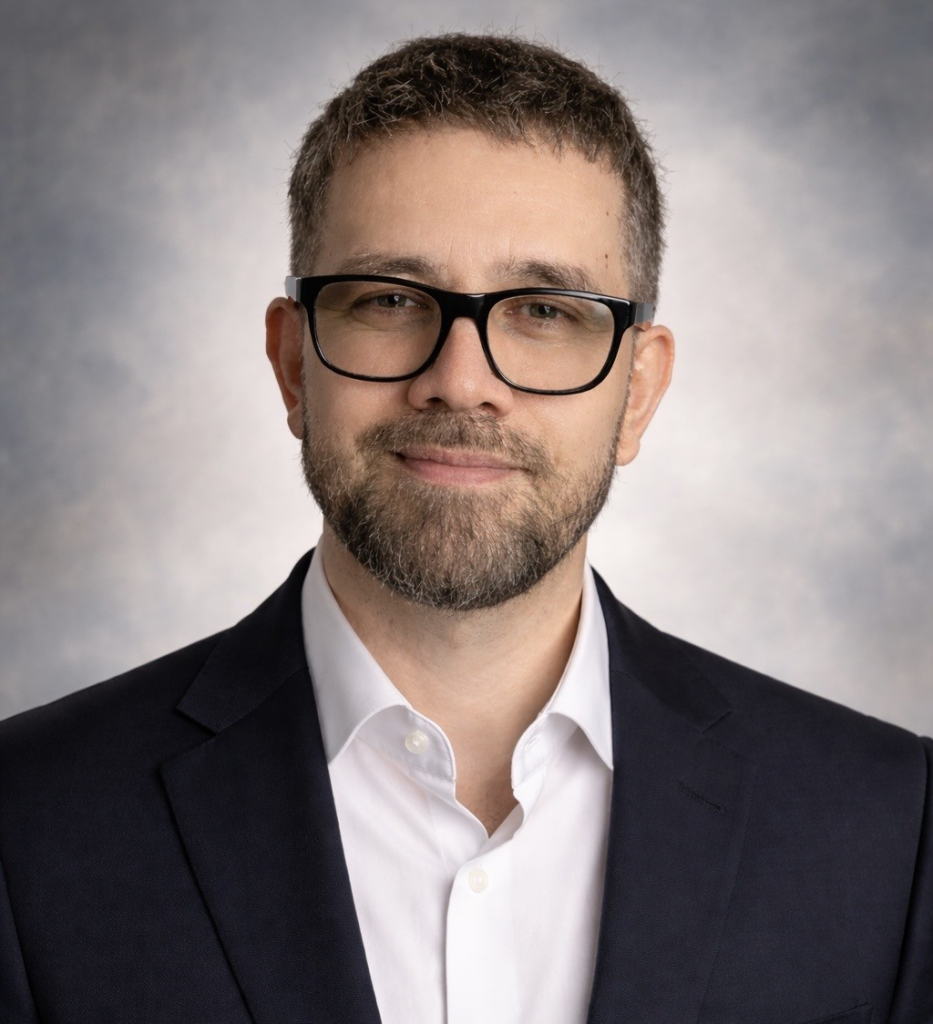
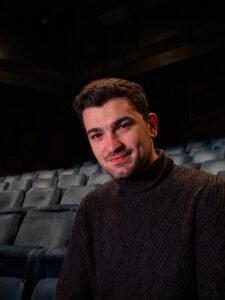
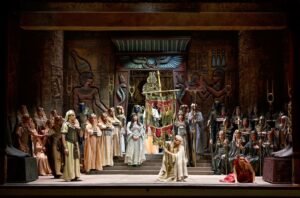
A director whom I greatly admire, I still remember attending a splendid Otello in Rome with Gregory Kunde in the lead role, with a truly faithful production. Allex Aguilera kindly agreed to answer a few questions below:
Geoffrey GRAND : To begin with, could you introduce yourself? Who are you, what do you do, and how long has opera been part of your daily life?
Allex Aguilera : My name is Allex Aguilera, and I am an opera stage director and set designer.
My career path has been somewhat unconventional. I first studied classical singing, which allowed me to experience opera from the inside, working closely with singers and gaining a deep understanding of their craft and artistic demands. I then trained in film directing, an experience that profoundly shaped the way I think about storytelling, rhythm, and visual composition.
Before becoming a stage director, I held several different positions in the opera world. I worked as a surtitle operator, stage manager, and assistant director. Each of these roles gave me a different perspective on how an opera production functions. Even today, when I direct a production, I retain that broad overview and a deep appreciation for the work of every department that brings an opera to life.
Opera has been part of my daily life for more than thirty years. Over the course of my career, I have had the privilege of directing works by Mozart, Verdi, Bizet, Leoncavallo, Villa-Lobos, and Wagner.
My artistic approach is based on a simple conviction: a production can be profoundly contemporary without ever betraying the work itself. I have immense respect for both the score and the libretto, which form the foundation of everything I do. But respecting the original work does not exclude modernity. On the contrary, I strive to create productions that speak to today’s audiences through a contemporary theatrical language, powerful imagery, and rigorous actor direction, allowing these masterpieces to continue engaging in dialogue with our own time.
G.G : Can you tell us about something unexpected that happened on stage during one of your productions?
That is the beauty of live performance: there is always an element of the unexpected. Unlike cinema, where anything can be redone, opera unfolds entirely in real time. You have to be ready to adapt constantly.
For example, a singer may suddenly have a lapse of memory during a recitative, another performer or the continuo player discreetly prompts the next line… and, in the rush of the moment, the singer accidentally answers the prompt instead of continuing the scene! These are the kinds of incidents that everyone laughs about afterward, reminding us that behind the characters are very real human beings.
Fortunately, I have been very lucky. So far, every production I have directed has gone remarkably well. Unexpected situations certainly arise, but they are almost always handled with great professionalism by both the artistic and technical teams. That, too, is one of the great strengths of theatre: everyone supports one another to ensure that the audience never notices anything has gone wrong.
G.G : What, in your opinion, is the greatest opera production that has never been created?
A.A : For me, the greatest production that does not yet exist is the one that makes you forget you are watching a production at all.
We live in an age that places great emphasis on concepts, artistic signatures, technology, and visual effects. All of these can be fascinating, but they are never an end in themselves. A truly great production should never place itself between the work and the audience. Instead, it should reveal the work, making it clearer, more immediate, and more emotionally powerful.
I imagine a production in which every image, every movement, and every silence carries genuine dramatic necessity. A production that is entirely contemporary in its theatrical language while remaining completely devoted to the music and the libretto. A production in which there is no need to choose between tradition and modernity because that opposition has simply ceased to exist.
To me, modernity does not mean relocating a work to another historical period or provoking the audience for its own sake. It means rediscovering the essence of the drama so that it speaks with the same force to today’s audiences as it did on opening night.
Perhaps that is the greatest production that has yet to exist: one that makes us forget the director altogether and leaves us face to face with the power of theatre, music, and human emotion.
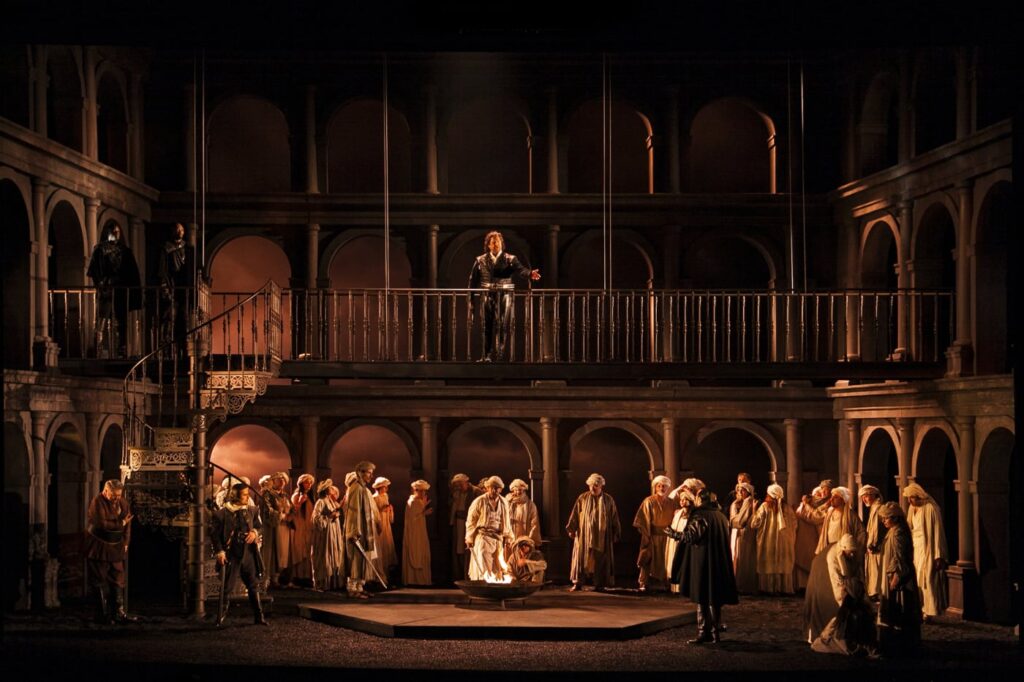
G.G : You have directed several productions of Otello. Is there one particular scene that always comes to mind when you begin developing your interpretation?
A.A : I never begin with a particular scene. I begin with a question. In Otello, my question is always the same: how can a man admired by everyone become the instrument of his own destruction?
From there, I reread the entire work. Every scene contributes part of the answer. The triumph of the first act already contains the seeds of tragedy; the love duet reveals everything that will eventually be lost; Iago merely accelerates a process that is already underway; and Desdemona’s bedroom ultimately becomes the inevitable destination of a journey that began much earlier.
So I do not search for the scene that triggers my staging. I search for the central idea that connects every scene. It is this dramatic thread that then guides every decision regarding the set, lighting, movement, and actor direction.
G.G : If one composer could attend one of your productions, which one would you choose to show them?
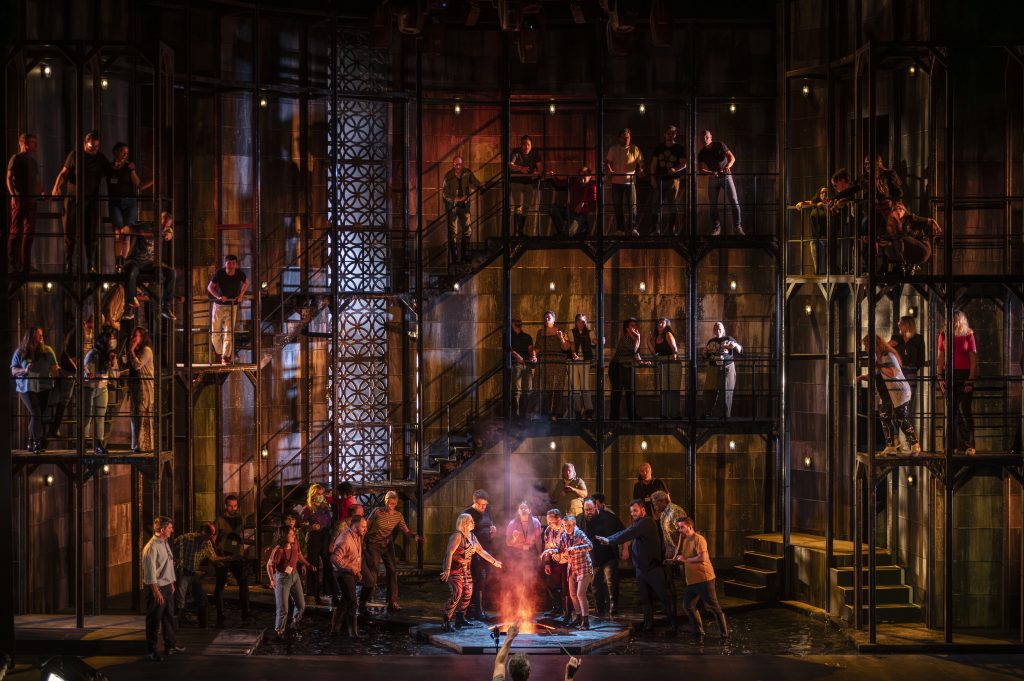
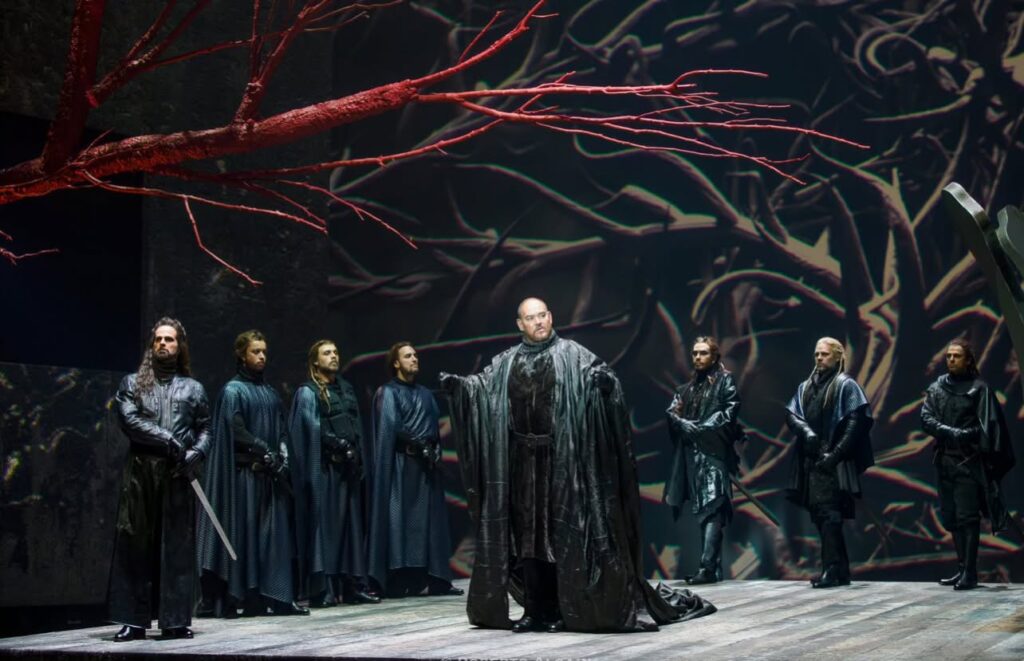
A.A : That is a difficult question because at the moment I am living intensely with two extraordinary works: Verdi’s Otello and Wagner’s Tristan und Isolde, both of which I am currently directing at the Theatro Municipal de São Paulo. They are two very different worlds, yet each occupies a very special place in my artistic journey. If I had to choose, however, Otellowould win… but only by a very small margin.
What matters most to me is not creating beautiful images, but provoking genuine emotion. To me, a production that fails to move its audience is ultimately a failed production, no matter how aesthetically flawless it may be.
I remember rehearsing the final scene with Maria Teresa Leva. Every time she sang the Ave Maria, she was deeply moved, often to the point of tears. It was neither an effect nor something we consciously sought. It was simply the result of a process in which the character had come to inhabit the performer completely. At moments like that, you understand that emotion cannot be manufactured; it emerges from truth.
And it is precisely that emotion that is then passed on to the audience. That is what I seek above all when directing opera. Sets, lighting, costumes, and video are never ends in themselves. They only have meaning if they allow the audience to experience something profoundly human.
If Verdi could attend one of my productions, I would want him to witness exactly that: that more than a century after its creation, Otello continues to move the artists performing it just as deeply as the audiences experiencing it. For me, there could be no greater reward.
G.G : What sells more tickets: the originality of the production, or the name of the stage director?
A.A : I believe that, in the overwhelming majority of cases, it is neither the originality of the production nor the name of the stage director that sells tickets. Above all, audiences come because of the opera itself, the singers, the conductor, the reputation of the theatre, and the trust they place in the institution.
Of course, there are a handful of stage directors whose names have become genuine artistic brands and who attract loyal audiences. But they are the exception. Most of us work in the service of a collective artistic project.
What a production can do, however, is encourage audiences to come back. If people leave the theatre having been moved, surprised, or deeply touched, they will talk about the performance with others. And nothing is more powerful than word of mouth.
Ultimately, I do not believe our role is to sell tickets. Our responsibility is to create a production worthy of the audience’s ticket: one that offers an unforgettable experience and inspires people to return to the opera. That, perhaps, is the greatest kind of loyalty we can hope to build.
About the Author