LES CONTES D’HOFFMANN | Konzert und Theater St. Gallen
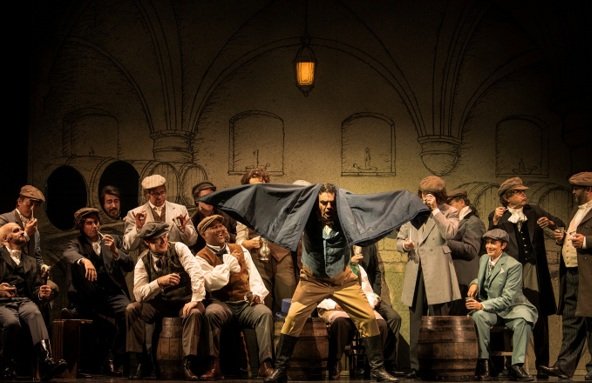
Fifteen years after his last appearance in this mythical role, Rolando Villazón once again steps into the boots of the tormented poet, much to our delight
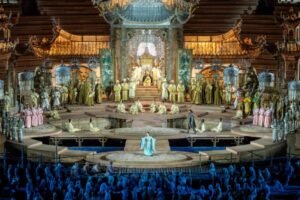
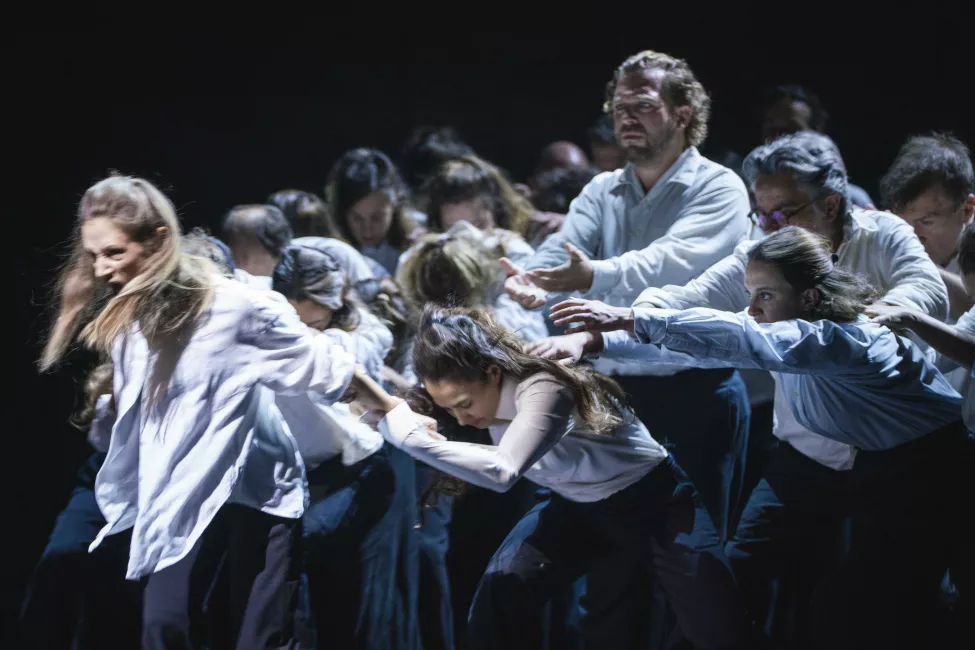
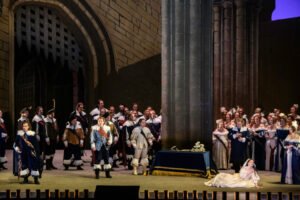
Guta Rau’s staging is built around a rotating platform whose illustrated panels charmingly evoke the various settings. A system of doors and staircases is enough to create a convincing sense of immersion. This is largely due to strong direction: each character seems perfectly at ease on stage, never lost, always active.
Costumes are classic and elegant, and the production displays a genuine visual coherence.
The spoken dialogues, delivered in German, help unfamiliar audience members follow the story, especially since many scenes have been cut and could otherwise confuse. Here, for instance, there is no mention of the singer Stella, the narrative is tightened to form a pot-pourri of the major arias from Les Contes d’Hoffmann.
There is no eccentric reinterpretation of the work’s meaning. We follow Hoffmann through his notebook, and the story stands firmly on its own, something for which we will not complain.
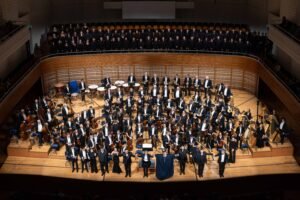
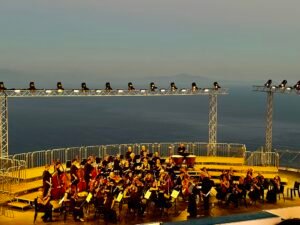
The Sinfonieorchester St. Gallen, conducted by Michael Zlabinger, rises fully to the occasion. Sharp from the opening bars, the ensemble proves consistently strong. Beautiful nuances are offered throughout the score. A few slightly slow tempi in the Antonia act may surprise, but they ultimately contribute to a coherent whole. Special mention must go to the violin solo in Vois sous l’archet frémissant, which was absolutely remarkable.
Costumes are classic and elegant, and the production displays a genuine visual coherence.
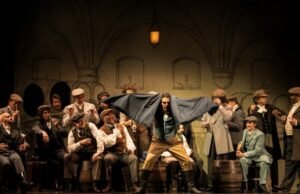
The St. Gallen chorus also shines, from the tavern’s exuberant antics to the sublime final ensemble, On est grand par l’amour et plus grand par les pleurs.
Mziwamadoda Sipho Nodlayiya is a dignified Spalanzani. A fine actor, the tenor also reveals some attractive high notes as Nathanaël.
Another character with too little opportunity to express himself, Felix Gygli offers Hermann and Schlemihl resonant low notes and strong stage presence.
Gloriela Villalobos makes the most of her brief appearance as Antonia’s mother’s voice, and her radiant smile brightens the playful chorus scenes in the Olympia act.
Bass Jonas Jud is impeccable as Luther and particularly compelling as Crespel.
Riccardo Botta displays delightful comic timing and delivers a thoroughly enjoyable C’est la méthode.
Among the principal roles, we must first salute the excellent French diction of all the performers.
Sylvia D’Eramo’s Antonia impresses with the sheer vocal power she brings, perhaps even a bit too much at the very beginning of the act. But the timbre is beautiful, the high notes superb, and her interpretation gains in subtlety as the act unfolds, resulting in a deeply moving portrayal.
In the four villain roles, Andrew Foster-Williams triumphs with threatening low notes that never compromise textual clarity. He excels as Dr. Miracle and provides a superb counterpoint to Hoffmann.
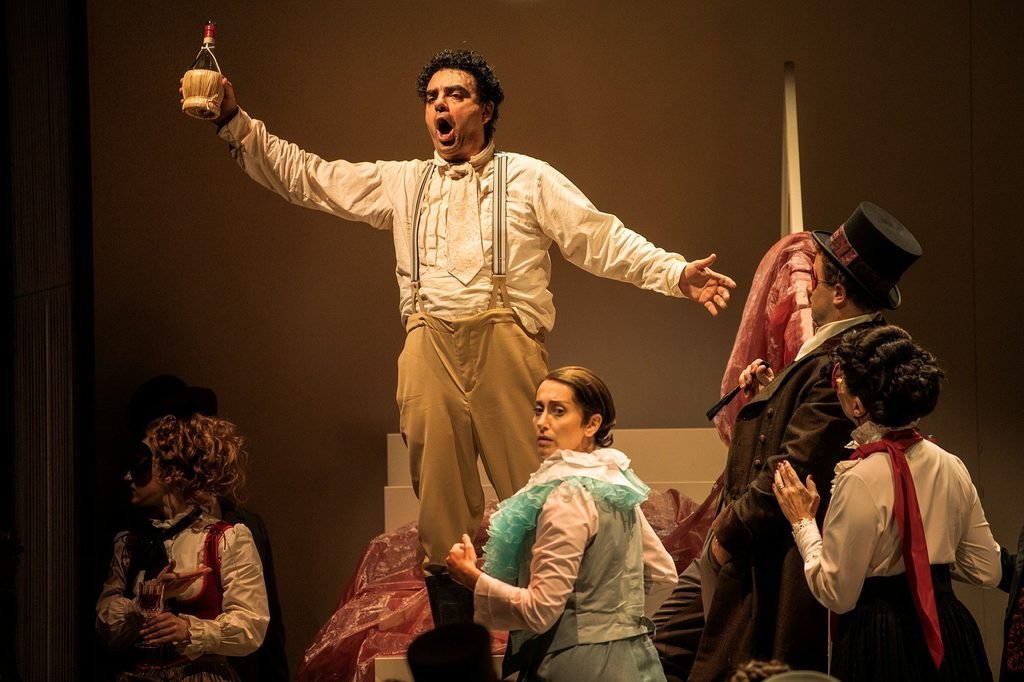
After debuting the role in Lyon last year, Eva Langeland Gjerde returns as Olympia, and one can already hear a striking evolution. The vocal pyrotechnics are more secure, and she seems to enuinely enjoy playing the role without fear of any note. Even more impressive is that she also takes on Giulietta. Slightly less at ease, perhaps, she nonetheless deploys a fine expressive palette. A stepping stone, maybe, toward performing all three roles one day.
Rolando Villazón once again dons the boots of a hero with whom he has triumphed many times.
A wonderful discovery this evening is Jennifer Panara as Nicklausse and the Muse. The artist displays beautiful middle register, and her Vois sous l’archet frémissant is a magnificent success. Her duet with Rolando Villazón shines with a touching complicity that anchors the entire story from the start.
Rolando Villazón once again dons the boots of a hero with whom he has triumphed many times. His intensity and stage commitment remain astonishing. The tenor holds nothing back, sometimes walking a tightrope, yet never slipping. His acting intelligence, comedic instinct, and expressive mannerisms could make the role work even if he were silent. But Villazón deploys his formidable vocal means with unfailing class, and his French, tinged with a slight South American accent, adds an extra charm to the character if any were still needed. An eternal Hoffmann.
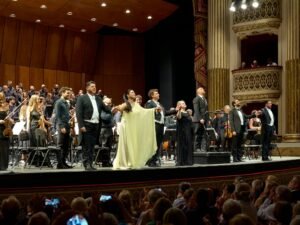
A standing ovation greeted the artists at the curtain call. A complete triumph.
About the Author