IL TROVATORE | Wiener Staatsoper
©Wiener Staatsoper/Michael Pöhn
The story may not be the happiest in the repertoire, but we left the Großer Saal of the Vienna State Opera with full hearts. Filled with a shared enthusiasm (both among devoted Verdi fans and more casual listeners like myself) for what we saw and heard, because we were united by one certainty: we had just experienced a truly great evening. A tarte à la crème remark? Perhaps. But how else can we describe what truly enchanted us? The opera is well known, its success undeniable, and the beauty of its arias, immortalised by legendary voices, recognised by all. There’s nothing left to prove: it is one of Verdi’s most celebrated works. Yet success is never guaranteed, and when it does happen, we can only be glad to have witnessed it. And that’s exactly what happened to us.

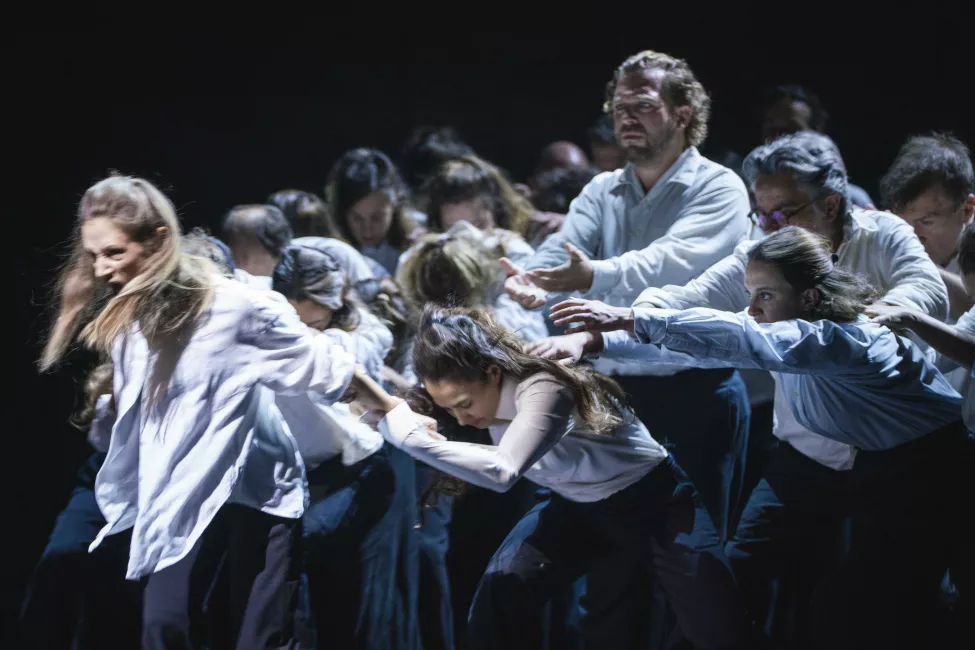
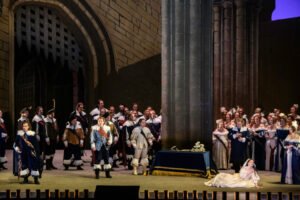
The recipe for success? As numerous as the many rounds of applause that punctuated the performance. Let’s start with the element that, at first, didn’s seem like a guaranteed win: the staging. A single set, a large open space where everything unfolds, with a stone wall as a backdrop and a few columns decorated with very simple patterns framing the stage. Only the singers’ movements and the lighting guide us through the different locations mentioned in the libretto. Too minimal? As soon as the story begins, we realise that this pared-down approach actually draws our attention more closely to the narrative being told on stage. With intelligence and relevance, Daniele Abbado’s staging shifts the original setting of the story (the War of the Spanish Succession) to highlight the harmful effects of religious fanaticism, which can lead to the destruction of individuals.

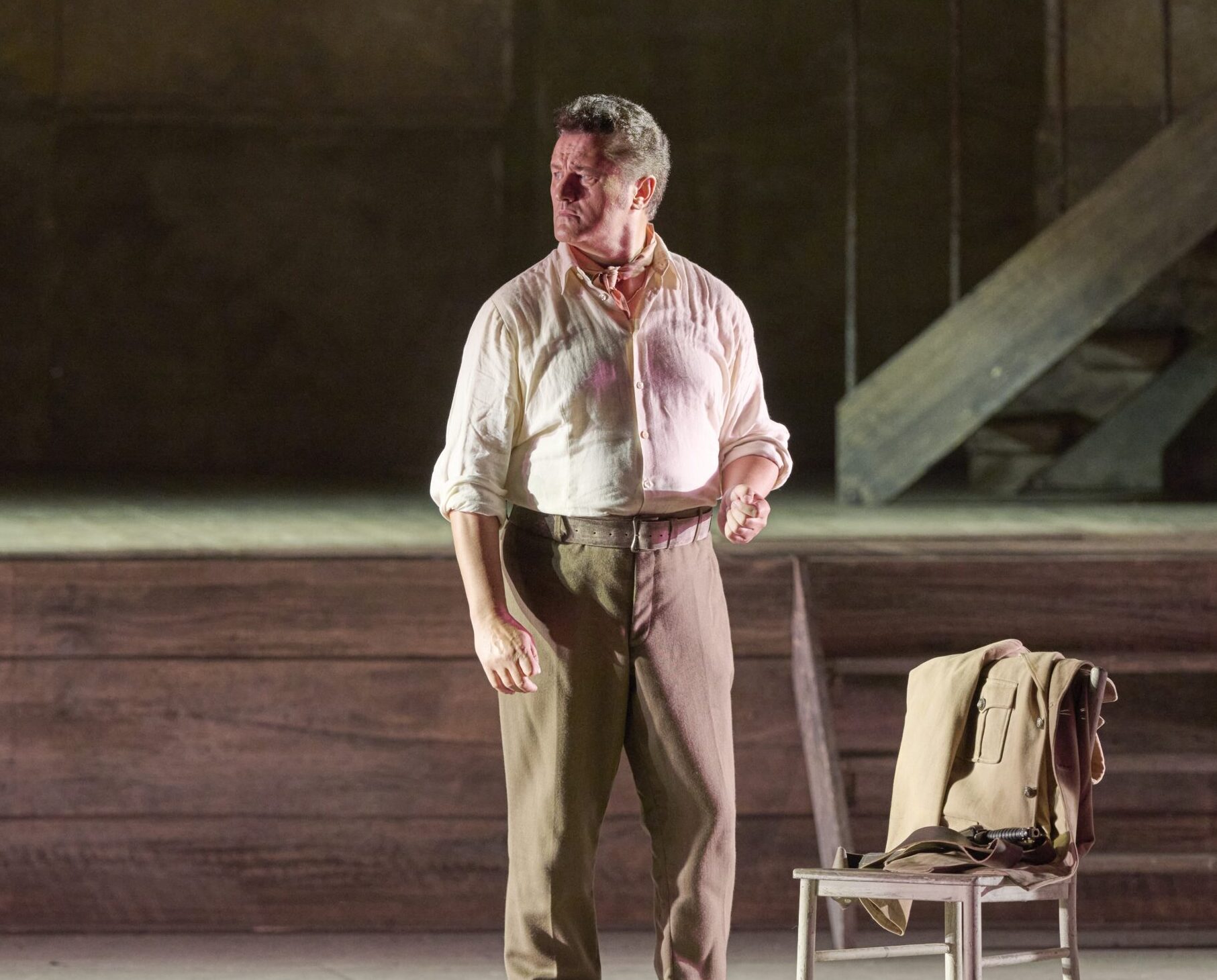
And let us say it straight away: despite the adaptation, nothing is lost of the opera’s chivalric spirit. With a star-studded cast that remains faithful to the libretto’s intentions, the strength of the action – and above all, of the characters – is just as powerful as one would expect. Starting with Manrico, played by Piotr Beczała, who astonishes above all with the sheer energy he brings to the role. The tenor seems so deeply connected to the character that what he achieves on stage feels miraculous: it is breathtaking in both beauty and power. We are left pinned to our seats, breathless, drinking in every word flowing from this seemingly endless bel canto source. True, the performance is more surprising than moving, but no matter: it is fiery and rousing, like the flames of the pyre shown at various moments during the production.

Krassimira Stoyanova brings to life a Leonora full of elegance and noble spirit, something we rarely see. Her vocal line is solid, her technique perfectly controlled and free of unnecessary embellishments, showing a deep connection with the role and the repertoire. This allows her to strip away excess and focus her vocal strength on refining her stage presence, worthy of the greatest sopranos of her time. It is truly delightful to witness a real craftswoman of text, singing, and theatrical expression, capable of removing the superfluous to reveal only what truly matters.

Luca Salsi’s Count di Luna is, above all, deeply human. His gestures may still be exaggerated, as expected, but in his warm and enveloping voice we hear the sincerity of emotions that go beyond all restraint. Isn’t that the best way to portray a character, no matter how flawed he may be? This ability to absorb the character’s intentions and deliver such touching truthfulness likely comes from his boundless admiration for a composer so dear to this baritone, who stands today as one of the great ambassadors of Verdi’s vocal tradition.
Witch or martyr? Victim or executioner? The answer is far from clear. What we do know is that Ekaterina Semenchuk leaves a mark (one we believe to be unforgettable) in her portrayal of Azucena, who is more than just a character: through her body and her voice, she becomes a force of nature. We leave the opera with her repeated cry of Mi vendica! to her “son” echoing in our minds, a plea that is finally fulfilled, at the cost of a death that could have been avoided. On reflection, the entire dramatic structure of the story rests on this gypsy woman, whose fate is marked by tragedy. And there is no better interpreter than this mezzo-soprano with seemingly limitless resources, a true enchantress of song, spellbinding in her nuanced performance.

Flaubert once said, “Beautiful fragments mean nothing; unity, unity, that is everything”. Whether knowingly or not, Marco Armiliato followed this principle, drawing from the Wiener Staatsoper orchestra a series of musical landscapes into which the singers’ voices added the final touches that brought the story to life. Like a liquid taking the shape of its container, the pit and the stage followed the direction of this conductor, who ensured a perfect balance. Thanks to this, a true sense of trust and a delicate synergy emerged, allowing musicians and singers alike to give their very best.
The best of Verdi’s operas? We wouldn’t dare make such a claim. However, faced with such a success on every level, we can allow ourselves to think that, for many of those who took part in this evening, the answer would be a warm yes.
::::::::::::::::::::::::::::::::::::::::::::::::::::::::::::::::::::::::::::::::::::::::::::::::::::::::::::::::::::::::::::::::::::::::::::::::::::::::::::::::::::::::::::::::::::::::::::::::::::::::::::::::::
IL TROVATORE
Opera in four parts of Giuseppe Verdi
Marco Armiliato | Direction · Daniele Abbado | Staging · Graziano Gregori | Scenography · Carla Teti | Costumes · Alessandro Carletti | Lights
Cast: Luca Salsi | Il Conte di Luna · Krassimira Stoyanova | Leonora · Ekaterina Semenchuk | Azucena · Piotr Beczała | Manrico · Dmitry Ulyanov | Ferrando · Maria Zherebiateva | Ines · Carlos Osuna | Ruiz · Oleg Savran | An old Gitano · Wolfram Igor Derntl | A messenger · Orchester der Wiener Staatsoper · Chor der Wiener Staatsoper · Credit photos: ©Wiener Staatsoper/Michael Pöhn.
(For further informations) Link to the Wiener Staatsoper website: Il Trovatore (2025 production)
About the Author