AIDA | Teatro Massimo di Palermo
There are opera houses you visit.
And then there are opera houses you dream about for years before finally stepping inside.
Coming to Palermo and discovering the Teatro Massimo was a huge moment for me personally. One of the last great Italian opera temples I still had to experience with my own eyes… and now it’s finally done. And honestly? I’m already counting the days until I return in October for another Verdi masterpiece: Rigoletto with Ludovic Tézier. Yes. That Ludovic Tézier.
Usually people save the thank-yous for the end of a review, but honestly I need to begin with a gigantic thank you to Alice and Giovanella from the communication department of the Teatro Massimo. Thanks to their kindness, I had the chance to attend both performances from the barcaccia boxes directly on the side of the stage.
And let me tell you something.
For me, opera singers are superheroes. Giuseppe Verdi is basically my religion. My drug. My emotional support system. I spend my weekends traveling around Europe chasing operas, emotions, orchestras, voices… and being seated there, meters away from the artists during a production like Aida honestly felt like someone privatized Disneyland just for me.
The Teatro Massimo itself deserves a chapter of its own.
Opened in 1897, it is the largest opera house in Italy and one of the biggest in Europe. A monument to Sicilian culture, history and artistic pride. The theater famously appears in the final scene of The Godfather Part III, but beyond cinema, this place breathes opera history from every corner. Bellini, Verdi, Wagner, Puccini — their spirits genuinely feel alive inside these walls. Walking through the corridors almost feels like entering a living museum where centuries continue to coexist without ever losing the deeply Sicilian soul of the place.
And Palermo itself?
Sicily is not just a region of Italy. Sicily is a country inside another country. You feel it immediately talking to locals, walking through the streets, hearing the accents, seeing the pride in people’s eyes. Palermo is chaotic, elegant, loud, historical, passionate and absolutely magnificent.
And so was this Aida.
My friends… when those trumpets appeared on stage during the Triumphal March, I think everybody in the theater collectively forgot how to breathe for a few seconds. This was not just visually spectacular, it was overwhelming in the best possible way.
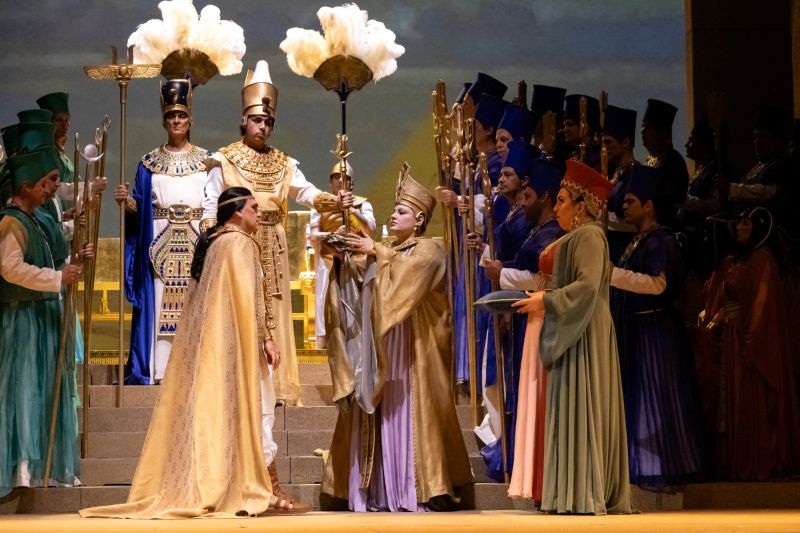
Mario Pontiggia’s production truly transports you to Egypt, especially during the first two acts. Sometimes simplicity and beauty work far better than trying to reinvent Verdi with unnecessary concepts. The staging respected the grandeur of the opera while still remaining elegant and fluid. Special mention for the costumes during Amneris’ scenes — absolutely stunning. Rich, detailed, majestic without ever becoming excessive.
And the ballet sequence?
Magnificent.
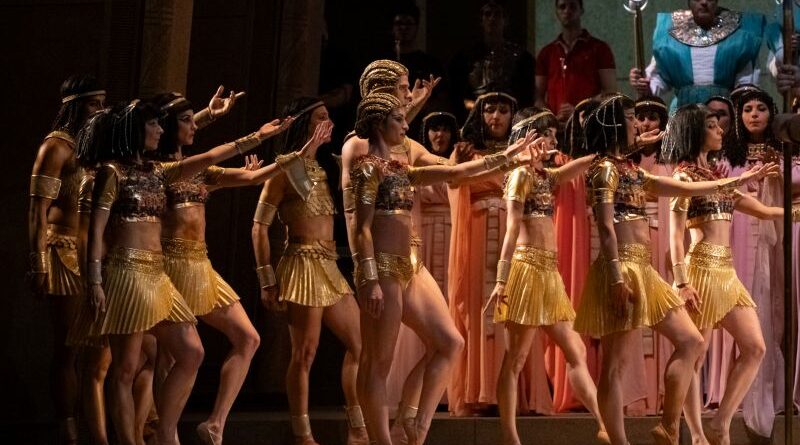
The choreography by Luigia Frattaroli brought real life and energy to the stage. Both the male and female dancers were excellent, and the costumes elevated everything even further. It became one of those magical Verdian moments where music, dance and spectacle merge together and you suddenly wish the scene could last forever. It reminded me a little of the ballet in I Vespri Siciliani: pure operatic luxury.
Maria José Siri is no stranger to Aida, and you can tell within seconds. She knows exactly how to shape the role vocally and emotionally. I had recently seen her in Verona where her voice practically shook the Arena itself, so there was never any doubt she would deliver here. Her Aida is noble, fragile, emotional and vocally secure throughout the evening.
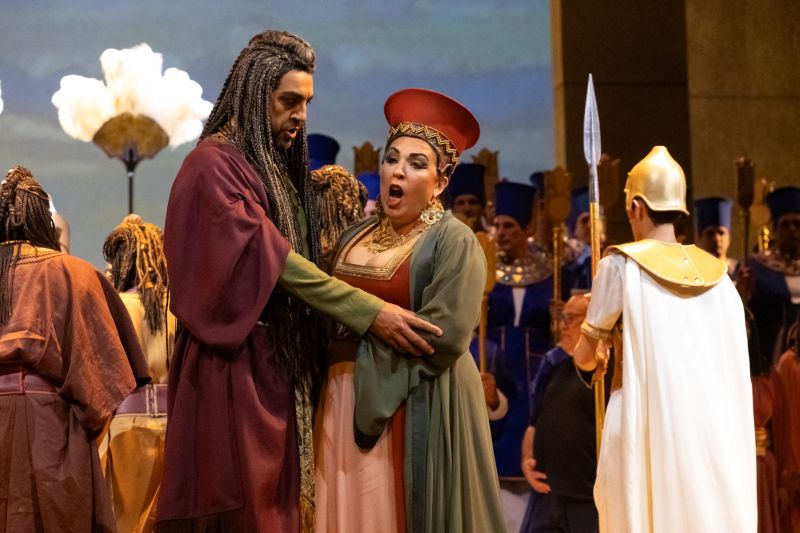
But what struck me the most was her chemistry with Claudio Sgura as Amonasro. Their father-daughter relationship on stage felt incredibly believable and emotionally intense.
And speaking of Claudio Sgura: I absolutely love this baritone.
I’m lucky enough to see him often around Italy, though not frequently as Amonasro since it remains a relatively short Verdi role. But Verdi still gave the character some glorious music, especially during the revenge scenes, and Sgura brought enormous authority and intensity to every single appearance.
Daniela Barcellona, meanwhile, was simply terrifying in the best possible sense.
I was seated sometimes barely one meter away from her, and honestly it became difficult to even hold eye contact with her during certain scenes because of how imposing she was vocally and dramatically. Presence, charisma, power… she dominated the stage every time she appeared.
Angelo Villari confirmed once again what a solid and reliable Italian tenor he is. This was actually the first time I heard him as Radamès — the last time I saw him was in Madama Butterfly in Piacenza — and he absolutely carried the role from beginning to end. And that ending of “Celeste Aida”? I’m pretty sure the walls of the Teatro Massimo are still vibrating today.
The smaller roles were also cast with enormous care. Giovanni Battista brought great authority to Ramfis, Manuel Fuentes was genuinely splendid as the King of Egypt, Andrea Schifaudo delivered beautifully as the Messenger, and Anna Ryabenkaya added elegance and mystery as the Priestess.
Nothing felt secondary. Nobody felt forgotten.
And finally, the true architect of the evening: Daniele Callegari.
You can immediately see a conductor who gives absolutely everything physically and emotionally. The orchestra sounded rich, alive, theatrical, passionate. Verdi’s score breathed naturally under his direction without ever becoming heavy or static.
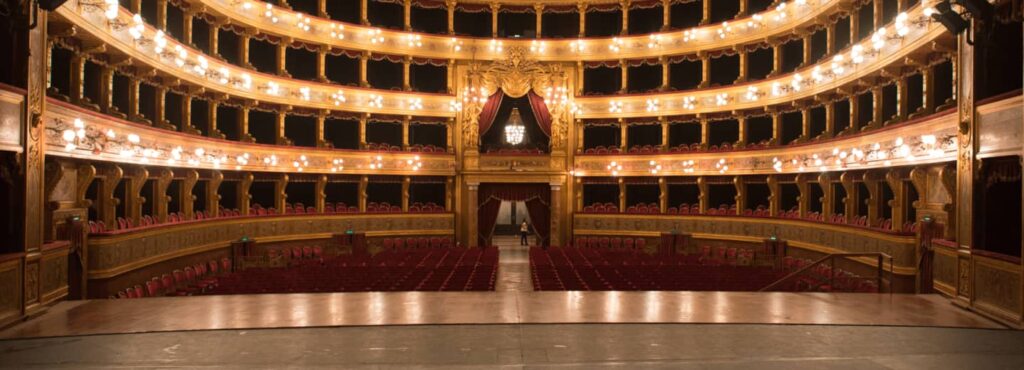
The Teatro Massimo truly is a special place. Fantastic acoustics, incredibly warm hospitality, a loyal audience, and two sold-out performances proving once again that opera is alive and thriving in Sicily.
So once again: thank you to Alice and Giovanella for their kindness and generosity. Thank you to the backstage crews, technicians, dressers, stage workers and all the invisible professions that allow us to experience nights like this inside a theater that has survived more than a century of artistic history.
And thank you, Sicily.
As they say here:
“Cu havi un amicu, havi un tesoru.”
“He who has a friend, has a treasure.”
**********************************************
CAST
Musiche di Giuseppe Verdi
Direttore Daniele Callegari
Regia Mario Pontiggia
Scene Antonella Conte
Costumi Ilaria Ariemme
Luci Andrea Ledda
Coreografia Luigia Frattaroli
Assistente alla regia Angelica Dettori
Assistente alla scenografia Chiarastella Santalucia
Assistente ai costumi Alice Perez
–
Aida Maria José Siri (22, 24, 27, 29, 31) / Alessandra Di Giorgio (23, 26, 28, 30)
Amneris Daniela Barcellona (22, 24, 27, 29, 31) / Valentina Pernozzoli (23, 26, 28, 30)
Radamès Angelo Villari (22, 24, 27, 29, 31) / Armaz Darashvili (23, 26, 28, 30)
Amonasro Claudio Sgura (22, 24, 27, 29, 31) / Devid Cecconi (23, 26, 28, 30)
Ramfis Giovanni Battista Parodi
Il Re dell’Egitto Manuel Fuentes
Un messaggero Andrea Schifaudo
Sacerdotessa Anna Ryabenkaya
About the Author

vva verdi!