MACBETH | Bayerische Staatsoper
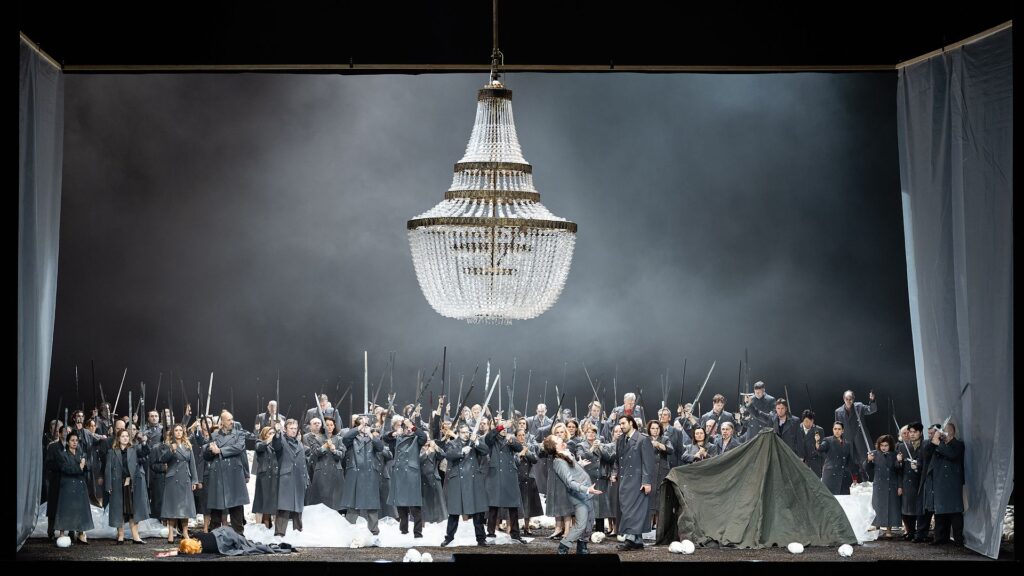
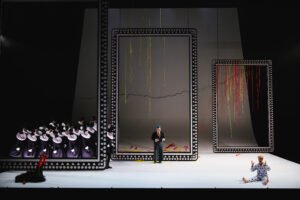
Martin Kušej’s Macbeth has been in the Bayerische Staatsoper’s repertoire since 2008 and has not lost a gram of its darkness. Martin Zehetgruber’s stage design is stripped, architectural, black; it creates an atmosphere of dread that sets in before a note is sung and does not lift until the curtain falls. There are moments of genuine visual shock, a choreography of sustained menace that Kušej manages with real theatrical intelligence, and the whole machine puts enormous pressure on whoever steps onto that stage. On this evening, the cast met that pressure completely. Andrea Battistoni conducts Verdi with the same fire and architectural clarity he brought to Turandot two evenings earlier, and if anything this score draws even more out of him: the textural contrasts, the sudden eruptions of violence, the passages of extraordinary lyrical beauty that Verdi hides inside this most sombre of his mature operas, all of it navigated with authority and genuine musical instinct. Two evenings, two completely different operas, two exceptional performances from the pit. The Bayerisches Staatsorchester under Battistoni is a thing to be celebrated. One looks forward with great anticipation to what he does next in this house.
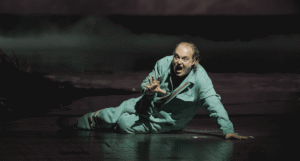
Gerald Finley as Macbeth is what a great baritone voice, used with complete intelligence, actually does to Verdi. The timbre is warm and dark, the legato immaculate, the projection effortless throughout the house. But what lifts this performance above the technically exceptional is the dramatic arc: Finley plays a man genuinely in the grip of forces larger than himself, and the progression from the first scenes to the great Act IV aria Pietà, rispetto, amore is one of the most coherent dramatic journeys one can hope to follow in an evening of opera. That aria, delivered with a depth and vocal beauty that left the hall silent, alone would justify the trip. He gives you the whole of Macbeth, not only the powerful moments. What an artist.
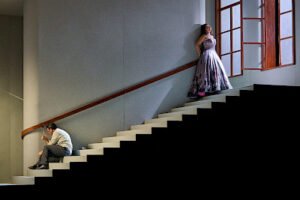
Asmik Grigorian‘s Lady Macbeth is something else entirely. She pushes this role to its absolute outer limit: more physical, more extreme, occasionally beyond the strict contours of what Verdi wrote, and it works — it works completely. Her chest register has a darkness and a specificity that suits this character in a way no other part of her voice could; the top is free and powerful; and the long arc from Vieni t’affretta in Act I to Una macchia è qui tuttora in Act IV is managed with a vocal and dramatic conviction that very few singers today would even dare attempt. Her sleepwalking scene alone would justify the evening. Some will find her too much — too free, too extreme, too willing to take the character to places the composer did not explicitly mark. They are not entirely wrong. But there are evenings when being overwhelmed takes precedence over being comfortable, and this was decisively one of them.
Roberto Tagliavini is a Banco of warm, substantial authority; the voice is reliable and full, and the ghost scene, handled with a disturbing calm, proves extremely effective. Jonathan Tetelman’s Macduff arrives in Act IV with exactly the ringing, open tenor tone this opera holds in reserve for precisely this moment, and delivers it without reservation; the ovations were immediate and deserved. Nontobeko Bhengu’s Lady-in-Waiting, Jinxu Xiahou’s Malcolm, and Martin Snell’s Doctor complete a cast of consistently serious and committed quality.
Long live the Bayerische Staatsoper. Long live Verdi. And long live Asmik Grigorian.
Cast & Creatives
Conductor — Andrea Battistoni
Director — Martin Kušej
Sets — Martin Zehetgruber
Costumes — Werner Fritz
Lighting — Reinhard Traub
–
Macbeth — Gerald Finley
Lady Macbeth — Asmik Grigorian
Banco — Roberto Tagliavini
Macduff — Jonathan Tetelman
Malcolm — Jinxu Xiahou
Doctor — Martin Snell
Dame — Nontobeko Bhengu
About the Author