ARIODANTE | Festival International d’Opéra baroque de Beaune
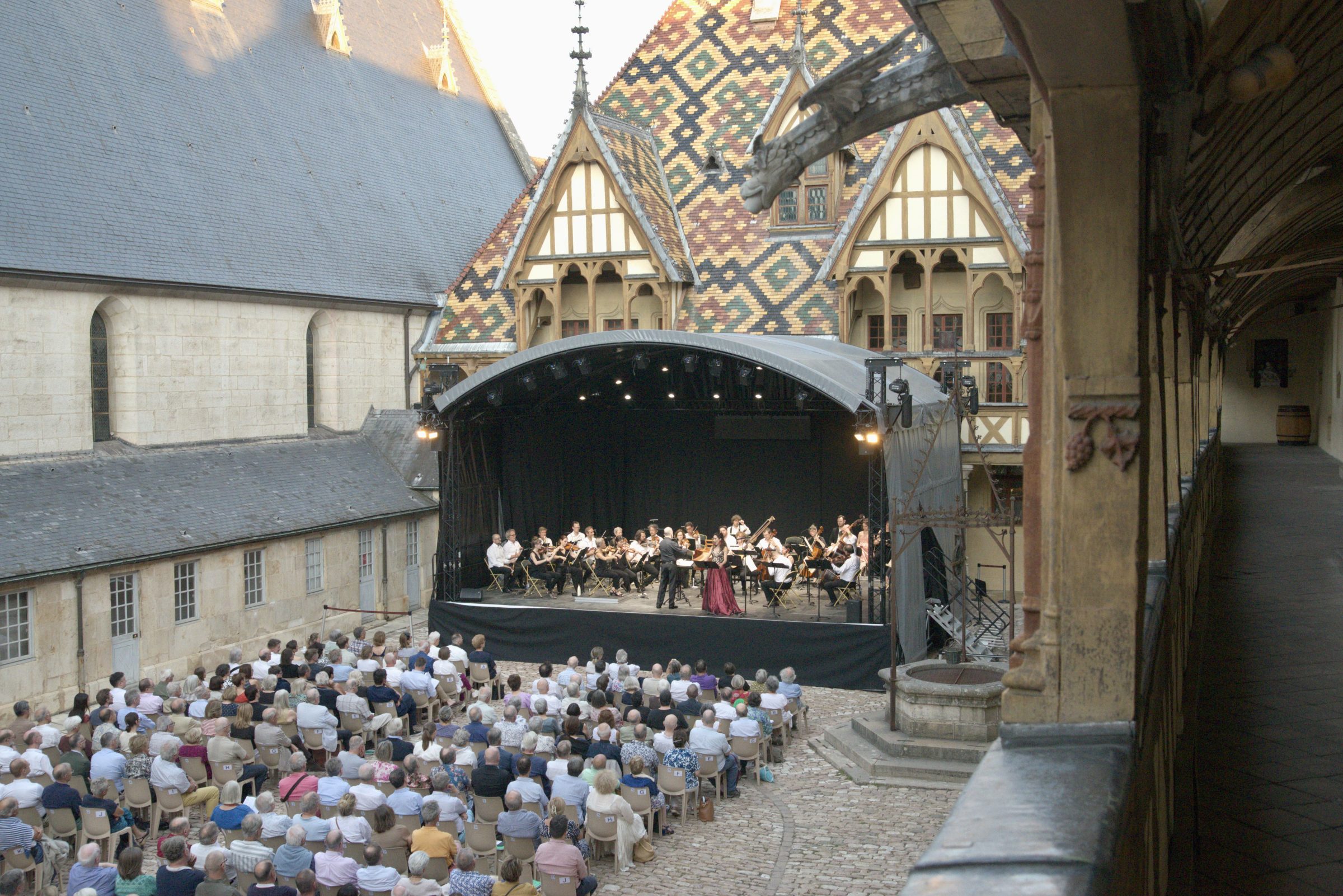
On July 4, the Festival International d’Opéra Baroque de Beaune presented a concert performance of Handel’s Ariodante. The evening carried particular significance as it marked Ève-Maud Hubeaux’s eagerly awaited role debut in the title role.
Few conductors could have provided a finer framework for such an occasion than Christophe Rousset, leading Les Talens Lyriques. From the opening bars, his reading was alive with rhythmic energy and theatrical instinct, never losing sight of the dance impulses that animate Handel’s score. Even the celebrated “Scherza infida,” so often stretched into near-static contemplation, benefited from a slightly brisker tempo that maintained its emotional weight while avoiding undue languor. Throughout the evening, Rousset balanced elegance with dramatic momentum, while Les Talens Lyriques responded with playing of remarkable refinement, offering the singers an ideal musical foundation.
The cast proved strikingly homogeneous, with every principal contributing to the success of the performance.
As the King of Scotland, Nahuel Di Pierro immediately established both vocal authority and dramatic presence. From his opening aria, “Voli colla sua tromba,” the Argentine bass displayed effortless command of the role’s demanding low register coloratura, coupled with exemplary diction and generous projection. Yet beyond the king’s authority, he also conveyed genuine paternal warmth, lending the character welcome humanity. A thoroughly impressive performance.
Nick Pritchard brought assurance and elegance to Lurcanio. His demanding “Il tuo sangue” was dispatched with impressive ease, while his duet with Dalinda provided one of the evening’s most graceful moments. Although Handel grants the character relatively limited stage time, the British tenor made each appearance count.
Margherita Maria Sala offered a compelling portrait of Polinesso, capturing the character’s manipulative nature without resorting to caricature. Her contralto found particular richness in “Dover, giustizia, amore,” while “Se l’inganno” revealed the full extent of Polinesso’s calculating cruelty, even if the chosen tempo perhaps slightly tempered its dramatic urgency. A finely nuanced interpretation and an effective foil to the opera’s hero.
The evening’s real revelation, however, was Michèle Bréant as Dalinda. The freshness and purity of her timbre perfectly embodied the character’s youth and innocence, making her vulnerability entirely believable. “Apri le luci” charmed through its radiant simplicity, while “Se tanto piace al cor” proved genuinely moving in its emotional fragility. A singer whose career will undoubtedly be worth following closely.
Marie Lys, by contrast, required no introduction. If anything, her Ginevra served only to reaffirm her standing as one of today’s most accomplished Handel interpreters. Only weeks after her acclaimed Gilda in Lausanne, the Swiss soprano once again demonstrated the extraordinary stylistic assurance that has become her hallmark. The exquisite ornamentation she brought to “Volate, amore” testified to impeccable technique, remarkable breath control and unfailing musical intelligence. Yet beyond the virtuosity, it was the emotional depth of her singing that lingered longest, particularly in an intensely affecting “Io ti bacio.” Her duet with Ève-Maud Hubeaux, “Bramo mille vite,” crowned the evening with a blend of voices of exceptional beauty.
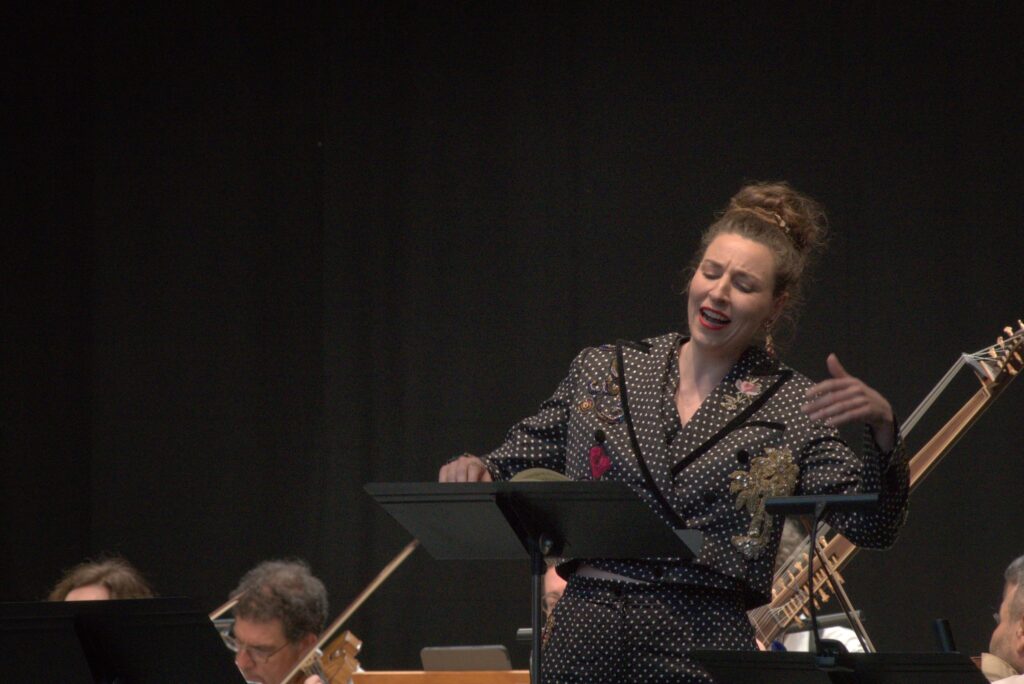
All eyes, however, were on Ève-Maud Hubeaux, making her first appearance as Ariodante. Expectations were fully met. Her portrayal presented a chivalrous, robust Ariodante, combining vocal assurance with unwavering conviction.
In “Con l’ali di costanza,” she immediately impressed with her seemingly inexhaustible breath control and stylishly executed ornamentation, thoughtfully shaped in collaboration with Christophe Rousset.
The evening’s emotional centre, “Scherza infida,” received a particularly warm ovation. Taken at Rousset’s flowing tempo, the aria allowed Hubeaux to showcase the richness and expressive warmth of her sumptuous middle register without sacrificing dramatic tension.
“Cieca notte” revealed the introspective vulnerability of her Ariodante, while a jubilant “Dopo notte” brought this impressive role debut to a dazzling conclusion, displaying effortless agility and sparkling upper notes.
This Ariodante proved a triumph on every level, confirming once again the exceptional artistic standards of the Beaune Festival. As for Ève-Maud Hubeaux, this highly successful role debut leaves only one wish, to see her take on Ariodante again, this time in a fully staged production where the dramatic qualities glimpsed here can flourish just as completely as her vocal ones.
DISTRIBUTION
Ève-Maud Hubeaux, Ariodante
Marie Lys, Ginevra
Michèle Bréant, Dalinda
Margherita Maria Sala, Polinesso
Nick Pritchard, Lurcanio
Nahuel di Pierro, Il Re di Scozia
Les Talens Lyriques
Christophe Rousset, direction
About the Author