DIE WALKÜRE | Bayreuther Festspiele
From KI to CT: Christian Thielemann’s Absolute Mastery in Die Walküre
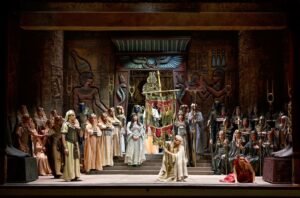
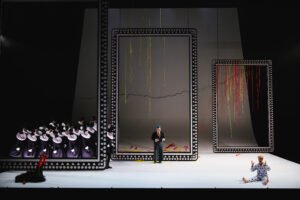
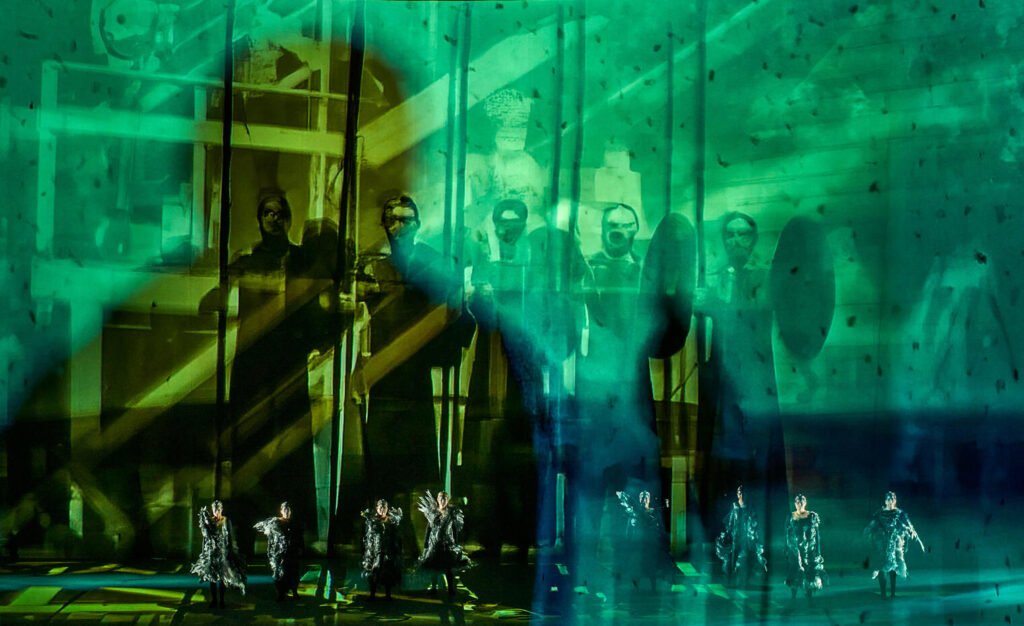
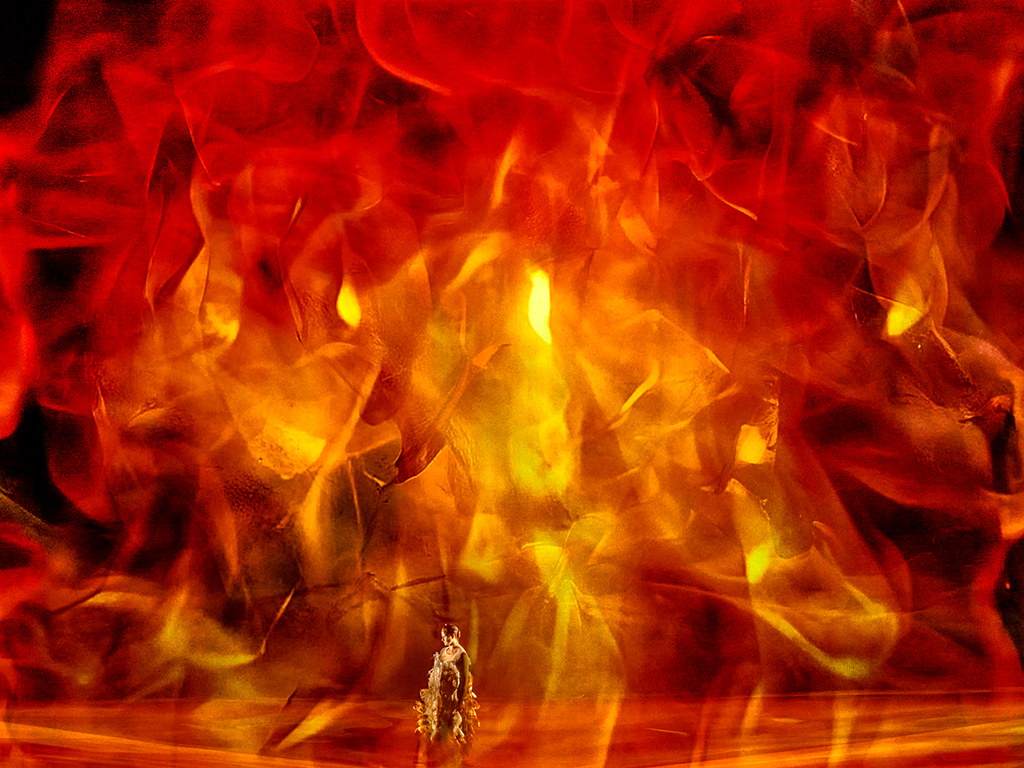
What was supposed to be the “KI” (Künstliche Intelligenz) Ring will instead be remembered as the “CT” (Christian Thielemann) Ring. The performance of the second opera of the Tetralogy—staged on the first day of the cycle, as Das Rheingold is considered der Vorabend—reaffirms and incontrovertibly confirms what had already emerged the previous day: total disappointment and boredom regarding the AI-generated visuals, contrasted by a grandiose musical performance that certainly ranks among the pinnacles of Wagnerian interpretation. The sequence of projected images is utterly confusing. Moving between Windows screensaver-style graphics and political references—including the appearance of Hitler and later Lenin—the sword Nothung does not survive. Furthermore, the Ride of the Valkyries was reduced to a superposition of archive images, while the Magic Fire Music and the flames surrounding Brünnhilde were merely overlapping red and orange frames. This resulted in a complete lack of connection with the music for what is, after all, the opera with the most compelling and engaging dramaturgy of the entire Tetralogy.
To discuss Christian Thielemann‘s Walküre, it is worth quoting Thomas Mann: “Wagner is not just an unsurpassable painter of physical phenomena, of storm and tempest, rustling leaves and glistening streams, dancing flames and rainbows; he is also a masterly portrayer of spiritual nature, of the eternal heart of man.” The first act is dazzling and goosebump-inducing. What might superficially seem like a romantic or verismo melodrama—tenor and soprano in love, thwarted by the bass—is here tinged with all the colors of nature, passion, and eroticism. The stürmisch (stormy) prelude that opens the opera is a masterpiece in itself, with its tempestuous alternation of pianos and fortes, and the overwhelming crescendos upon which the first violins flash like lightning. Then comes the encounter between Siegmund and Sieglinde. For this scene, Thielemann finds orchestral tempos and colors that cast a veil of passion over the silent exchange of glances between the twin siblings—the first human figures of the Tetralogy after the Gods and Giants ofDas Rheingold. The timbre of the cellos seals their intimacy and budding love, while the melodic flow of the violins as she pours him a horn of cider is utterly captivating. The drama unfolds and darkens with Hunding’s entrance, becomes ecstatic and inebriating with the arrival of spring, and turns sacred and heroic during the sword scene. The act’s finale, featuring the twins’ incest on stage, is thrilling, with Thielemann driving a dizzying tempo and igniting the orchestra with a magnetic erotic charge. The beginning of Act II is equally dazzling, striking an epic yet carnal tone that echoes the leitmotifs of the first act. Thielemann’s extensive use of extreme rubato is noteworthy, harking back to the Romantic school; tempos contract and expand, creating immense dramatic tension and profound psychological exploration. This reaches its peak in Wotan’s marital clash with Fricka, and especially in the lengthy monologue that follows, where interminable pauses create a gripping dramatic and emotional stillness. In Act III, following a Ride of the Valkyries that is intense in sound but balanced and restrained in pace, Thielemann rediscovers his deepest inspiration in the duet between Wotan and Brünnhilde. Here, the pianissimos, the pauses, and the crystalline clarity of the instruments convey the protagonists’ psychological drama. At the beginning of the third scene, before Brünnhilde begins “War es so schmählich, was ich verbrach,” the poignant introductory solos of the english horn, clarinet, and bassoon are exceptional, perfectly preparing the protagonist’s stunning phrases as she begs her father’s forgiveness. In the finale, reaching the Magic Fire Music that encircles Brünnhilde’s rock—unfortunately visually erased by the artificial intelligence—Thielemann distends the tempo in an atmosphere of rarefied emotion, the sound fading away with extraordinary musical clarity and poetry.
Klaus Florian Vogt (Siegmund): After his devious Loge, Klaus Florian Vogt takes on the heroic role of Siegmund, portraying a young and smitten protagonist with a clear, luminous voice. Once again, one cannot help but admire his pristine diction and immaculate musicality, which allow him to deliver a performance of great vocal and dramatic prestige, even in moments that usually demand a heavier, more dramatic voice. His “Wälse! Wälse!” are sung with supreme confidence and masterful breath control. The “Winterstürme” is tackled with lyricism, textbook legato, and a vast palette of colors, while the sword scene features a crisp declamation that gives immense dramatic weight to every word. Even in Act II, during the famous Todesverkündigung (Announcement of Death) and the duel with Hunding, Vogt maintains a noble, fluid singing style, characterized by a sculpted yet never overly aggressive delivery.
Mika Kares (Hunding): Mika Kares possesses a beautiful, deep bass voice that perfectly portrays Sieglinde’s authoritative husband. Kares confidently masters his lower-middle range, descending with ease and ample volume to the low G. He offers a highly refined interpretation of a despotic, cruel man defending his home, traditions, and lineage. To this role, Kares lends a harsh and penetrating phrasing that remains consistently tasteful and never over-the-top.
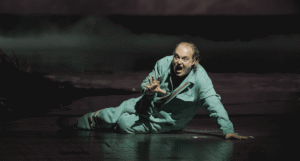
Michael Volle (Wotan): From his debut in Act II, Volle reveals himself as an exceptional Wotan. His incisive accentuation, sculpted vocals, and dramatic psychological nuance evolve masterfully as the tragedy unfolds. Already during the clash with his wife, Wotan begins to grow dark, visibly oppressed by his own laws. The ensuing monologue—the dramatic fulcrum of the entire Tetralogy—is a masterpiece of Sprechgesang, or rather, “recitar cantando.” Volle’s complete command of the tessitura is remarkable, featuring full, resonant low notes and richly ringing highs. Among the many marvels of his performance, “das Ende, das Ende” cannot be overlooked: the first “Ende” explodes dramatically after an agonizingly long pause, while the second is delivered in a pianissimo whisper to express his ultimate failure and sense of shame. In Act III, despite a hint of vocal fatigue, Volle portrays an exemplary ruler whose initial anger and rage melt into a heartbreaking finale, where his love for the daughter losing her divinity merges with the pain of abandonment and resignation to the laws he must uphold.
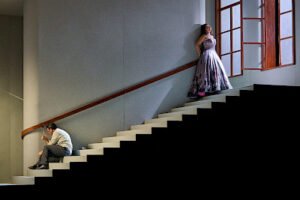
Elza van den Heever (Sieglinde): Elza van den Heever possesses the perfect vocal color and volume for Sieglinde—a role she previously sang to great acclaim at Teatro alla Scala in Milan. The soprano confidently dominates the entire tessitura, displaying a uniform production across all registers, with luminous high notes and well-supported, harmonically rich tones whenever the writing dips below the staff. Her Sieglinde is initially fragile, then turns determined and ecstatic in an emotional crescendo that explodes in a truly moving “Du bist der Lenz,” perfectly in sync with Vogt’s Siegmund. In Act II, van den Heever portrays a frightened Sieglinde, overwhelmed by events and delirious, yet she never loses the nobility of her singing, even in moments of pure terror and dismay. Act III rewards Sieglinde with one of the most beautiful musical phrases in the entire Tetralogy: “O hehrstes Wunder! Herrlichste Maid!” set to the theme of redemption through love (Liebeserlösung-Motiv). The soprano sings this with immense emotional intensity, soaring to brilliant high Gs and As.
Camilla Nylund (Brünnhilde): Camilla Nylund is currently the leading lyric-dramatic soprano for the Wagnerian repertoire. Her luminous timbre and elegant emission emerge from the very moment of her debut with the battle cry “Hojotoho! Heiaha!”. The high Cs are struck with ease using a tastefully measured ascending portamento, and her trill is equally beautiful, executed with the skill of a seasoned bel canto singer. Following this debut as the faithful, favorite daughter, Nylund finds deeply moving accents in the Todesverkündigung scene, where her transformation from goddess to mortal creature is conveyed first with wonder, and later with troubled, emotional inflections. Her invitation to Sieglinde, “Zu Ross, dass ich dich rette,” is heartfelt and desperate, supported by a Thielemann in a state of absolute grace. Act III is where Nylund’s vocal characteristics and interpretive style shine brightest. Her luminous tone and proud, sorrowful phrasing draw a humanized Brünnhilde, who discovers through her rebellion against her father that love is the vital force of existence.
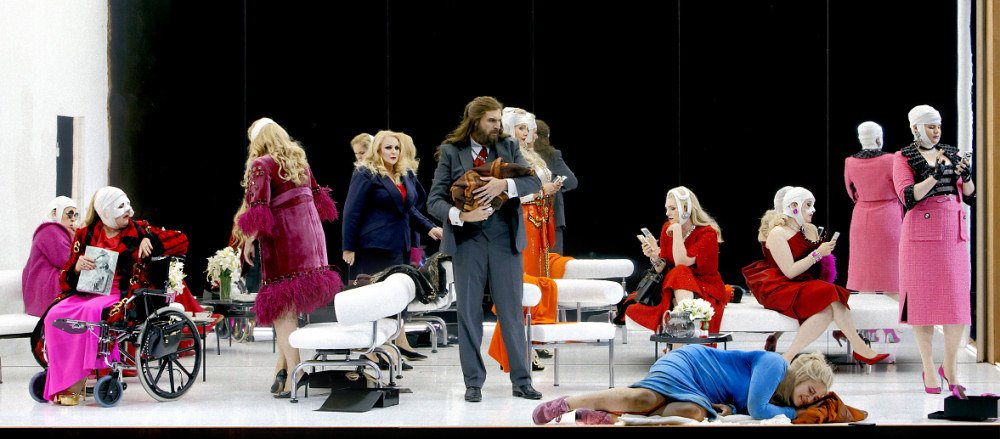
Anna Kissjudit (Fricka): Fricka plays a pivotal role in the Ring, representing the sanctity of honor as opposed to love. Kissjudit, just as in Das Rheingold, displays an impressive vocal instrument in terms of volume and color, finding its ideal outlet in the long duet with Wotan. Her voice is particularly sumptuous in the lower-middle register and rises effortlessly to the high notes, soaring up to an A-flat that cuts through the orchestra like a blade, resonating with a harsh, sharp edge. The character she creates is regal and imperious—her “Ich klage!” lands like a whip—but she never descends into hysteria, maintaining her dignity as the guardian of law and marriage.
The Valkyries: The eight Valkyries, Brünnhilde’s sisters, sing in Act III as a homogeneous and harmonious ensemble across all vocal parts. They confidently master both the sudden leaps to the high notes of their battle cry and the complexity of the polyphonic texture. Special mention goes to Martina Welschenbach (Gerhilde), Brit-Tone Müllertz (Ortlinde), Karis Tucker (Waltraute), Freya Apffelstaedt (Schwertleite), Magdalena Hinterdobler (Helmwige), Alexandra Ionis (Siegrune), Marie Henriette Reinhold (Grimgerde), and Natalia Skrycka (Rossweisse).
As with Das Rheingold, there were heavy protests during the curtain calls, primarily directed at the staging, while all the musical artists received warm and enthusiastic applause.
About the Author