LA BOHEME | Teatro di Piacenza
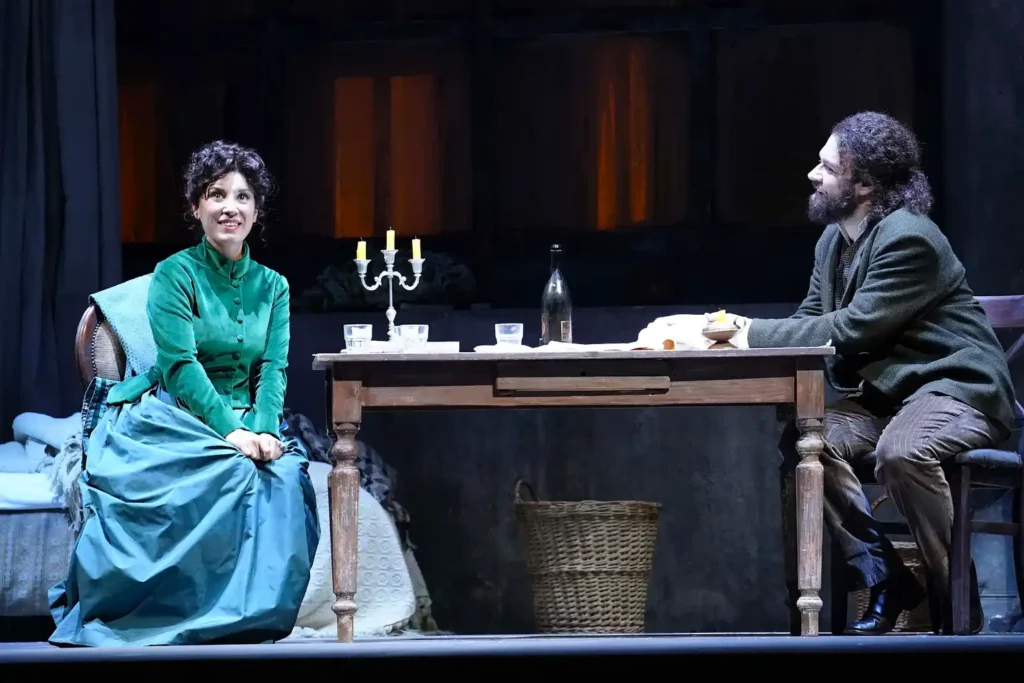
©Gianni Cravedi
La bohème in Piacenza: Opera in the Best Possible Conditions
Piacenza… Piacenza!
My friends already know this, but I will happily say it again: Teatro Municipale di Piacenza is my favourite theatre in the world. Yes, it is smaller than La Scala, and yes, it does not have the international prestige of La Fenice, but honestly, none of that really matters to me. There is simply something aboutthis theatre that I find almost impossible to resist. Perhaps it is the wooden floor that creaks beneath your feet, the gold everywhere you look, the beautiful exterior and extraordinary interior, or the wonderfully warm welcome you receive every time youwalk through its doors. More than anything, however, it is the feeling that you are entering a theatre that has been telling stories through Italian opera for more than two centuries.
The Teatro Municipale opened in 1804, and its horseshoe-shaped Italian theatre architecture was considered revolutionary at the time.Stendhal himself described it as one of the most beautiful, if not the most beautiful, theatres in Italy. Today, with its 1,121 seats, it still possesses something that I find increasingly precious: the intimate atmosphere of a genuine Italian operahouse, rather than the feeling of entering a huge international venue where the building can sometimes become almost as important as the performance itself. For me, this is what opera should feel like, and on this particular Sunday, I was lucky enough to experienceit in what felt like the best possible conditions.
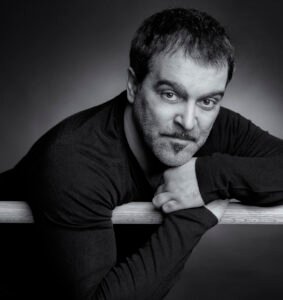
Thanks to Francesca, I had a seat right next to the barcaccia, which is probably my favourite place to sit in any opera house. But even that was not where the emotional part of the day began. Before the performance, I had the extraordinary opportunity to interview one of my all-time idols, Leo Nucci. So, before La bohème had even started, the day was already carrying considerably more emotion than I had perhaps anticipated.
The production
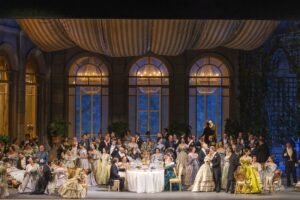
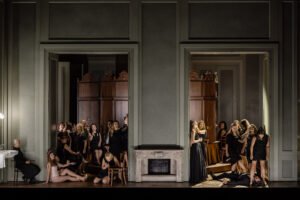
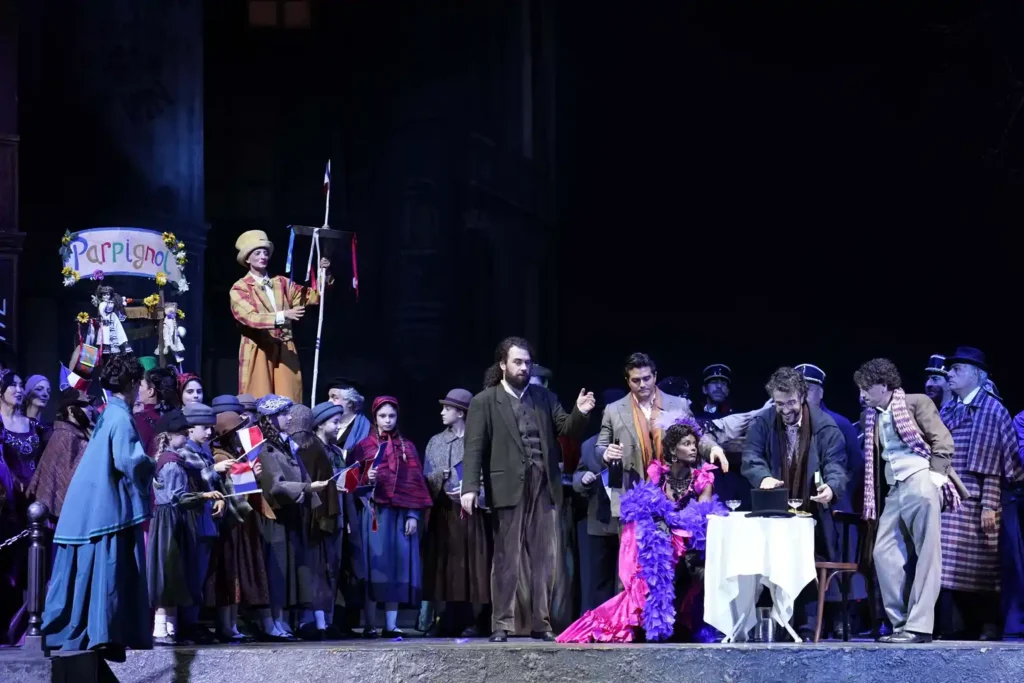
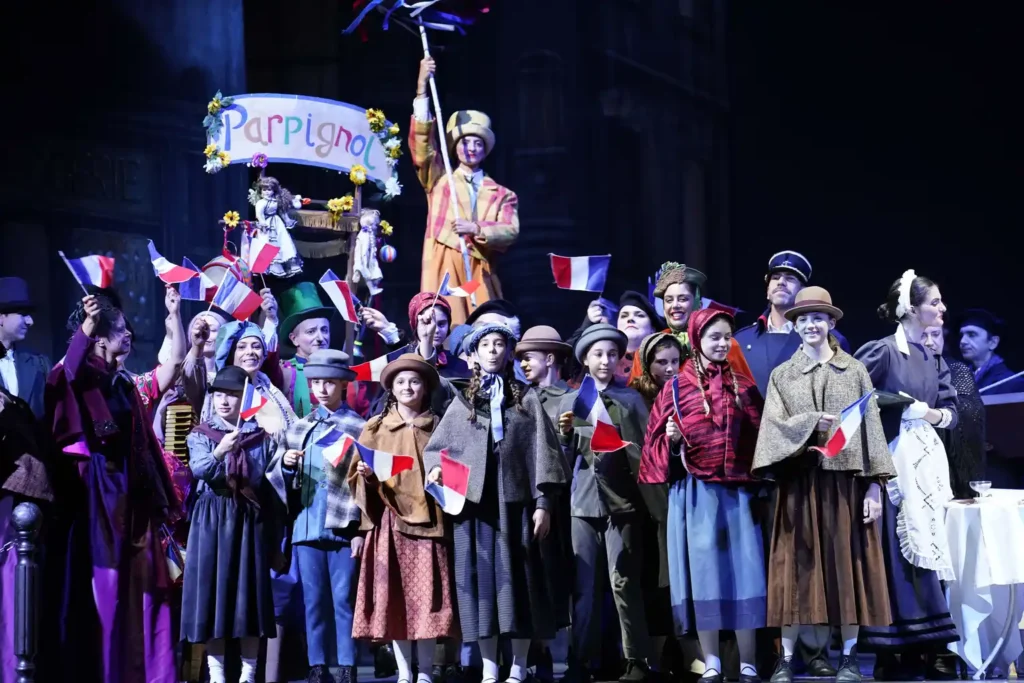
This was exactly the kind of La bohème that I never get tired of seeing. It was a traditional, old-school production that gave us Paris, period costumes, the garret, Café Momus and a stage filled with young people, energy, laughter and chaos. What I particularly appreciated wasthe way the production allowed the enormous emotional contrast at the heart of the opera to remain completely intact: the warmth, humour and youthful exuberance of the earlier scenes gradually give way to the devastating final moments, and the impact of thattransition remains incredibly powerful when you do not try to overcomplicate it.
There are, of course, countless ways of staging La bohème, but personally, I know I will never grow tired of seeing it like this. Give me Paris, period costumes, a colourful Café Momus and a proper theatrical set, and I am perfectly happy. This production, directed by Leo Nucci, gave me exactly that.It felt warm, theatrical and genuinely Italian, and in a theatre like Piacenza, where the atmosphere itself seems to belong to another era, the whole thing simply made sense.
Claudia Pavone – Mimì
Claudia Pavone was one of the highlights of the afternoon, and it was particularly enjoyable for me because this was already thethird time I had had the pleasure of seeing her, following La traviata this summer, Manon last year and Madama Butterfly in this very theatre. Once again, she demonstrated just how naturally she fits this repertoire. Her Mimì was tender, sincere and beautifully drawn, with a voice that immediately draws you into the characterwithout ever making the interpretation feel artificial or overly calculated.
I also felt that she carried a considerable part of the emotional weight of the performance. There was a natural warmth to her singingand acting that made Mimì extremely easy to believe in, and her chemistry with Rodolfo worked particularly well. By the end of the afternoon, she had also clearly won the applause contest, and quite deservedly so. I genuinely enjoy seeing Pavone in this kindof repertoire, because there is something in the colour of her voice and in her way of inhabiting these characters that seems particularly well suited to Puccini. I very much hope I will have the opportunity to see her again soon.
Davide Giusti – Rodolfo
Opposite her was Davide Giusti as Rodolfo, and his performance came with a rather extraordinary personal detail: he was celebrating his 40th birthday on stage that very day. Sunday 4 October happened to be his birthday, and at the end of the performance Maestro Vincenzo Milletarì arranged for the orchestra to play Happy Birthday for him. It was one of those spontaneous theatre moments that you simply cannot plan, and it became a beautiful conclusion to the afternoon.
Giusti was visibly trying to hold back his tears, and I suspect quite a few people in the theatre were doing exactly the same. Afterspending the afternoon singing one of Puccini’s most demanding tenor roles, he suddenly found himself standing on stage in front of a full theatre while the orchestra played for him. You could see how much the moment meant to him, and it felt particularlytouching because it came after such an emotionally demanding performance.
As Rodolfo, he brought plenty of energy and a very convincing stage presence, while his relationship with Pavone gave the centralcouple the necessary sense of intimacy and spontaneity. He handled the character’s emotional journey very well, and there was a lovely generosity to his performance. So, happy 40th birthday, Davide. I cannot imagine too many better ways to celebrate than standingon the stage of the Teatro Municipale di Piacenza with a Puccini orchestra playing for you.
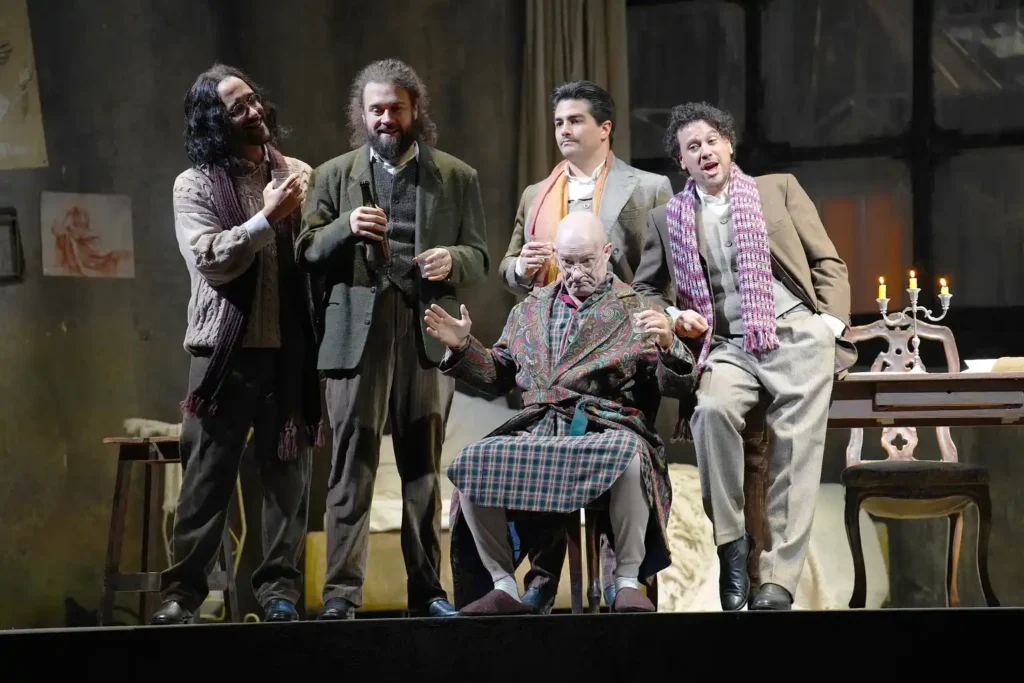
Marcello, Schaunard & Colline
I also thoroughly enjoyed the three other young men at the centre of the Bohème gang: Fabrizio Brancaccio as Marcello, Fernando Cisneros as Schaunard and Diego Maffezzoni as Colline. One of the things I particularly enjoy about La bohème is the sense that these four young men genuinely belong together, and here that chemistry came across beautifully. There was a natural energy between them, with plenty of humour and a real sense of friendship rather than four singers simplysharing a stage.
They were lively, spontaneous and very comfortable with the comedy, while also sounding extremely well together vocally. You actuallywanted to believe that these characters had known each other for years, spent countless evenings together in their freezing garret and shared all the ridiculous and difficult moments of youth. That complicity is essential to La bohème, because without it, the tragedy of the final act loses some of its impact. Here, it was one of the pleasures of the afternoon.
Mariam Battistelli – Musetta
And then there was Mariam Battistelli. This was my first time seeing her, and she very quickly became one of my discoveries of the afternoon. Her Musetta was glamorous, funny, energetic and completely impossible to ignore, and she nearly stole the entire second act. WhatI particularly appreciated was that she understood how to dominate the stage without turning Musetta into a caricature; the character remained funny and larger than life, but there was always a real singer and actress underneath it.
Vocally, she was equally impressive, with a bright, expressive voice and the kind of stage confidence that makes Musetta such anirresistible character. I came away from the performance thinking that I really hope this was not my last encounter with her. Interestingly, Battistelli has already sung Musetta at the Wiener Staatsoper and appeared in La bohème at major international houses including La Scala, Glyndebourne and the Opéra de Monte-Carlo, so perhaps I was simply rather late in discovering her.
Vincenzo Milletarì and the orchestra
At the head of the performance was Vincenzo Milletarì, who brought a great deal of energy and a very strong theatrical instinct to the score. The orchestra breathed naturally throughout the performance, allowing Puccini’s music to move without ever becoming unnecessarily heavy. Therewas plenty of warmth and colour in the playing, but also a welcome sense of space for the singers, which is particularly important in La bohème, where the music has to support both the intimacy of the characters and the larger emotional moments.
The Orchestra together with the Chorus of the Teatro Municipale di Piacenza, contributed enormously to the atmosphere of the afternoon. The performance had the warmth and immediacy that I associate with Italian opera, and the balance between the orchestra,the stage and the comedy was very well judged. And, of course, the birthday celebration at the end gave the whole afternoon an unexpected final touch that none of us were likely to forget.
And now… Piacenza again
Sadly, this was the final performance of La bohème in Piacenza, which is a little frustrating because I would happily have gone back again. There are performances that you enjoy, and then there are performances that make you want to return to the theatre simply because you are not quite readyfor the evening to be over. This was very much the latter for me.
If you did not manage to see La bohème, however, there is no reason to stop looking towards Piacenza. The next season already promises some very interesting things, and in particular I would keep an eye on Umberto Giordano’s Siberia, which comes to the Teatro Municipale in December 2026, with performances on 18 and 20 December. For anyone looking for an unusual Christmas present for an opera lover, I can think of worse ideas than a trip to Piacenzaand an evening of Giordano.
And, as always, I have to say thank you. Thank you to Francesca, who knows how much that place next to the barcaccia means to me,and thank you to the entire cast for giving us such a warm and enjoyable afternoon. Thank you as well to everyone at the Teatro Municipale di Piacenza for continuing to create the kind of atmosphere that makes me want to return again and again. There is somethingwonderfully reassuring about walking into this theatre and feeling, almost immediately, that you are exactly where you are supposed to be.
And finally, a very special thank you to Leo Nucci. Thank you for being there, for giving me the opportunity to meet one of my idols, and for all the dreams you have given me over the years and continue to give me today. For someone who has spent so much of his life listening to Italian operaand travelling from theatre to theatre, these are the moments that remain long after the curtain has fallen.
I came to Piacenza to see La bohème. I left feeling extraordinarily lucky, and perhaps that is the simplest explanation for why I keep coming back to this theatre. Some opera houses give you a performance. Piacenza gives you a memory.
About the Author