AIDA | Teatro Verdi di Busseto
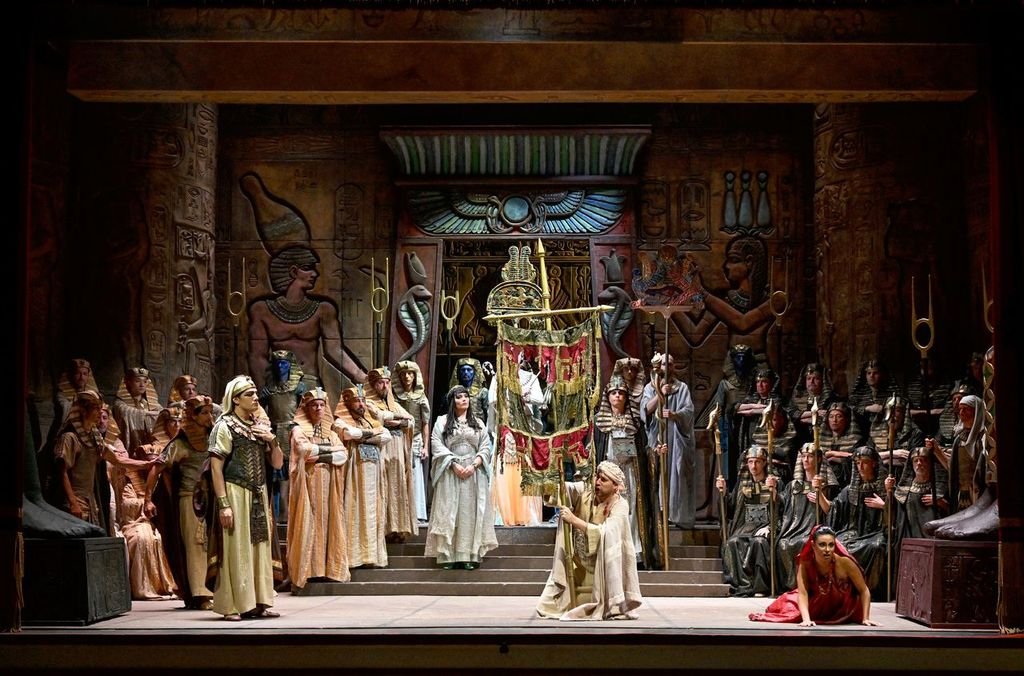
Credits: Roberto Ricci
A Small Theatre, a Giant Verdi: When Busseto Becomes the Centre of the Opera World Franco Zeffirelli’s Aïda, a magnificent cast and a thrilling musical performance make for an unforgettable evening in the heart of Verdi’s homeland.
.
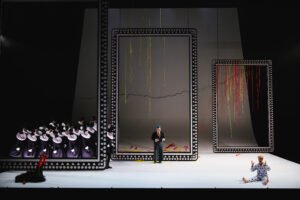
There are opera evenings that remind you why you fell in love with this art form in the first place, and then there are those that make you feel as though you have experienced something truly special, almost outside of time. This performance of Verdi’s Aïda at the Teatro Giuseppe Verdi in Busseto definitely belongs to the second category. Seeing such a monumental work in a theatre this intimate, in Franco Zeffirelli’s production specially adapted to the venue, was already an exciting prospect. But what happened once the curtain went up exceeded my expectations by quite some distance.
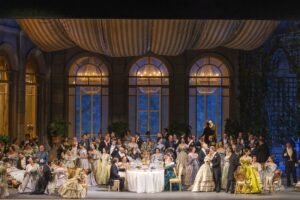
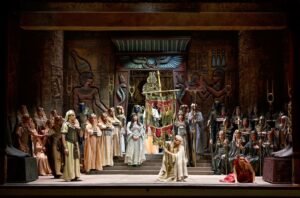
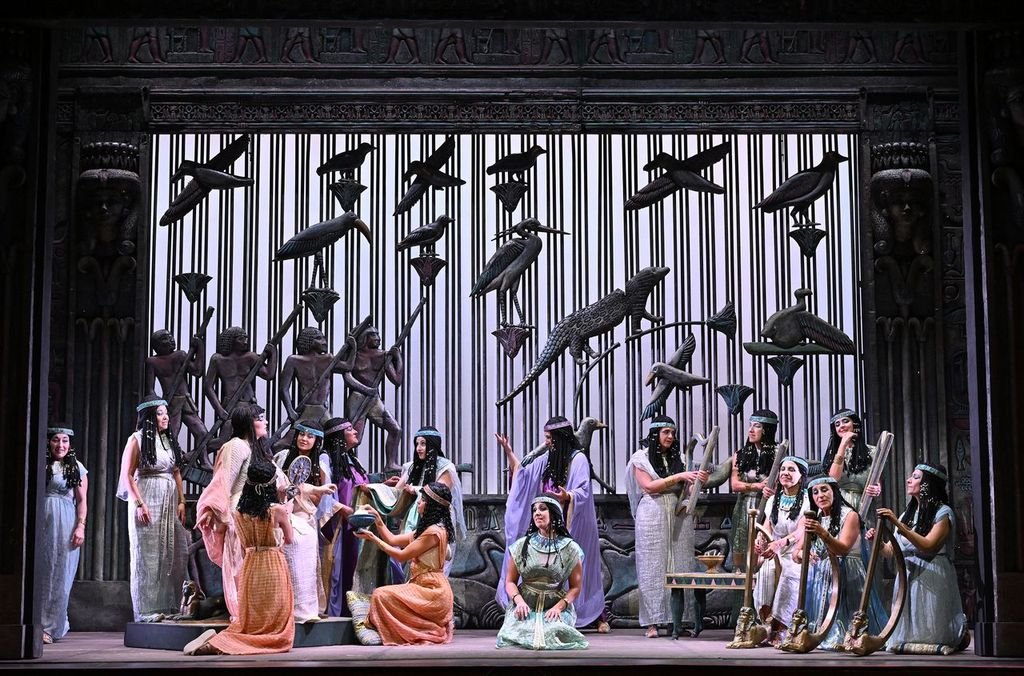
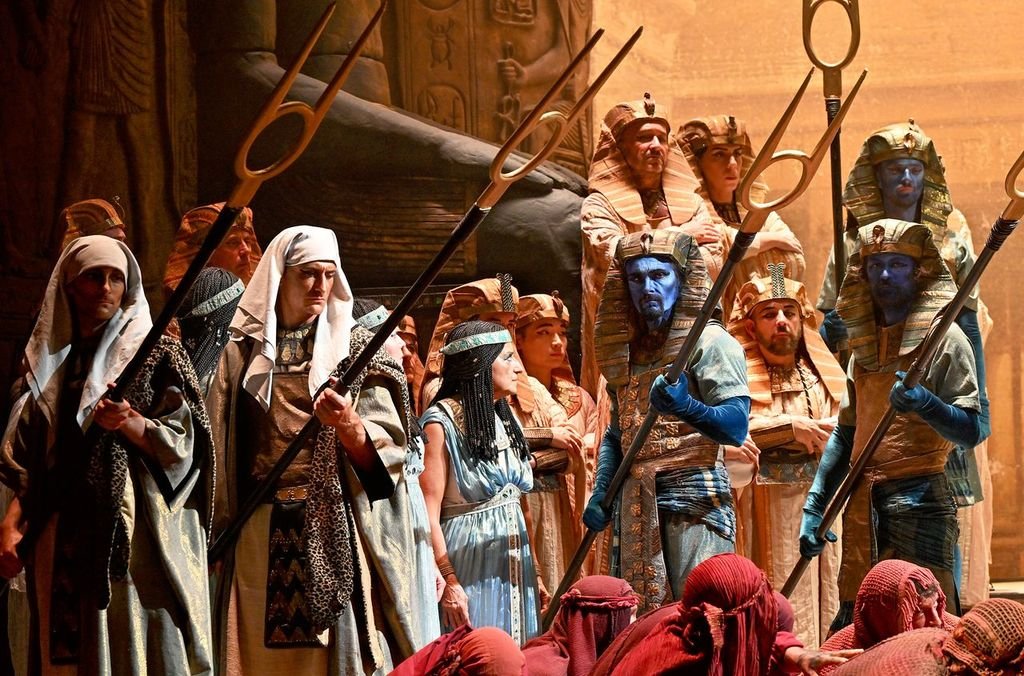
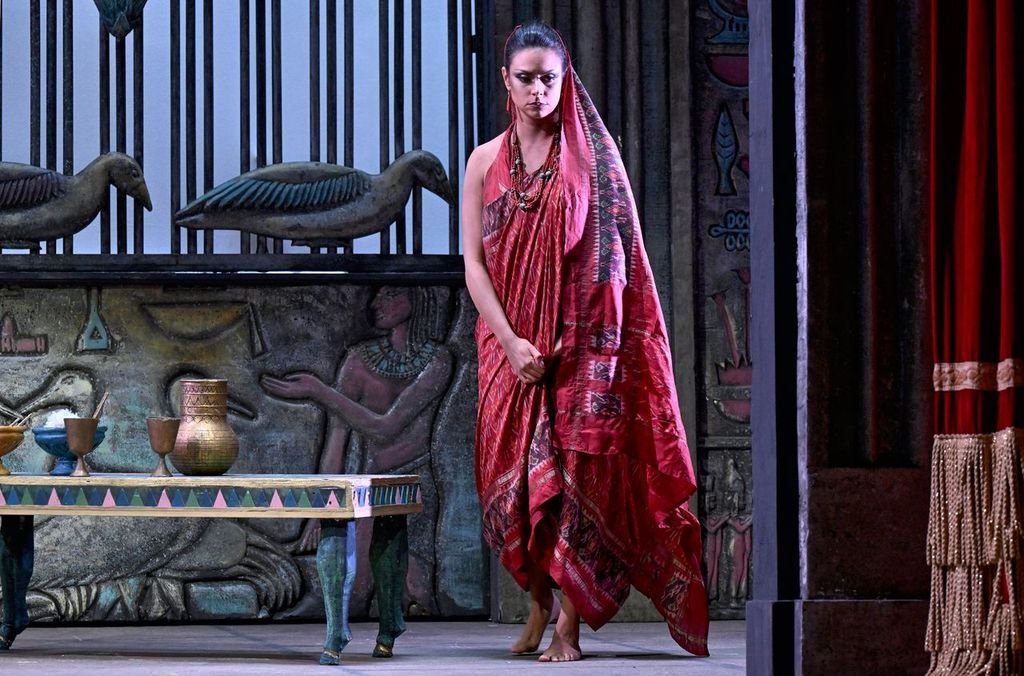
I was sitting in the third row — and I would like to take this opportunity to thank the press team in Parma once again for giving me such a wonderful seat — which meant I was perfectly placed to appreciate every detail. Yet, after just a few minutes, something quite extraordinary happened: I completely forgot how small the theatre actually was. The intimate auditorium surrounding me seemed to disappear, replaced by an ancient Egypt that stretched far beyond the few metres of the stage. At times, I could almost have imagined myself at La Scala or La Fenice, so completely was I drawn into the atmosphere of the production. That is the magic of Franco Zeffirelli’s staging, originally conceived for the centenary of Verdi’s death in 2001 and revived here by Stefano Trespidi: the ability to fit an entire world into such a small space without ever making you feel that anything is missing in terms of scale, grandeur or theatrical impact.
And what a date to experience it! We were there on 9 October, the eve of Giuseppe Verdi’s 213th birthday, celebrated the following day. It is difficult to imagine a better place to feel close to the Maestro and his universe. In Busseto, on the very land so intimately connected with his life and legacy, Aïda took on an entirely different dimension, almost as if the music had naturally returned to the place where it belongs. Add a superb vocal cast, an immersive production and an exceptionally exciting musical direction, and you have all the ingredients for a truly memorable evening.
Vincenzo Costanzo – Radamès
Let me start with Vincenzo Costanzo, whom I absolutely adore and whose talent impressed me all over again when I rediscovered him a few months ago in Turin, in Tosca. He genuinely blew me away there, and I was delighted to see him again in Busseto. I have always had a soft spot for those old-school tenors, the kind with generous voices, a distinctive timbre and that wonderfully direct way of giving everything they have on stage. No half-measures, no unnecessary fuss: just a beautiful, powerful voice and a genuine commitment to the music. And when the man in question happens to be Neapolitan, well, I am probably already halfway won over!
But beyond my personal admiration, Vincenzo delivered a performance of an exceptionally high standard. He immediately set the tone with “Celeste Aida”, which earned prolonged applause from the audience, and maintained that level throughout the evening. His voice had the richness, the warmth and the presence I love so much, while his dramatic commitment made Radamès feel like a living, breathing character rather than simply a great tenor role. By the end, he had genuinely moved me, particularly in the final love duet with Aïda, which was simply wonderful. Some artists are a pleasure to see again; others remind you exactly why you became such a fan in the first place. Vincenzo definitely belongs to the second category. Huge congratulations, and I am already looking forward to seeing you again in Piacenza in December 2026 for Siberia, an opera I have yet to discover and am therefore particularly curious about!
Federica Vitali — Aïda
Opposite him, Federica Vitali was a radiant Aïda. I must confess that I cannot quite remember where I saw her previously — my memory has apparently decided to play tricks on me — but I can certainly say that I will not be forgetting this performance any time soon. She has absolutely stunning high notes, a beautiful stage presence and, above all, a remarkable ability to communicate through her acting. There is something in her eyes, in the way she allows emotions to emerge without ever having to overplay them, that gives her character real depth. Her Aïda was fragile, dignified and deeply moving, and she formed a wonderful partnership with Vincenzo Costanzo. What impressed me most was the combination of vocal brilliance and dramatic sensitivity: she was not simply singing the role beautifully, she was inhabiting it. This was a truly outstanding performance from Federica Vitali, and she was one of the great highlights of the evening.
Teresa Iervolino — Amneris
Teresa Iervolino completed this central trio with a performance full of character and talent. Over the past few months, I have found myself seeing her several times, almost by chance, and I have to say that I am always delighted when our paths cross again. Her Amneris had all the complexity the role demands, moving between jealousy, pride, passion and despair with real conviction. She never felt like a mere rival to Aïda; instead, she stood firmly on her own as a character, with her own contradictions, vulnerabilities and emotional wounds. That is precisely what makes Amneris such a fascinating role when it is done well, and Teresa gave her plenty of personality. Another thoroughly convincing performance from a singer I am always happy to hear again.
Alberto Comes — Ramfis
I also very much enjoyed Alberto Comes as Ramfis, a solid and authoritative presence within this excellent cast. It is not necessarily the role that offers the greatest opportunities for individual development, but it remains an important part of the dramatic and musical architecture of Aïda. Alberto brought the necessary weight and presence to the character, fitting comfortably into the overall balance of the performance. Sometimes there is not much more to say than that someone did their job extremely well, and there is absolutely nothing wrong with that. A very good contribution to an evening in which the leading roles were particularly impressive.
Hae Kang – Amonasro
I do, however, want to spend a little extra time on Hae Kang as Amonasro, because those who read Opera Diary regularly may already know that I have a particular weakness for certain supporting roles that can completely transform a performance in just a few minutes. Amonasro may not be the longest or most obviously spectacular baritone role in Aïda, but for me, he is one of those characters who matter enormously. There is that wonderful scene in Act III, when he meets his daughter and manipulates her into revealing the Egyptians’ military secrets, just before Radamès finds himself trapped. Those few moments, in which an intimate father-daughter relationship becomes entangled with political intrigue and impending tragedy, fascinate me every single time. And once again, I found myself transported somewhere else entirely, completely absorbed by what was happening on stage. Hae Kang brought real impact to this moment, and I wanted to give him a special mention for it. Sometimes, all it takes is a few minutes for a singer to leave a lasting impression, and this was one of those occasions.
Giuseppe Mengoli – Conductor
And then there was Giuseppe Mengoli, whose musical direction deserves an enormous round of applause of its own. I am going to sound repetitive here, but anyone who knows me will know that I love Verdi when he is played with energy, momentum and a tempo that really carries you along. Sometimes I feel as though I could happily ask for another 15% speed on top of what is already happening, without losing a single ounce of dramatic intensity! All right, I am not suggesting that every performance should turn into a Formula One race, but I do love it when the music moves, breathes and pulses, without ever becoming bogged down.
And here, I was absolutely spoiled. Mengoli’s conducting was energetic, sharply paced and wonderfully alive, bringing out the dramatic urgency of Verdi’s score while allowing the music to retain its expressive richness. The Filarmonica Arturo Toscanini played with great flair, and the entire musical performance contributed enormously to the success of the evening. There was a genuine sense of cohesion between the orchestra and the singers, a musical drive that never seemed to fade and that kept the drama moving forward. It was exactly the kind of Verdi conducting I love: vibrant, committed and full of life. In short, I absolutely loved it.
A Weekend Entirely Dedicated to Verdi
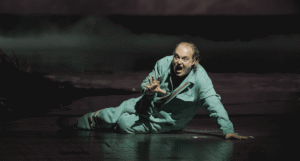
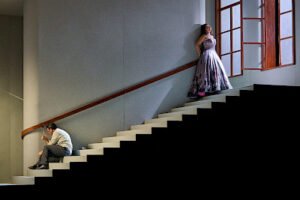
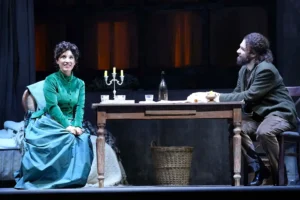
So, am I completely objective? Probably not, and I certainly have no intention of pretending otherwise. But is that really necessary after an evening like this? This particular Verdi weekend had already put me in the best possible mood: Alzirain Parma on Thursday, Aïda in Busseto on Friday, the Gala Verdiano in Parma on Saturday, on the Maestro’s birthday itself, and then Nabucco back in Parma on Sunday. Four performances in four days, four opportunities to experience Verdi from different perspectives, and four moments that gave this trip a very special flavour. When you love a composer, his musical universe and the places that keep his legacy alive as much as I do, how could you possibly leave without a smile on your face?
The Festival Verdi is probably my favourite opera festival. Of course, there is Verdi himself, one of the greatest composers in the history of music, but there is also Parma, Busseto and this entire region where his music is not simply a heritage to be preserved behind glass. It is something that is lived, shared and celebrated. The organisation is excellent, and the programme extends far beyond the performances themselves, with conferences, concerts and all sorts of initiatives dedicated to the composer. You really feel that an entire region is coming together to keep his memory alive. This is not simply a series of opera performances; it is a genuine immersion in Verdi’s world, full of passion, curiosity and generosity.
On Friday, in a shop in Busseto, someone told me that Verdi was simply too great and too important for such a small village. I understand the point, of course, but I actually think that this is precisely what makes the experience so special. Yes, Verdi is enormous. Yes, his music belongs to the entire world. But when Busseto, Parma and the whole of this corner of Emilia-Romagna continue to vibrate to his music, when theatres, streets and cultural venues spend an entire month celebrating his work, I think the Maestro would have every reason to be proud. And honestly, if he could return to us for a weekend and see everything happening in his honour, I reckon he would be seriously impressed. To put it less elegantly, he would be absolutely blown away!
A huge thank you to Teatro Regio di Parma, the Festival Verdi and everyone who makes these experiences possible. Thank you for keeping the Maestro’s memory alive with such passion, and for allowing us, year after year, to discover, rediscover and fall in love with his music all over again.
As for this Aïda in Busseto, it will remain one of those memories that perfectly explain why I continue to travel from theatre to theatre: for those moments when the outside world disappears, when you stop noticing the dimensions of the auditorium, when the music takes over completely and, for a few precious hours, everything simply feels right.
About the Author