INTERVIEW | Vincenzo Costanzo
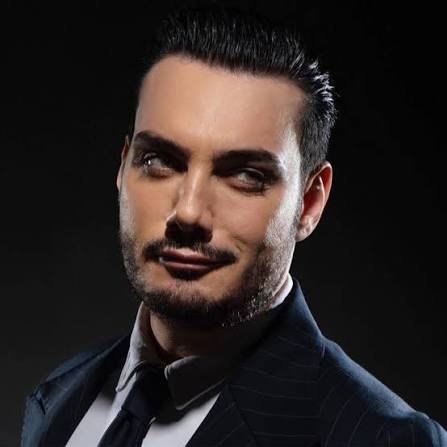
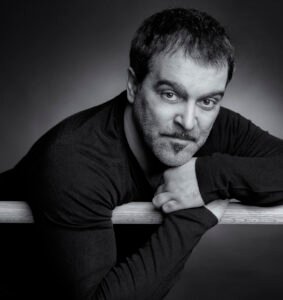
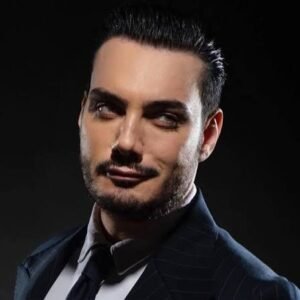
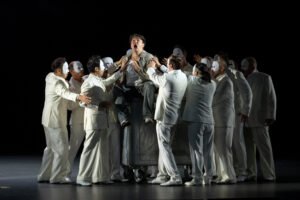
I remember a June evening, it was warm, when I went to see the second performance of Tosca at the Teatro Regio in Turin. At the time, I didn’t yet know Vincenzo Costanzo, who was singing the roleof Cavaradossi. Following a few exchanges on Instagram and a glass of champagne after the show with Vincenzo and Stefano Poda, I found myself developing a genuine admiration for this passionate, and truly captivating, singer.
Geoffrey Grand: You have performed in many major opera houses. In your opinion, is it easier to sing at La Fenice, in such a large theatre, or in asmall venue like the theatre in Busseto?
Vincenzo Costanzo: Every theatre has its own acoustic identity, which is not necessarily related to its size. I have been singing professionally since the age of seventeen and have had the privilege of performing in some of the world’s most prestigious opera houses, from the San Francisco Opera House to the Bolshoi Theatre in Moscow, from the Teatro Real in Madrid to the Berlin State Opera, as well as in more intimate venues such as the Teatro Verdi in Busseto. I believe that the difficulty lies not so much in a theatre’s seating capacity asin its architectural characteristics and the resulting acoustic response. In this particular case, Busseto presents a particularly challenging acoustic environmentfor a singer. It is a small theatre, yet its sound is rather dry, offering the voice none of the natural amplification that a performer may benefit from elsewhere. La Fenice, by contrast, has a generous and enveloping acoustic. However, this generosity extends to both the voices and the orchestra. It is therefore essential that the conductor skilfully manages the sonic relationship between the orchestra pit and the stage. Without the right balance, there is a risk that the orchestral sound may overpowerthe voice. Ultimately, I believe that every theatre requires a different ability to adapt onthe part of the singer. It is not a question of size, but of knowledge, sensitivity and an awareness of acoustics.
Geoffrey Grand: What, in your opinion, is the quintessential tenor role, the most importantone you have already performed or dream of performing?
Vincenzo Costanzo: I do not believe there is a tenor role that can be defined, in absolute terms, as the most important. Rather, there are roles that naturally lendthemselves to certain vocal, temperamental and interpretative characteristics. Not every voice can tackle every repertoire indiscriminately. To believe that everyonecan sing everything is, in my view, to deny the very principle of vocal identity. The voice is not an instrument to be bent indiscriminately to suit the ambitions of the moment, but a precious asset to be understood, respected and preserved. Throughout my career, I have found the character of Calaf to be particularly wellsuited to me, a role in which I have been able to recognise myself both vocally and interpretatively. As for the dream I hold close to my heart, it is to make my debut as Otello one day.I consider it one of the absolute pinnacles of the tenor repertoire: a role that requires not only a certain vocal strength, but also an artistic and human maturity capable of conveying the full psychological complexity of such an extraordinary character.
Geoffrey Grand: In your opinion, what is still missing today for opera to become even more widely known and appreciated than it already is?
Vincenzo Costanzo: Opera is one of the most extraordinary expressions of Italy’s intangible cultural heritage. It was born in Italy and, over the centuries, has managedto survive profound social, cultural and technological transformations. Today, we live in a society characterised by speed, constant demands on our attentionand an almost inexhaustible supply of entertainment. In such a context, it is inevitable that audiences’ relationship with opera requires a different approach from that of the past, when opportunities for leisure and entertainment were certainly fewer. Nevertheless, I believe we should not necessarily chase the present by distortingwho we are and what we have been. In my view, one of the things currently missing, if we want audiences to leave the theatre genuinely moved, is greater artistic freedom for performers. I am referring to the freedom to interpret an opera without necessarily having tosubmit to preconceived interpretations or directorial impositions which, at times, risk overshadowing the score rather than engaging in a dialogue with it. I certainly do not intend to deny the value of research, innovation or new interpretativeapproaches. However, I believe that modernity should not become a dogma, just as tradition should not turn into a constraint. Opera is already extraordinarily modern in its very essence, because it speaks ofhumanity, of our passions, contradictions and deepest emotions. It does not need to be constantly justified through layers of conceptual frameworks that sometimes risk distancing it from its true nature. When an artist is free to express themselves, they can give themselves completely.And when that happens, the audience senses it, even when experiencing opera for the very first time. I believe it is precisely through this authenticity that we can build an even deeper relationship between the theatre and its audience.
Geoffrey Grand: You performed Aida in Busseto for the Verdi Festival. What is your fondest memory of that festival?
Vincenzo Costanzo: Without a doubt, my fondest memory is the warmth and human kindness I received from that region and its audiences. The affection and enthusiasm withwhich I was welcomed at the end of each performance meant a great deal to me. I also cherish the joy of reconnecting with friends and sharing those moments withthem after the performances, when the emotions of the stage give way to the more genuine dimension of human relationships. Ultimately, theatre is also about this: not only what happens during a performance,but the whole range of relationships, encounters and emotions it manages to create. And it is often precisely this human dimension that makes an artistic experience truly unforgettable.
Geoffrey Grand: You have a voice with an almost old-world quality, a beautiful, pure tenor voice, and on top of that, you are Neapolitan. What do you feel youare still missing today, both artistically and professionally?
Vincenzo Costanzo: First of all, I would like to thank you for your kind words and for the attention with which you have described my voice. I believe that an artist’s journey, both vocally and in terms of personal and innerdevelopment, is a constantly evolving process. Growth does not end with study, technique or stage experience; it is inevitably nourished by everything that happens in everyday life as well. Every experience can enrich us or diminish us. It is up to us to develop the abilityto transform what we go through into a means of greater awareness and personal growth. I would not be entirely sincere if I simply listed the things I still lack, followinga sort of ritual of modesty that often accompanies questions of this kind. What I can tell you is that, at this particular moment in my life, I feel I have reachedan important sense of balance. I feel that I am where I am meant to be, at the right point of equilibrium, both artistically and personally. This does not mean that I have stopped dreaming, striving for more or looking towardsthe future with curiosity. Rather, it means that I have learned to recognise the value of my own journey and to understand that an artist’s fulfilment does not necessarily lie in reaching every single milestone, but also in being aware of the person one has become. And I can assure you that finding this balance has required years of hard work, sacrificeand, above all, a long journey of inner growth.
Geoffrey Grand: If you could make your dream come true tomorrow and stage whichever opera you wished, with an ideal cast made up of today’s singers, which operawould you choose and who would you want by your side?
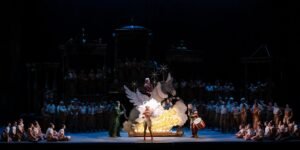
Vincenzo Costanzo: In fact, I feel that I am already living a dream: making my debut as Loris Ipanovat La Fenice in Venice, surrounded by wonderful colleagues and artists such as Maria Agresta, Simone Piazzola and Ekaterina Bakanova, under the baton of Donato Renzetti and with Hugo De Ana directing. I am a fortunate man. My thanks to Opera Diary for this wonderful interview, and warm greetings to all itsreaders.
About the Author