VANESSA | Spoleto Festival
It is one of Italy’s finest festivals, founded in 1958 by the brave vision of Gian Carlo Menotti, an Italian-born American composer, with the aim of uniting European and American culture in a global artistic vision that transformed Spoleto into one of the world’s avant-garde capitals. For two weeks, the small Umbrian town is transformed into a vast stage where music, dance, cinema, and visual art coexist. We are in the most beautiful and authentic Italy, far from the vulgarity of overtourism, where you can admire Renaissance masterpieces and elegantly savour truffles and fine wines.
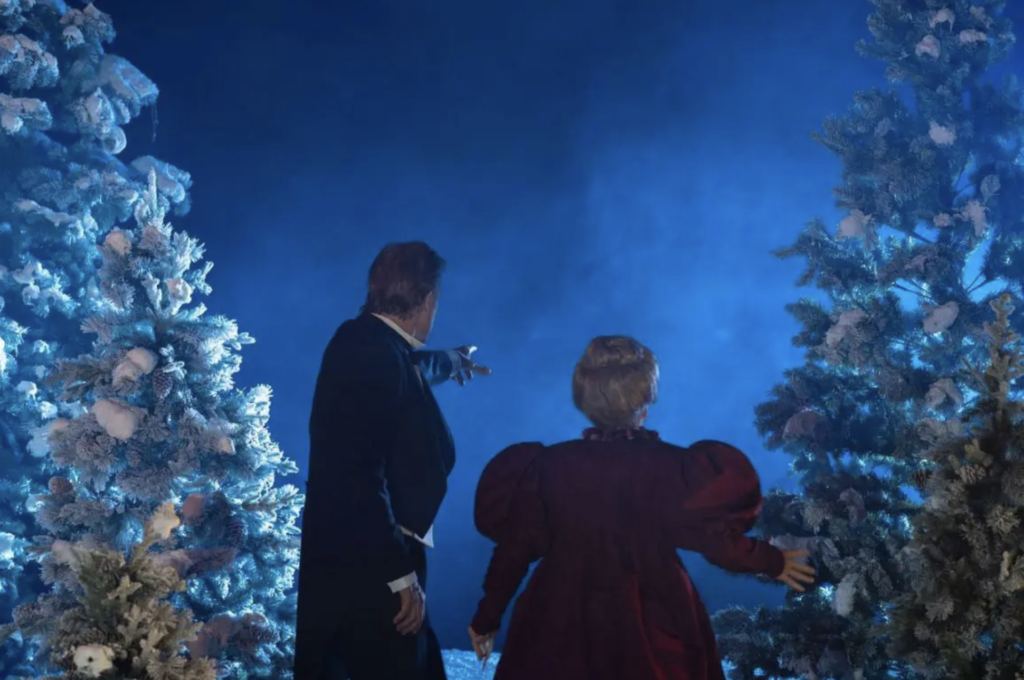
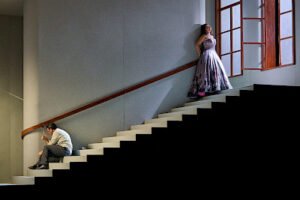
If there’s one opera that perfectly embodies the spirit of Spoleto, it’s Vanessa, written by American composer Samuel Barber to a libretto of Gian Carlo Menotti based on Karen Blixen’s “Seven Gothic Tales.” The opera, apparently conceived for Maria Callas’s voice, premiered in 1958 at the Metropolitan Opera in New York, conducted by Dimitri Mitropoulos and featuring a prodigious cast including Eleonor Steber, Nicolai Gedda, Rosalind Elias, and Regina Resnik. The first European performance was in Spoleto in 1961, performed in Italian. The opera explores the conflicts and emotional tensions of three women who live in a remote mansion in an unspecified northern town. Vanessa has been waiting 20 years for the return of her old lover Anatol, and 20 years later his son, also named Anatol, arrives. Anatol seduces Erika, Vanessa’s niece, with Vanessa herself obsessively attracted to the young opportunist, all under the watchful eye of her mother, the elderly Baroness. Erika, after giving up the child she’s carrying, decides to abandon Anatol and leave him with Vanessa, in a destructive game of obsession and loneliness.
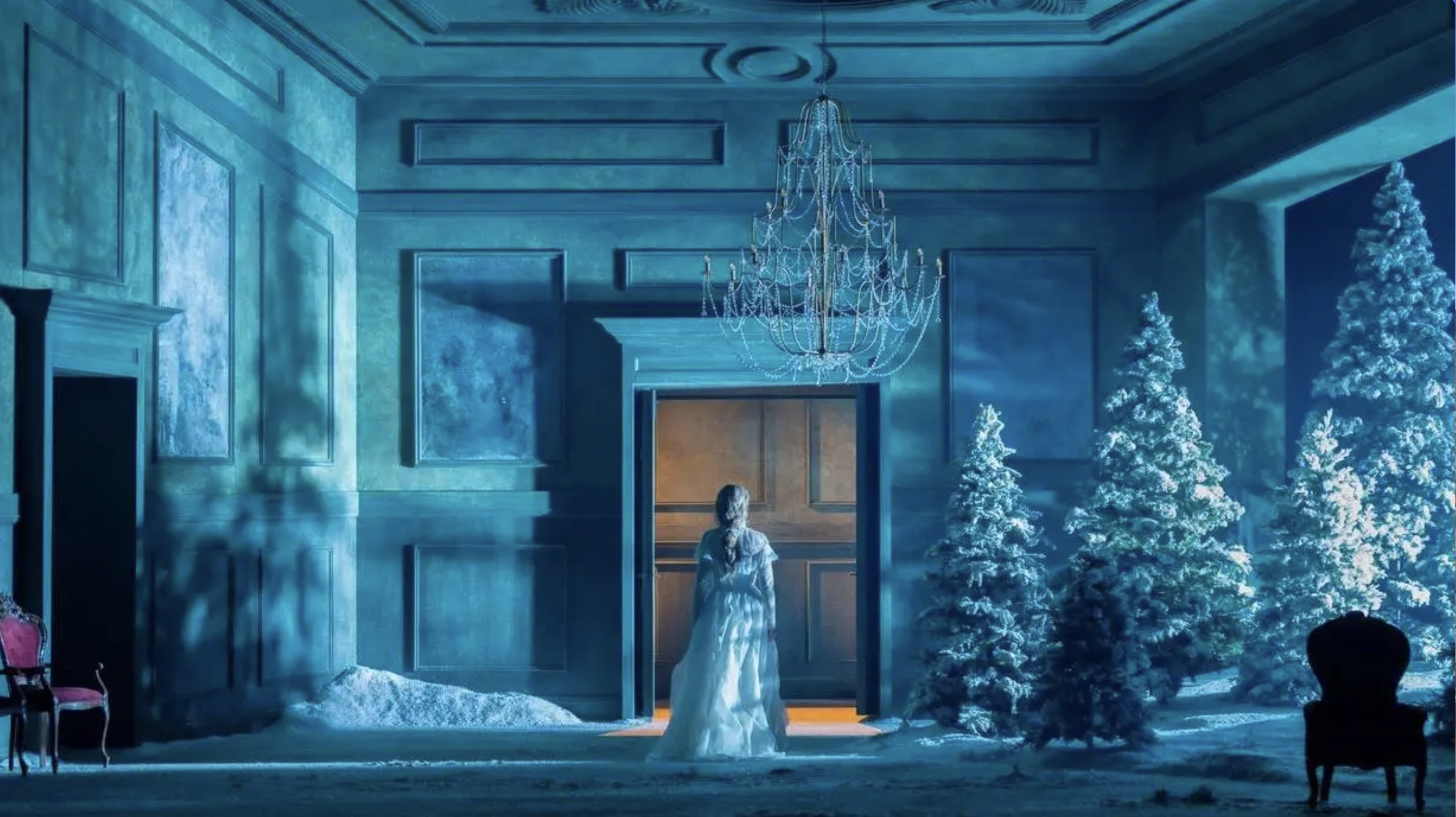
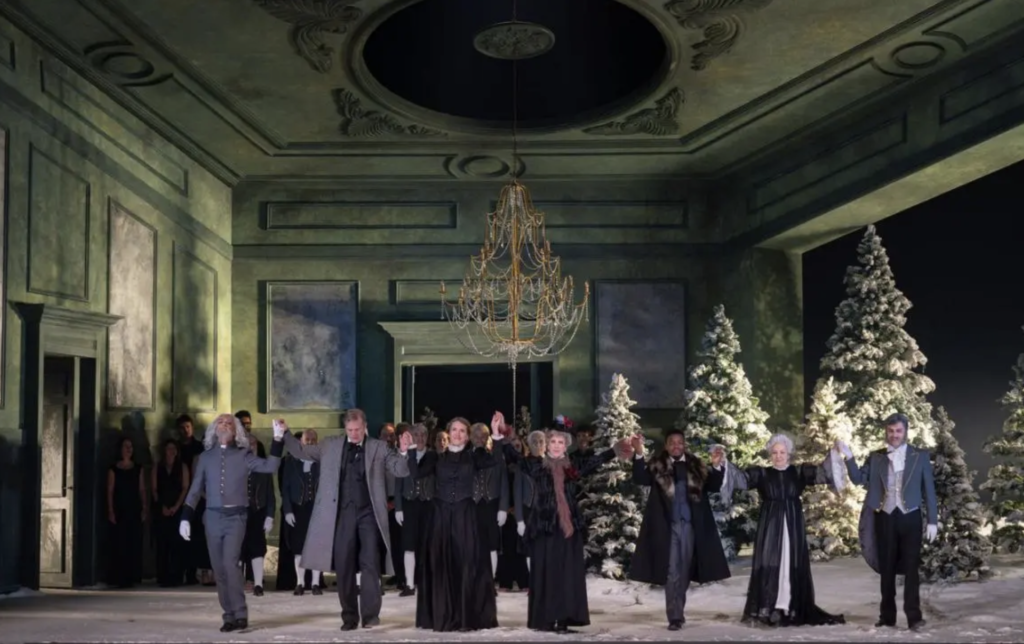
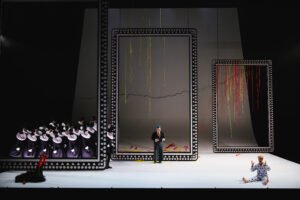
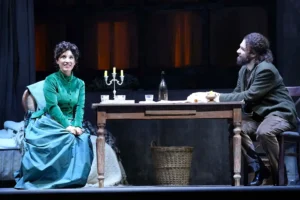
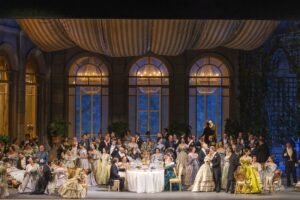
Director Leo Muscato creates a production that is both elegant and theatrically effective, with an extraordinary play of lighting that captures the atmosphere and the protagonists’ drama. The set piece depicts a bourgeois salon that opens onto a winter garden, conveying the Gothic atmosphere and the turbid psychological family triangle. Faithful to the libretto—and it couldn’t be otherwise, given the spirit of Menotti that still lingers in the theater—Muscato builds the production around the house’s mirrors, covered for twenty years, which, even when uncovered, return only blurred images distorted by the illusions and regrets of the three women.
The musical result is also of the highest caliber. South Korean conductor Sora Elizabeth Lee is superb in acknowledging Barber’s debt to European music, with its echoes of Puccini, Strauss, Janacek, and even Mahler. At the same time, she highlights all the innovative elements of this first American opera, which embraces and celebrates the prosody and rhythm of the English language and recalls the great soundtracks of 1950s American films and Broadway musicals. Lee confidently leads the excellent Bologna Comunale Orchestra through the score’s many lyrical outbursts and more dramatic moments, enhancing the expressive tension of the dissonances and wind solos.
In the best Spoleto tradition, the Festival has assembled an international cast of highly talented young singers, capable of conveying all the beauty and theatrical power of an opera that has, unfortunately, been too rarely performed.
In the role of Vanessa, Australian soprano Lauren Fagan emerges, portraying a proud and, at the same time, almost delusional Vanessa in her obsession with Anatol. Her timbre is beautiful and expressive, and Fagan handles it with great technical prowess in all registers, confidently mastering the sudden ascents to the many high Bs and Cs that characterize the part. At the same time, Fagan excels in managing the protagonist’s many dynamic tones with an evocative and confident use of pianissimo and a great temperament in the lower mid-range of the declamations.
American mezzo-soprano Kayleigh Decker‘s Erika will long be remembered for her vocal and stage performance of the opera’s true dramatic engine. Her beautiful lyric mezzo-soprano timbre adapts very effectively to Barber’s vocal writing, displaying exemplary legato and perfect breath control and sweeping melodic arcs. Decker is phenomenal in perfectly delineating Erika’s psychological evolution, from the lyricism of the famous “must the winter come so soon” to the dramatic duets with Anatol and the Baroness, all the way to the resignation and pride of the dramatic finale. The variations in timbre and color are perfectly reflected in her acting and stage gestures, which enhance her beautiful presence on the scene.
As Anatol, we find South African tenor Lulama Taifasi, who confidently and technically masters a challenging role conceived for Nicolai Gedda’s stratospheric vocal talent. Taifasi has a clear, brilliant timbre that perfectly complements the character’s youthful charm and boldness; his numerous high notes are always luminous and never strained, and his English diction effectively conveys the seducer’s cynicism and insolence. Even in duets, Taifasi’s voice blends effectively with the female voices of the protagonists, remaining captivating and seductive even in moments of great dramatic tension.
As Baroness, we find German contralto Helene Schneiderman; her deep, imperious timbre provides a fitting contrast to the more luminous timbres of Vanessa and Erika. The singer stands out with her sculpted declamation and a stage presence that dominates the stage with her silences.
American baritone Rod Gilfry brings his extensive experience as a singer and actor to the role of the old doctor. Gilfry is phenomenal in his Broadway-style rendition of “Under the Willow Tree,” yet he also manages to find melancholy and evocative accents in the opera’s finale.
Also noteworthy are the excellent vocal and stage performances of Nicolò Lauteri as the Butler and Mattia Ribba as the footman.
As mentioned, the Bologna Teatro Comunale Orchestra gave an excellent performance and perfect mastery of Barber’s music; the Chorus, directed by Mauro Presazzi, also performed admirably.
The Teatro Nuovo Gian Carlo Menotti, packed with an elegant international audience, gave this beautiful performance a well-deserved triumph, with peaks of enthusiasm for Decker and Lee; luckily this production will be revived next season at the renovated Teatro Comunale di Bologna.
***************************
CAST
Vanessa: Lauren Fagan
Erika: Kayleigh Decker
The Baroness: Helene Schneiderman
Anatol: Lulama Taifasi
The old doctor: Rod Gilfry
The butler: Nicolò Lauteri
The footman: Mattia Ribba
Conductor: Sora Elisabeth Lee
assistant conductor: Elias Peter Brown
Stage direction: Leo Muscato
sets: Andrea Belli
costumes: Margherita Baldoni
lights: Alessandro Verazzi
choreography: Simona Bucci
Orchestra del Teatro Comunale di Bologna
Coro del Teatro Lirico Sperimentale di Spoleto
Chorus Master: Mauro Presazzi
About the Author



Una recensione perfetta , meravigliosa per tutte le sfumature colte . Bravo Michele
Spoleto e’ sempre Spoleto