DIE ZAUBERFLÖTE | Opernhaus Zürich
©Herwig Prammer
When We Know the Dream but Not Where It Will Take Us: Can an opera we know by heart still enchant us, and what remains of its magic when we wake?
There was a time when Die Zauberflöte represented much of what first attracted me to opera. I suspect I am far from alone. For many of us, Mozart’s fairy tale is one of the first doors into opera, sometimes encountered as children, long before we know much about it at all. There is a prince, a princess, a frightening Queen, a magic flute, a funny bird catcher and music that seems immediately familiar. Over the years, my own tastes have moved towards darker and more dramatic operas, particularly verismo and Wagner. Coming back to Die Zauberflöte today is therefore different. We know the Queen of the Night will unleash her coloratura, Papageno will ring his bells, and fire and water are waiting for Tamino and Pamina. The question is no longer what happens next, but whether something so familiar can still surprise us.
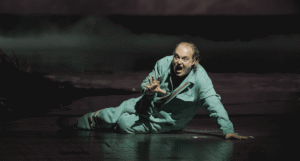
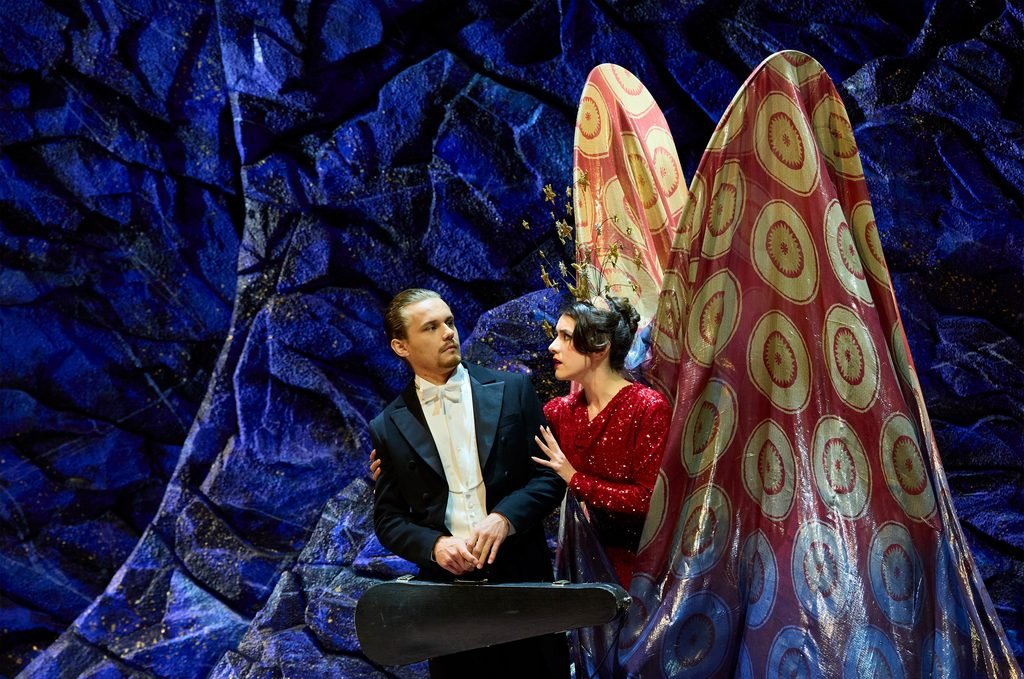
Daniele Finzi Pasca’s new production, opening the 2026/27 season at Opernhaus Zürich, does not try to make the strange world of Die Zauberflöte more logical. Instead, it asks us to dream with it. The entire overture takes place with the curtain closed. Towards its end, a violinist suddenly appears in front of it. He seems to have arrived late, too late to join the orchestra. This musician from our world is Tamino. Instead of entering the pit, he is about to be pulled into Mozart’s fairy tale and handed another instrument, the magic flute. Only when the overture is over does the curtain finally open and reality disappear. The stage is flooded in vivid blue and a huge serpent moves around Tamino. It is beautiful, dynamic and immediately hypnotic.
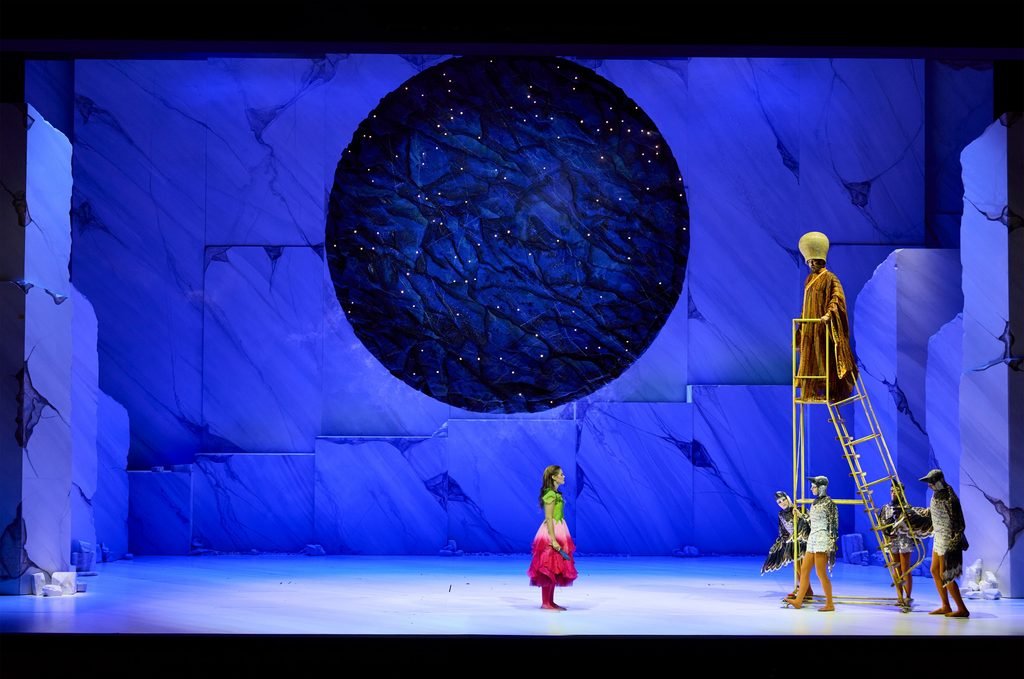
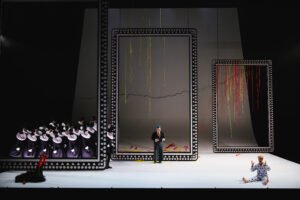
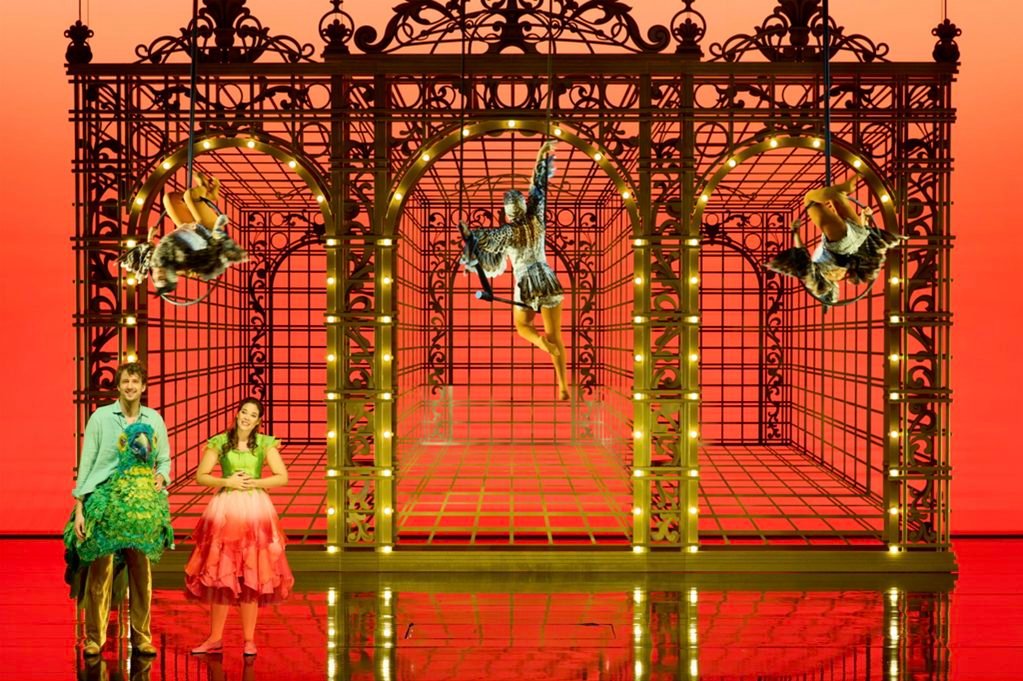
From there, the production becomes a succession of tableaux. Birds, acrobats, trapezes, projections, moving scenery, real fire and vivid colours constantly transform the stage. Finzi Pasca uses its full height and depth, often with performers suspended above the action. Light becomes almost another performer, changing the space and sometimes descending physically towards the characters. Finzi Pasca describes this as the dream logic of the opera, a world of sudden changes in which we can move from one place to another without wondering how we got there. His aim is to create wonder. That is how the production feels. Scenes appear, dissolve and give way to something completely different, like pieces of a puzzle that do not necessarily fit in an obvious way, yet somehow belong to the same picture. At first, all the bright colours, acrobats and constant movement made me wonder whether the production was becoming a little too much like a children’s show. But once inside this world, I stopped resisting it. Dreams are allowed to be messy. The audience laughed, the comedy worked, and what initially felt almost too close to a circus gradually became part of the production’s language.
Dreams are allowed to be messy. The audience laughed, the comedy worked, and what initially felt almost too close to a circus gradually became part of the production’s language.
That abundance comes at a price. With so much happening on stage, there were moments when I almost forgot to listen. More importantly, the production is better at creating images than developing characters. I was enchanted by the world, but I did not always feel much for the people living inside it. The Queen of the Night is perhaps the clearest example. Jasmin Delfs certainly has the voice for the role. Her first aria already showed how comfortable she is in this music, and Der Hölle Rache confirmed it, with excellent coloratura, secure high notes and a remarkable sense of ease. Yet the character around that voice felt surprisingly small. In a production capable of sending bodies flying through the air, the Queen simply rises through an opening in the centre of the stage. Her entrances never gave her the mystical force I expected, and even her final defeat passed almost unnoticed. She was neither explored deeply enough as a mother nor made spectacular enough as a fairy tale villain. Delfs’s singing deserved a Queen as striking as the world around her.
Regula Mühlemann’s Pamina gradually revealed more of her emotional journey as the evening progressed. Ach, ich fühl’s was sensitively sung, if somewhat restrained for my taste. Later, as Pamina contemplated suicide, the character came into much sharper focus. There was greater urgency and conviction, and her exchange with the excellent Three Boys became one of the moments when I felt closest to her Pamina. Magnus Dietrich, by contrast, seemed to grow with Tamino. His singing became more assured as the evening progressed, with greater freedom and expression bringing out the attractive colour of his voice. It suited Finzi Pasca’s framing of Tamino beautifully: an ordinary musician suddenly drawn into this strange world and gradually finding his place within it.
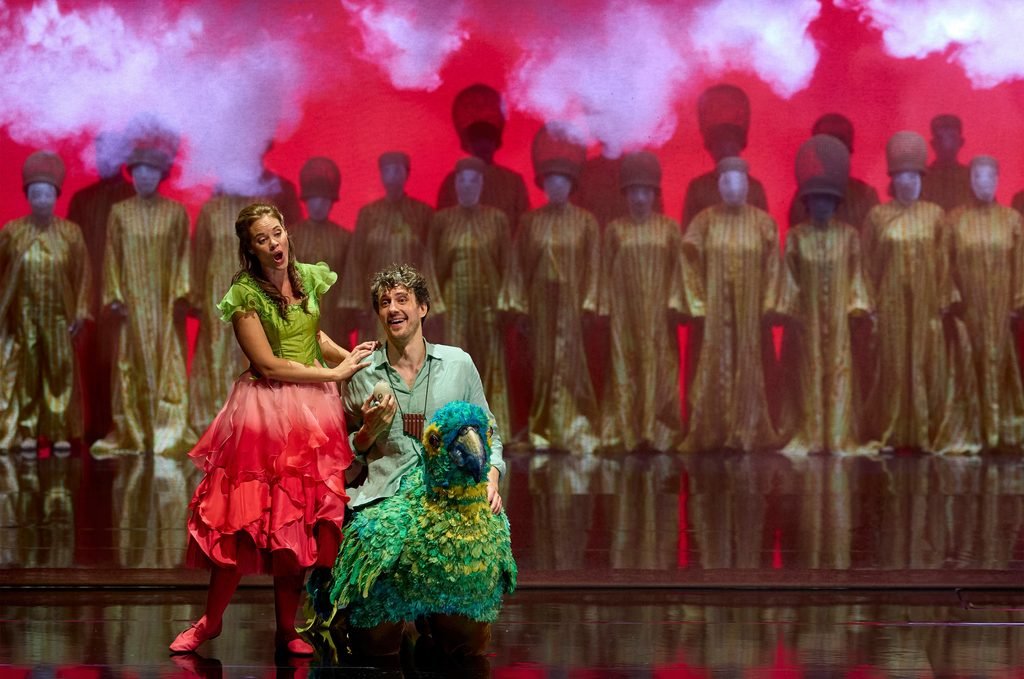
The person who seemed most completely at home there was Yannick Debus. His Papageno was probably the highlight of the evening, combining excellent singing, great comic timing and effortless stage presence. He was ridiculous at exactly the right level, slightly clownish without becoming merely a circus act. Most importantly, he felt human. Finzi Pasca sees Papageno as a kind of Sancho Panza, someone who does not need Tamino’s search for enlightenment to find happiness. Debus captured that simplicity naturally. His chemistry with Mariam Suleiman’s Papagena was equally convincing, from her old woman disguise and altered voice to the charming transformation from a crow to a swan.
The person who seemed most completely at home there was Yannick Debus. His Papageno was probably the highlight of the evening, combining excellent singing, great comic timing and effortless stage presence.
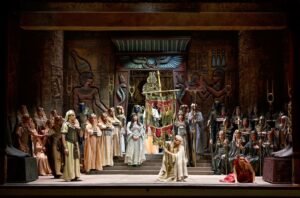
Tobias Kehrer gave Sarastro authority, warmth, paternalism and just enough menace to complicate the traditional image of the wise ruler. Sarastro’s world is built from white marble, solid and bright, while the exaggerated costumes of his male court add an almost phallic comedy to all this masculine authority. Finzi Pasca clearly plays with their patriarchal world, its rituals and its seriousness. Yet despite the irony, the traditional division between Sarastro and the Queen of the Night never really disappeared. Sarastro’s authority may be mocked and questioned, but he still represents wisdom and order while the Queen remains the threatening force. Kehrer nevertheless gave Sarastro an interesting mix of warmth, authority and menace.
The Three Ladies, Hannah McKay, Karima El Demerdasch and Dominika Stefańska, made an elegant trio, vocally and theatrically, bringing both poise and humour to their appearances. The Three Boys were particularly impressive, combining remarkable clarity and control with a playful presence that made them feel like genuine inhabitants of this strange world. Andrew Moore’s Speaker immediately commanded attention. There was a calm authority to his performance that changed the atmosphere of the scene. In an evening filled with movement, colour and spectacle, he needed very little to hold our attention. His encounter with Tamino became a moment of stillness in which the words suddenly mattered, giving the Speaker a real sense of importance within Sarastro’s world. Nathan Haller’s Monostatos attacked the role with tremendous physical energy and an almost restless comic intensity, made even more striking by his illuminated costume. The Zurich Opera Chorus completed the larger scenes beautifully, fully part of Finzi Pasca’s theatrical world without ever disappearing into it.
In the pit, Tarmo Peltokoski chose a deliberately historical palette, including historical horns, trumpets and timpani. The winds brought beautiful colours, while the glockenspiel fitted naturally into the dream unfolding on stage. My main reservation concerned the pacing of certain passages. The opening felt unusually slow to me, and later some phrases seemed stretched beyond their natural flow, particularly in Sarastro’s music and the Speaker’s scene. A slower tempo can create space, tension or mystery. Here, I did not always feel that it added enough in return, especially when the stage itself was so full of movement.
Andrew Moore’s Speaker immediately commanded attention. There was a calm authority to his performance that changed the atmosphere of the scene.
One of the most beautiful scenes was also one of the simplest. During the trials of fire and water, Tamino and Pamina remained to the side while dancers doubling for them moved behind a transparent curtain through projected elements. After so much colour and movement, everything suddenly felt softer, calmer and more focused. The magic was still there, but it finally had room to breathe. By the end, I realised I could not choose one image that defined the evening. What remained was the collection: the blue serpent, the birds, bodies floating through the air, marble, fire, water, light, a crow becoming a swan. Perhaps that is the most honest response to Finzi Pasca’s idea. We rarely remember a dream as a coherent story. We remember fragments.
As the finale approaches, the characters almost seem to arrange themselves for the curtain call. Reality is already knocking. On the final note, the curtain falls and Tamino appears once again in front of it. The prince has disappeared. He is the violinist from the beginning, back in our world, as if he has just woken up. Then Papageno catches him and pulls him behind the curtain again. That simple gesture may contain more magic than all the acrobatics. Tamino was never only a distant fairy tale prince. He was one of the musicians, someone from our world who happened to fall into Mozart’s. For a few hours, he was allowed to dream. Why shouldn’t we?
There is another truth about dreams, though. However vivid they are while we are inside them, parts begin to disappear almost as soon as we wake. I left this Die Zauberflöte enchanted, but not always deeply moved. Finzi Pasca gives us so many memorable images that there is not always enough room for the characters and their relationships to develop. The dream is often more vivid than the human story inside it. Still, an opera I thought I knew took me somewhere unexpected. The dream may not have stayed with me equally in all its details, but for a few hours I believed in it. Perhaps that is enough. Magic does not have to be new for us to fall under its spell again.
Sometimes we simply need someone to pull us back inside.
About the Author