TOSCA | Teatro Regio Torino
There are operas you love.
There are operas you could happily watch every season.
And then there is Tosca.
Tosca is one of those rare masterpieces that I honestly believe I could watch almost every week without ever getting bored. Three acts, no wasted time, one unforgettable melody after another, some of the greatest characters ever written for the opera stage, and enough drama to keep you on the edge of your seat from the first note to the last.
This past weekend, I had the chance to see Tosca twice at the Teatro Regio di Torino: opening night on Friday and the second performance on Saturday.
And while both evenings were enjoyable, I have to admit that it was the second cast that completely won me over.
Before talking about the performance itself, I have to say once again how much the Teatro Regio has become one of my favourite theatres in Europe.
Living in Lausanne means Turin is only a few hours away by train or car, and this season alone I must have visited the Regio close to ten times already. Every visit feels special. The theatre is beautiful, the sightlines are excellent, the atmosphere is welcoming, and the entire team always makes visitors feel at home.
A special thank you, once again, to Sara from the communications department, who is always incredibly kind, helpful and responsive. After finally having the chance to meet her in person, I can confirm she is just as friendly in real life as she is by email.
Now the season is over, and I already know the wait until Cavalleria Rusticana and Pagliacci next autumn is going to feel very long.
But what a way to close the season.
One of the great joys of seeing two performances back-to-back is discovering just how much a cast can change your perception of the same production.
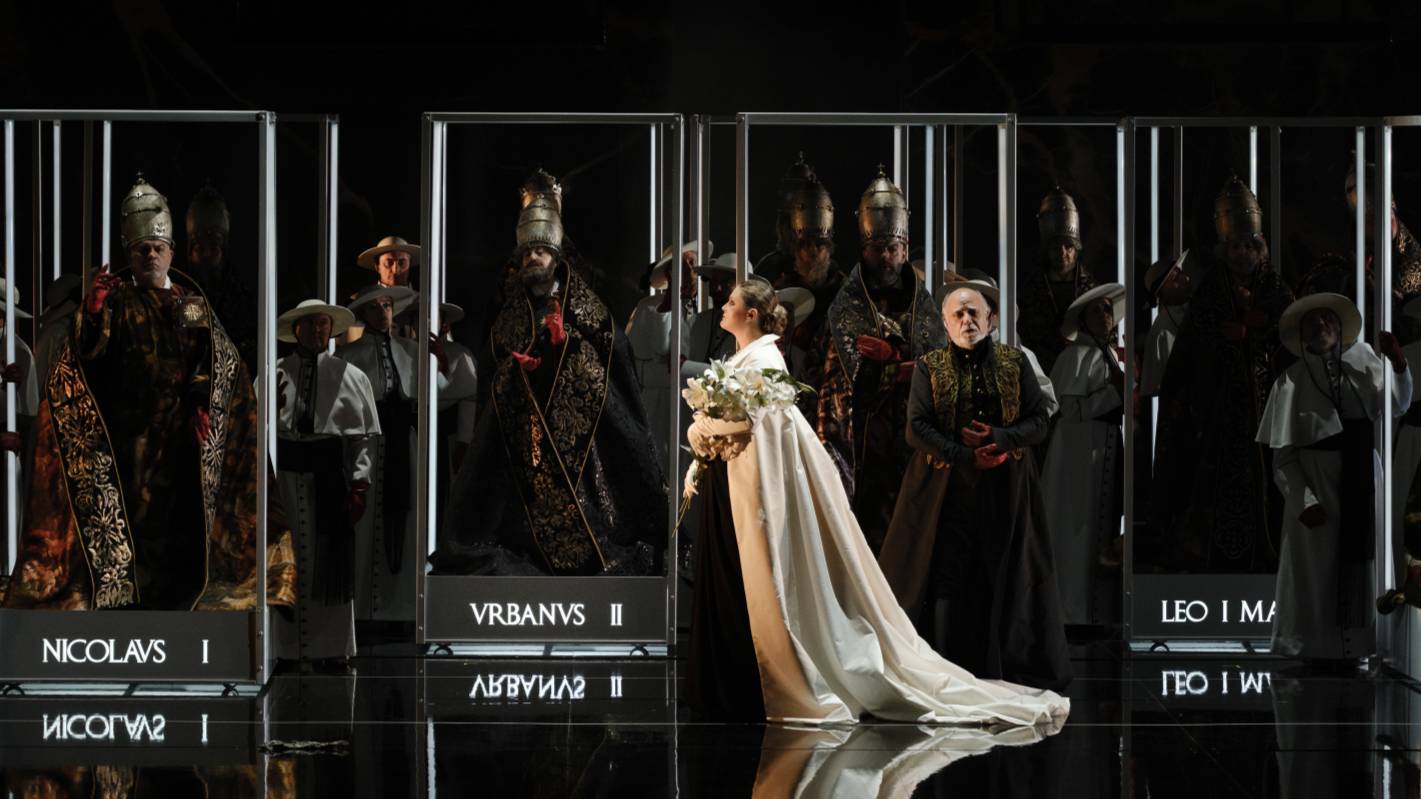
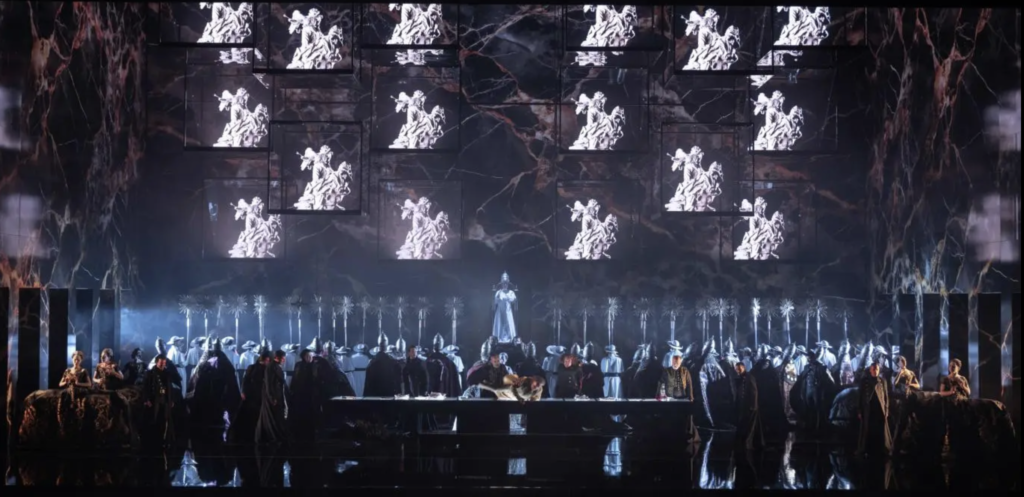
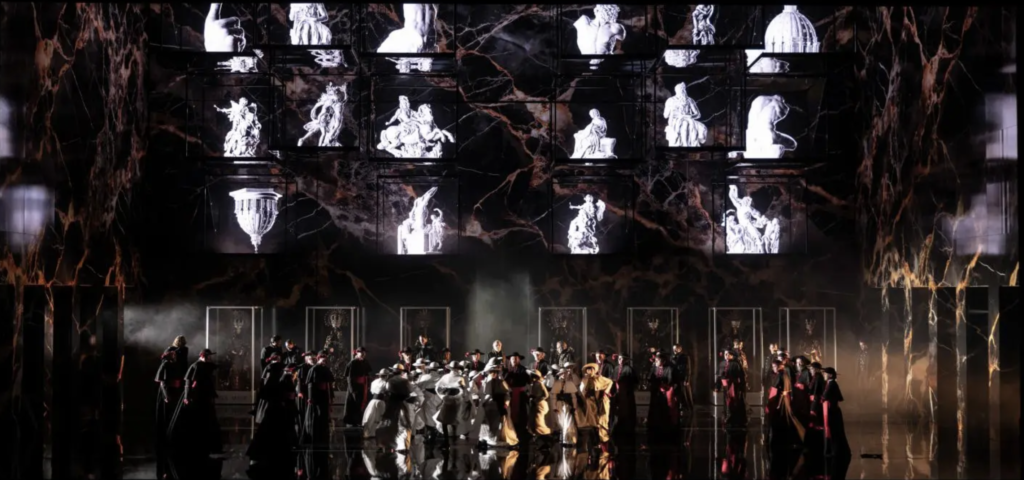
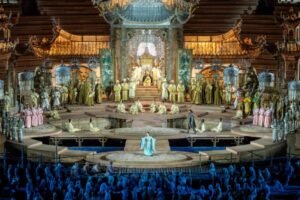
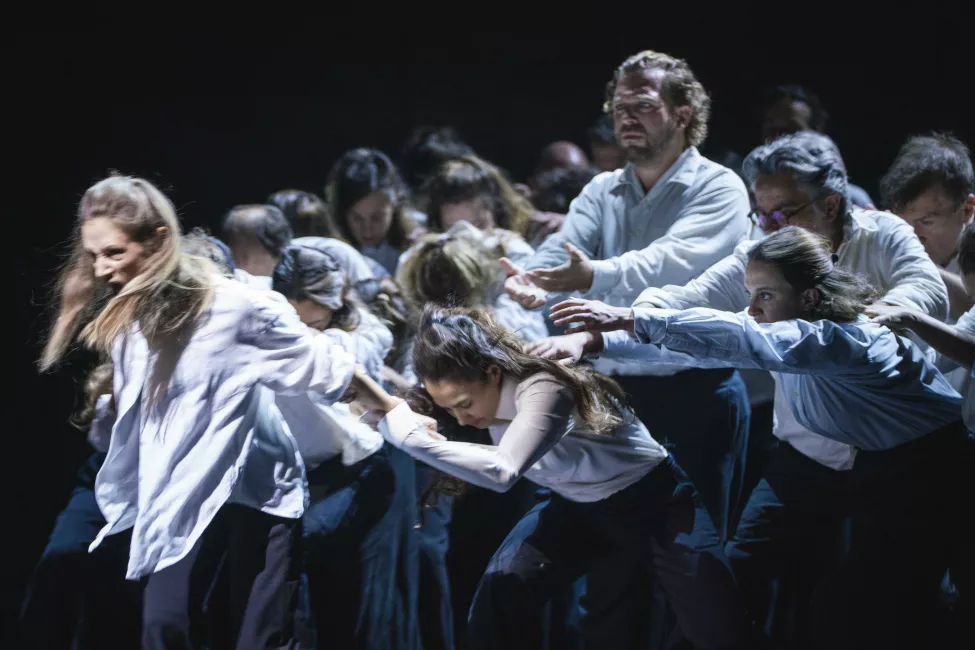
The staging by Stefano Poda remains as fascinating as ever. With Poda, you never quite know what to expect, but you know you will be surprised.
This Tosca is elegant, visually striking, and constantly alive. The moving cubes filled with changing images create a dreamlike atmosphere throughout the evening, while the descending metal structure in the third act transforms the stage into something resembling a giant prison.
And those final ten seconds…
No spoilers here.
Let’s just say that Poda still knows how to leave an audience speechless.
But what truly elevated the second performance was the cast.
Let’s start with Vincenzo Costanzo.
I honestly don’t know many tenors today, perhaps with the exception of Vittorio Grigolo, who embody Cavaradossi with such fire.
For me, Cavaradossi is not just a romantic hero.
He is passion.
He is elegance.
He is youthful arrogance.
He is courage.
He is fury.
And Costanzo seemed to understand every single aspect of the character.
From his first entrance to his final moments on stage, he was completely invested in the role. His singing was vibrant, his acting natural, and there was a genuine sense of danger and urgency in everything he did. This wasn’t simply a tenor singing beautiful notes. This was a man fighting for love, freedom and survival.
An outstanding performance.
Alongside him, Ekaterina Sannikova delivered a wonderfully compelling Tosca.
It was my first time hearing her live, and what immediately struck me was how naturally she fits the role.
She has the presence, the elegance and the vulnerability that make Tosca such a fascinating character. At times fragile, at times explosive, she carried the emotional weight of the evening with remarkable confidence.
Most importantly, the chemistry between her and Costanzo felt completely genuine.
Their scenes together never felt staged. They felt lived.
And in an opera where the central love story must be believable for the tragedy to work, that chemistry is priceless.
Then there was Claudio Sgura.
What can I say?
I’ve seen him so many times over the years in theatres all across Italy, and every time he steps onto a stage, he commands attention.
I had already enjoyed him recently in Palermo as Amonasro in Aida, but seeing him return to Scarpia was a real pleasure.
Physically, he is almost the perfect Scarpia.
Tall.
Imposing.
Powerful.
And blessed with one of those faces that can switch from charming to terrifying in a matter of seconds.
His Scarpia was cruel, predatory and deeply unsettling, exactly as the role should be. Every interaction with Tosca felt dangerous, and every appearance raised the tension another notch.
Together, Sannikova, Costanzo and Sgura brought something fresh to the production.
They brought youth.
They brought energy.
They brought sensuality.
They brought modernity.
And most importantly, they made the story feel immediate and alive.
Beyond the central trio, the supporting cast contributed beautifully to the success of the evening. Artists such as Matteo Torcaso, Daniel Umbelino and Igor Durlovski ensured that even the smaller roles were delivered with care and conviction, helping create a wonderfully balanced ensemble performance.
A final word must go to Andrea Battistoni.
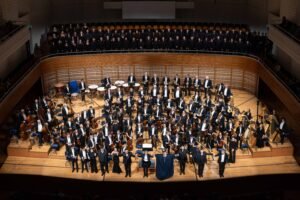
I don’t know whether it was simply one of those magical evenings where everything aligns, but I actually found the musical performance on Saturday even stronger than on opening night.
The orchestra sounded magnificent.
The brass were dark and threatening.
The strings were rich and precise.
The dramatic pacing never sagged.
Most importantly, you could feel how much Battistoni loves this score.
Tosca isn’t simply conducted under his baton, and that passion reached every corner of the theatre.
Two performances in less than twenty-four hours.
Two different casts.
Two different experiences.
And one more reminder of why Tosca remains one of the greatest operas ever written.
Thank you once again, Teatro Regio.
*********************************************************
CAST
Tosca : Ekaterina Sannikova
Mario Cavaradossi : Vincenzo Costanzo
Scarpia : Claudio Sgura
Il Sagrestano : Matteo Torcaso
Spoletta : Daniel Umbelino
Cesare Angelotti : Igor Durlovski
Sciarrone : Eduardo Martinez
Un carceriere : Lorenzo Battagion
Direttore : Andrea Battistoni
Regia : Stefano Poda
About the Author

looks great production!